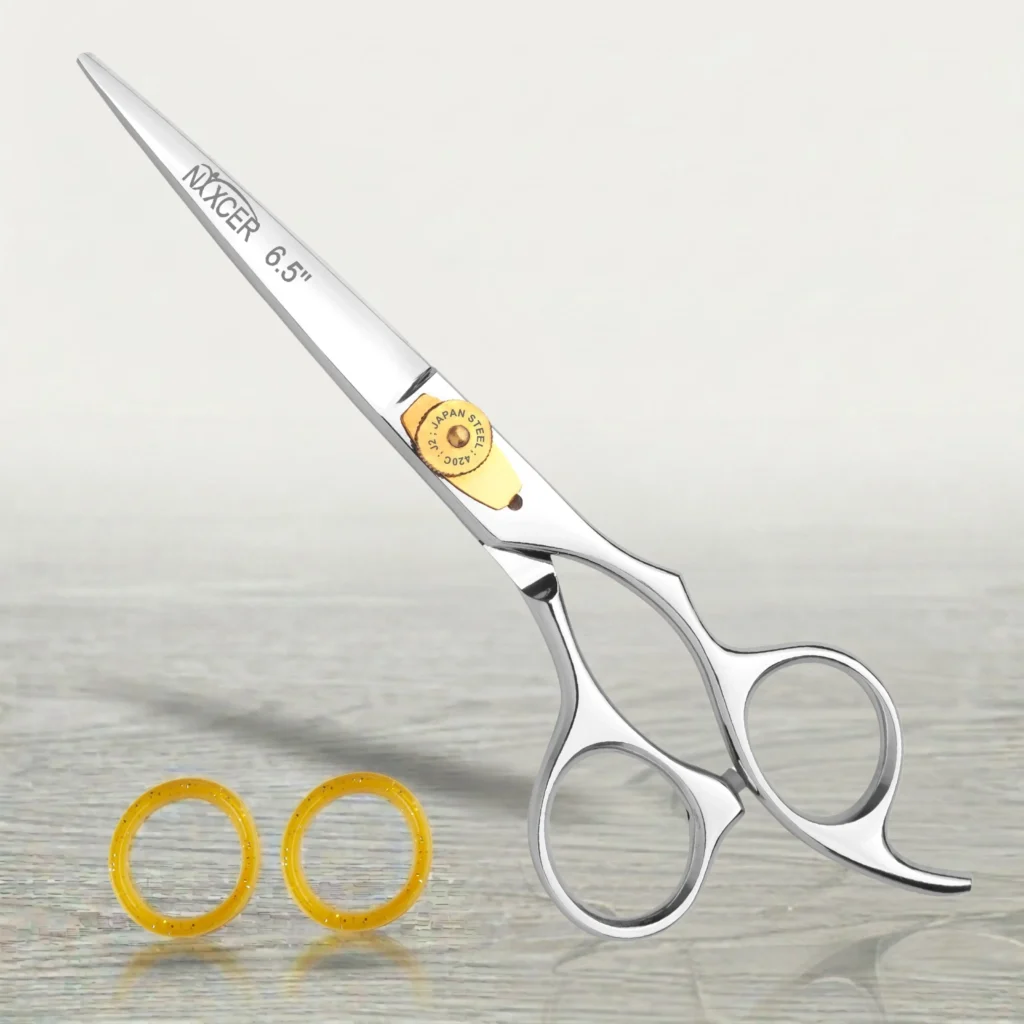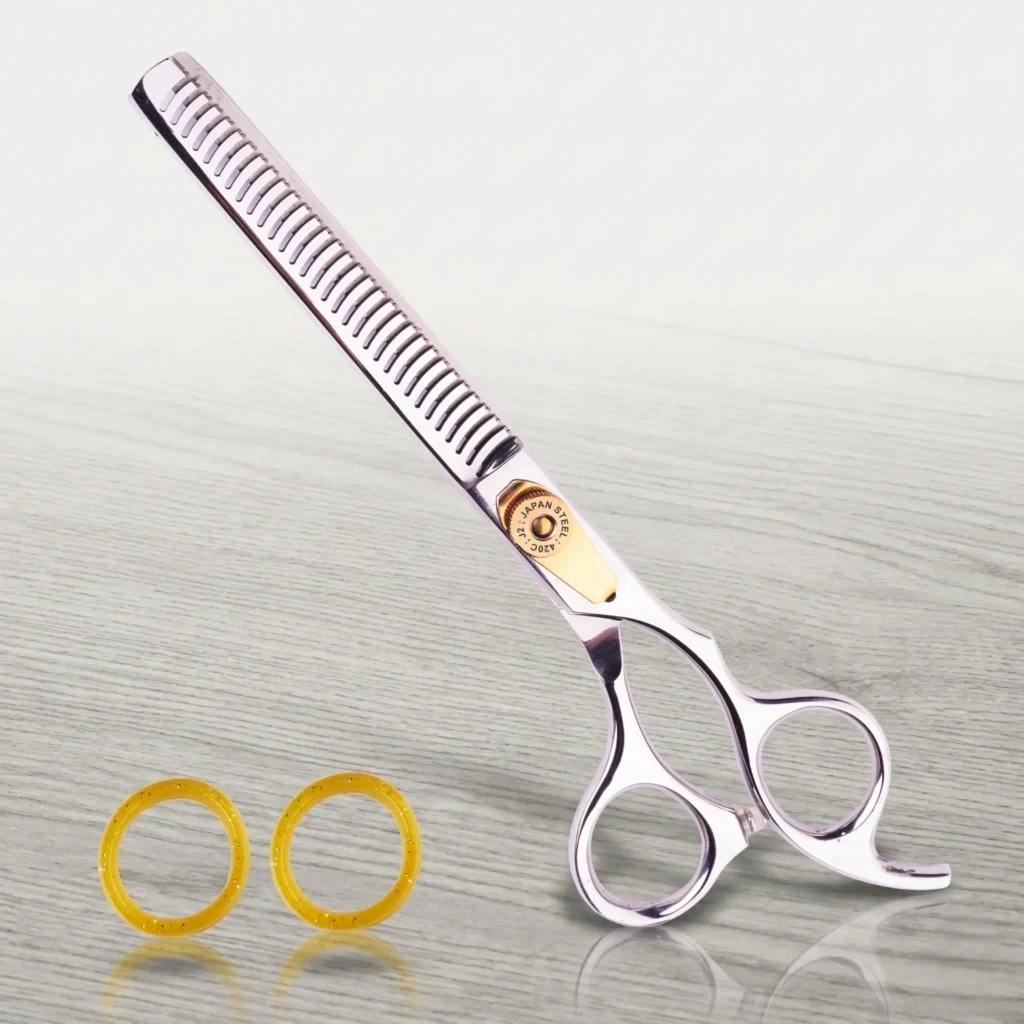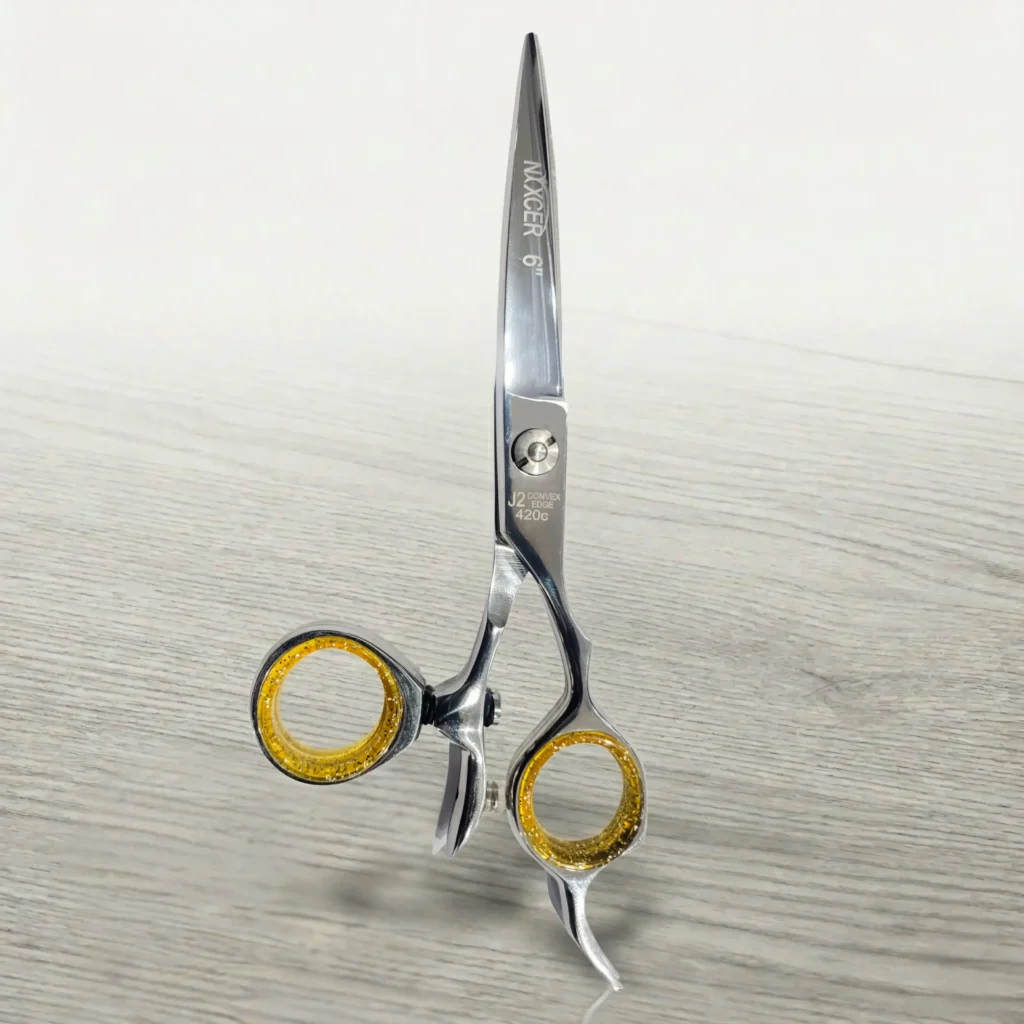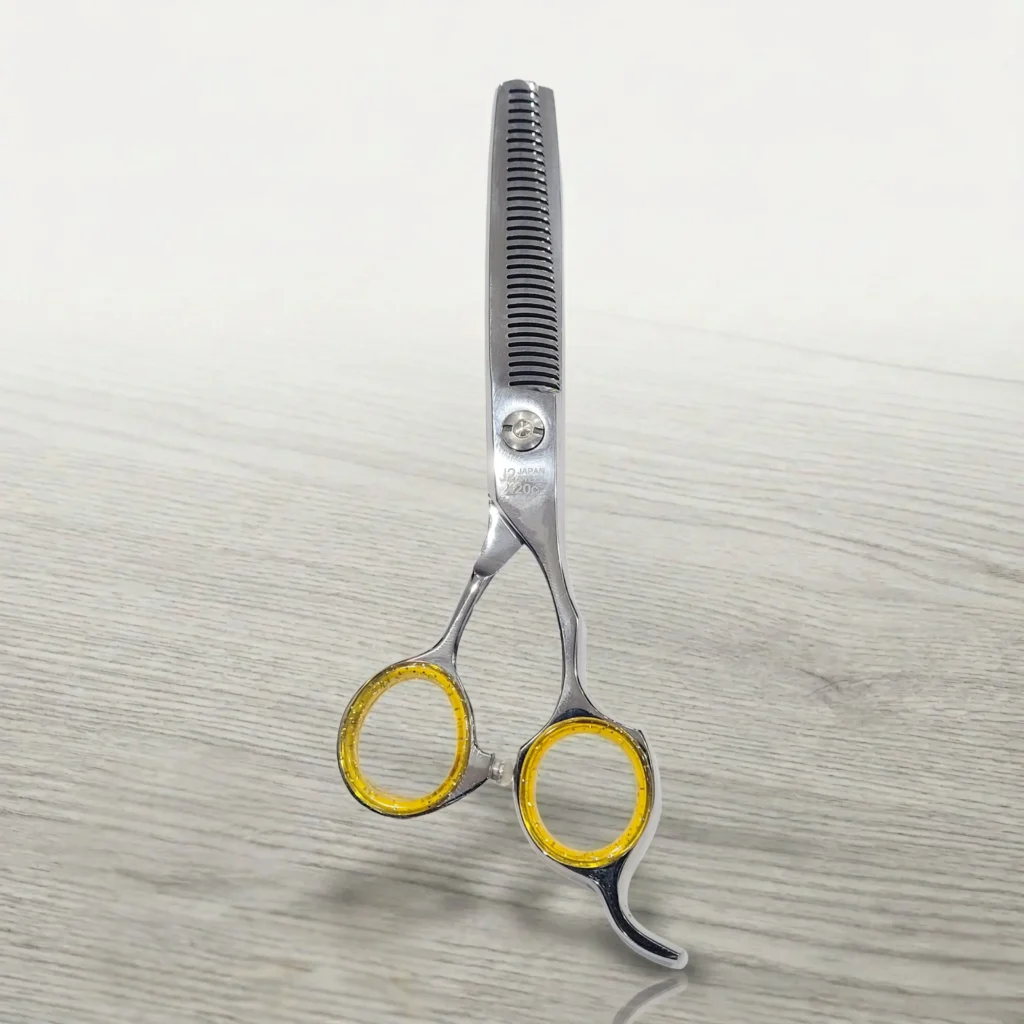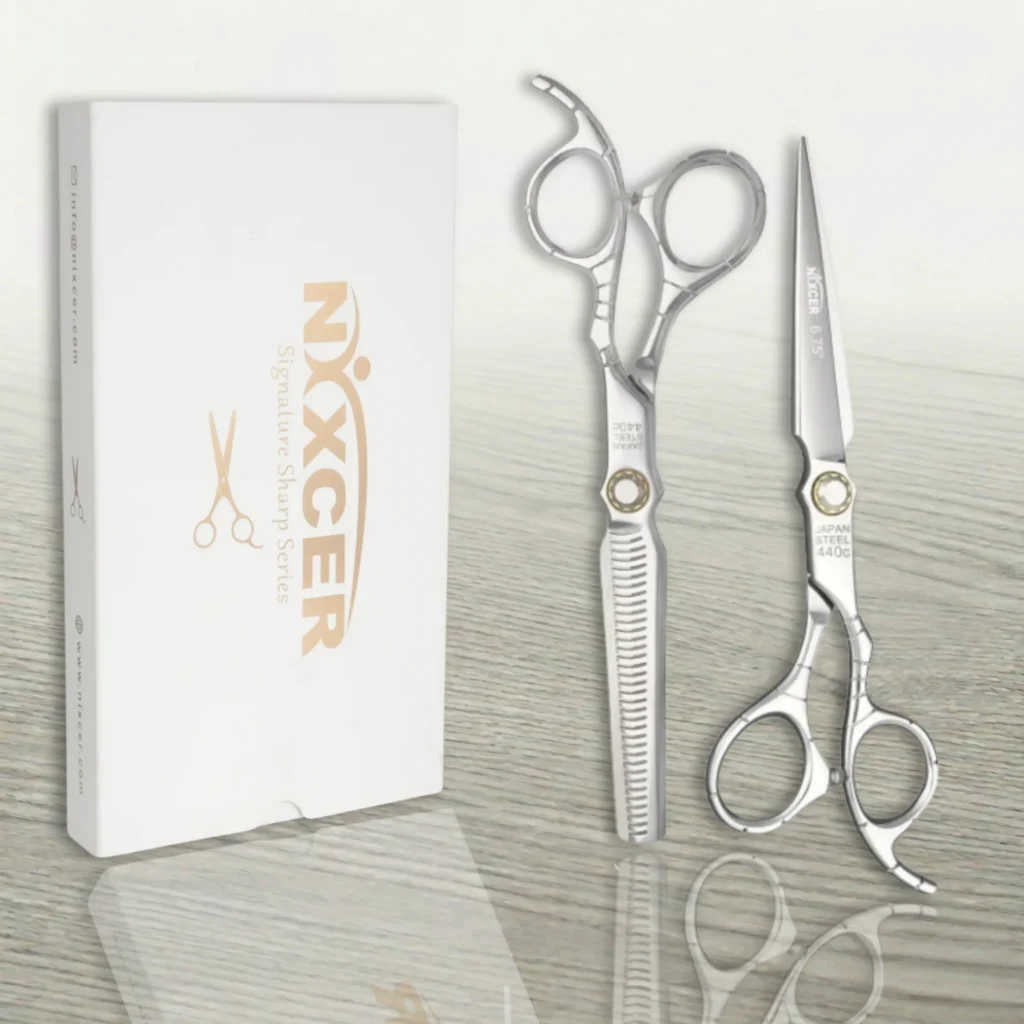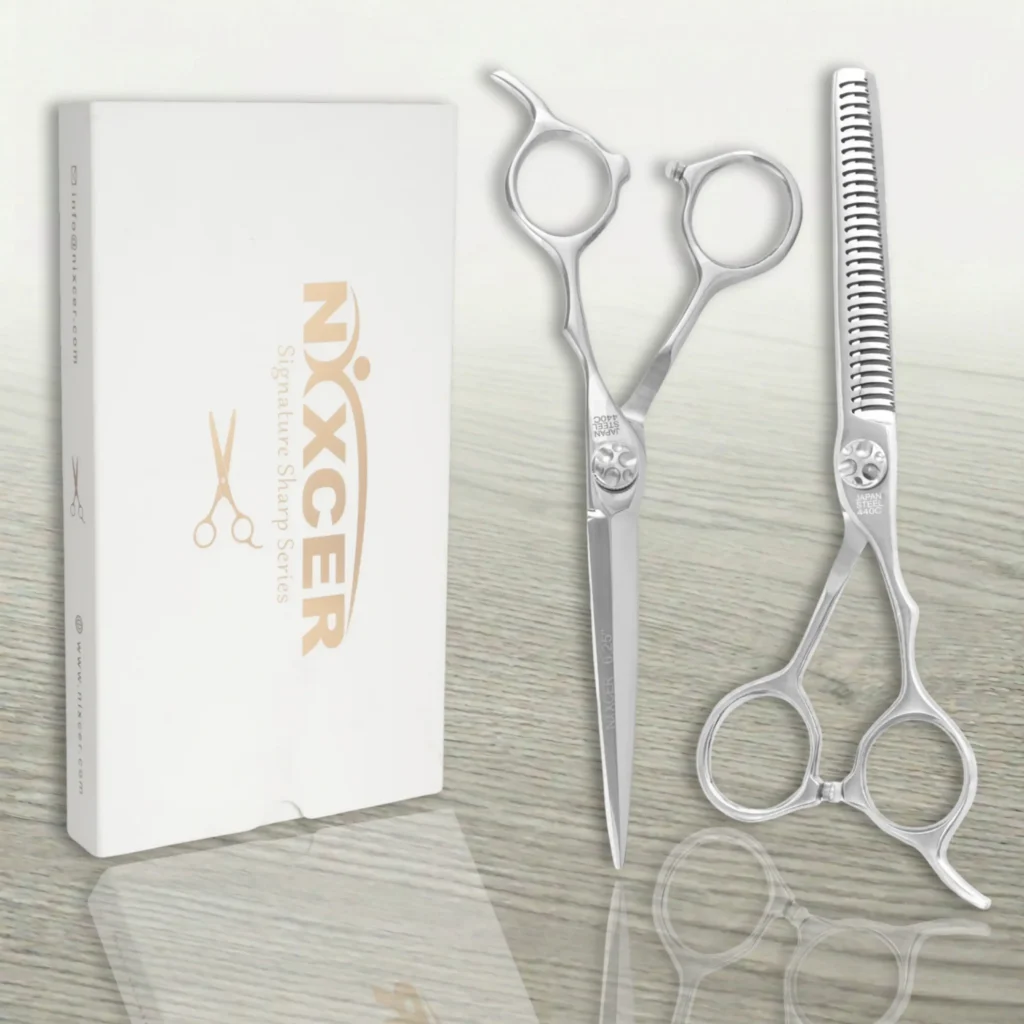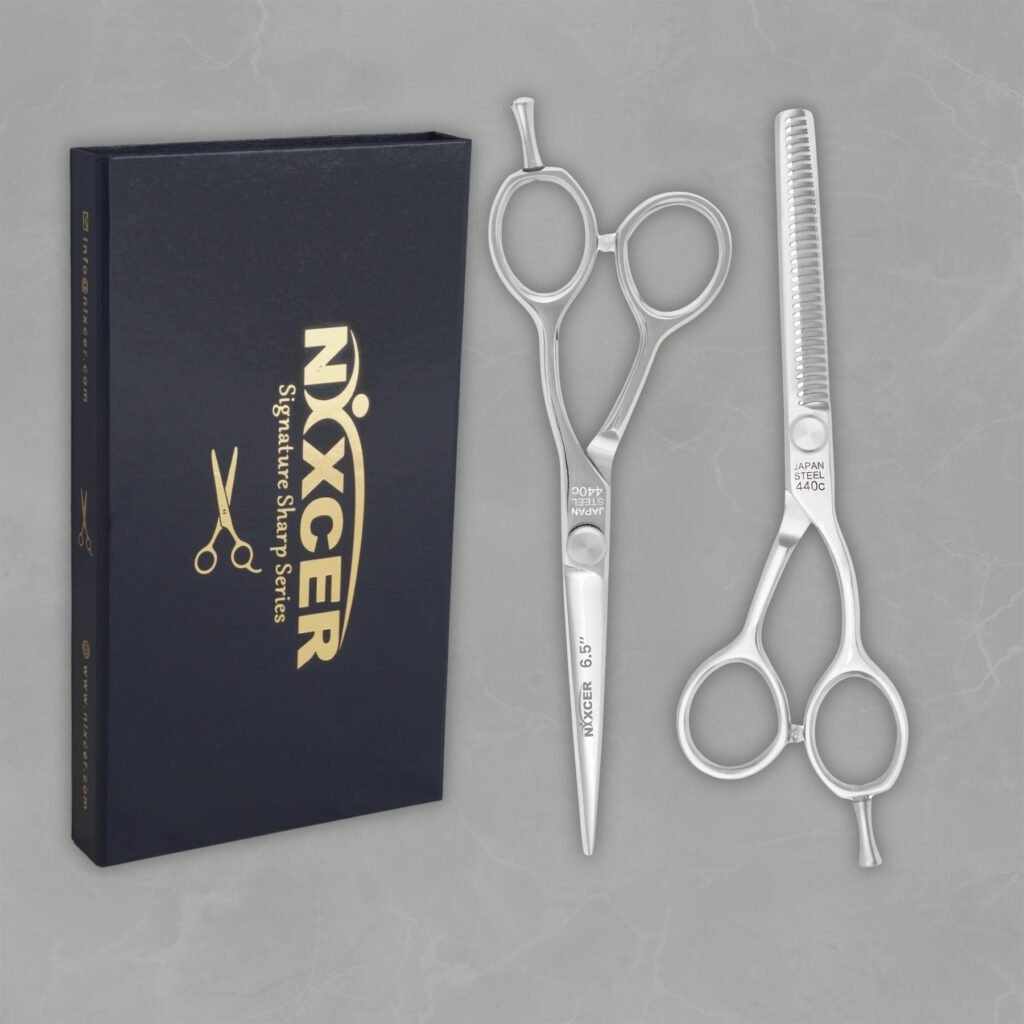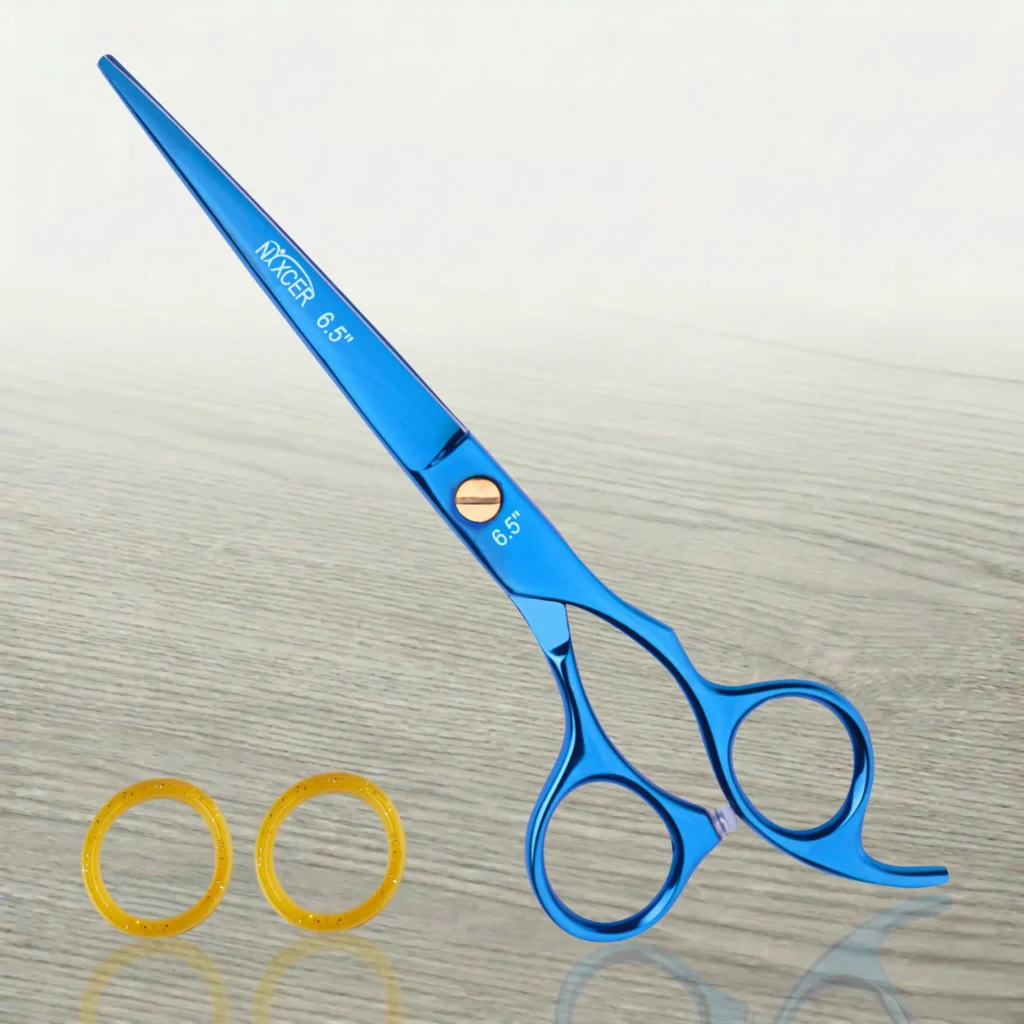
Quick answer: The best hair cutting scissors for a professional stylist are sharp, balanced, correctly tensioned, comfortable in the hand, and suited to the techniques performed most often. A versatile midsize shear works for many daily cuts, while longer, shorter, swivel, broad blade, and thinning models solve more specific problems.
A top professional shear is not defined by one brand name, country label, steel number, or price. It earns its place in a working kit by cutting cleanly, responding predictably, fitting the stylist’s hand, and remaining serviceable over time. The right choice therefore begins with the work the shear must perform.
This guide compares the main types of professional hair cutting scissors and explains how blade edge, length, handle design, balance, tension, handedness, and maintenance affect the decision.
What Top Means for a Professional Shear
Professional stylists use scissors for repeated, precise work. A strong candidate should meet several practical tests.
- It cuts the intended section without pushing, folding, or pulling the hair.
- The blade length and shape support the stylist’s main techniques.
- The handle allows a secure grip without forcing the thumb or wrist into an awkward position.
- The balance feels stable during opening, closing, and changes of cutting angle.
- The tension can be set correctly and remains consistent during use.
- The edge can be serviced by a qualified sharpener familiar with its blade geometry.
- The seller provides clear specifications, return terms, and support.
These points matter more than an unverified claim that a model is universally best. The top choice for detailed fringe work may be inefficient for scissors over comb. A powerful long blade may feel excessive in a small hand position. A fine convex edge may suit motion cutting but require more careful handling than a durable beveled edge.
Professional Shear Types by Use Case
| Main work | Useful shear features | Main tradeoff |
| General salon cutting | Midsize blade smooth action comfortable offset handle | Versatility does not replace a specialized dry or texturizing shear |
| Precision and fringe work | Shorter narrow blade fine tip stable balance | Covers less hair with each closure |
| Scissors over comb | Longer straight or slightly curved blade controlled tension | Requires confident blade control near the scalp and ears |
| Slide cutting and slicing | Very sharp convex edge smooth pivot curved blade line when preferred | Fine edges need careful handling and specialist sharpening |
| Dense or dry hair | Longer broad or sword style blade with stable power | Added blade mass may not suit detailed work |
| Varied cutting positions | Offset crane or swivel handle matched to the hand | A new handle geometry may require an adjustment period |
| Weight removal and blending | Dedicated thinning or texturizing shear with known tooth pattern | Removal rate varies and repeated passes can take out too much hair |
Best All Purpose Scissors
For many stylists, the first professional shear should be a versatile midsize model. A length around the middle of the professional range can handle palm to palm cutting, layering, blunt work, point cutting, and routine detailing without feeling too short or too long.
Sam Villa describes 5.75 to 6.25 inch shears as midsize tools that can cover a wide range of tasks. JOEWELL also explains that size should follow cutting technique, with shorter scissors favoring detail and longer scissors favoring more powerful or efficient work. These are useful ranges, not rules. Control and comfort remain the deciding factors.
A good all purpose shear should open and close smoothly, keep the hair stable at the cutting point, and feel balanced through the full blade. An offset handle may make daily cutting positions easier for many users, while a symmetric handle offers more freedom for stylists who frequently reverse or palm the scissors.
Best Short Scissors for Detail Work
Shorter blades give the stylist close visual control around fringes, ears, short graduation, and precise perimeter details. They also limit how much hair can be removed in one closure, which can be useful when making small corrections.
The benefit is accuracy in a compact area, not automatic precision. The stylist still needs clean sectioning, a stable guide, and consistent tension. A short shear becomes inefficient when used for a long perimeter or broad scissors over comb work because it requires more closures and increases the chance of creating steps.
Choose a fine but safe tip, a handle that does not crowd the fingers, and enough blade stability to avoid flexing during the intended cut.
Best Long Scissors for Barbering
Longer shears suit scissors over comb, broad perimeters, deep point cutting, and work on larger sections. They can cover more of the comb or cutting line in one movement, which improves efficiency when the stylist maintains control.
For barbering, a 6.5 inch or longer shear is common, but the correct length depends on the user’s technique and working space. The blade should track cleanly along the comb without feeling tip heavy. A straight or moderately curved line can support controlled cutting, while a broad or sword style blade may add stability for dense hair.
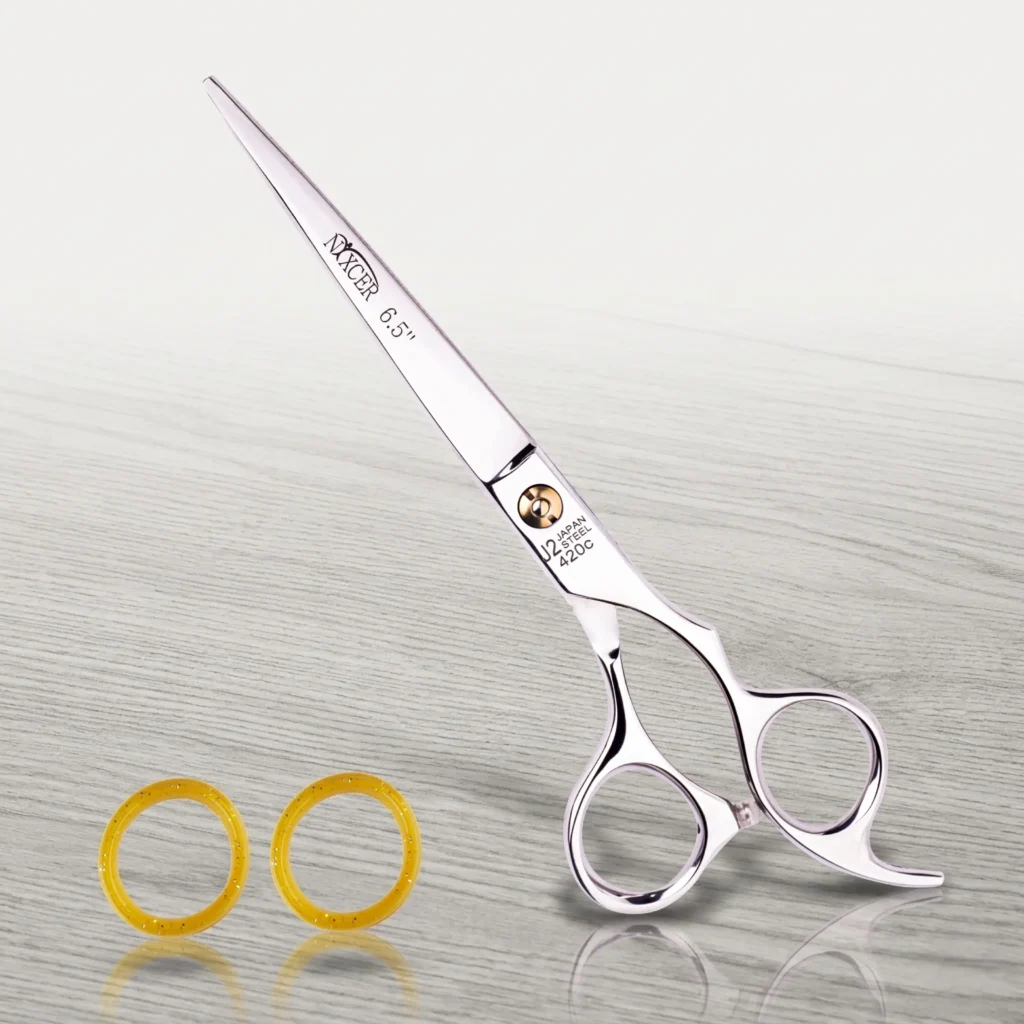
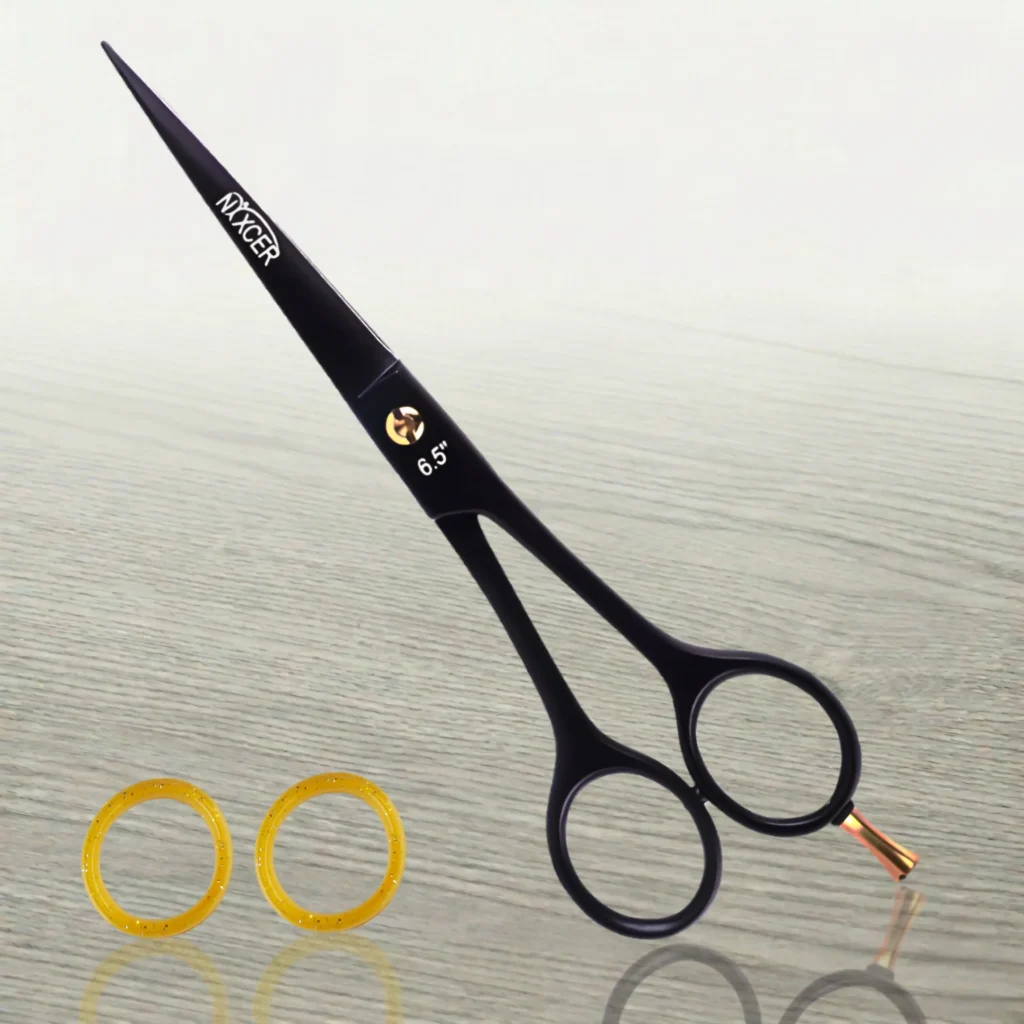
The Nixcer Signature Sharp Series KOREAN Hair Cutting Shears provide a 6.5 inch option in the current range. Stylists who prefer a longer format can also review the Nixcer Signature Sharp Series SWORD Hair Cutting Shears, listed at 6.75 inches. Product specifications should be confirmed on the product page before purchase.
Best Convex Scissors for Motion Cutting
Convex edges are commonly selected for slide cutting, slicing, point cutting, and refined finishing because their fine geometry can provide a smooth action with lower resistance. JOEWELL describes convex blades as sharp and suitable for soft cutting, while its blade guide links more curved blade lines with slide cutting and slicing.
The edge is only one part of the system. Pivot condition, tension, blade alignment, hair section, and the stylist’s hand motion also affect whether the shear glides or catches. A damaged or poorly serviced convex edge can perform worse than a well maintained shear with a different geometry.
For a closer comparison, read convex versus beveled hair cutting scissor edges and the guide to slicing with hair cutting scissors.
Best Broad Blade Scissors for Dense Hair
Broad and sword style blades are designed to carry more material behind the edge. That structure can provide a stable feel when cutting larger sections, dense hair, dry hair, or strong one length lines. JOEWELL notes that wider blades are intended for more powerful cutting, while thin blade points favor detail.
Power should not be confused with force. A professional shear should cut through an appropriate section without the user squeezing excessively. If hair bends or pushes, check section size, tension, alignment, and edge condition rather than forcing the handles closed.
Within the Nixcer range, the Professional Series Broad Blade Razor Edge Scissors are listed at 6.25 inches. Compare their dimensions and handle with the stylist’s usual working position before choosing them for daily use.
Best Ergonomic Scissors for Varied Positions
Handle geometry changes where the thumb, wrist, elbow, and shoulder sit while the blades move. A well matched handle can support a lighter grip and reduce unnecessary repositioning. It does not guarantee comfort or prevent injury, because technique, workload, tool fit, and the stylist’s individual needs also matter.
Symmetric handles allow a wide range of holding positions. Offset handles bring the thumb ring forward and may support a more open hand. Crane handles increase the offset further. Swivel handles let the thumb ring rotate, which some stylists prefer when working around the head at changing angles.
The Nixcer Signature Sharp Series ARC Hair Cutting Shears provide a 6.25 inch option with an adjustable tension screw according to the product page. Stylists considering a new grip should compare finger hole size, thumb movement, tang position, and balance rather than relying on the word ergonomic alone. The Nixcer guide to professional scissor handle design explains these handle formats in more detail.
Best Thinning Scissors as a Companion Tool
Cutting scissors and thinning scissors perform different jobs. A cutting shear has two continuous edges and cuts all hair captured at the closing point. A thinning or texturizing shear uses teeth or gaps so only part of the section is removed.
A professional kit often benefits from a dedicated hair thinning scissors option for blending, softening weight lines, or controlling selected density. The result depends on tooth design, cut ratio, blade orientation, section thickness, placement, and the number of passes. Do not assume that two shears with the same tooth count remove the same amount of hair.
Use thinning tools conservatively near the perimeter, on fine hair, on fragile hair, and where short internal hairs could disturb curl or surface control. Release and assess the section before making another pass.
How to Choose Blade Length
Blade length should match the cutting action. JOEWELL states that professional scissors are sized in inches and that shorter tools suit detail while longer tools suit more powerful work. Sam Villa similarly recommends shorter shears for intricate detail, midsize shears for varied salon use, and longer shears for deep point cutting, slide cutting, and shear over comb.
Use these questions when comparing lengths.
- Does the blade cover the comb or section used most often without overshooting the work area?
- Can the stylist control the tip through the full opening and closing motion?
- Does the shear remain balanced when held in the normal cutting position?
- Does the length reduce unnecessary closures without encouraging sections that are too large?
- Can the tool work safely around the ears, neckline, fringe, and fingers?
If possible, test more than one length with the same handle family. A nominal half inch difference can feel significant when the blade width and balance also change.
How to Choose the Blade Edge
Convex and beveled edges offer different cutting characteristics. Convex edges are usually associated with a smooth, fine action suited to motion and precision techniques. Beveled edges can feel firm and stable for blunt cutting and general work. Semi convex designs sit between those broad categories.
Marketing names such as razor edge do not replace a clear specification. Ask what the edge geometry is, whether the inner blade is hollow ground, and which sharpening method the manufacturer requires. A qualified sharpener should preserve the original geometry rather than converting every shear to the same edge.
The stylist should also consider the blade line. A straighter line can hold hair more directly during blunt work. A more curved line may encourage a smoother sliding action. The best combination depends on the cut, the hair, and the user’s motion.
How to Compare Handles and Handedness
A handle should let the stylist control the moving blade with limited thumb motion while the ring finger remains stable. Finger inserts can improve fit when the rings are too large, but they should not create pressure points. The tang should support the little finger without forcing the hand open.
Left handed professionals should look for true left handed scissors. A true left handed shear reverses the blade relationship as well as the handle, allowing the user to see the cutting line and apply natural closing pressure with the left hand. Turning a right handed shear over does not change its blade mechanics.
Comfort should be judged during realistic cutting positions. Open and close the shear with a relaxed grip, palm it, work beside a comb, and check whether the wrist stays near neutral. Persistent pain, numbness, or weakness should be assessed by a qualified health professional rather than solved only by buying a different handle.
How to Check Balance and Tension
Balance describes how the weight of the blade and handle sits in the hand. A balanced shear feels stable rather than pulling sharply toward the tip or handle. Balance is personal because finger placement, hand size, grip, and cutting angle differ.
The Nixcer balance test for hair cutting scissors offers a practical inspection sequence. Test the tool clean and correctly assembled, then assess it in the grip used for work.
Tension controls blade contact. If tension is too loose, hair may fold or push because the edges separate. If it is too tight, the action can feel heavy and increase wear. Follow the manufacturer’s adjustment instructions, make small changes, and test the full blade rather than judging only the first part of the closure.
How to Evaluate Steel and Hardness Claims
Steel influences edge potential, wear resistance, corrosion resistance, toughness, and service requirements. It does not determine final performance by itself. Heat treatment, grinding, edge geometry, alignment, pivot construction, and finishing also matter.
Rockwell hardness is an indentation measurement used to describe material hardness. A higher number does not automatically mean a better shear. Very hard steel may retain an edge well but can be less forgiving of impact or poor sharpening. A lower value may be easier to service but require more frequent edge maintenance. Read the Nixcer guide to the Rockwell hardness scale for hair cutting scissors for a fuller explanation.
Treat vague labels such as Japanese steel or premium steel as starting points. Look for a specific alloy or material designation, a stated hardness when available, clear manufacturing information, and service guidance.
A Professional Buying Checklist
Before ordering, confirm the following details.
- Main duty: wet cutting, dry cutting, detail, scissors over comb, slide cutting, or texturizing.
- Length: total stated size and, when available, actual blade length.
- Edge and blade line: convex, beveled, semi convex, straight, curved, broad, or sword style.
- Handle: symmetric, offset, crane, or swivel, with suitable finger hole and tang placement.
- Handedness: true right handed or true left handed construction.
- Balance and weight: stable in the normal grip and appropriate for the working day.
- Tension system: adjustable, secure, and supported by clear instructions.
- Service path: access to a sharpener who understands the original edge.
- Seller support: accurate specifications, return terms, warranty details, and contact information.
- Kit role: a clear reason the shear belongs beside the tools already owned.
Testing Scissors After Purchase
Inspect the shear before using it on a client. Check that the tips meet correctly, the blades open and close without grinding, and the pivot has no obvious side play. Test cutting performance according to the manufacturer’s guidance and confirm that hair enters the cut rather than sliding away unexpectedly.
The Nixcer guide to testing hair cutting scissor sharpness can help identify pushing, folding, or inconsistent cutting along the blade. Do not use a damaged shear or attempt aggressive adjustment when the cause is unclear.
Maintenance for Daily Professional Use
Remove loose hair and product residue after use with a soft cloth and an approved cleaning method. Keep moisture away from the pivot and store the shear closed in a protective case where the edges cannot strike other tools.
Oil reduces friction at the pivot and helps flush fine debris from the moving surfaces. Use a small amount of suitable scissor oil and follow the maker’s schedule. The Nixcer article on regularly oiling hair cutting scissors explains the routine.
Do not sharpen professional hair shears with kitchen sharpeners or general purpose grinding tools. Convex, beveled, and micro serrated edges require different service methods. Record sharpening dates and note any change in feel so problems can be addressed before they affect client work.
Common Buying Mistakes
Choosing by Brand Alone
A respected name does not guarantee that a specific length, handle, or edge suits the user. Compare the actual model specification with the job it must perform.
Choosing by Steel Alone
Steel labels cannot reveal alignment, pivot quality, finishing, or fit. Treat material as one part of the decision.
Buying One Shear for Every Task
A versatile shear is a sound starting point, but repeated specialist work may justify a second cutting shear or a thinning tool. Add tools when a specific duty exposes a limitation in the current kit.
Ignoring True Handedness
Left handed stylists often lose visibility and natural cutting pressure when using a flipped right handed shear. Confirm blade orientation before buying.
Overlooking Service and Returns
Fit and balance can be difficult to judge from a product page. Review the seller’s return conditions before use, and confirm how the original edge should be maintained.
Frequently Asked Questions
Best Scissor Size for Professional Stylists
A midsize shear between about 5.75 and 6.25 inches is versatile for many salon techniques. Shorter blades favor compact detail, while 6.5 inch and longer shears can improve coverage for scissors over comb, broad lines, and deep point cutting. Technique and control should decide the final size.
Best Blade Edge for Professional Hair Cutting
Convex edges suit stylists who need a smooth action for slide cutting, slicing, and refined point cutting. Beveled edges can offer a firm, stable feel for blunt and general cutting. Neither edge is best for every task.
Number of Scissors in a Professional Kit
A new stylist can begin with one reliable cutting shear and one suitable thinning or blending shear. A working professional may add a shorter detail shear, a longer dry or barbering shear, or another texturizing tool when regular techniques justify it.
Professional Scissors for Left Handed Stylists
Choose true left handed scissors with reversed blade construction and a handle designed for the left hand. Confirm the model specification rather than assuming an ambidextrous label provides the same cutting view and pressure.
Signs of Incorrect Tension
Loose tension can let hair fold, push, or escape as the blades separate. Excessive tension makes the shear difficult to open and close and may increase wear. Adjust only in small steps according to the manufacturer’s instructions.
Value of a Higher Rockwell Rating
Hardness can contribute to edge retention, but a higher HRC number does not prove better overall quality. Toughness, heat treatment, geometry, finishing, alignment, and correct servicing remain important.
Replacement or Sharpening
Have the shear inspected when it pushes, folds, pulls, makes rough contact, or no longer cuts consistently along the blade. A qualified sharpener can determine whether cleaning, tension correction, alignment, edge service, or replacement is appropriate.
Final Recommendation
Start with the techniques performed most often, then choose the blade length, edge, handle, and balance that make those movements controlled and repeatable. A midsize professional cutting shear is the strongest first purchase for many stylists. Add a longer, shorter, swivel, broad blade, or thinning model only when it serves a clear role.
Compare current options in the Nixcer hair cutting scissors collection, verify specifications on the individual product page, and include maintenance and sharpening access in the purchase decision.