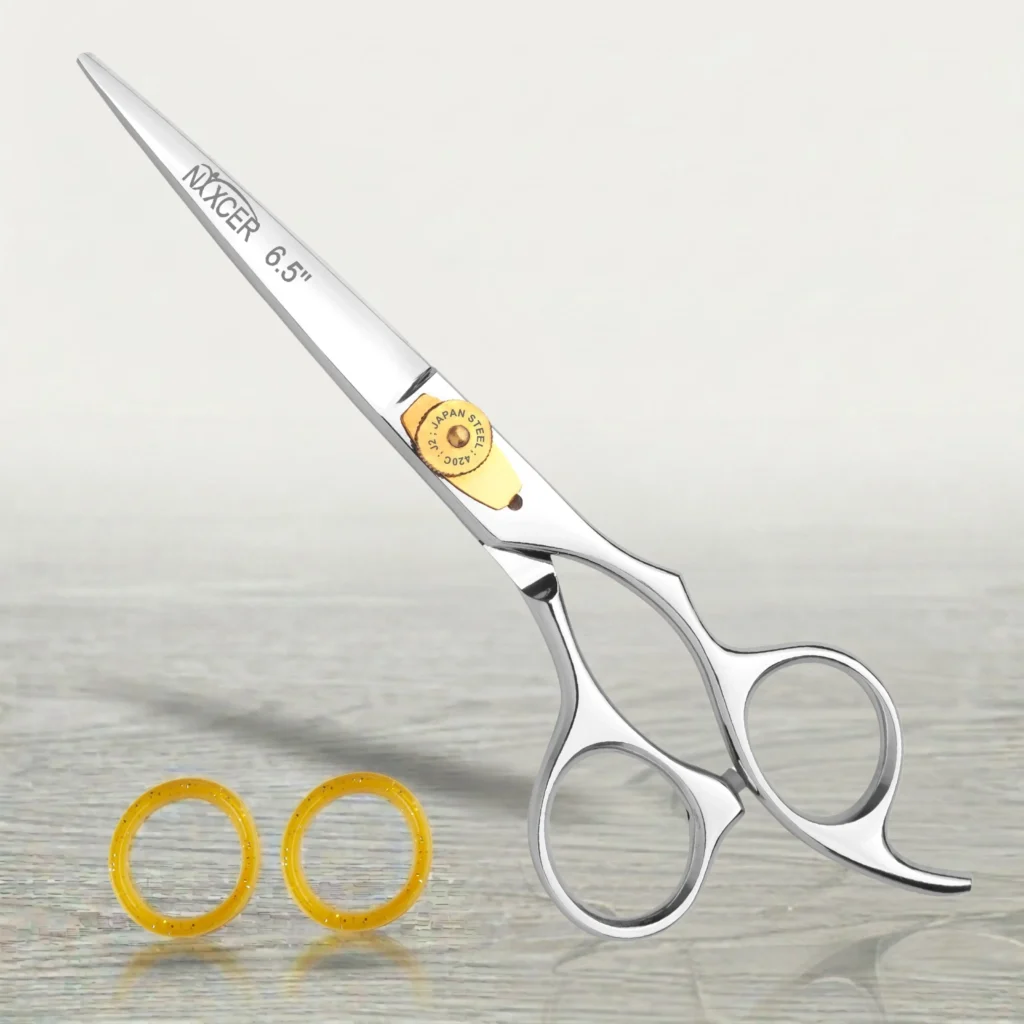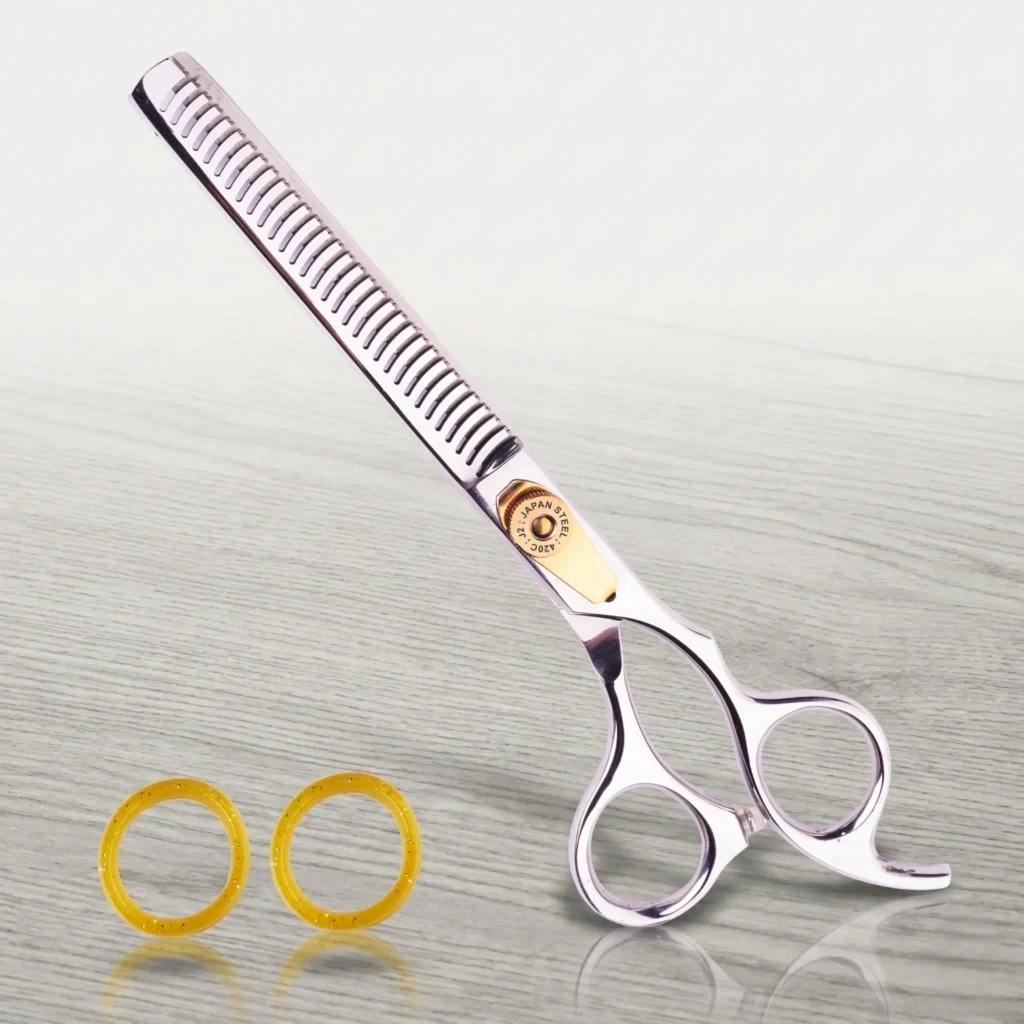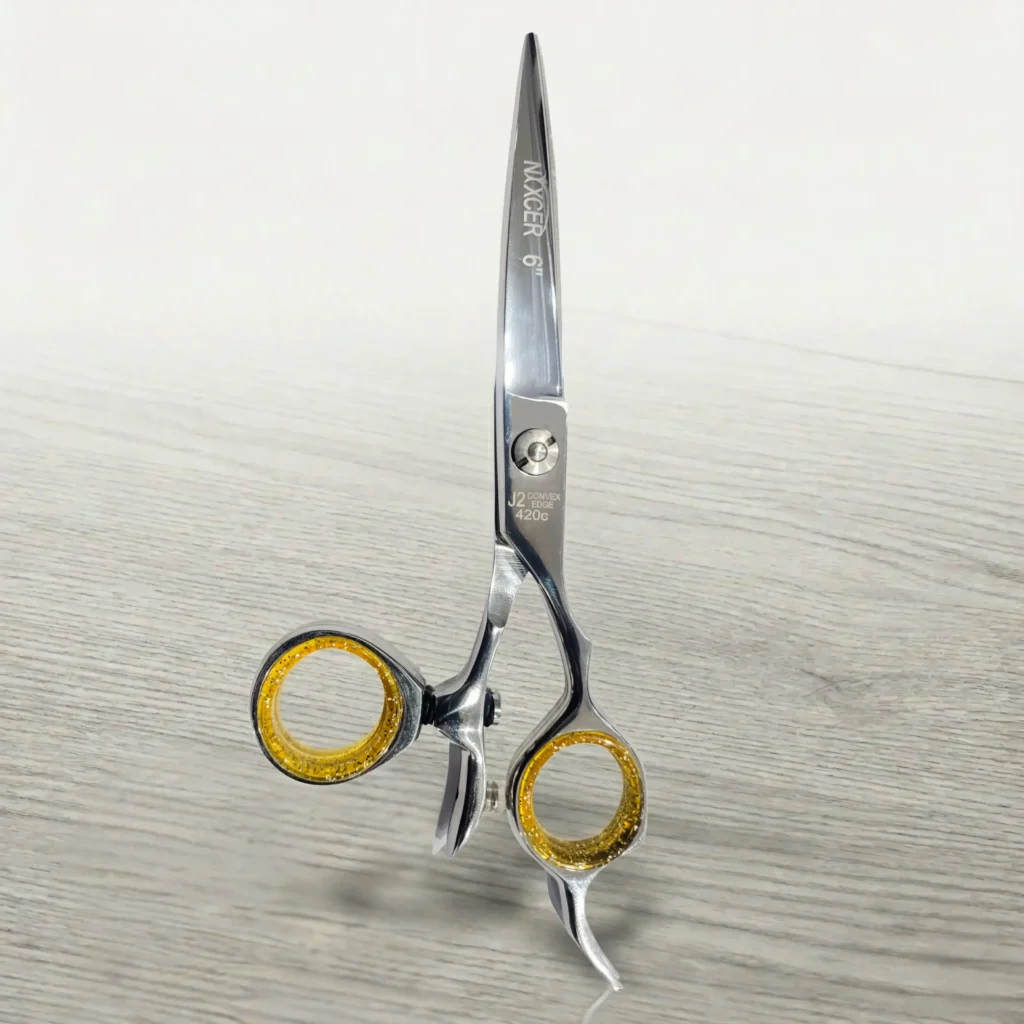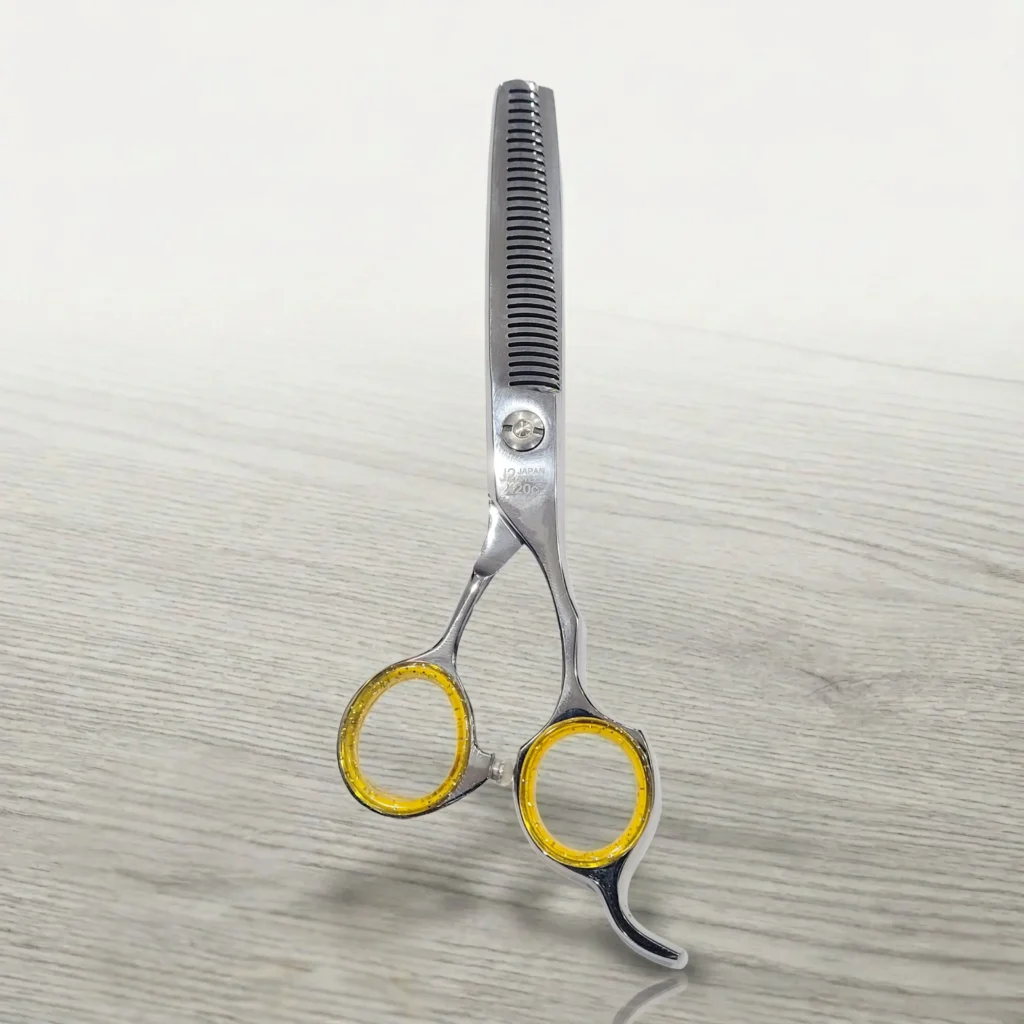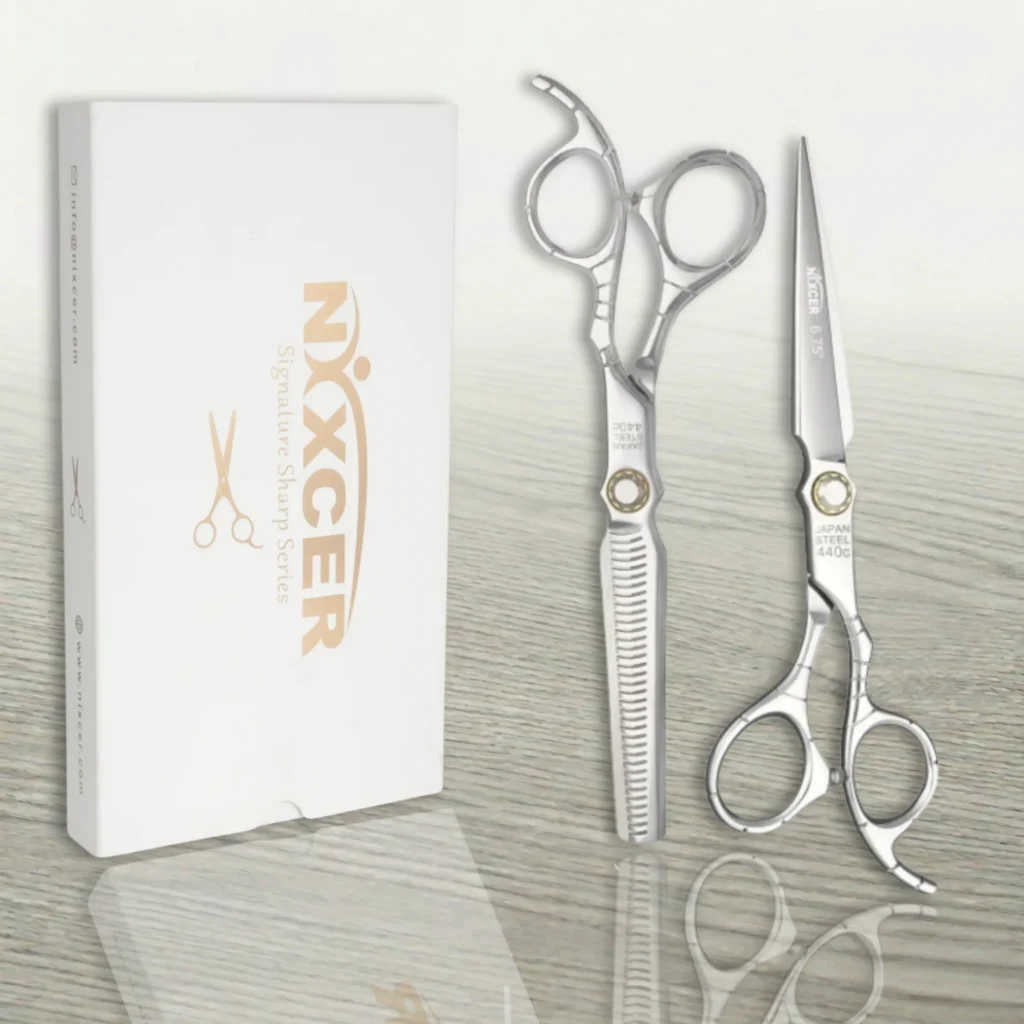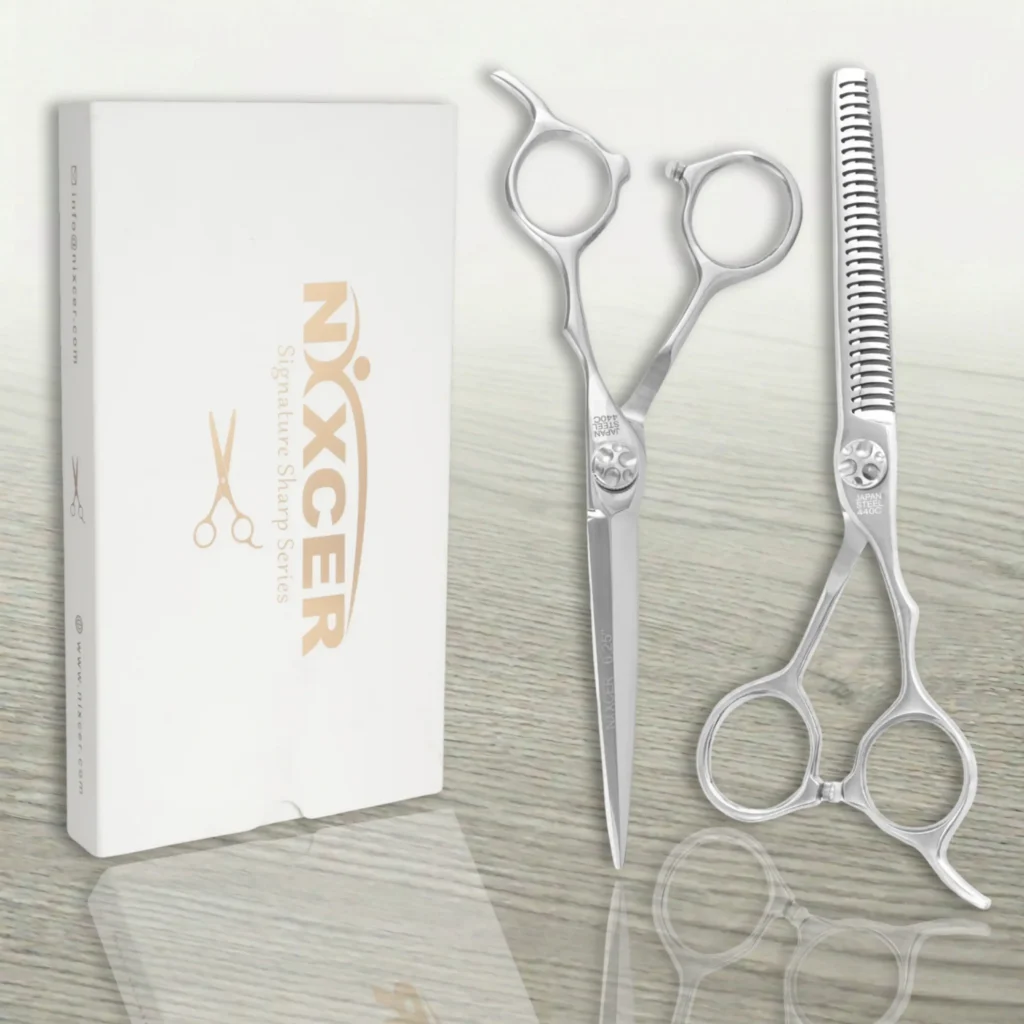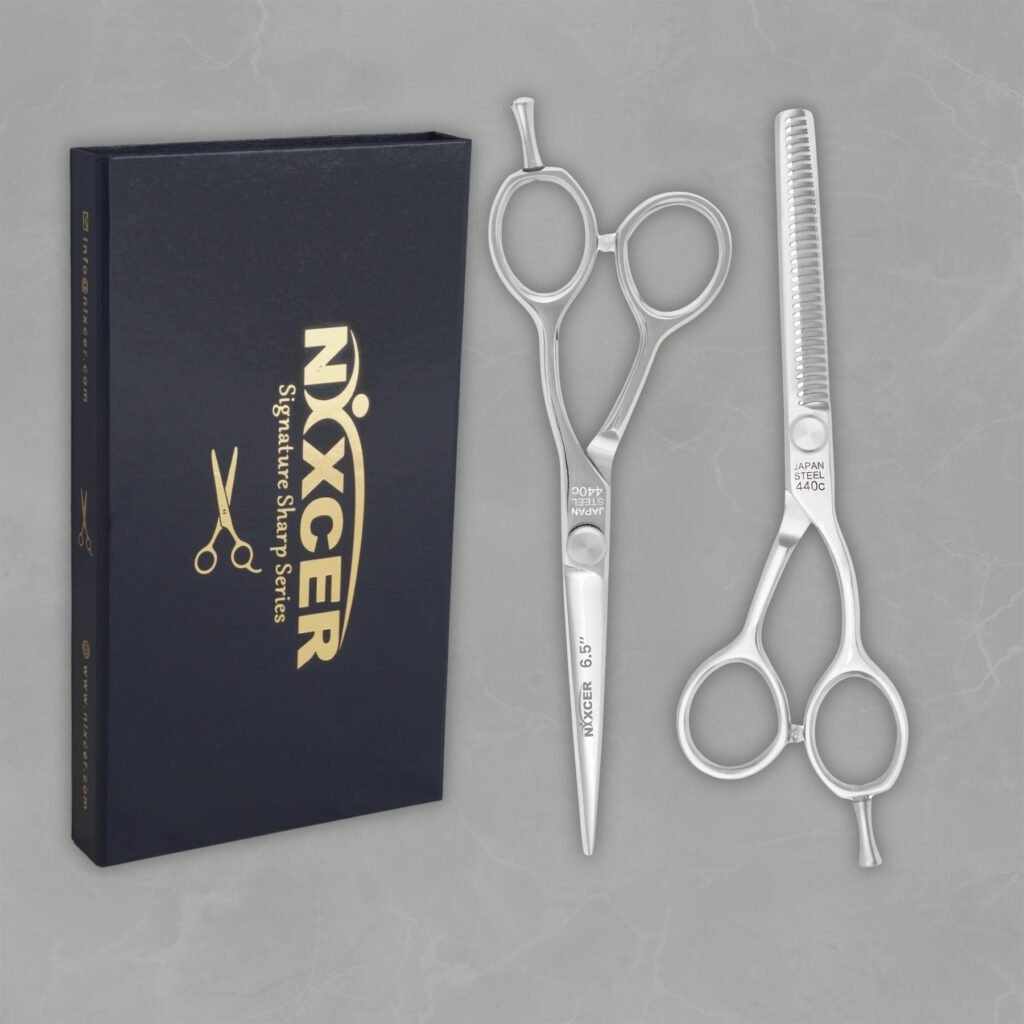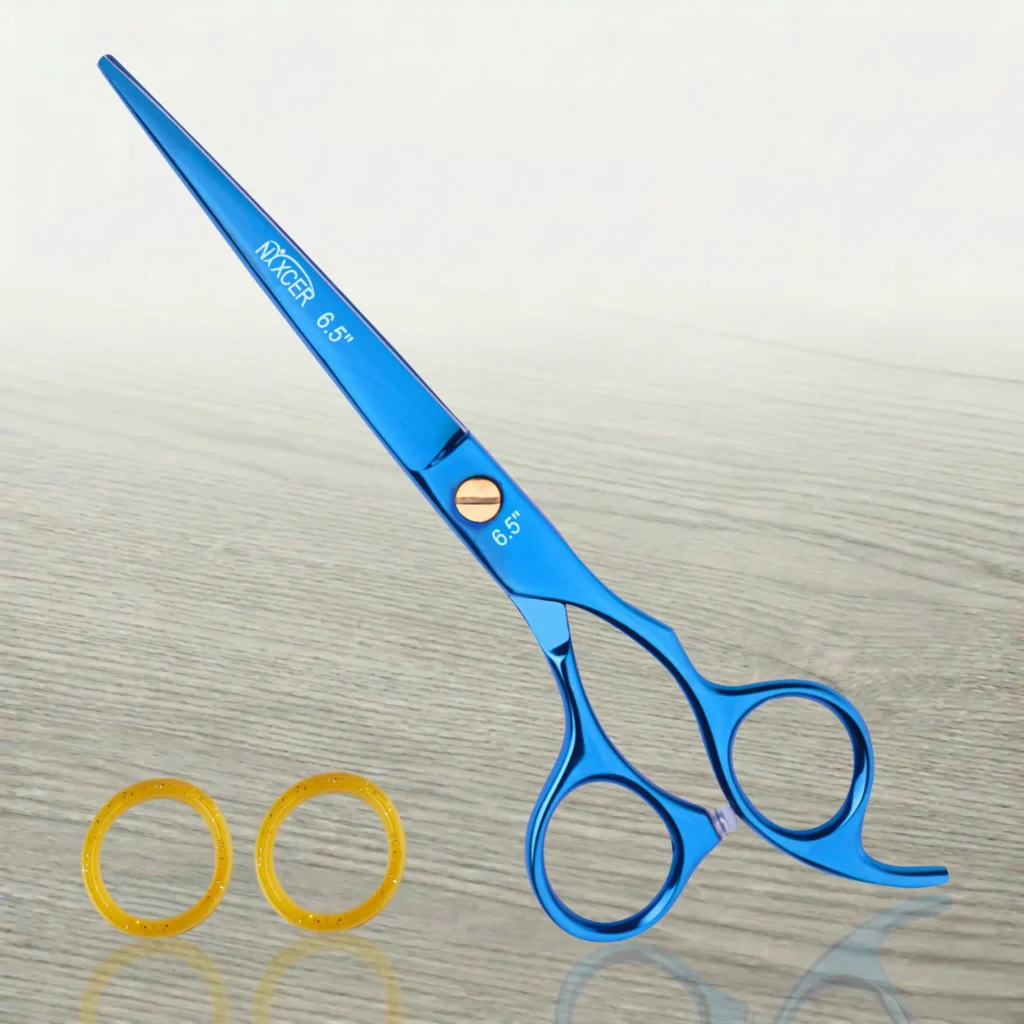
Quick answer: A convex edge has a rounded outer profile that narrows into a fine cutting edge, producing a smooth action suited to precision, point cutting, and controlled sliding techniques. A beveled edge has a visible angled facet and usually delivers a firmer cutting feel that suits direct, blunt, and general-purpose work. Neither is automatically better: the right choice depends on technique, blade construction, maintenance support, and personal cutting preference.
The edge is the working part of a hair cutting scissor, but it is easy to confuse edge geometry with the shape of the entire blade. Terms such as convex, semi-convex, flat bevel, straight blade, sword blade, and micro-serrated are sometimes used together even though they describe different features.
That is why a useful comparison must go beyond “convex is sharp” and “bevel is durable.” The edge affects how the blades enter and release hair, but blade line, width, steel, heat treatment, alignment, tension, and sharpening quality also influence performance.
This guide explains the practical differences between convex and beveled edges, how each feels in use, and what to verify before buying or servicing professional hair cutting scissors.
Convex vs. Beveled Scissor Edges at a Glance
| Feature | Convex edge | Beveled edge |
| Outer profile | Rounded transition toward a fine edge | Flat blade face meets a distinct angled facet |
| Typical cutting feel | Smooth and fluid when correctly set | Firmer and more positive |
| Common strengths | Precision, point work, slicing, slide techniques | Blunt lines, controlled direct cutting, general salon or barber work |
| Hair control | Relies on blade geometry and technique | A micro-serrated version can add grip |
| Service need | Technician must preserve the convex profile and ride line | Technician must preserve the bevel and any serration |
| Main caution | Fine edge can be harmed by impact or incorrect sharpening | A coarse or serrated edge may not suit sliding techniques |
These are general tendencies, not a guarantee for every product. Manufacturer terminology is not completely standardized. A maker may offer several convex profiles, a flat single-bevel blade, or a hybrid that it calls semi-convex.
What Is a Convex Edge on Hair Cutting Scissors?
A convex edge is shaped with a rounded outer surface that flows toward a fine cutting edge. Instead of showing one obvious flat facet near the edge, the profile changes more continuously. Many professional models pair this geometry with a carefully finished inner surface and ride line so the blades meet correctly as they close.
JOEWELL’s scissor specification guide distinguishes its flat single-bevel blade, Convex Pro blade, and Convex Shape blade. The guide associates the convex designs with soft, sharp cutting and also shows that blade width and blade line vary independently from edge type.
How Convex Scissors Feel
When the edge, pivot, and alignment are in good condition, convex shears commonly feel smooth through the stroke. The fine edge can enter hair with low resistance, which is useful when a stylist wants a soft visual result rather than a pronounced “snip.”
That performance depends on the whole cutting system. A convex label cannot compensate for poor alignment, excessive or insufficient tension, damage, or unsuitable technique. A finer edge also does not mean the scissors should be treated like a razor or tested against skin.
Techniques Commonly Matched to Convex Edges
Convex edges are often considered for:
- Controlled slide cutting and slicing when the model is designed for it
- Point cutting that needs a soft, refined finish
- Detailed perimeter or fringe work
- Layering and graduation that benefit from a smooth blade entry
- Wet or dry refinement, subject to the model’s intended use
The exact blade line still matters. JOEWELL’s guide notes that straighter blade lines hold hair more readily, while more curved blade lines allow greater sliding. Edge geometry alone therefore does not tell you how aggressively hair will move along the blade.
For practical technique guidance, see Nixcer Outlet’s article on using hair cutting scissors for point cutting.
What Is a Beveled Edge on Hair Cutting Scissors?
A beveled edge has a distinct flat angle ground near the cutting edge. The blade body may be relatively flat, with that visible facet forming the final edge. This construction generally provides a different contact and cutting sensation from a polished convex profile.
JOEWELL describes its standard flat single-bevel blade as lightweight and easy to use, with a flat face that works against the hair and comb. That is a manufacturer-specific example, but it shows why “beveled” should not be treated as a low-quality category.
Plain Bevel and Micro-Serrated Bevel Are Not the Same
Some beveled scissors have a smooth cutting edge. Others add fine serrations to one blade to help hold hair during the cut. Micro-serration is a surface feature; bevel describes edge geometry. The terms can overlap, but they are not synonyms.
This distinction matters when buying and servicing. Ask whether the cutting edge is plain, micro-serrated, or corrugated, and whether the serration is on one blade or both. Do not infer the answer from “German-style” or “beveled” alone.
Techniques Commonly Matched to Beveled Edges
A beveled edge may suit:
- Direct blunt cutting and perimeter work
- Scissor-over-comb and controlled barbering work
- General trimming where a firm cutting response is preferred
- Training environments where clear blade feedback is helpful
- Cutting slippery sections when an appropriate micro-serrated edge is desired
A serrated edge is generally not the first choice for slide cutting because its purpose is to grip rather than glide. A plain, finely finished bevel can behave differently, so assess the actual model instead of treating every bevel as identical.
What Is a Semi-Convex Edge?
Semi-convex usually describes a hybrid profile positioned between a full convex curve and a pronounced flat bevel. Manufacturers may use the term differently, and the transition may be subtle. It can provide a smoother feel than a traditional bevel while retaining a more supported edge than some full-convex designs.
This middle category is useful for stylists who want one general-purpose pair, but “semi-convex” is not a fixed technical standard across brands. Ask the seller or manufacturer for the exact blade and edge description. Nixcer Outlet’s broader guide to different hair cutting scissor blade types gives this hybrid more context.
Edge Geometry Is Only One Part of Cutting Performance
An edge comparison becomes misleading when it ignores the rest of the scissors.
Blade Line and Width
A straight, willow, or curved blade line changes how hair stays on or moves along the blade. A wider blade can also feel more powerful or stable, while a finer tip may support detailed work. These properties can change the experience even when two models use the same edge family.
Steel and Heat Treatment
Steel names alone do not establish edge quality. Composition, heat treatment, manufacturing accuracy, and final finishing all matter. Hardness can support edge retention, but harder is not automatically better. JOEWELL explicitly notes that long-lasting sharpness depends on a balance of hardness, wear behavior, and wear resistance.
Read Nixcer Outlet’s guide to the Rockwell hardness scale for hair cutting scissors before comparing an HRC number in isolation.
Alignment, Tension, and Pivot Action
The blades must meet correctly. Tension that is too loose or too tight can change cutting performance and may be mistaken for an edge problem. Follow the instructions for the model and have damaged or uneven shears inspected rather than repeatedly turning the pivot screw.
Handle Fit and Balance
The edge determines how the blade cuts; the handle determines how you control it. Finger-hole fit, handle geometry, balance, handedness, and working posture all affect the final result. Choose the complete tool, not an edge label by itself.
Nixcer Outlet’s hair cutting scissor anatomy guide explains how the blades, pivot, handles, finger holes, and tang work together.
Which Edge Is Best for Each Cutting Technique?
Blunt Cutting
A plain beveled edge can provide a firm, controlled closure for straight lines. A micro-serrated model may help hold slippery hair. Convex scissors can also produce precise blunt lines when the blade line, tension, and stylist’s technique suit the task.
Choose based on the cutting response you want. Do not assume a bevel is automatically more accurate or a convex edge is automatically too soft.
Point Cutting
A sharp convex or refined semi-convex edge can make point cutting feel smooth, especially when working shallowly for a soft finish. A beveled edge may provide more deliberate feedback for stronger texture. Tip shape and blade length are also important near the face and ears.
Slide Cutting and Slicing
This is where edge choice becomes more specific. A polished convex edge, paired with a suitable curved blade and correct tension, is commonly chosen for controlled slide work. Avoid using a micro-serrated edge for a technique that requires the hair to move along the blade.
Slide cutting demands training and a sharp, properly serviced tool. It should not be attempted simply because the packaging says “convex.”
Scissor-Over-Comb
Many barbers prefer a blade that offers clear control along the comb. A flat or beveled model may fit that preference, while longer convex or semi-convex scissors can also work when designed for the technique. Blade length, line, balance, and comb compatibility can be more decisive than edge category alone.
Dry Cutting and Refinement
Dry hair reveals movement and density, but it can also expose any tendency for a blade to push or catch. Convex edges are often selected for soft refinement; a micro-serrated bevel can help hold a section for a direct cut. Confirm that the model is intended for the task and adjust technique to the hair rather than forcing the blades.
Maintenance: Preserve the Original Edge
Correct servicing matters because sharpening can change edge geometry. A technician who turns a convex profile into a flat bevel has not simply “made it sharp”; the cutting behavior has been altered.
Use this maintenance approach:
- Identify the edge. Check the manufacturer specification and record the model before service.
- Clean and dry correctly. Follow product and salon hygiene guidance without dragging material across the edge.
- Lubricate the pivot. Use the recommended lubricant in the correct location and remove excess.
- Protect the blades. Close and store the scissors safely; avoid loose storage with combs, clips, or other metal tools.
- Use an appropriate technician. Ask how the service provider preserves convex profiles, ride lines, bevel angles, and micro-serrations.
- Test after service. Check smooth movement and cutting performance using a safe, manufacturer-approved method.
Do not use a kitchen sharpener, pull-through device, whetstone, or rotary tool on professional hair scissors unless the manufacturer specifically authorizes that procedure and you are trained to perform it. Home grinding can remove too much metal, change the set, erase serrations, or damage the ride line.
For a broader care routine, use Nixcer Outlet’s guide on sharpening and maintaining professional hair cutting scissors. Also see the scissor sharpness test guide for safer evaluation principles.
How to Choose Between Convex and Beveled Scissors
Use a task-first decision rather than choosing from marketing language.
Choose Convex When
- Smooth, low-resistance cutting is central to your work
- You regularly use point, slide, slicing, or soft-detail techniques
- You have access to a technician who services convex shears correctly
- You are prepared to protect the fine edge from impact and misuse
Choose Beveled When
- You prefer a firm, positive cutting response
- Direct cutting, blunt work, or scissor-over-comb dominates your services
- Hair control is important and an appropriate micro-serrated option suits the task
- You want a straightforward general-purpose edge and know its exact service requirements
Consider Semi-Convex When
- You want a versatile everyday pair rather than a highly specialized feel
- You use several techniques and prefer a balance of smoothness and support
- The manufacturer clearly explains what “semi-convex” means for that model
Before buying, verify the edge, blade line, blade width, steel, handedness, handle, tension mechanism, warranty, return conditions, and available servicing. If possible, compare the scissors in your normal grip using an approved demonstration method.
Common Buying Mistakes
- Treating “Japanese” and “convex” as synonyms: Japanese manufacturers make different blade profiles, and country labels do not replace specifications.
- Assuming every bevel is serrated: A bevel may be plain or micro-serrated.
- Choosing only by sharpness: Control, edge stability, blade line, and intended technique also matter.
- Ignoring the service plan: A premium edge is a poor investment if local sharpening will not preserve it.
- Using one pair for every task: A stylist may prefer separate tools for soft slide work and direct barbering.
- Believing a high HRC number proves quality: Hardness is one variable, not a complete performance score.
Frequently Asked Questions
Is a convex edge better than a beveled edge?
Not universally. Convex edges often suit smooth, detailed, and sliding techniques, while beveled edges often suit direct cutting and a firmer feel. The better edge is the one that matches your technique and can be maintained correctly.
Are convex scissors sharper?
A well-finished convex profile can form a very fine cutting edge and feel exceptionally smooth. Actual sharpness also depends on steel, manufacturing, alignment, tension, wear, and service quality. The label alone does not guarantee performance.
Are all beveled scissors micro-serrated?
No. Some beveled scissors have a plain edge, while others use fine serrations to help grip hair. Check the specification for the exact model.
Can I slide cut with beveled scissors?
A micro-serrated bevel is generally a poor match for sliding because it is designed to hold hair. A plain, refined bevel may behave differently, but stylists usually choose a suitable polished convex edge for controlled slide cutting.
How can I tell which edge my scissors have?
Check the manufacturer’s specification or ask an authorized seller or experienced scissor technician. Visual inspection can be difficult on polished or hybrid profiles, and the presence of serration does not by itself identify the entire blade geometry.
Can a convex edge be changed into a bevel?
Metal can be removed during sharpening, but changing the geometry changes how the scissors cut and may affect value or warranty. Ask a qualified technician to preserve the original manufacturer profile unless an intentional conversion has been carefully evaluated.
How often should convex scissors be sharpened?
There is no universal interval. Service depends on workload, steel, edge condition, technique, cleaning, storage, and any impact damage. Respond to performance changes and the manufacturer’s guidance rather than an arbitrary calendar rule.
Final Verdict
Convex and beveled edges are different tools, not quality grades. Convex scissors generally favor smooth entry, refinement, and movement through the hair. Beveled scissors generally favor a positive cut and controlled direct work. Semi-convex designs occupy the middle, but their meaning varies by maker.
Start with the techniques you perform most, confirm the complete blade specification, and plan for correct servicing. Then compare current options in the Nixcer Outlet hair cutting scissors collection. A well-chosen pair should match your hand, method, and maintenance resources – not merely the most impressive edge name.