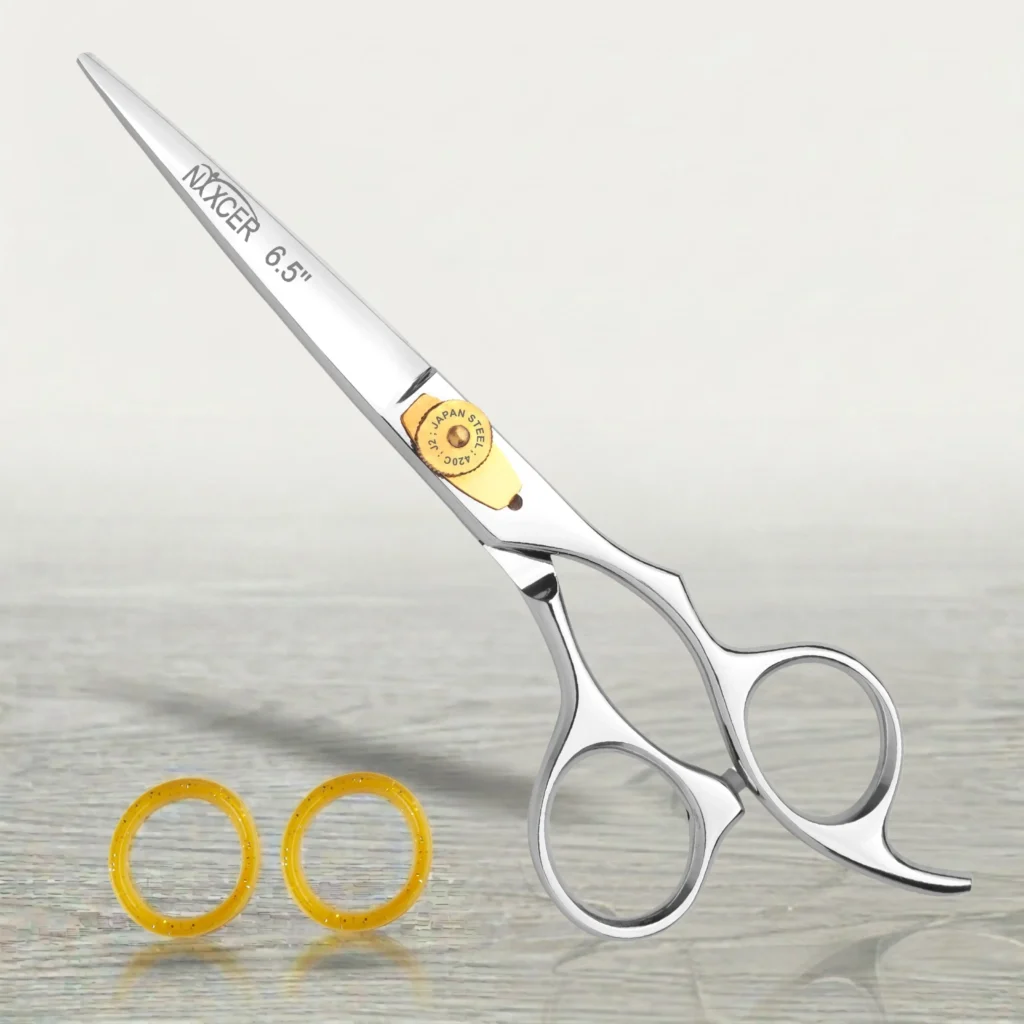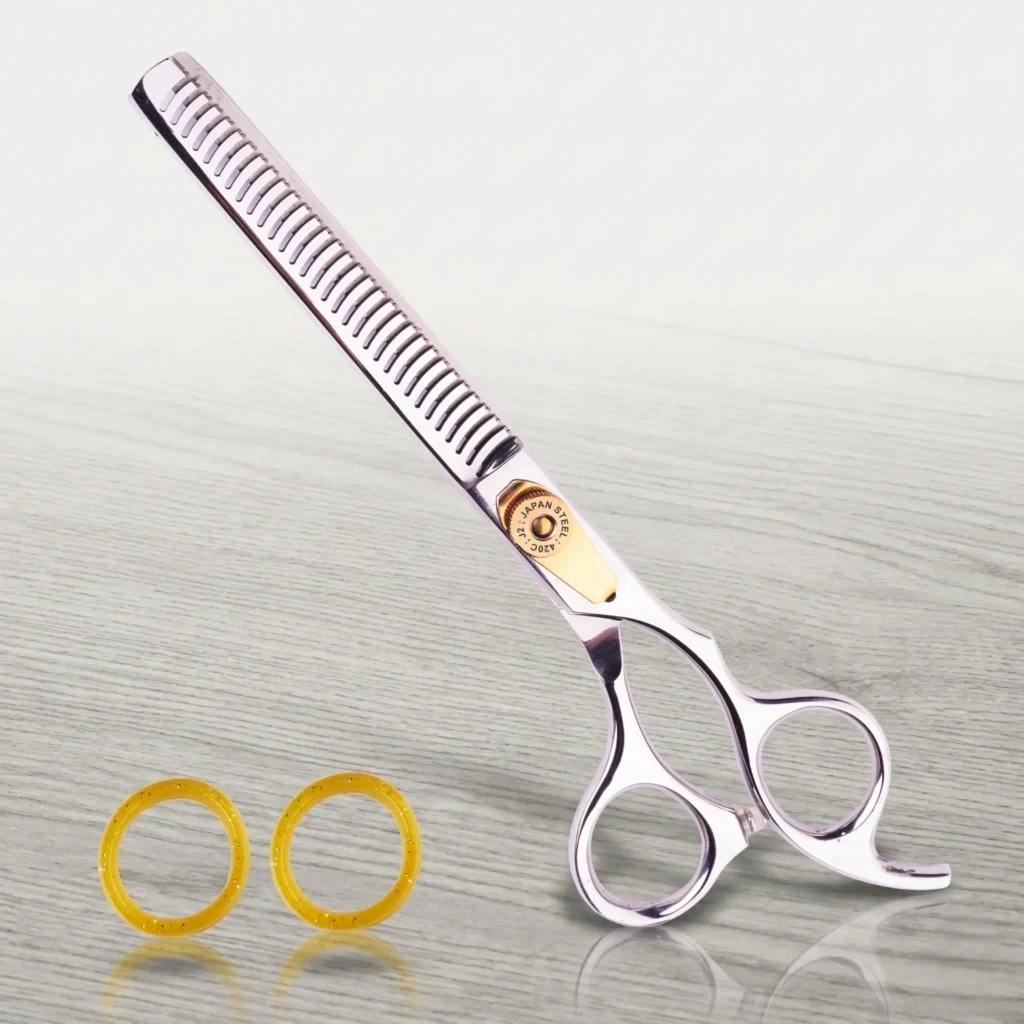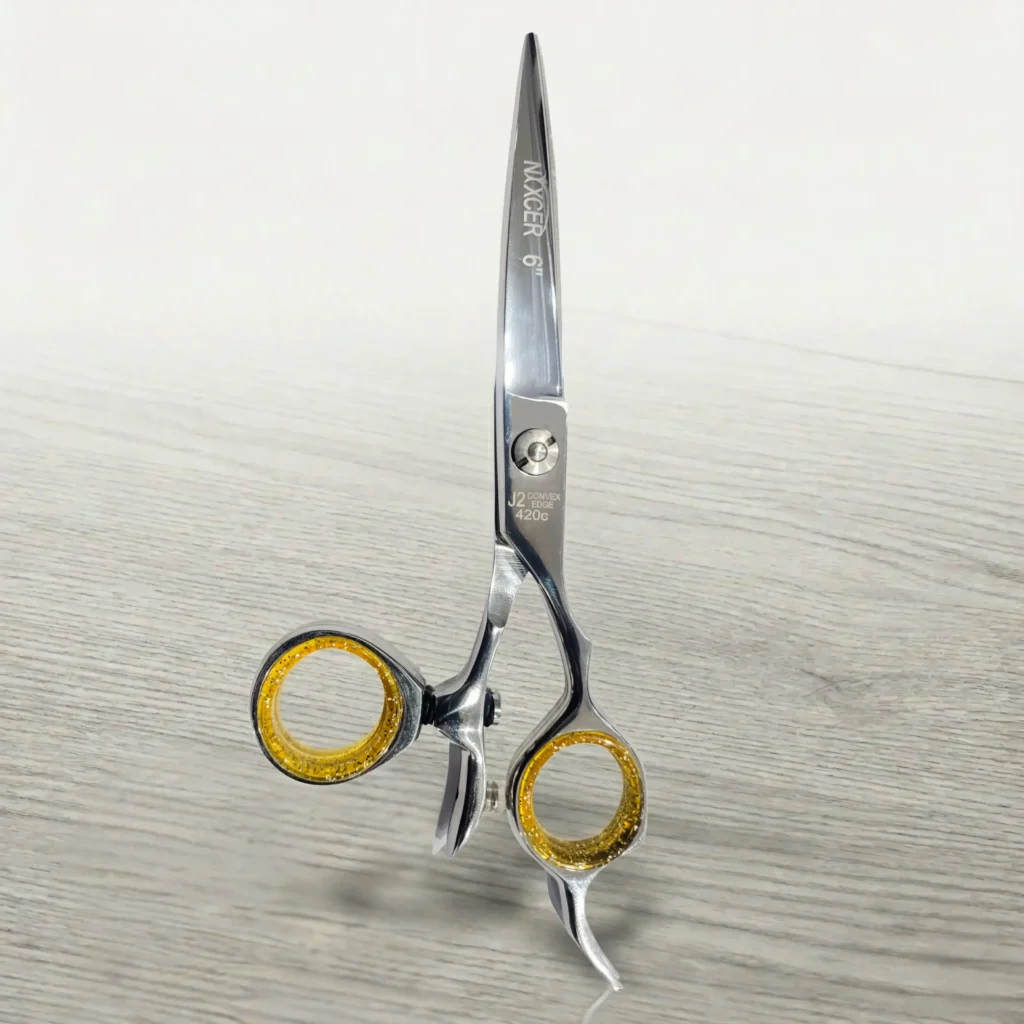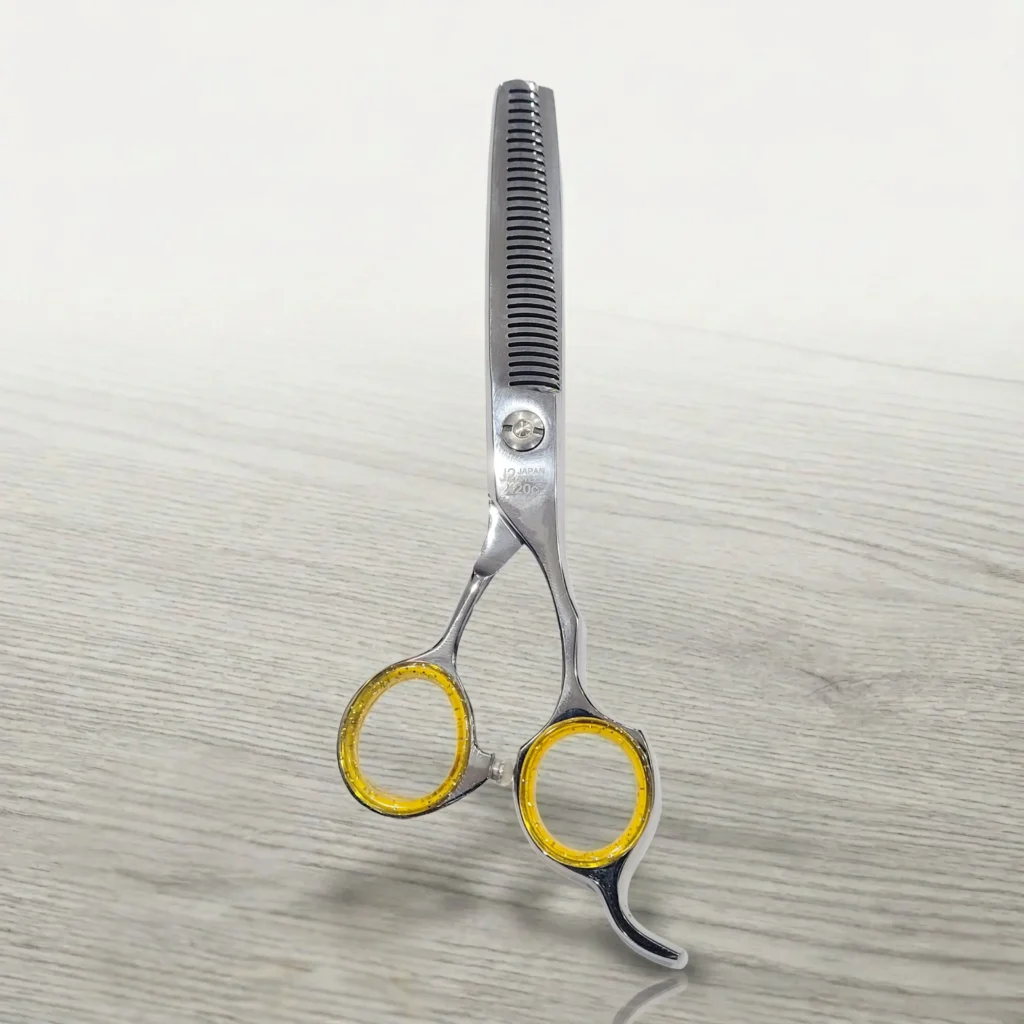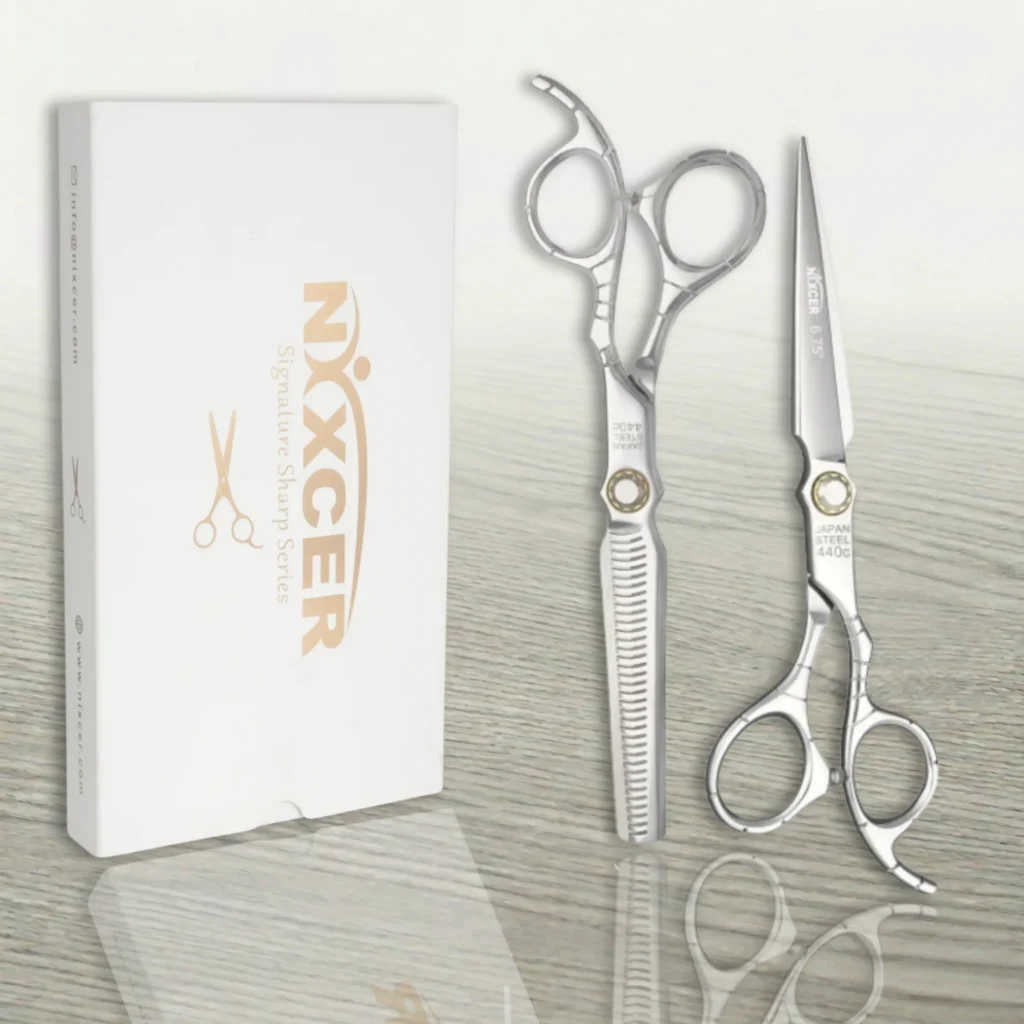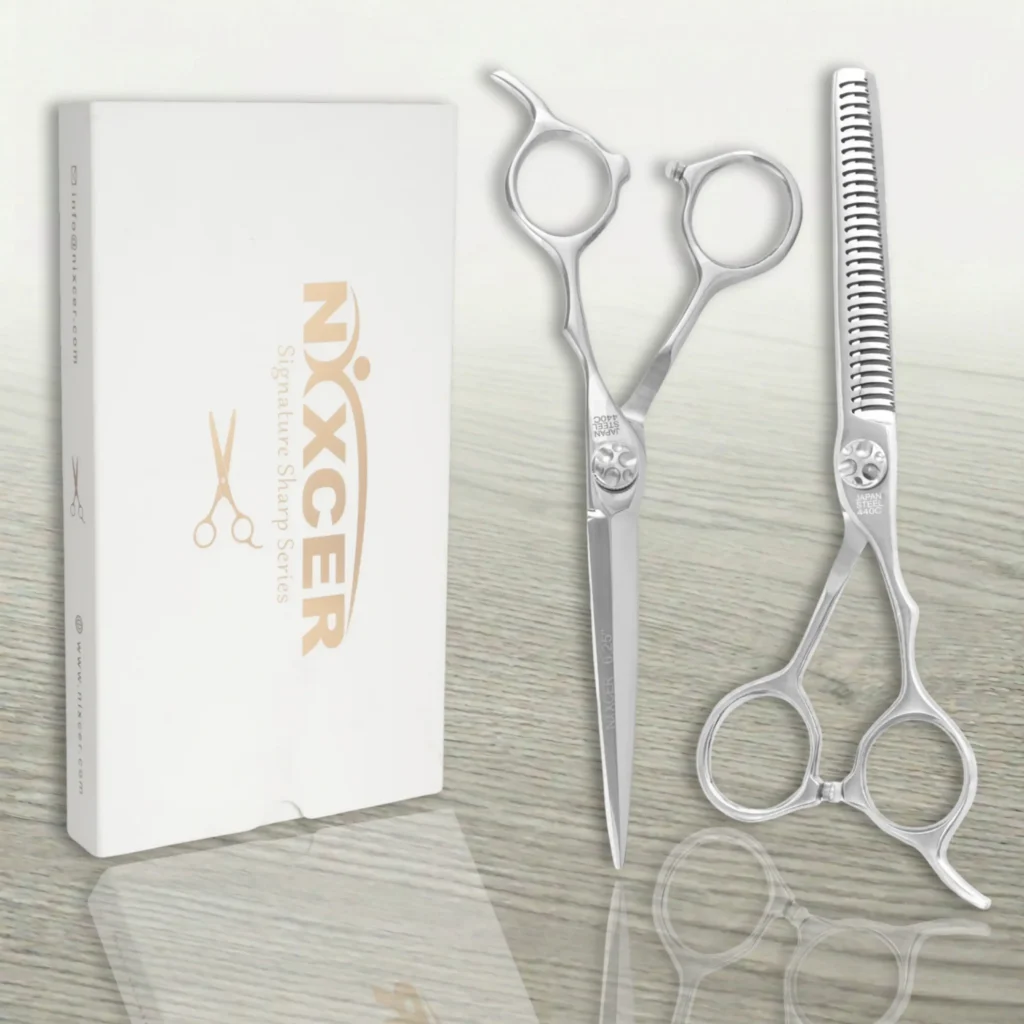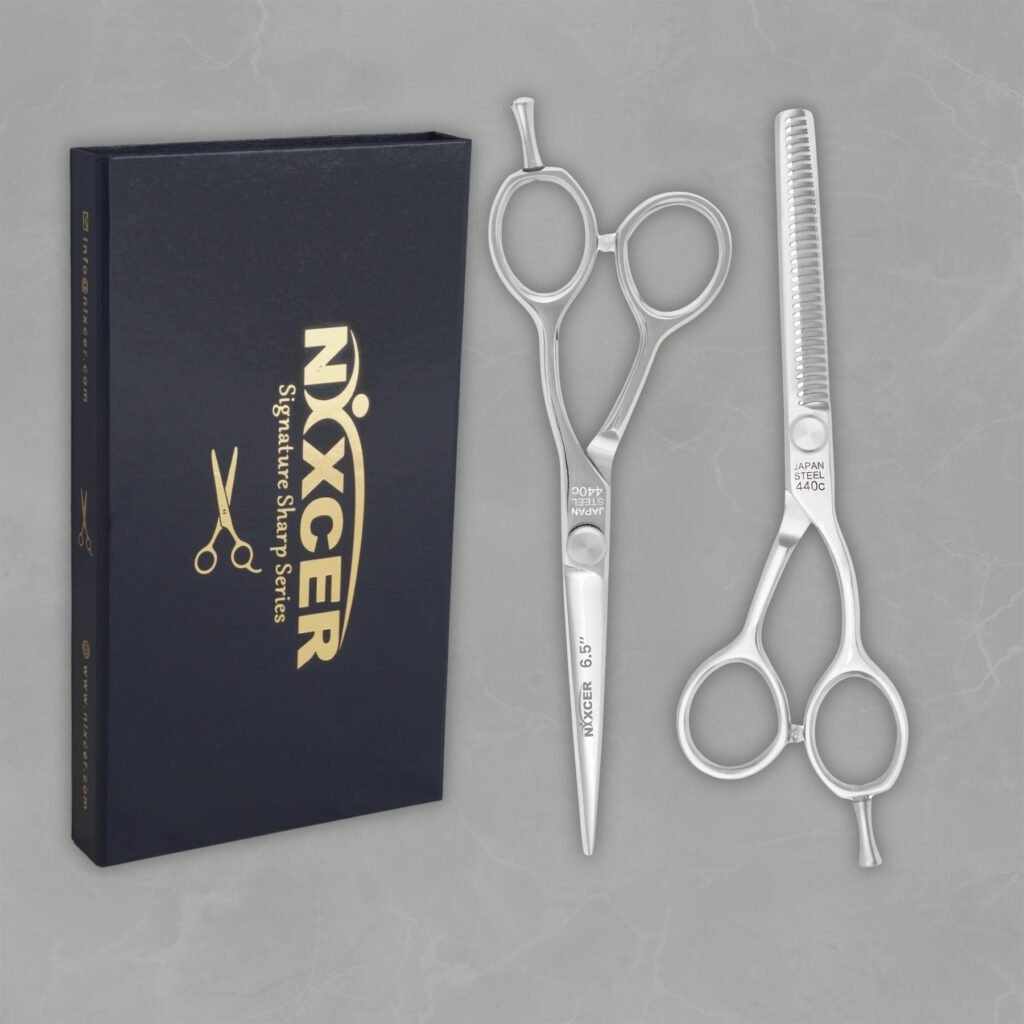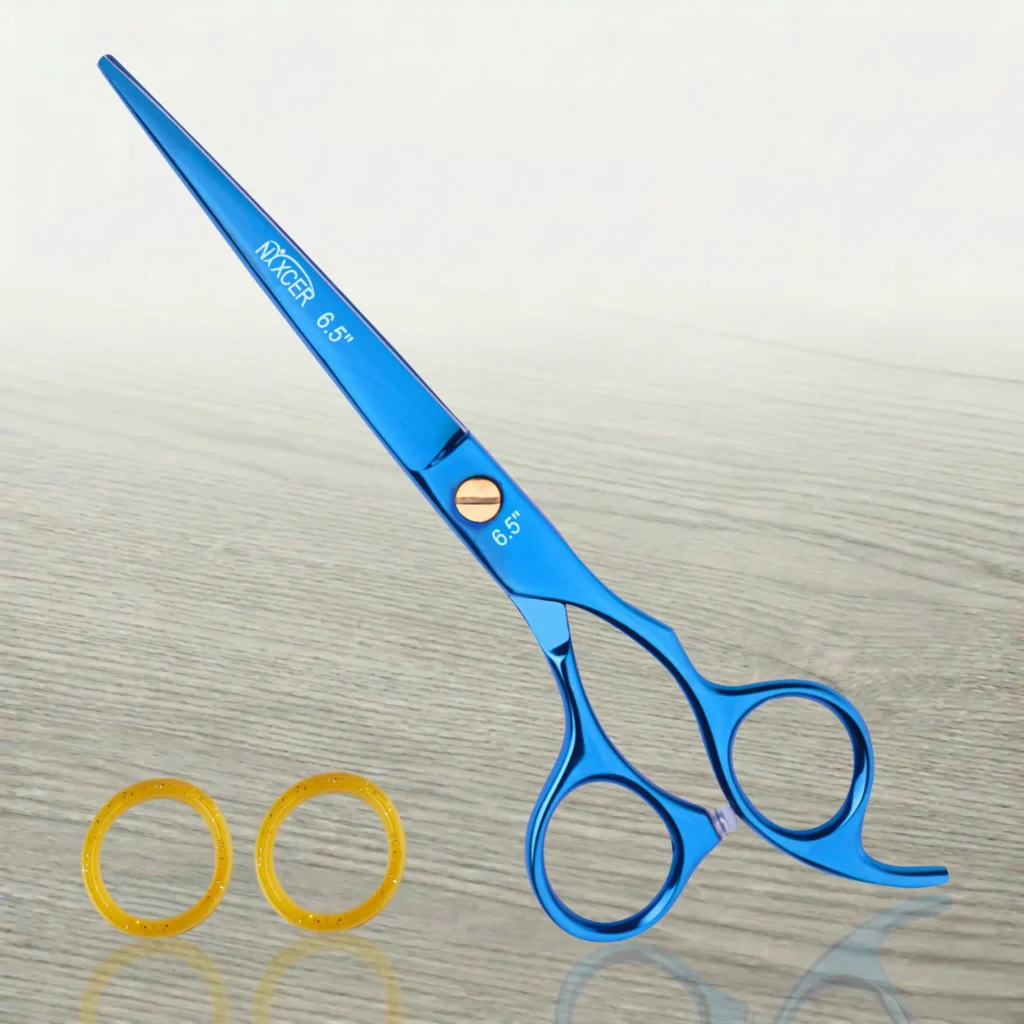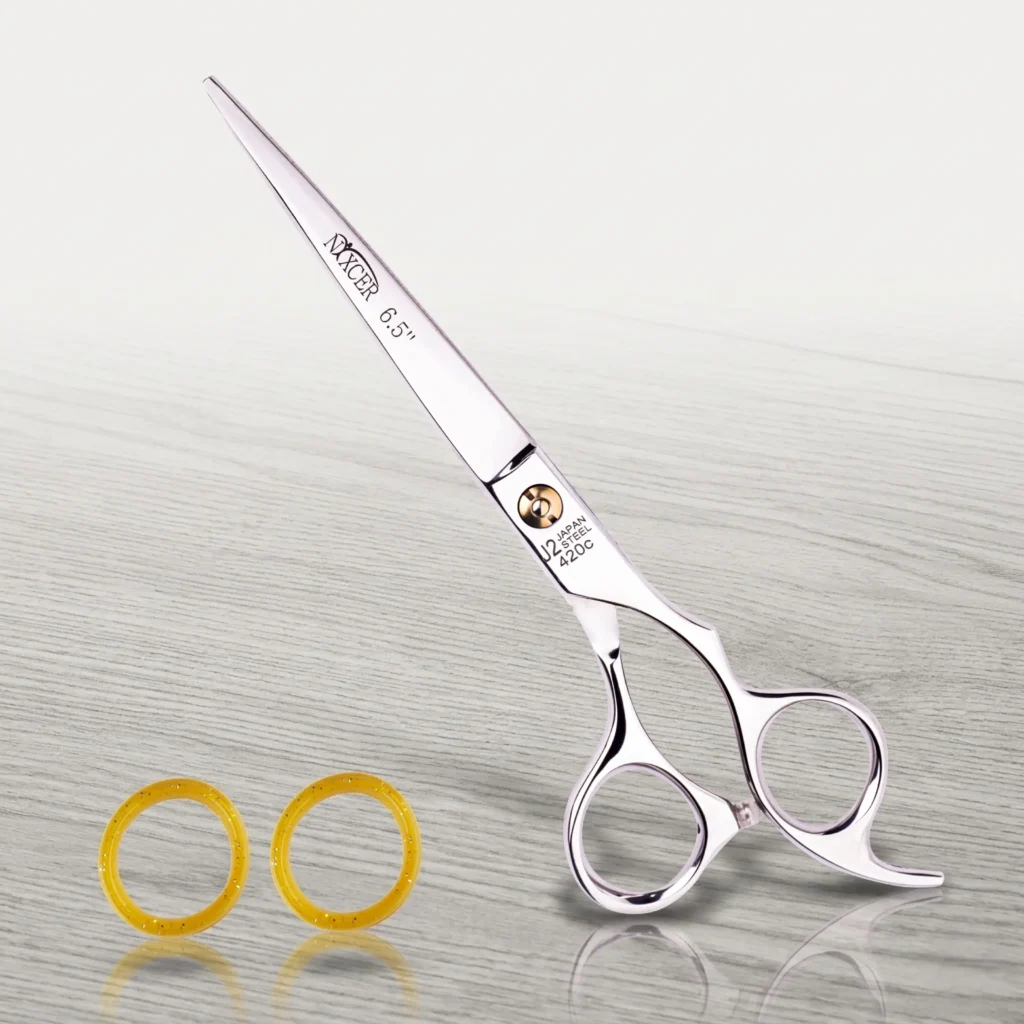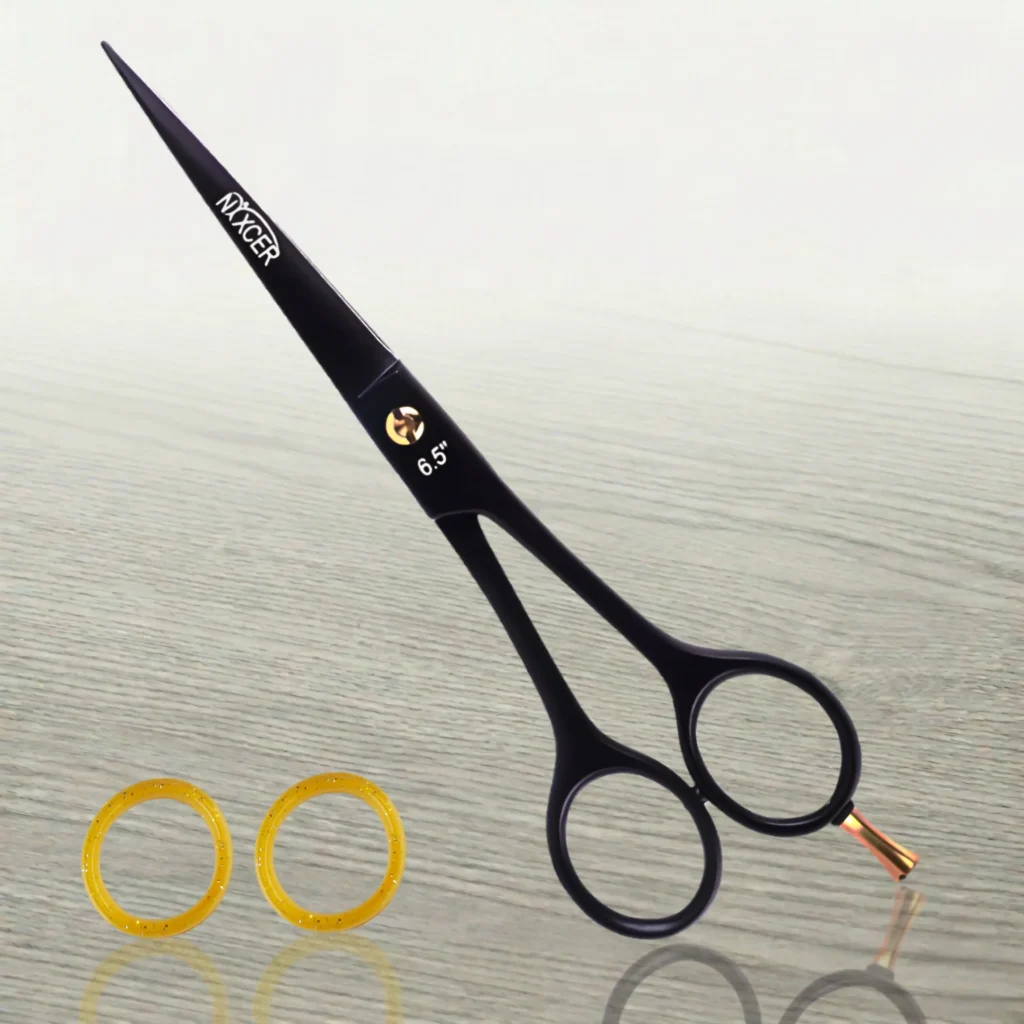
The main types of hair cutting scissor blades are convex, semi-convex, beveled and micro-serrated cutting edges, plus specialized broad or sword blade profiles and toothed thinning or texturizing blades. Convex edges favor smooth slicing and slide cutting. Beveled and micro-serrated edges provide more grip for controlled blunt work. Semi-convex edges balance smoothness and durability. Broad and sword profiles add stability or power, while toothed blades remove only part of a section.
That quick answer is useful, but it hides an important detail: people often use “blade type” to describe three different things. One term may refer to the shape of the cutting edge, another to the outline of the blade, and another to the teeth. Understanding that distinction makes it much easier to compare professional hair shears accurately.
Quick rule: Choose a blade by the technique you perform most often, then confirm the size, handle, tension, handedness and maintenance requirements. Hair type matters, but it should not be the only deciding factor.
Blade Edge, Profile and Teeth: What Is the Difference?
A pair of hairdressing scissors can combine several design features. For example, a broad blade may have a convex edge, while a thinning shear may use a toothed blade paired with a straight cutting blade.
| Feature | What it describes | Common examples |
| Cutting-edge geometry | The shape at the sharpened cutting surface | Convex, semi-convex, beveled |
| Blade profile | The overall outline, spine and distribution of metal | Straight, broad, sword-style, curved |
| Edge or tooth treatment | Added grip or selective hair removal | Micro-serrated, thinning teeth, texturizing teeth |
| Inner blade construction | The inside surface that affects clearance and contact | Hollow-ground inner face, ride line |
This is why “convex vs. sword blade” is not a direct comparison. A sword-style profile can still carry a convex or another polished edge. When shopping, read the full specification instead of assuming one marketing name explains the entire blade.
Hair Cutting Scissor Blade Types at a Glance
| Blade or edge type | Cutting feel | Best suited to | Main tradeoff |
| Full convex edge | Very smooth, low-resistance movement | Slide cutting, slicing, precision work, soft lines | Needs specialist sharpening and careful handling |
| Semi-convex edge | Smooth with slightly more edge support | General salon cutting, wet cutting, point cutting, controlled blunt work | Less specialized than a full convex or grippy bevel |
| Beveled edge | Deliberate, stable and controlled | Blunt cutting, barbering, scissor-over-comb, students | Usually less fluid for long slide-cutting motions |
| Micro-serrated edge | Strong grip on slippery strands | Straight lines, dry hair, beginner control, scissor-over-comb | Not designed for smooth sliding through the hair |
| Broad or sword profile | Stable, firm and powerful through a section | Dense hair, broad panels, perimeter work, barbering | Can feel heavier or less agile for fine detail |
| Thinning or texturizing teeth | Removes selected strands instead of a full line | Blending, weight removal, texture and separation | Overuse can create gaps, frizz or weak ends |
1. Convex Edge Scissors
A full convex edge has a smoothly rounded outer surface that continues toward a very fine cutting edge. It is sometimes associated with Japanese-style shears and may be described as a clam-shaped or hamaguri edge. The polished geometry allows hair to move across the blade with relatively little resistance.
Best Uses for a Convex Edge
- Slide cutting and slice cutting
- Soft layers and movement
- Precision cutting on small, controlled sections
- Point cutting and dry refinement with an experienced hand
- Wet cutting when a fluid closure is preferred
A convex edge is a strong choice for stylists who want the blade to travel through a section rather than hold every strand in one place. That smooth action makes it useful for the techniques in our guide to using hair cutting scissors for layering.
Convex Edge Limitations
The fine edge is less forgiving of drops, incorrect tension and poor sharpening. It should be serviced by a sharpener who understands convex geometry and can preserve the original edge and ride line. A generic grinding process can flatten the curve and permanently change how the shear performs.
For a Nixcer example, the Signature Sharp Series ARC Hair Cutting Shears list a convex edge on a 6.25-inch professional shear.
2. Semi-Convex Edge Scissors
A semi-convex edge sits between a full convex edge and a traditional bevel. It keeps some of the rounded, smooth character of a convex blade while adding a small supporting facet near the cutting edge. Manufacturers may use slightly different names or geometry, so the product description matters.
Best Uses for a Semi-Convex Edge
- Everyday salon cutting
- Wet and dry cutting
- Graduation and layering
- Point cutting
- Controlled blunt lines
- Stylists moving from entry-level beveled shears to a smoother edge
For many professionals, semi-convex scissors are practical all-rounders. They can feel smoother than a pronounced bevel without demanding exactly the same delicate handling as an ultra-fine full convex edge. They are useful when one primary pair must cover several techniques during a service.
3. Beveled Edge Scissors
A beveled edge has a clearly defined flat facet that meets the blade at an angle. The supporting metal behind the edge makes this construction durable and predictable. Beveled hair scissors are common in barbering, education and general cutting because the blade provides deliberate control.
Best Uses for a Beveled Edge
- Blunt cuts and one-length perimeters
- Scissor-over-comb
- Beard and sideburn detailing
- Straight cutting on controlled sections
- Students learning consistent opening and closing motions
The bevel can help hold the section more firmly than a highly polished convex edge. That does not automatically make it “better” for blunt cutting; sharpness, alignment, tension and technique still determine the result. It simply offers a different cutting feel.
Beveled Edge Limitations
A pronounced bevel may create more resistance during slide or slice cutting. If soft movement is the main goal, a convex or refined semi-convex edge usually feels more fluid. Do not force a beveled blade through a sliding technique if it catches or pushes the hair.
4. Micro-Serrated Hair Scissor Blades
A micro-serrated edge contains tiny teeth that grip hair as the blades close. Some shears have serrations on one blade, while the other blade carries a conventional cutting edge. Micro-serration is an edge treatment, not the same thing as a bevel, even though the two features may appear on the same pair.
Best Uses for Micro-Serrated Scissors
- Preventing fine or slippery strands from moving forward
- Controlled blunt cutting
- Scissor-over-comb
- Dry cutting where grip is more useful than glide
- Students or home users who want a stable section
When Not to Use Them
Micro-serrated blades are not intended to glide along the hair shaft. Avoid using them for slide cutting or long slicing motions because the teeth are designed to hold the hair rather than release it smoothly. They also require a sharpener who can service the specific serration pattern; ordinary sharpening may remove the teeth.
5. Straight, Broad and Sword Blade Profiles
Edge geometry explains how the sharpened surface meets the hair. Blade profile explains how the rest of the blade is shaped. Profile names vary more from one manufacturer to another, so treat them as useful descriptions rather than universal technical standards.
Straight or Standard Profile
A straight blade gives a clear visual line from heel to tip. It supports controlled sectioning, blunt lines, point cutting and general salon work. The actual cutting character still depends on whether the edge is convex, semi-convex, beveled or serrated.
Broad Blade Profile
A broad blade places more metal behind the cutting edge. The added width can improve stability through dense hair, long perimeters and larger controlled panels. It is useful for a stylist or barber who wants a firm blade without jumping to an excessively long shear.
The Nixcer Broad Blade Razor Edge Hair Cutting Scissors use a 6.25-inch broad profile with an adjustable tension system. This type of design can suit thick sections and strong outlines, provided the section is still small enough for a clean closure.
Sword Blade Profile
A sword-style blade usually has a pronounced spine or ridge that increases stiffness and directs force toward the cutting edge. It can feel powerful through dense sections and is popular for barbering, strong perimeter work and other techniques that benefit from stability.
“Sword blade” is not one fixed engineering specification across every brand. Compare the actual length, weight, balance, edge and handle. Nixcer offers a Signature Sharp Series SWORD Hair Cutting and Thinning Scissors option for buyers who want coordinated cutting and thinning tools.
6. Hollow-Ground Inner Blades and the Ride Line
Hollow grinding removes a small amount of material from the inner face of the blade. This creates clearance so the two blades do not rub across their entire inner surfaces. A narrow contact area near the edge, often called the ride line, helps guide the blades as they close.
Hollow ground is therefore better understood as an inner-blade construction feature, not a substitute for “convex” or “beveled.” A quality shear may combine a hollow-ground inner face with a particular outer edge geometry.
Never attempt to grind or polish the inner face at home. The ride line, set and alignment are precision features. Changing them can cause folding, snagging, tip gaps or uneven contact.
7. Thinning, Blending and Texturizing Blades
Thinning and texturizing shears use teeth to cut only selected strands in a section. They do not build the primary perimeter in the same way as a standard cutting blade.
Thinning Shears
Thinning shears commonly use many smaller teeth for controlled blending and weight reduction. They can soften a transition, reduce bulk or refine a shape after the main haircut is complete.
Texturizing and Chunking Shears
Texturizing shears often use fewer, wider or differently shaped teeth to create more visible separation and movement. Tooth count alone does not determine removal percentage; tooth width, spacing, groove design and the matching blade all contribute. Check the manufacturer’s stated cut ratio whenever available.
Use these tools conservatively. Repeated closures in one area can leave gaps, short pieces or frizz, especially on fine, curly, fragile or already layered hair. The Nixcer Professional Series Hair Thinning Scissors can be paired with a standard cutting shear when the service calls for selective weight removal.
Convex vs. Beveled Scissors: Which Is Better?
Neither edge is universally better. A convex edge is usually better for low-resistance slicing, slide cutting and soft movement. A beveled edge is usually better for grip, durability and deliberate straight cutting. Semi-convex sits between the two.
| If your priority is… | Start with… | Why |
| Slide or slice cutting | Full convex edge | Smooth edge movement with less drag |
| Versatile salon work | Semi-convex edge | Balanced smoothness and support |
| Blunt lines and controlled sections | Beveled edge | Stable, deliberate cutting feel |
| Maximum grip on slippery hair | Micro-serrated edge | Tiny teeth help hold the section |
| Dense sections and strong perimeters | Broad or sword profile | Extra blade stability and stiffness |
| Selective weight removal | Thinning or texturizing teeth | Cuts only part of the section |
The best choice also depends on the user. An advanced stylist may value a delicate convex edge for creative movement, while a student may prefer the feedback of a bevel or micro-serration. A barber doing frequent scissor-over-comb may want a longer, firmer blade than a stylist performing detailed fringe work.
Match the Blade to the Cutting Technique
Blunt Cutting
Use a sharp beveled, semi-convex or stable broad blade. The shear should close cleanly without pushing the section. A micro-serrated edge can add grip on very fine or slippery hair. For more detail, see how to choose hair cutting scissors for bob cuts.
Slide and Slice Cutting
Use a polished convex edge or a smooth semi-convex edge designed for the technique. Work with light pressure and controlled sections. Stop if the blade drags, snags or scrapes along the hair.
Point Cutting
Convex, semi-convex and precise beveled shears can all perform point cutting. Tip accuracy, blade length and control matter as much as the edge label. Use shallow entry for subtle softness and deeper entry only when the design calls for stronger texture.
Scissor-Over-Comb
A beveled or micro-serrated edge can provide useful grip. Barbers often choose a longer or more rigid profile for coverage and stability, but the right length must still fit the hand and working angle.
Blending and Weight Removal
Use a dedicated thinning or texturizing shear after the structure is correct. Make a limited number of closures, comb the section out and reassess before removing more hair.
Does Hair Type Change the Best Blade Choice?
Yes, but density, condition and technique are more informative than a broad label such as “curly” or “straight.”
- Fine or slippery hair: A micro-serrated or controlled beveled edge can improve grip for a blunt line. Avoid aggressive thinning that reduces visible density.
- Thick or dense hair: A broad or sword-style profile can add stability. Work in manageable sections instead of forcing a blade through excess hair.
- Curly or coily hair: Sharp convex or semi-convex shears can support careful dry detailing and shape refinement. Use thinning tools conservatively because short internal pieces may expand or frizz.
- Damaged or fragile hair: Use a clean, sharp, correctly aligned cutting shear and minimal pressure. No blade type repairs damage, and a dull or poorly adjusted tool can fold or pull the hair.
- Straight hair: Every step in a perimeter may be visible, so tip accuracy, alignment and stable tension are especially important.
Other Features That Matter as Much as the Blade
The edge label should never be the only buying criterion. Compare the complete shear:
- Length: Shorter shears favor detail and tip control; longer shears provide coverage for broad lines and scissor-over-comb.
- Handedness: True left-handed shears reverse the blade arrangement, supporting a natural sightline and pressure direction.
- Handle geometry: Offset, crane and swivel designs change wrist and thumb position.
- Steel and heat treatment: These influence toughness and edge retention, but a steel name alone does not prove quality.
- Balance: A well-balanced shear is easier to guide without squeezing.
- Tension and alignment: The blades must meet correctly from heel to tip without being excessively tight.
- Service support: Specialist sharpening is essential for convex and serrated edges.
When comparing Nixcer models, review the listed blade, length, material, handle and tension features together. You can browse the full scissors collection to compare cutting and thinning options by job.
Blade Care and Sharpening
Good care protects the geometry you paid for and helps the shear close cleanly.
- Remove loose hair from the blades and pivot after every service.
- Clean and disinfect according to salon regulations and the product directions.
- Dry the shear fully, including the pivot area.
- Apply a small amount of suitable scissor oil at the pivot.
- Check tension with the manufacturer’s recommended method; do not overtighten the screw.
- Store the shear closed in a protective case.
- Keep it away from paper, packaging, comb teeth, clips and hard surfaces.
- Use a specialist sharpener who will preserve the original convex, beveled or serrated geometry.
There is no single sharpening schedule for every professional. Service the shear when it pushes hair, folds a section, snags, loses tip performance or requires extra hand pressure. Workload, edge geometry, steel, cleaning and cutting habits all affect the interval.
Common Blade-Selection Mistakes
- Treating “razor edge,” “sword blade” or “Japanese steel” as a complete performance specification
- Assuming the most expensive or sharpest-looking shear fits every technique
- Using micro-serrated scissors for slide cutting
- Asking a general knife sharpener to service a convex salon shear
- Choosing by hair type without considering the actual cutting method
- Using thinning teeth to correct an inaccurate shape
- Forcing a broad blade through oversized sections
- Ignoring tension, alignment, handedness and hand fit
Final Verdict
The best hair cutting scissor blade is the one that matches the technique and feels controlled in the user’s hand. Choose convex for smooth slide and slice work, semi-convex for versatile salon cutting, beveled for stable and deliberate lines, and micro-serrated for added grip. Choose a broad or sword profile when dense sections need more blade stability, and use thinning or texturizing teeth only for intentional weight removal.
Read product labels carefully because blade terminology is not fully standardized. A complete comparison should include the edge, profile, length, handle, handedness, tension, steel and sharpening requirements. When those features work together, the shear becomes easier to control and better suited to repeatable professional results.
Ready to compare options? Shop Nixcer Outlet hair cutting and thinning scissors by blade design, size and cutting purpose.
Frequently Asked Questions
What are the main types of hair cutting scissor blades?
The main cutting-edge types are full convex, semi-convex and beveled. Micro-serration adds grip to an edge. Broad and sword describe blade profiles, while thinning and texturizing shears use teeth for selective hair removal.
Is a convex or beveled edge better for hair cutting?
A convex edge is generally better for smooth slicing, slide cutting and soft movement. A beveled edge offers more support and grip for deliberate blunt work, barbering and scissor-over-comb. Neither is best for every technique.
What blade is best for slide cutting?
A sharp, polished convex edge is usually the best choice for slide cutting because it can move through the section with low resistance. A smooth semi-convex edge may also work. Do not use a micro-serrated edge for a sliding motion.
What are micro-serrated hair scissors used for?
Micro-serrated scissors use tiny teeth to hold slippery strands as the blades close. They are useful for controlled straight cutting, dry work, scissor-over-comb and beginners who want added grip.
Are sword blade scissors the same as convex scissors?
No. Sword blade usually describes the overall blade profile or reinforced spine. Convex describes the geometry of the cutting edge. One shear can have both a sword-style profile and a convex edge.
What is a hollow-ground scissor blade?
A hollow-ground blade has material removed from its inner face to create clearance between the blades. It works with a narrow ride line near the edge. Hollow grinding is an inner construction feature, not a replacement term for convex or beveled.
Can convex hair scissors be sharpened?
Yes, but they should be sharpened by a specialist who understands convex salon shears. Incorrect grinding can flatten the curve, disturb the ride line and change the cutting action.
How do I know when hair scissors need sharpening?
The shear needs inspection when it pushes, folds or pulls hair, snags during a cut, loses tip accuracy or requires noticeably more hand pressure. First confirm that the blades are clean and correctly tensioned, then arrange professional service if the problem remains.
Are thinning scissors a type of cutting blade?
They are a specialized shear system. One or both blades carry teeth so only selected strands are cut. Thinning scissors are designed for controlled blending and weight removal, not for creating the main perimeter of a haircut.air cutting.