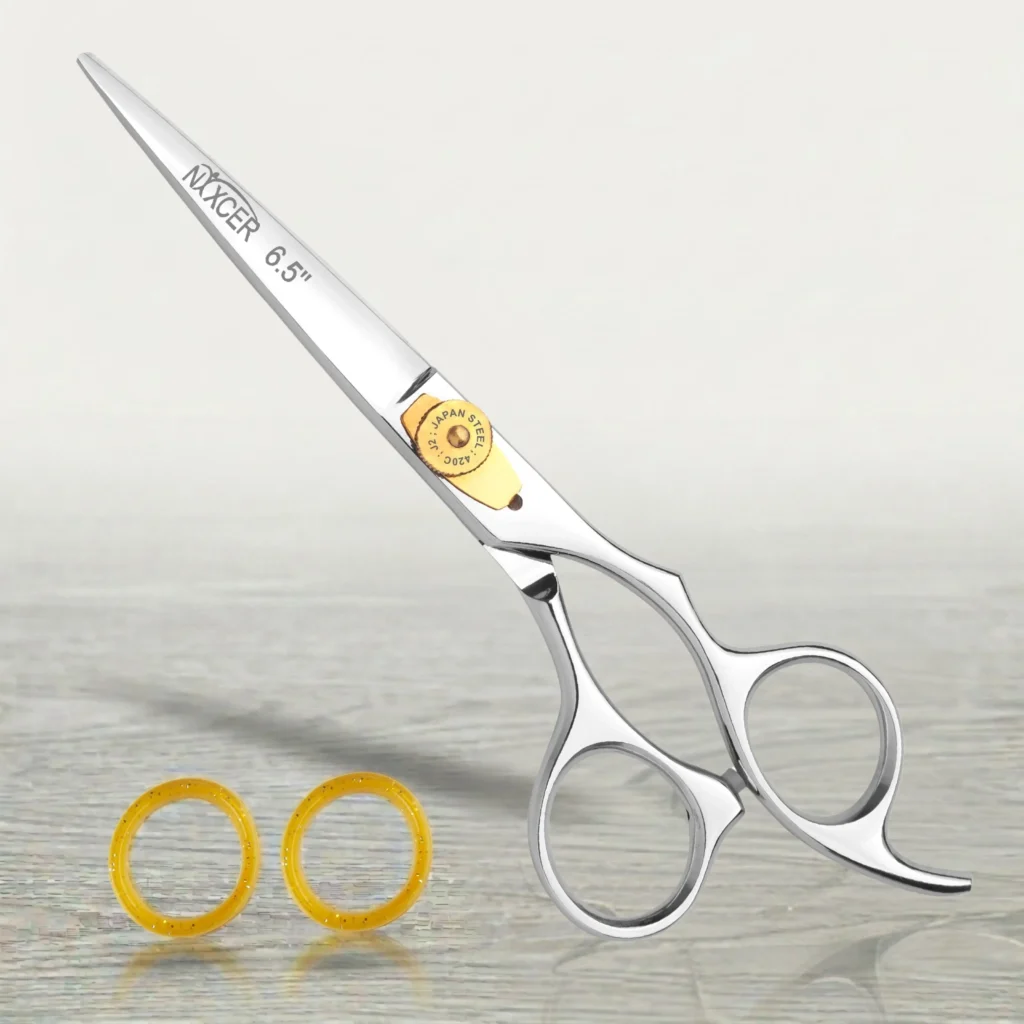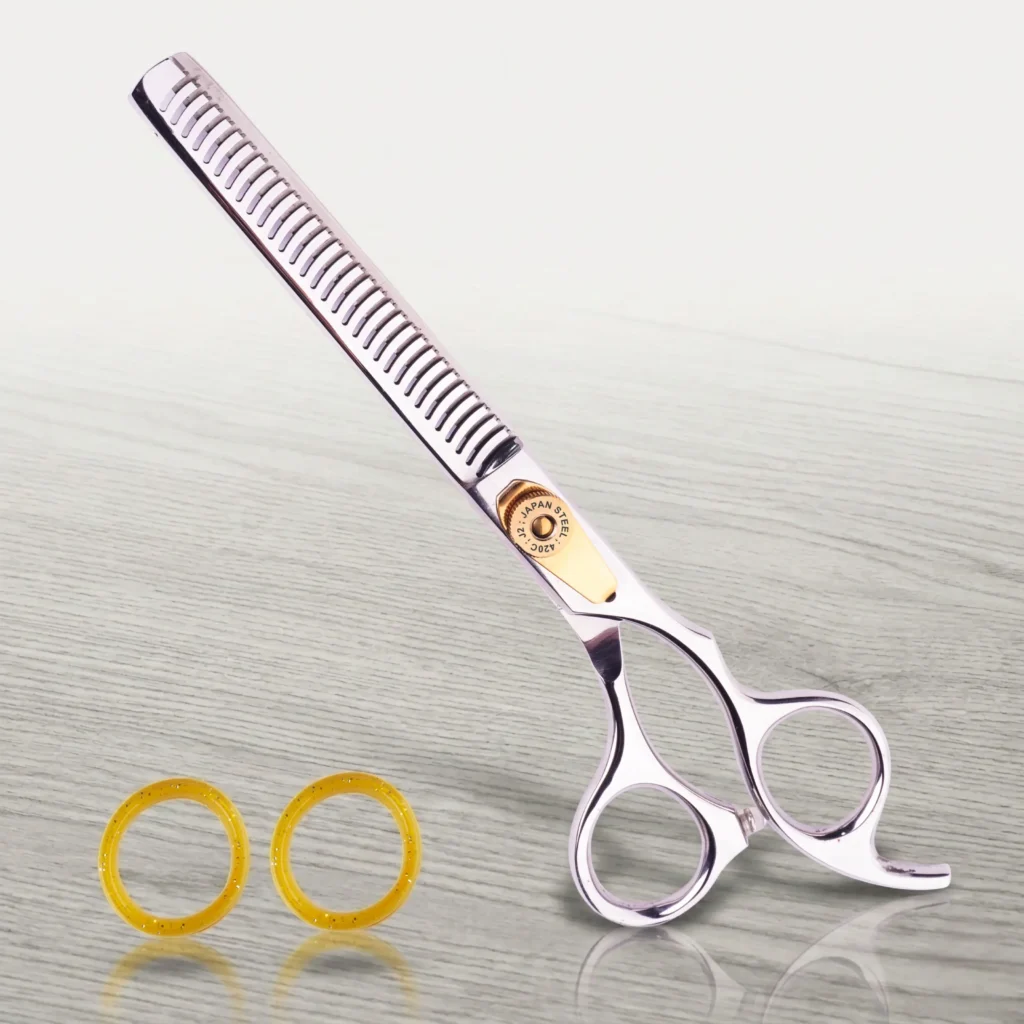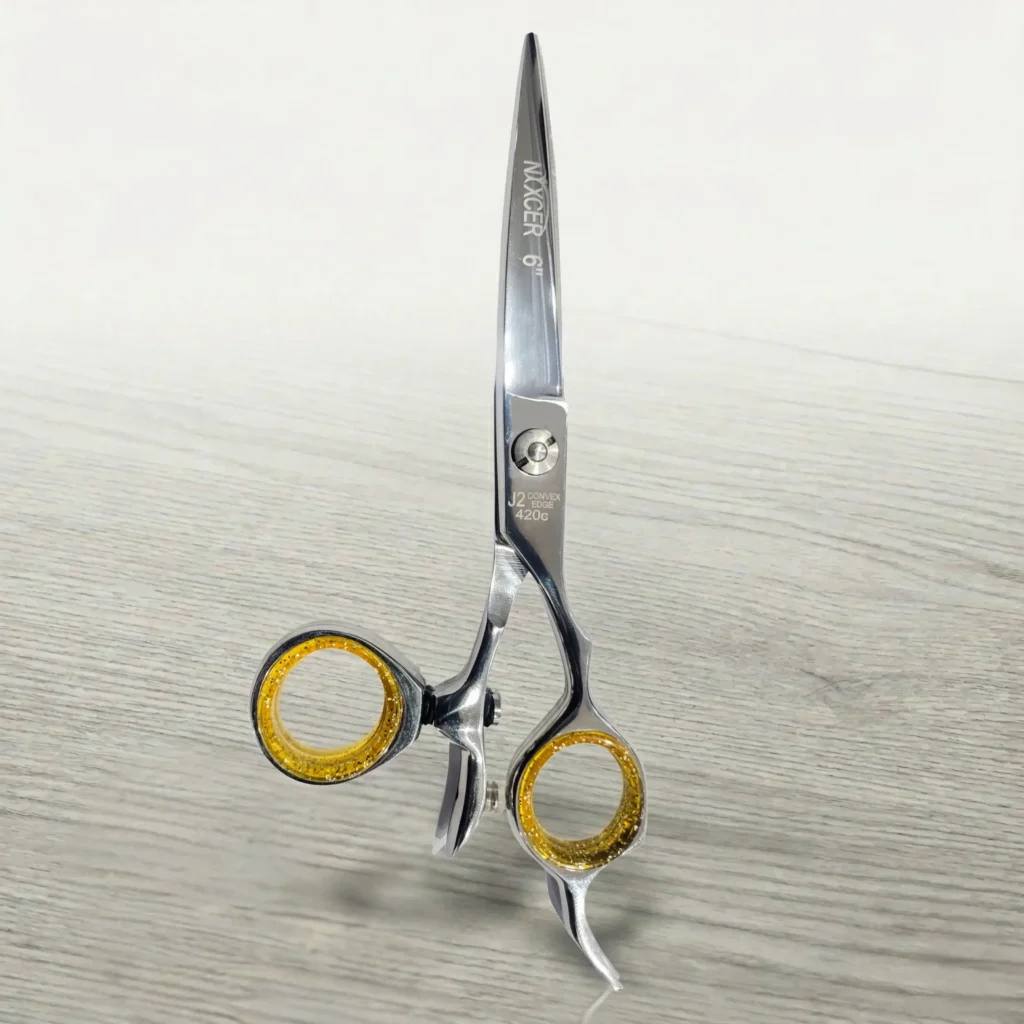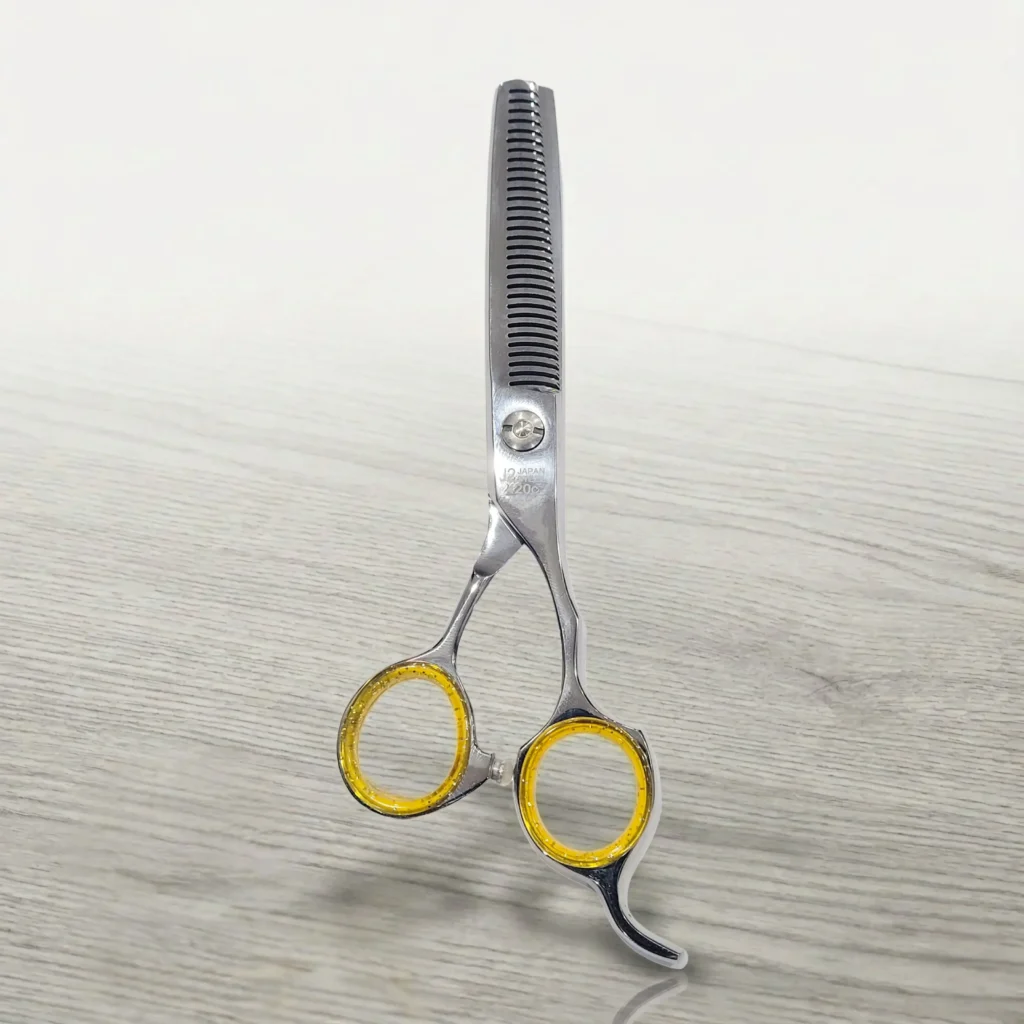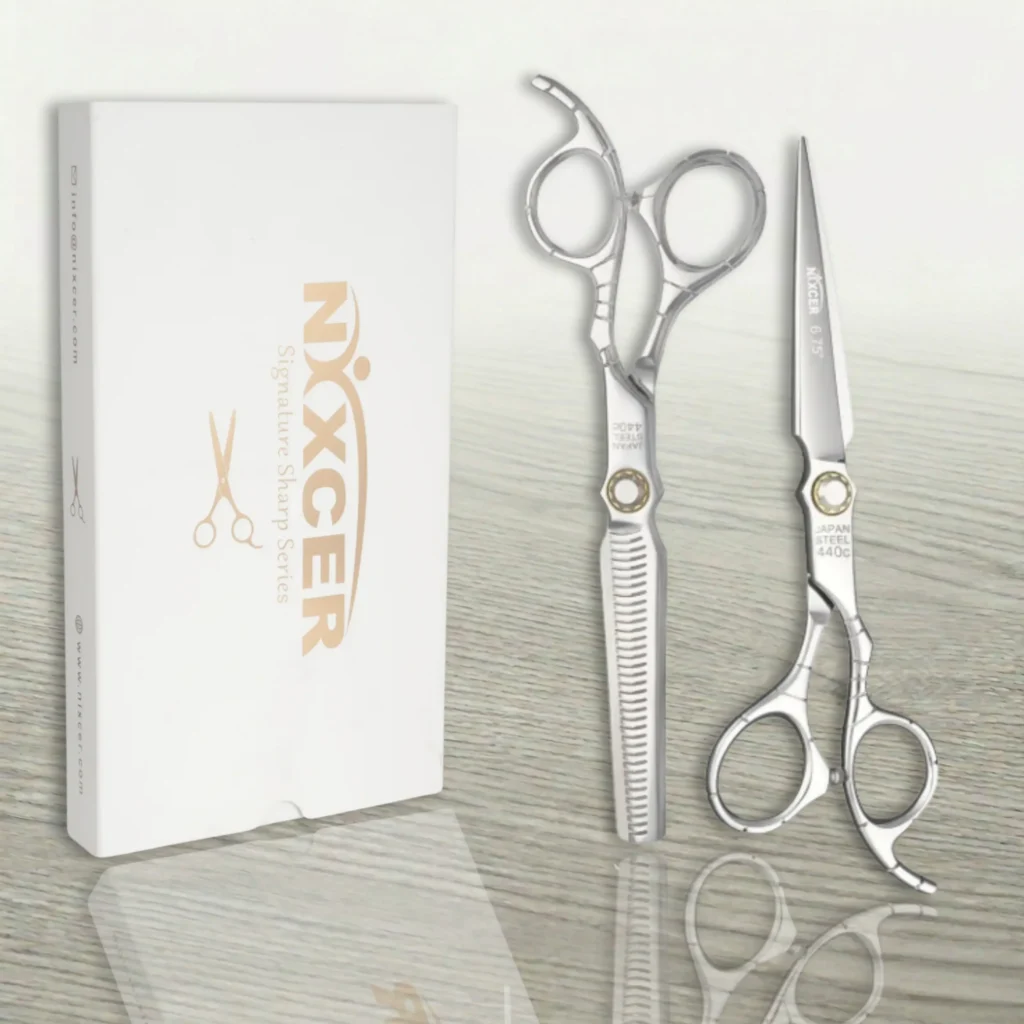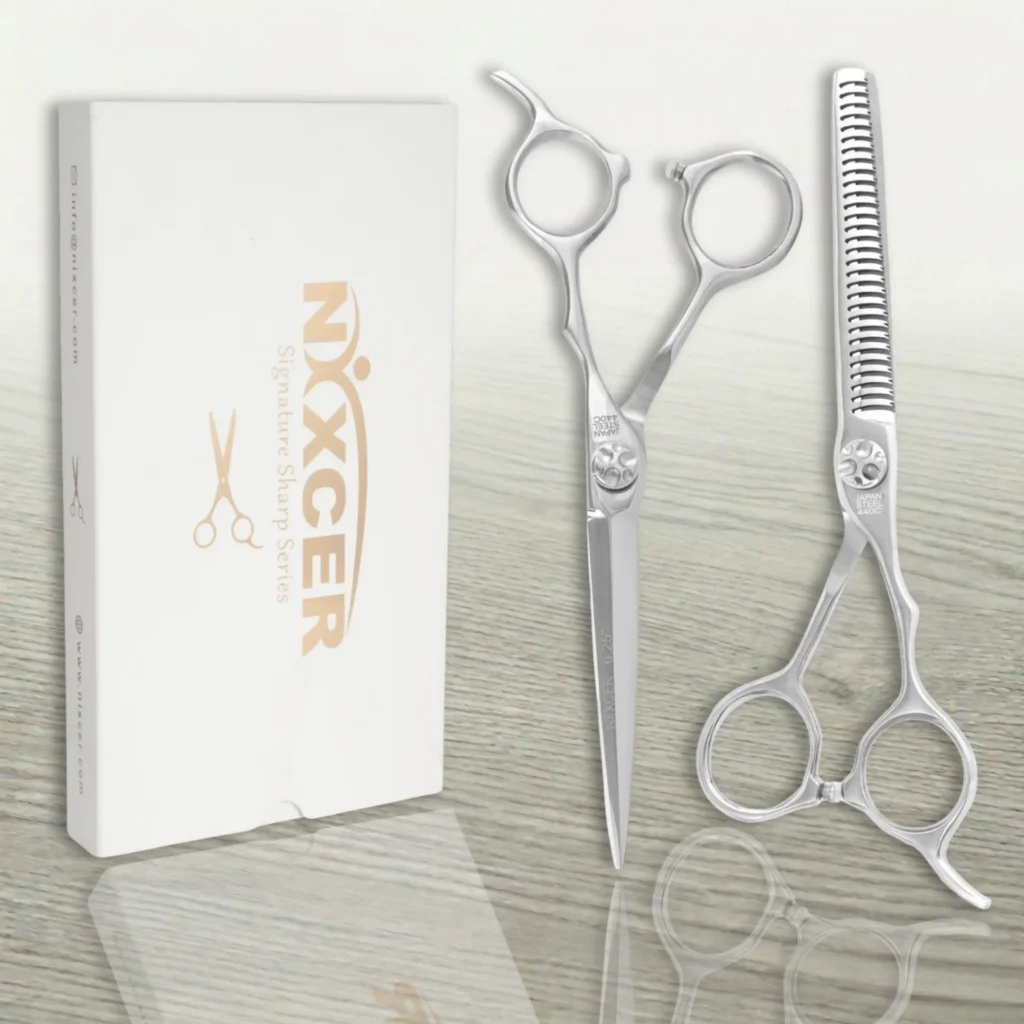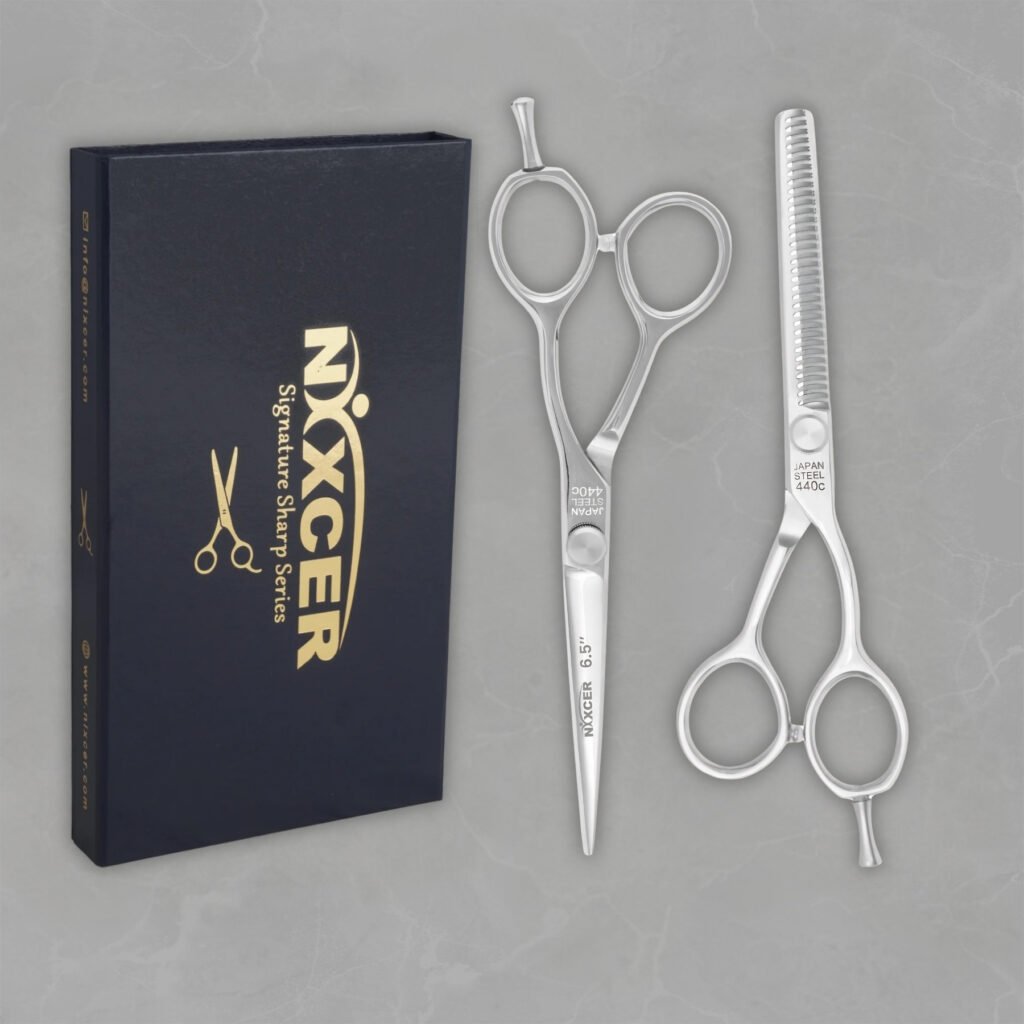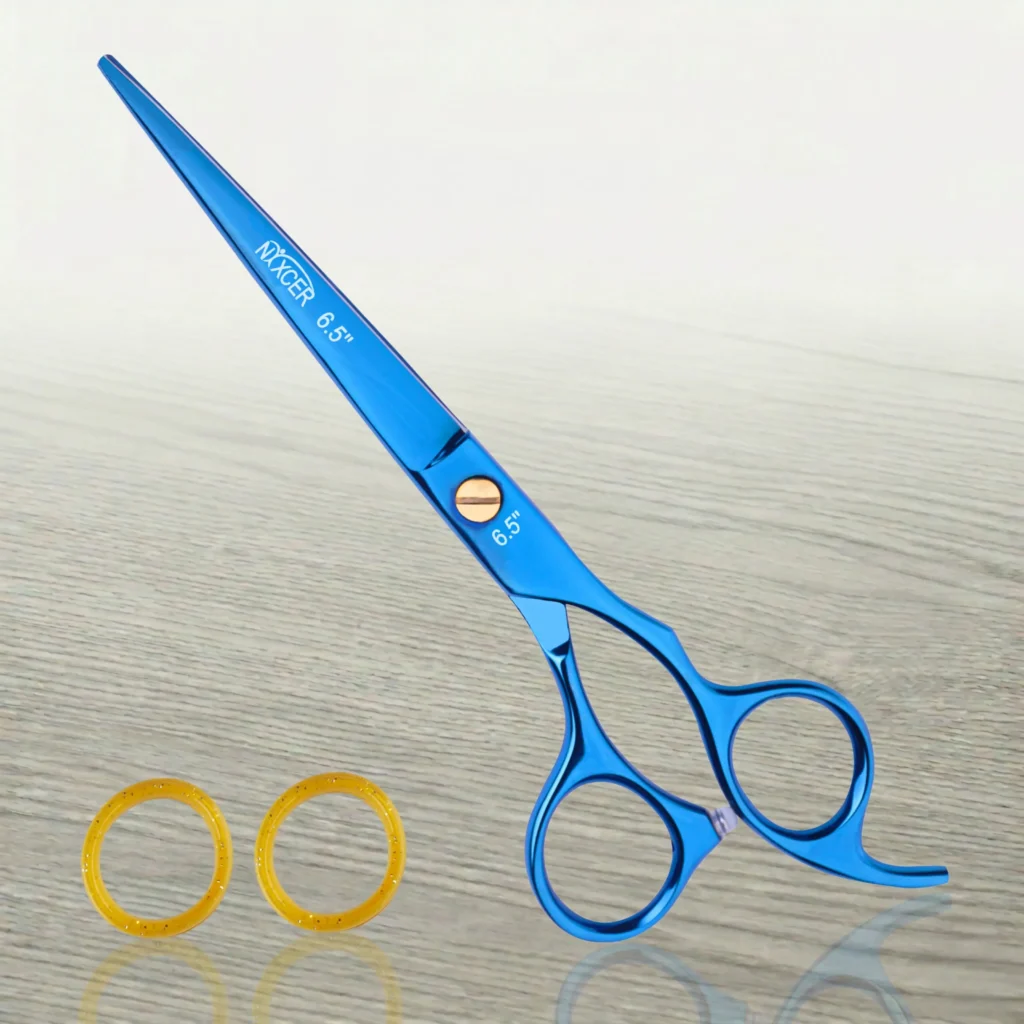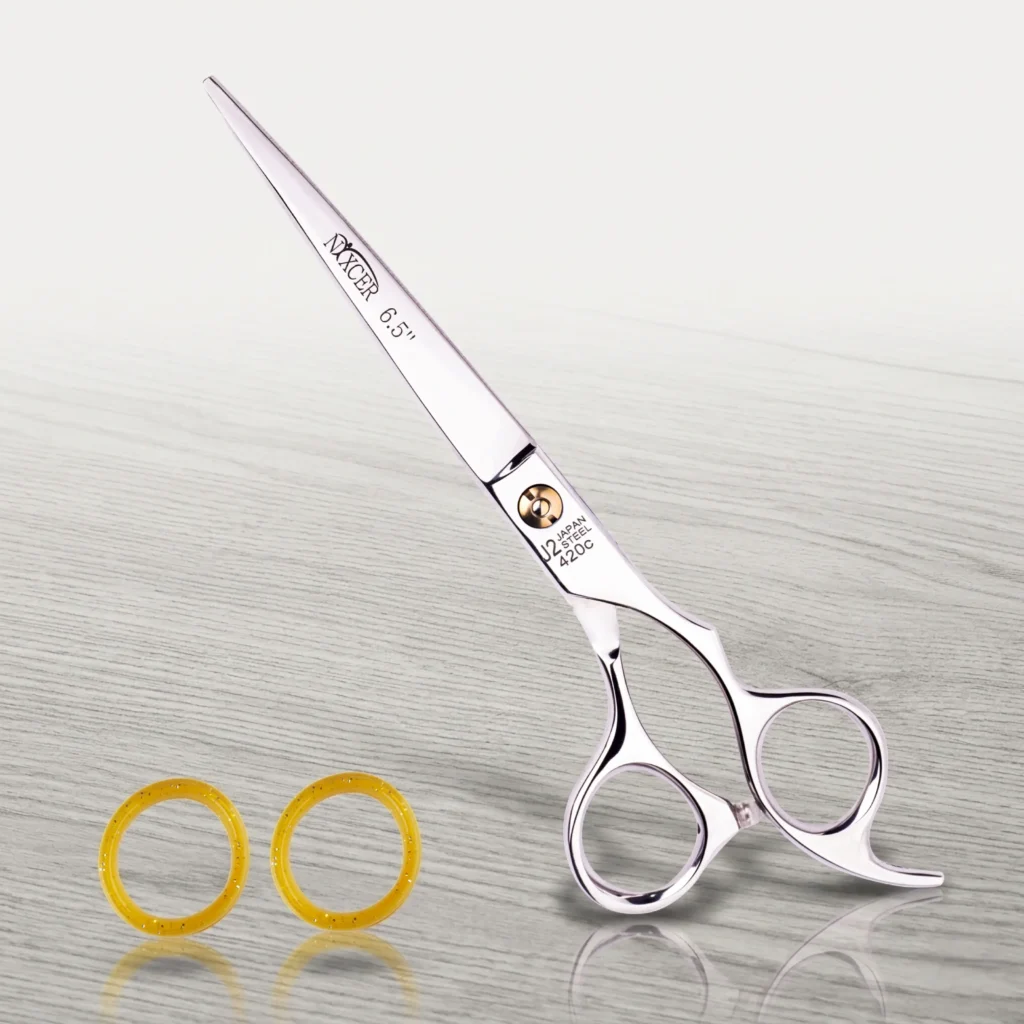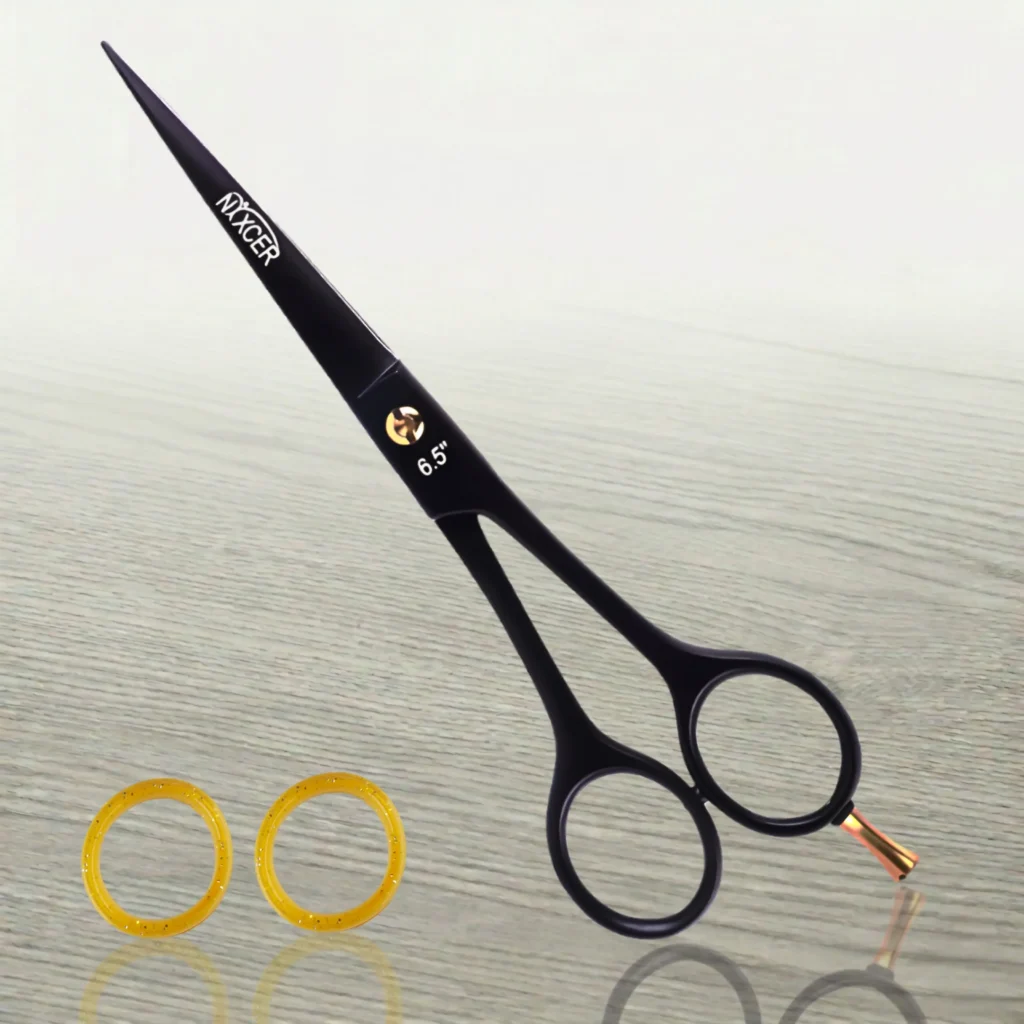
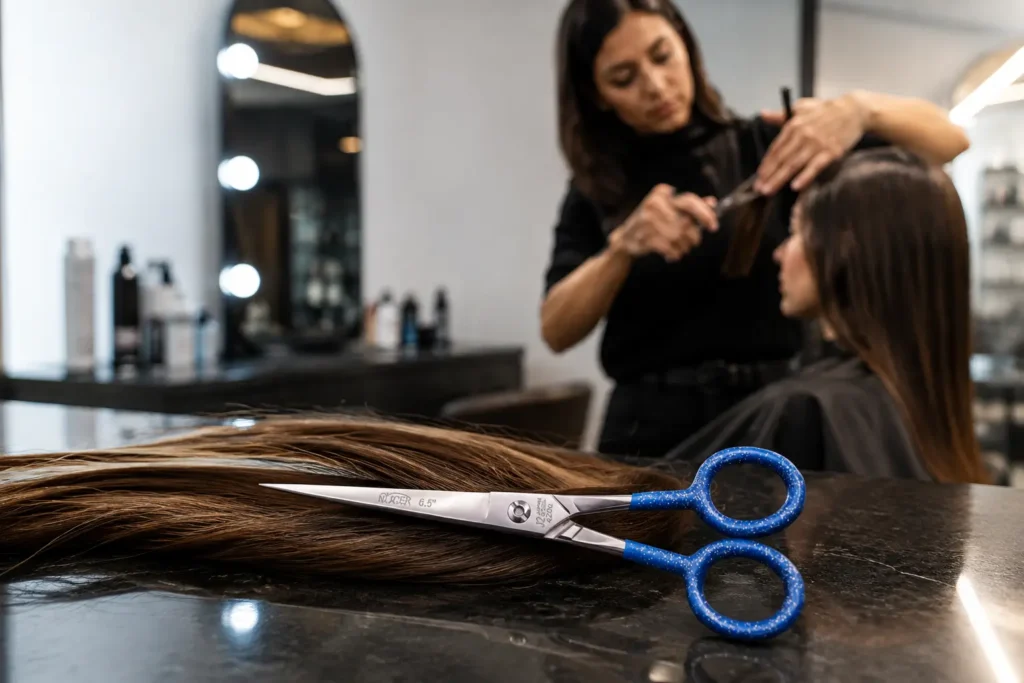
Choose hair cutting scissors by the work you perform, the blade’s intended use, and how securely the handle fits your hand. Compare usable blade length, edge geometry, handedness, tension controls, and service support. A standard cutting shear creates length and shape, while a thinning shear removes selected strands to adjust weight or blend a finish.
The best choice is not determined by one steel label, a decorative finish, or the longest blade available. Start with your most frequent technique, then check whether the complete tool suits it. This guide explains the main decisions and the care checks that help you assess an existing pair before replacing it.
Understand the Tool Before Comparing Models
A hair cutting shear consists of two blade halves joined at a pivot. Each half has a cutting blade and a handle opening. Other components may include a tension adjuster, finger rest, bumper, or removable ring inserts. Our scissor anatomy guide explains these parts in detail.
Knowing the names helps you ask useful questions. If a tool catches halfway through closure, report that location rather than simply calling it blunt. If a handle feels insecure, check the ring opening and reach rather than immediately choosing a different blade material.
Compare Cutting and Thinning Scissors
| Tool or feature | Main purpose | What to verify |
| Continuous edge cutting shear | Establish length and shape | Edge finish and blade profile for your technique |
| Thinning or blending shear | Cut selected strands to change weight | Tooth design and stated removal ratio |
| Shorter cutting format | Work within smaller areas | Actual working blade length and comfortable reach |
| Longer cutting format | Cover more of a section per closure | Control and visibility in your normal grip |
| Offset handle | Change the relationship between thumb and finger rings | Fit in your working positions |
| Adjustable pivot | Set blade contact within the intended range | Compatible key and model instructions |
A thinning shear is not simply a cutting shear with fewer cutting points. Tooth spacing and shape change which strands are selected. JOEWELL’s thinning guidance identifies tooth count and shape as factors in cut ratio. Counting teeth alone cannot reliably predict the amount removed.
Use thinning tools deliberately, observing the result before repeating closures in the same area. Read our thinning and texturizing guide before choosing a specialist tool to complement your main cutting pair.
Match Blade Length to the Technique
JOEWELL’s length guidance distinguishes shorter formats for detailed work and longer formats for greater coverage and more powerful work. This is a selection principle, not a rule that every beginner or barber needs the same inch size.
Check how the manufacturer measures its scissors. Overall size and working blade length describe different things. A product’s nominal size does not tell you exactly how much edge lies between the pivot and tip.
When trying a model, recreate the positions you use during a haircut. Can you see your guide, control the tips, and complete a closure without reaching awkwardly? Consider these questions alongside hand size. A palm measurement alone cannot represent the range of movements involved in cutting.
For a focused comparison, see our guide to scissors for blunt cuts.
Separate Edge Geometry From Blade Shape
Convex and beveled refer to edge geometry. A convex profile curves toward the edge; a bevel has a more defined flat surface leading into it. These terms do not describe the whole lengthwise curve of the blade.
JOEWELL’s blade information distinguishes straight and curved blade lines. Straighter lines tend to hold hair more readily, while greater curvature encourages sliding. The same guide discusses wider blades and fine points as separate design features.
Compare the finished shear and the techniques its maker recommends. Do not assume every convex model is ideal for every sliding method, or that every beveled edge has serrations. A micro serrated finish and a smooth edge are different specifications.
Our convex versus beveled comparison and blade types guide explain the distinctions. Confirm servicing arrangements before buying an unfamiliar edge design.
Choose a Handle You Can Guide Lightly
Symmetric handles and offset handles place the rings differently. JOEWELL’s handle guide recommends choosing according to fit and technique and notes that an insert can reduce a finger opening. These are useful points to check on the actual tool.
In a conventional professional grip, the ring finger uses the finger opening and the thumb operates its opening lightly. The little finger may rest on the tang. The grip should let you guide the shear without clenching to keep it secure.
Check handedness separately. A comfortable ring shape does not by itself establish that a shear has the blade orientation intended for a left handed user. Ask for the model’s exact specification rather than relying on an ambiguous photograph.
Read our offset handle guide for more on this arrangement. A handle described as ergonomic still needs to suit the individual using it.
Evaluate Materials Without Relying on Labels
Ask for the actual blade material and care requirements. Stainless alloys and cobalt based alloys are distinct categories in JOEWELL’s specifications. A reference to cobalt in marketing does not necessarily identify which category a product belongs to.
Material information is only part of a buying decision. Ask who can service the finished edge, whether replacement parts are available, and what the warranty actually covers. A colored surface or engraving does not answer those questions.
Avoid choosing by an isolated hardness number. Even a precise material specification cannot tell you whether the ring fits or whether the blade profile suits your technique. Compare the full tool instead of turning one specification into a universal quality score.
Check Tension Before Assuming the Edge Is Dull
A tension setting affects how the blade halves meet and how the tool moves. Hair folding can occur with an incorrect setting, but it can also occur when an edge needs attention. Tightening is not sharpening.
Use the test prescribed for your exact model. MIZUTANI provides a gravity based check and small adjustment instructions in its manual. Hikari describes a different expected stopping position. These examples show why a universal 45-degree pass rule is inappropriate.
Follow our tension test guide while keeping the manufacturer’s instructions as the authority. If the setting will not hold, the movement catches, or the shear was dropped and now behaves differently, arrange inspection rather than continuing to turn the screw.
Care for the Shear as a Complete Tool
Remove hair and residue after use. Clean and disinfect according to the salon’s applicable rules, the disinfectant label, and the manufacturer’s instructions. Dry the tool and lubricate the specified locations using the approved product. Oiling does not replace cleaning or disinfection.
Keep handles secure and fingers away from edges during care. Store the tool protected from hard objects. Hikari’s maintenance guidance restricts its scissors to human hair and warns against paper, plastic, wigs, and unsuitable treated mannequin hair. Check your maker’s approved test material rather than copying a household scissor test.
Our cleaning and disinfection guide and oiling guide cover related routines. Persistent roughness or poor cutting after permitted care deserves professional assessment.
Compare Nixcer Options With a Clear Checklist
Start with the Nixcer hair cutting scissors collection. The Broad Blade scissors and Signature SWORD shears provide different formats to examine. These links are product examples, not independent test rankings.
Before choosing, confirm:
- The blade design and techniques recommended for the model.
- Overall size and working blade length.
- Handedness, ring fit, and thumb reach.
- The correct tension adjustment tool and care method.
- Servicing, replacement parts, returns, and warranty terms.
If a listing gives conflicting details, ask Nixcer to confirm the model before ordering. Keep a record of the specification you receive. Choose the tool whose documented features match your work and whose upkeep you can support.
Frequently Asked Questions
What Is the Best Size of Hair Cutting Scissors
There is no single best size. Compare the working blade length, your technique, and your control in normal cutting positions. A nominal inch measurement is only a starting point.
Are Cutting Scissors and Thinning Scissors Interchangeable
No. Continuous edges establish length and shape, while thinning teeth select strands to alter weight or blending. Choose according to the intended result.
Are Convex Edges Always Better
No single edge label establishes the best tool for every technique. Compare blade line, edge finish, recommended use, and service requirements together.
Why Do My Scissors Fold Hair
An unsuitable tension setting or an edge problem may contribute. Check the tool using its manual and avoid forcing it. Persistent folding after appropriate care needs further assessment.
Can I Sharpen Professional Shears With a Household Sharpener
Do not assume a household device is compatible. Ask the maker which service can preserve the tool’s edge geometry and blade relationship.
Should I Replace Scissors as Soon as They Feel Rough
First stop and identify the problem. Approved cleaning may address residue, while damage or a pivot fault may require service. A rough stroke alone does not establish that replacement is necessary.