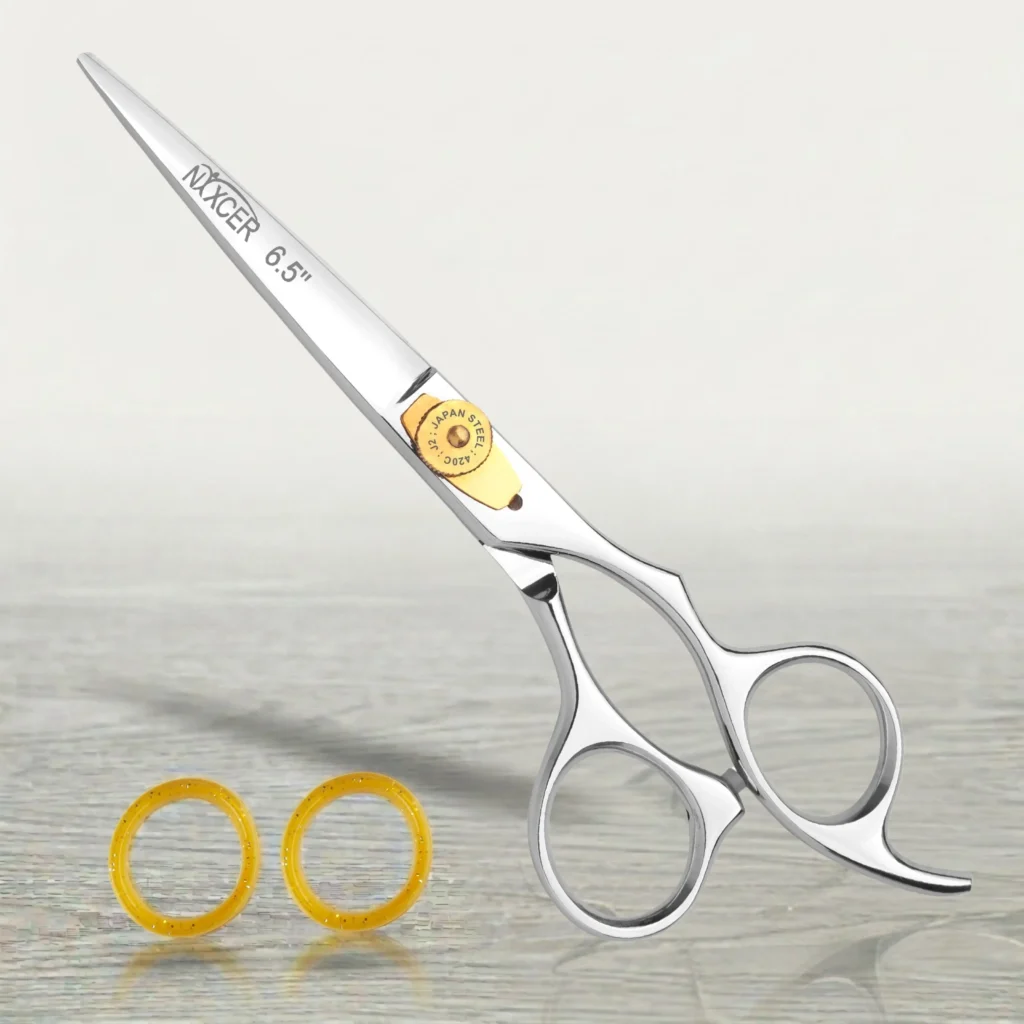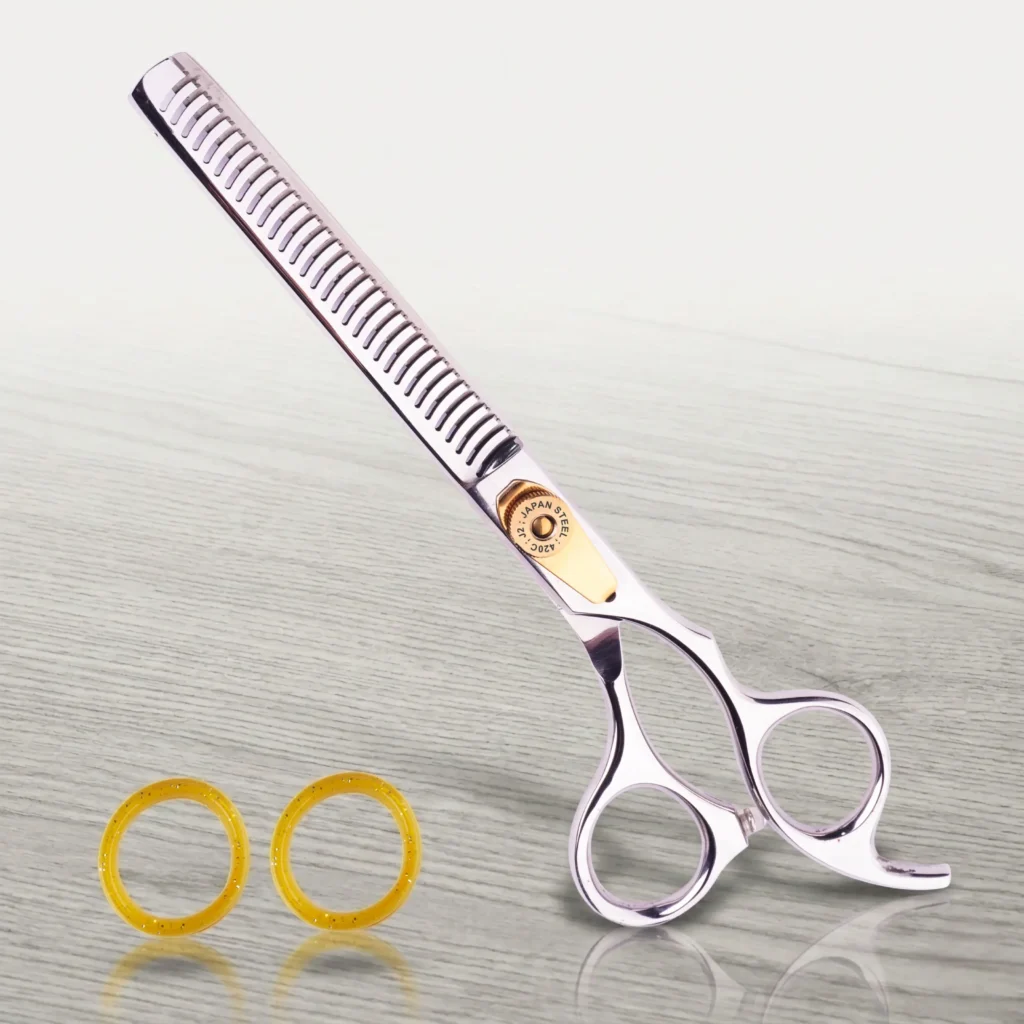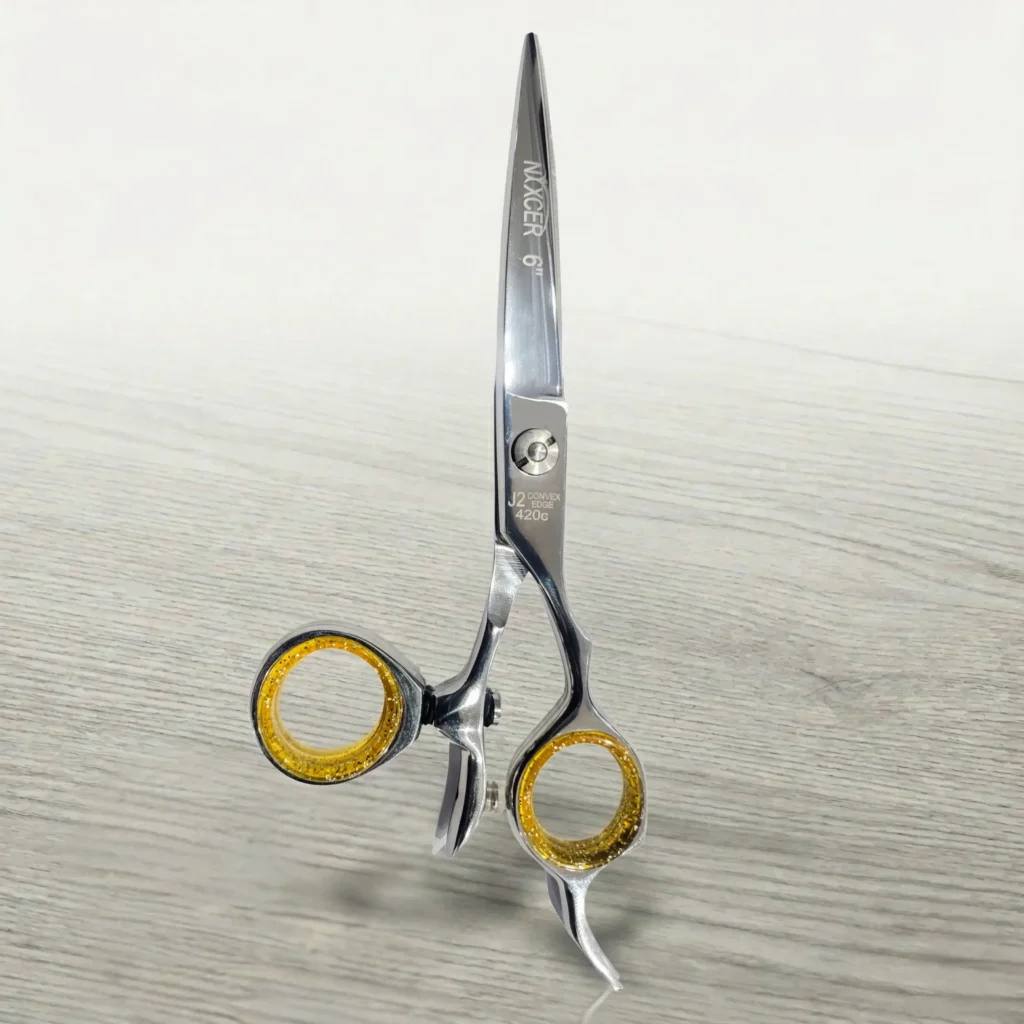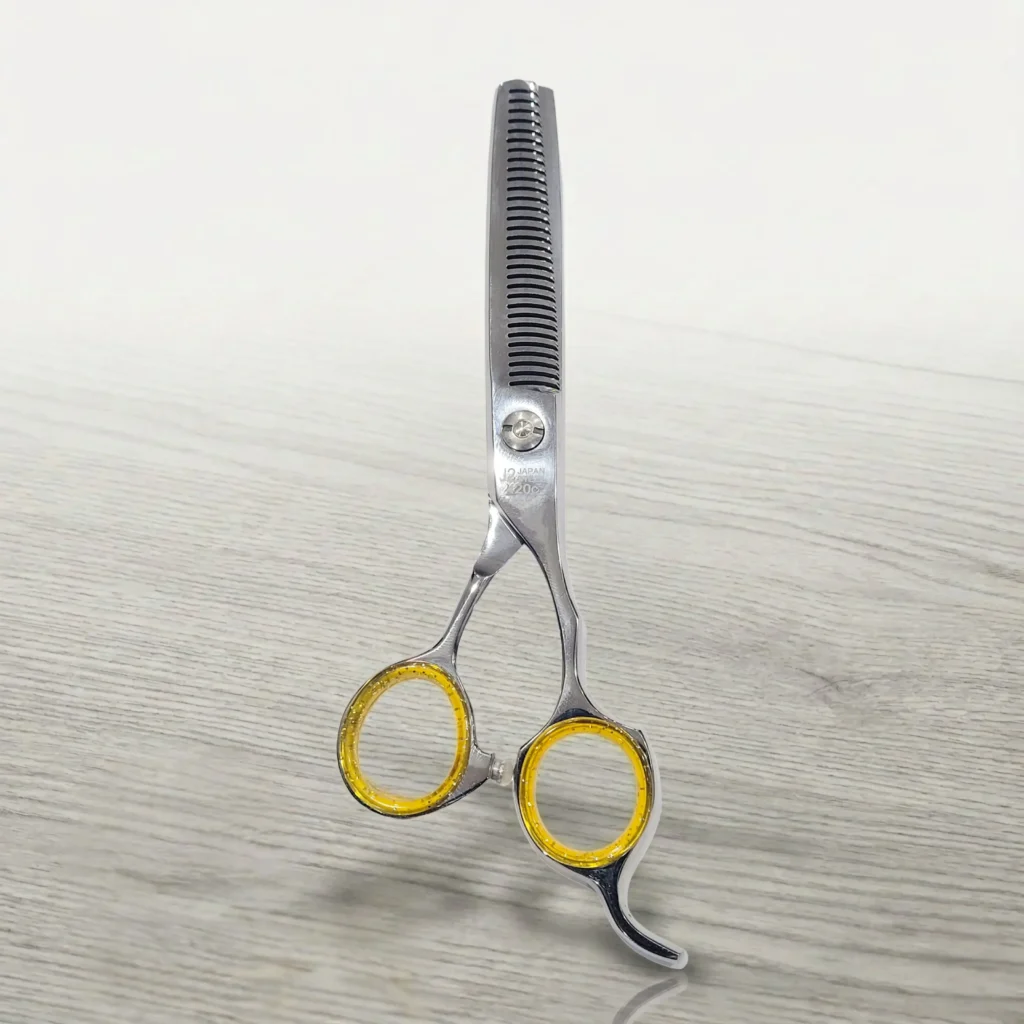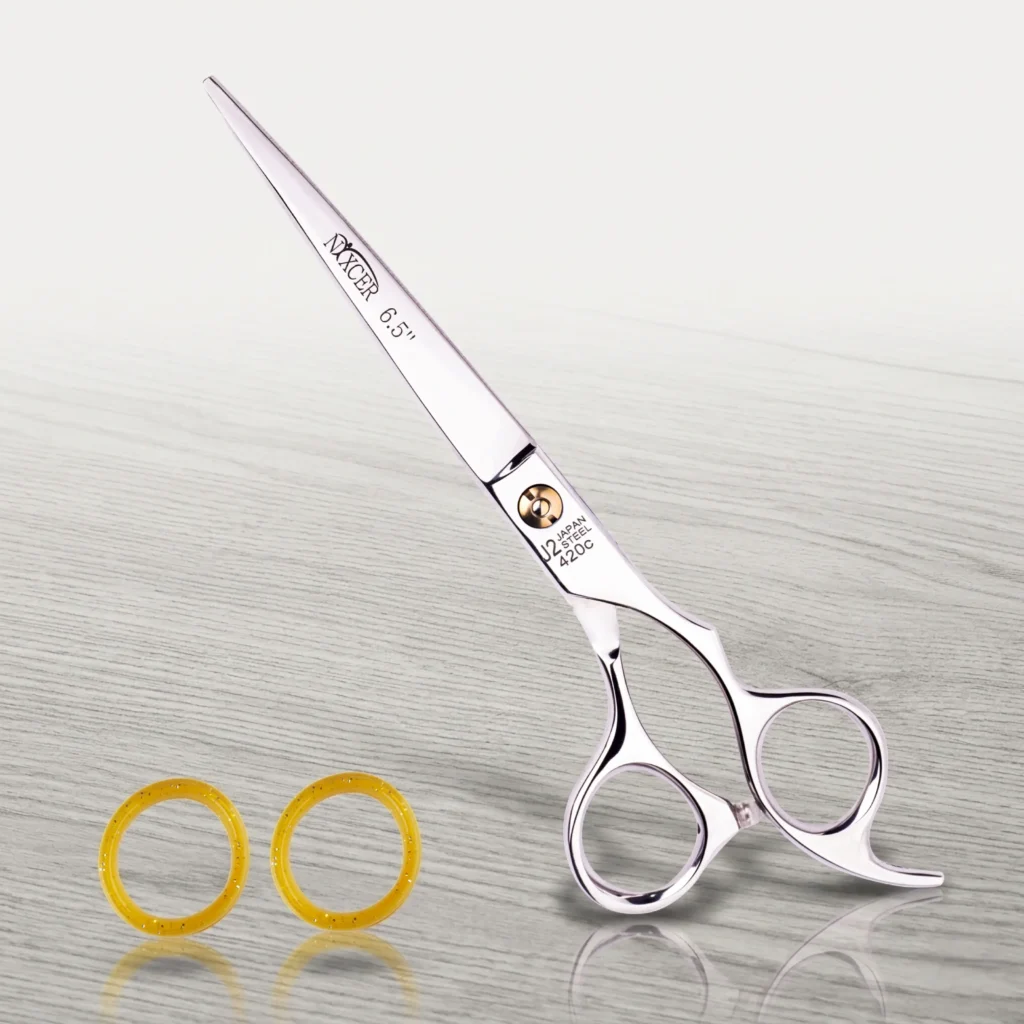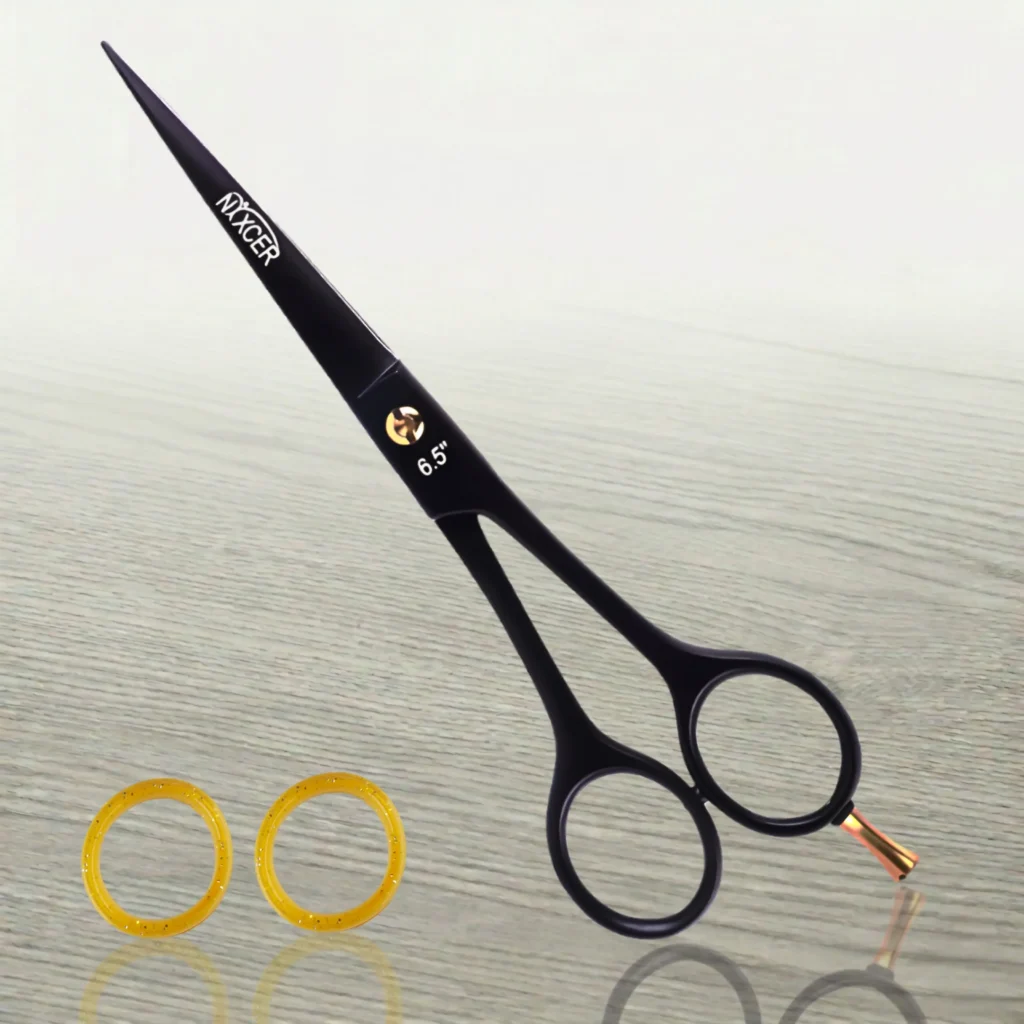
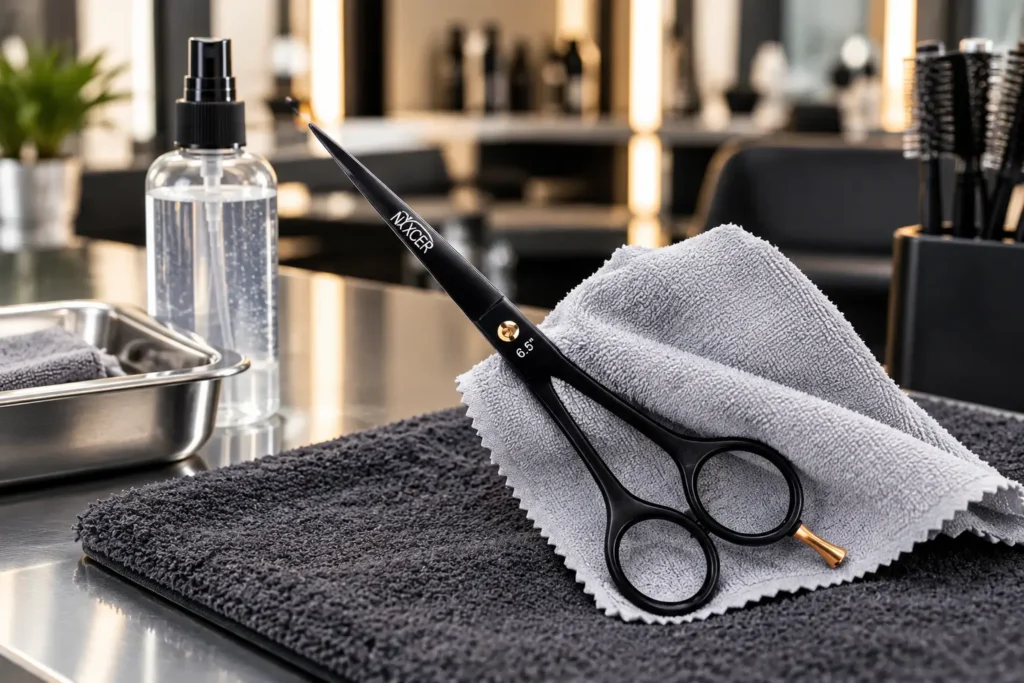
Clean hair cutting scissors by removing all visible hair and residue, washing the accessible surfaces with soap or detergent and water, and drying as required by the cleaning process. Then apply a disinfectant that is approved for the intended use and compatible with the shear. Keep every treated surface wet for the contact time on the disinfectant label. Rinse or neutralize only when the product label or shear maker requires it, dry the scissors completely, oil the pivot if instructed, and store them in a clean protected place.
The exact product, application method, dilution, contact time, rinsing step, and personal protective equipment can vary. Always follow three authorities together: the disinfectant label, the care instructions for the exact scissors, and the current rules for the salon location. Do not assume that a product suitable for a counter, comb, or clipper is automatically suitable for a precision shear.
Quick Answer
The safest general sequence is remove debris, wash, rinse if required, dry as directed, disinfect for the full labeled contact time, rinse or neutralize if required, dry completely, lubricate the pivot when appropriate, inspect, and store in a clean covered location. Cleaning must come before disinfection because hair, oils, and product residue can interfere with the disinfectant. Never guess the concentration or contact time, and do not soak a shear unless both the applicable rules and the shear manufacturer permit that method.
Cleaning and Disinfection Are Different
Cleaning physically removes hair, skin particles, oils, styling products, and other soil. Soap or detergent, water, and gentle mechanical action loosen this material. The Centers for Disease Control and Prevention defines cleaning as physical removal rather than killing microorganisms.
Disinfection is a chemical or thermal process that inactivates microorganisms on an inanimate object. A disinfectant cannot work reliably through a layer of dried product or visible debris. That is why the correct order is clean first and disinfect second.
Sanitizing and sterilizing are also different terms. Sanitizing reduces microorganisms to a level defined by the product or regulation. Sterilization destroys all forms of microbial life through a validated process. Routine salon shear care is generally described by the rules that apply to cleaning and disinfection. Do not advertise a shear as sterile unless it has passed a recognized sterilization process required for that claim.
Check Three Instructions Before You Begin
Disinfectant Label
In the United States, select an EPA registered disinfectant whose label covers the intended site, surface, application method, and required antimicrobial claims. The label controls dilution, personal protective equipment, application, contact time, rinsing, storage, and disposal. A household cleaner or a product described only as a sanitizer may not meet salon disinfection requirements.
The EPA explains that the contact time is the period the surface must remain visibly wet for the product to be effective. If a label requires ten minutes and the surface dries after five, the label may require more product so the full wet time is achieved. Never shorten the contact time to fit a busy appointment schedule.
Scissor Manufacturer Instructions
Check the manual or care page for the exact model. Blade steel, coatings, colored finishes, inserts, washers, bearings, bumpers, and pivot systems can react differently to water and chemicals. One manufacturer may permit a correctly prepared immersion bath, while another may specify a wipe or warn against prolonged soaking.
JAGUAR publishes an immersion process for its scissors that follows the disinfectant maker’s concentration and time, then requires rinsing, thorough drying, and pivot oil. This is product specific guidance, not a universal instruction for every shear.
Local and Workplace Rules
Salon requirements differ by country, state, province, municipality, school, and workplace. California, for example, instructs licensees to remove visible debris, clean shears with soap or detergent and water, then spray or wipe them with an EPA registered bactericidal, fungicidal, and virucidal disinfectant according to the manufacturer’s instructions. The same rule requires storage in a clean covered place and prohibits placing disinfected shears in a holder that cannot be disinfected.
Check the rule that applies where the service occurs. This article provides a safe framework but does not replace licensing rules, an exposure control plan, or a product label.
Supplies for a Safe Scissor Cleaning Station
- A labeled container for used or contaminated shears
- Clean running water where the selected process requires it
- Mild soap or detergent compatible with the scissors
- A soft brush reserved for tool cleaning
- Clean lint free cloths or disposable paper towels
- A labeled disinfectant approved for the intended salon use
- Measuring equipment when the label requires dilution
- Gloves and eye protection when required by the label or workplace plan
- Scissor lubricant recommended by the shear maker
- A clean covered storage container that can itself be cleaned and disinfected
- The disinfectant label and current shear care instructions
Keep clean and dirty items physically separated. Do not place a disinfected shear on the same towel, tray, or station surface that held the used tool.
Step by Step Cleaning and Disinfection Process
Step One Isolate the Used Scissors
After the service, close the blades carefully and place the used shear in the designated dirty or contaminated area. Do not put it back in a clean case. Perform hand hygiene and put on the personal protective equipment required by the disinfectant label and workplace procedure.
Handle the tool by the rings or shank. Avoid running fingers or a cloth directly along the sharpened edge. Work on a stable surface with the tips pointing away from the body.
Step Two Remove Hair and Visible Debris
Open the scissors to expose the inner blade faces and pivot area. Use a clean cloth or soft brush to remove clipped hair and loose residue. Brush away from the cutting edge and from the pivot toward the tip.
Remove finger inserts before processing only when the shear maker permits it. Clean and disinfect removable parts separately so debris does not remain underneath them. Do not dismantle the pivot unless the manufacturer or a qualified technician instructs you to do so.
Step Three Wash With Soap or Detergent
Clean the accessible surfaces with the compatible soap or detergent and water method required by local rules and the shear maker. Pay attention to both blade faces, the shanks, finger rings, tang, finger rest, bumper, and the outside of the pivot.
Use gentle action. Abrasive pads, metal brushes, powdered cleansers, and aggressive solvents can scratch finishes or alter an edge. Keep a secure grip because wet shears are easy to drop.
If the cleaning product or local procedure requires rinsing, rinse thoroughly without directing unnecessary water into a pivot that the manufacturer says should stay dry. Do not leave detergent film behind because residue can interfere with the next product.
Step Four Dry Before Disinfection When Required
Some salon rules require a cleaned tool to be dried before it enters or receives a disinfectant so water does not dilute the prepared product. Follow the applicable procedure. Use a new clean paper towel or lint free cloth and reach the area around the pivot, screw, finger rings, and removable inserts.
Do not use a used client towel. Do not place the cleaned shear on a contaminated station while preparing the disinfectant.
Step Five Apply the Disinfectant
Use the application method stated on both the disinfectant label and the shear care instructions. A spray or wipe may be appropriate for shears under some regulations. Full immersion may be required for other nonporous tools and is permitted for certain shear models, but it should not be assumed.
Cover every required surface. If using a ready to use wipe, use enough wipes to keep the blades, shanks, rings, rest, and accessible pivot area visibly wet. If using a spray, apply it at the stated distance and rate. If using a concentrate, measure the product and water accurately; a stronger mixture is not automatically safer or more effective.
Never mix disinfectants with each other, bleach, ammonia, soap, or another chemical unless the product label explicitly directs that combination. Mixing can reduce effectiveness, damage the scissors, or create dangerous fumes.
Step Six Keep Surfaces Wet for Contact Time
Start timing only after all required surfaces are fully treated. Maintain visible wetness for the complete contact time on the label. The EPA notes that reapplication may be needed when a surface begins to dry before the required time ends.
Contact time is product and claim specific. Do not copy a time from another bottle, school handout, or online article. A label may list different times for different organisms or applications.
Step Seven Rinse or Neutralize When Required
After contact time, follow the label and shear maker. Some methods require rinsing disinfectant residue with clean water; others direct the user to let the product air dry or wipe it away. JAGUAR instructs users to rinse residue from its scissors after the company’s approved bath process to prevent damage.
Do not add a rinse step that contradicts the label, because removing a product too soon can invalidate disinfection. Do not leave a corrosive residue on a shear when the maker instructs rinsing or neutralizing.
Step Eight Dry the Scissors Completely
Remove moisture promptly with a clean lint free cloth or new paper towel. Dry both sides of the blades, the pivot, screw, finger rings, rest, bumper, inserts, and any recesses. Follow the manufacturer if it permits cool forced air or another drying method.
Moisture trapped at the pivot can contribute to corrosion and rough movement. Do not store the shear until it is completely dry.
Step Nine Lubricate and Work the Pivot
When the manufacturer recommends oiling after disinfection, place the specified amount of scissor oil at the pivot. Open and close the shear several times to distribute the lubricant, then wipe away loosened residue and excess oil with a clean cloth.
Oil supports smooth movement and helps displace remaining moisture, but it is not a disinfectant. Apply it only after the cleaning and disinfection steps are complete. Read the Nixcer guide to regularly oiling hair cutting scissors for pivot care.
Step Ten Inspect and Store
Check that the blades move smoothly and that there is no visible residue, corrosion, chip, catch, loose screw, or damaged coating. A dropped, nicked, misaligned, or rough shear should be removed from client service and inspected by a qualified technician.
Store the clean dry scissors closed or in the position specified by the maker. Use a clean covered container that can be disinfected. Keep clean tools away from used tools, open chemicals, sinks, moisture, and loose objects that can strike the edge.
Cleaning Method Comparison
| Method | Appropriate role | Main caution |
| Dry wipe or soft brush | Removes loose hair before washing | Does not replace cleaning and disinfection |
| Soap or detergent and water | Removes visible soil and product residue | Dry or rinse as required before the next step |
| Ready to use disinfectant wipe | May disinfect compatible shear surfaces when the label and rules allow it | Use enough product to keep all surfaces wet for full contact time |
| Disinfectant spray | May suit shears under rules that specify spray or wipe application | Control overspray and follow label coverage and contact time |
| Prepared immersion bath | May be permitted for specific shears and local procedures | Can affect pivots finishes and inserts if the maker does not approve immersion |
| Alcohol product | May be required or allowed in some jurisdictions and care instructions | Concentration application time and material compatibility must be verified |
| Ultraviolet cabinet | May provide storage or supplemental treatment if specifically approved | Does not remove soil and should not replace required chemical disinfection |
| Scissor oil | Lubricates the pivot after processing | Does not clean or disinfect the tool |
Products and Methods to Avoid
Unlabeled Household Mixtures
Vinegar, essential oils, mouthwash, and homemade mixtures are not substitutes for a registered disinfectant required by salon rules. Their recipes do not provide an approved antimicrobial claim, dilution, contact time, material compatibility, or safety instructions for this use.
Undiluted Concentrate
More concentrate can increase residue, corrosion, skin exposure, or finish damage without improving the approved result. Measure dilutable products exactly as the label directs and prepare fresh solution on the required schedule.
Abrasive Cleaners
Steel wool, rough scrub pads, and abrasive powders can scratch polished or coated surfaces and damage precision edges. Use a soft cloth or brush approved for the tool.
Prolonged Unapproved Soaking
Unapproved immersion can trap liquid near the pivot, affect washers or bearings, loosen adhesives, fade coatings, or start corrosion. Soak only when the exact shear maker and applicable rules allow it.
Disinfecting Without Cleaning
Spraying over hair, oil, and product residue skips the necessary cleaning step. Organic material can shield surfaces and interfere with the disinfectant.
Between Client and End of Day Routines
Between Each Client
- Move the used shear to the dirty tool area.
- Remove visible hair and product residue.
- Clean with the approved soap or detergent process.
- Apply the compatible disinfectant for its full labeled contact time.
- Complete required rinsing, drying, and lubrication steps.
- Return the shear only to clean covered storage.
Plan enough tools and turnaround time to complete the full process. A second prepared shear is safer than shortening contact time because the next client is waiting.
End of Day
- Inspect the pivot, rings, rest, bumper, and blade faces for hidden residue.
- Complete the manufacturer recommended oiling routine.
- Check tension and cutting action without overtightening the screw.
- Clean and disinfect the storage case or tray when its material allows it.
- Replace contaminated cloths and dispose of single use items correctly.
- Review the disinfectant solution or wipe container for expiration, debris, and replacement requirements.
The Nixcer guide to hair cutting scissor maintenance kits lists the basic cloth, oil, adjustment, storage, and care items for a workstation.
Blood or Body Fluid Exposure
If a shear cuts skin or contacts blood or another body fluid, stop the service and follow the salon exposure control plan and current local rules. Put on the required personal protective equipment, manage the client injury according to workplace procedure, isolate the contaminated tool, and use the disinfectant level and process required for that exposure.
Do not return the shear to service after a quick wipe. Report and document the incident when workplace rules require it. Seek occupational health or medical guidance for an exposure involving the worker.
Protect the Edge During Hygiene Work
Cleaning should not change the blade geometry. Keep the cloth and brush away from a motion that pulls a fingertip across the edge. Open and close the blades slowly after lubrication and stop if they catch or scrape.
Do not adjust tension to hide a rough feel caused by dried residue, corrosion, a nick, or misalignment. Use the Nixcer sharpness test guide to recognize performance problems, then arrange professional service when needed. The article on why shear quality matters explains how alignment, edge quality, and finish affect use and maintenance.
Common Cleaning and Disinfection Mistakes
- Treating a dry wipe as complete disinfection
- Applying disinfectant before removing visible soil
- Using a product without checking its registration and intended use
- Guessing dilution or contact time
- Letting the surface dry before contact time ends
- Rinsing the disinfectant before the labeled time is complete
- Leaving residue when the label or shear maker requires rinsing
- Soaking a shear that is not approved for immersion
- Storing the tool while the pivot is damp
- Returning a disinfected shear to a contaminated case or towel
- Applying oil before disinfection is complete
- Using the same brush or cloth for clean and dirty stages
- Mixing chemicals or using a stronger concentration than the label states
- Handling the cutting edge directly during wiping
Scissor Care Checklist
Before returning a shear to service, confirm that:
- All visible hair and residue were removed.
- The tool was washed with a compatible soap or detergent process.
- The disinfectant is approved for the intended use and surface.
- The product was mixed or used exactly as labeled.
- Every required surface stayed wet for the full contact time.
- Rinsing or neutralizing matched the label and shear instructions.
- The blades, rings, inserts, and pivot are completely dry.
- The pivot was lubricated when the manufacturer requires it.
- The shear opens and closes without a catch, scrape, or loose pivot.
- Clean storage is covered and can itself be disinfected.
- The method follows current workplace and local licensing rules.
Proper scissor hygiene is a controlled sequence, not a single spray. Cleaning prepares the surface, labeled disinfection provides the antimicrobial step, drying and lubrication protect the mechanism, and clean storage prevents the tool from being contaminated again. A salon that documents the exact product, contact time, shear instructions, and local rule can train staff consistently and update the process when any of those instructions change.
Frequently Asked Questions
Should Scissors Be Disinfected After Every Client
Professional salons should follow the local rule and workplace policy for tools used on each client. Many jurisdictions require used shears to be cleaned and disinfected before reuse. Home users should still clean after use and disinfect when tools are shared or contamination is possible.
Can Hair Cutting Scissors Be Soaked
Only when the exact shear manufacturer permits immersion and the applicable disinfectant label and local rule support that method. Some makers publish a bath procedure, while some salon regulations specify spray or wipe disinfection for shears. Never assume all pivots, coatings, inserts, and bearings tolerate soaking.
Can Rubbing Alcohol Be Used
Alcohol may be specified by some jurisdictions or manufacturers, but it is not a universal answer. Verify the required concentration, wet contact time, application method, material compatibility, and regulatory status for the location. Do not substitute an unlabeled alcohol product for a required registered disinfectant.
How Long Should Disinfectant Stay on Scissors
Use the exact contact time on the product label for the intended claim and application. Keep all required surfaces visibly wet for that full period. Do not rely on a general time from an article because products differ.
Should Scissors Be Rinsed After Disinfection
Rinse or neutralize only when the disinfectant label or shear maker directs it. Complete the full contact time before rinsing. When rinsing is required, dry the blades and pivot immediately and thoroughly.
Should Scissors Be Oiled After Disinfection
Oil the pivot after the tool is clean, disinfected, and dry when the shear maker recommends it. Use scissor lubricant, work the pivot slowly, and wipe away excess. Oil is maintenance and does not replace disinfection.
How Should Clean Scissors Be Stored
Store them dry in a clean covered container or case that can be cleaned and disinfected. Keep them separate from used tools, moisture, chemicals, and loose implements that can damage the edge.
What If Disinfectant Damages the Finish
Stop using the product on that shear and consult the shear maker and disinfectant manufacturer. Remove a corroded, peeling, rough, or misaligned tool from client use until it has been inspected. Do not cover damage with oil or polish and continue cutting.