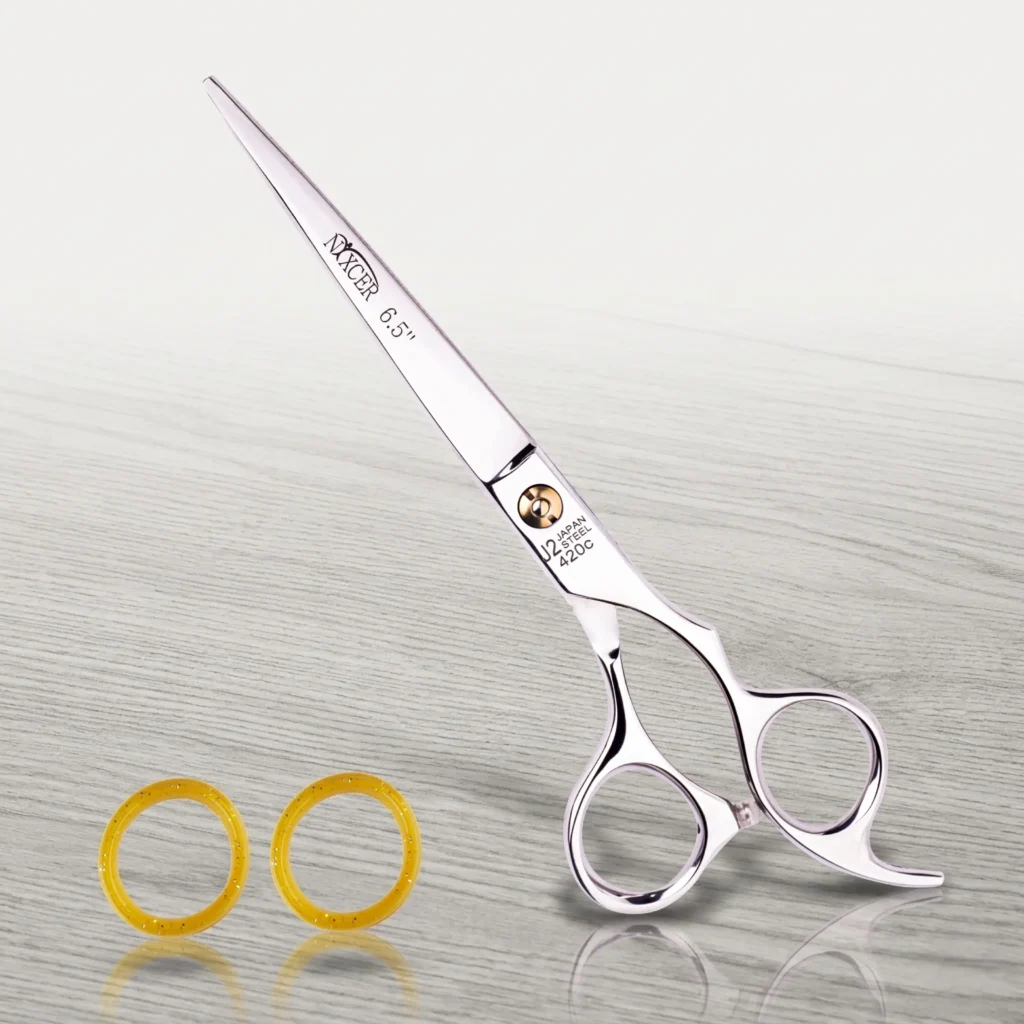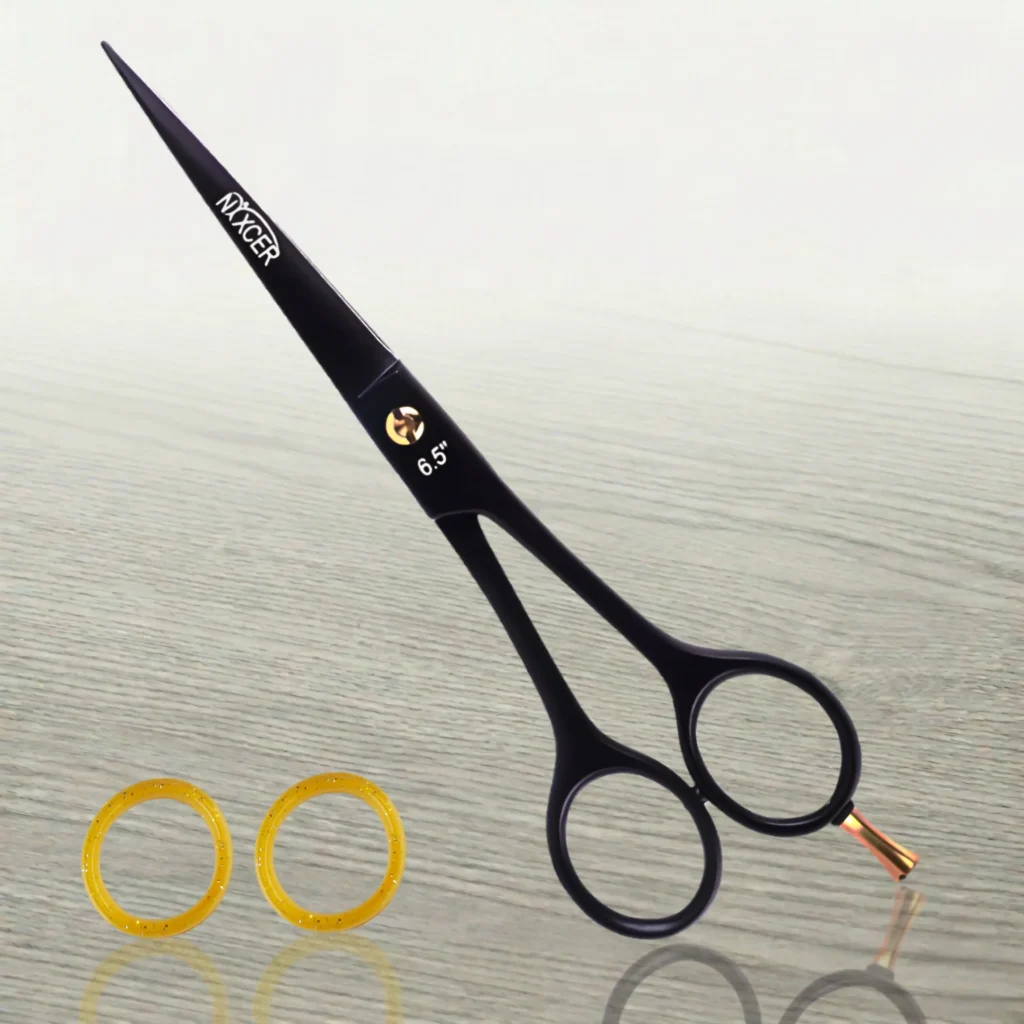
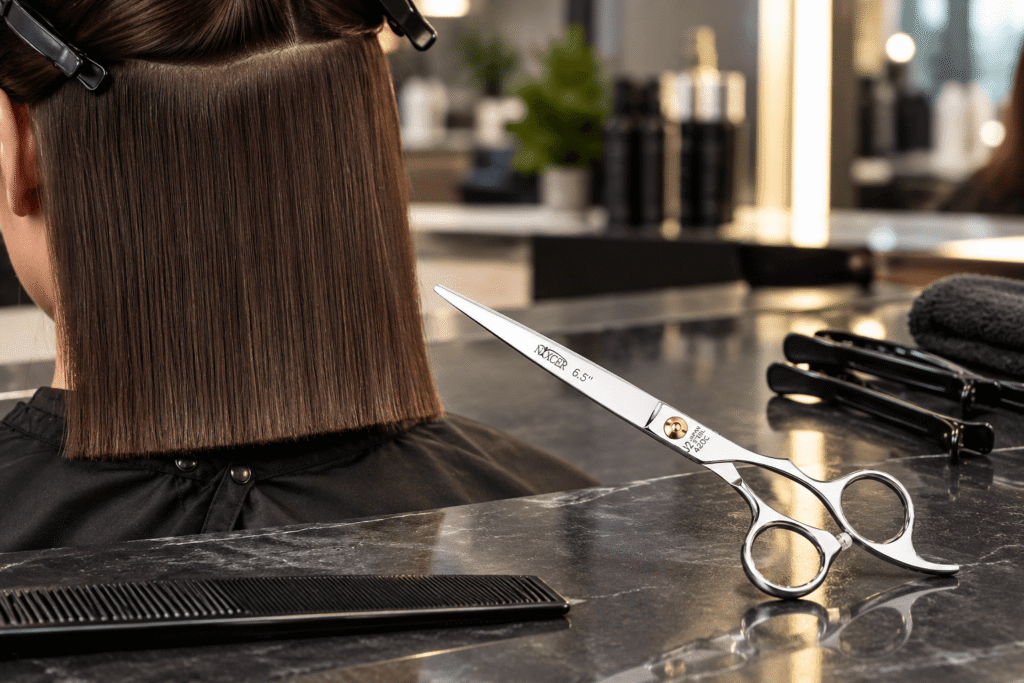
A blunt cut looks simple because the finished edge is clean and direct. Producing that line consistently, however, depends on the relationship between the scissors, the section, the guide, the elevation, and the tension used by the stylist. The best hair cutting scissors for blunt cuts are therefore not defined by one premium sounding material or one fashionable blade profile. They are sharp, properly aligned, stable in the hand, suitable for the width and density of the section, and comfortable enough to control through the entire perimeter.
Quick Answer
Choose professional shears with a blade line that holds the hair instead of pushing it away, a sharp edge suited to your cutting style, enough blade length and rigidity for the section, and a handle that lets your wrist and thumb work naturally. Shorter shears offer detailed control around fringes and tight areas, while medium or longer shears can cover a broad bob or long perimeter more efficiently. Both convex and beveled edges can perform blunt cutting well when the blades are sharp, balanced, correctly tensioned, and serviced for their original edge design.
What Makes a Blunt Cut Different
A blunt cut creates a strong, visible perimeter with little or no graduation at the cutting line. It may appear in a classic one length bob, a straight fringe, a long solid baseline, or a geometric salon shape. The goal is usually an even edge and a deliberate sense of weight.
The scissors do not create that result alone. Clean sectioning, a stable guide, consistent body position, controlled elevation, suitable tension, and a final check in the hair’s natural fall all matter. A well chosen pair of blunt cutting shears makes those actions easier to repeat and reduces the temptation to overwork the edge.
Choose a Blade Line That Controls the Hair
Blade line describes the curve or straightness of the cutting blade. A relatively straight blade line tends to hold hair at the intended position during a straight across closure. A more curved blade line encourages the hair to slide and is commonly associated with slicing or other moving techniques.
For precision perimeters, a straight or moderately straight blade is often the practical starting point. That does not mean every blunt cut requires a completely straight blade. The right amount of curve depends on the shear design, the section size, and the stylist’s hand movement. What matters is whether the hair remains controlled instead of being pushed ahead of the closing blades.
Blade width also affects the feel of the cut. A broader or sword style blade can add stability and power through dense sections. A narrower blade can feel nimble around a fringe or detailed corner. More power should not be used as a reason to take sections that are too large to control.
Read the guide to different hair cutting scissor blades before comparing individual models.
Compare Convex and Beveled Edges
Convex edges are finely honed and known for a smooth cutting action. They can work well for precise lines and also provide versatility for advanced techniques. Beveled edges have a more defined cutting angle and can offer a stable, controlled feel. Either edge can produce a clean blunt cut when its geometry, sharpness, alignment, and tension are correct.
A micro serrated edge may help grip slippery hair, but it produces a different cutting sensation and should be sharpened by a technician familiar with that edge. Do not choose an edge from the label alone. Consider the finish you want, the amount of hair you normally cut in each section, the service options available to you, and how the blades feel during a controlled close.
For a deeper comparison, see convex and beveled scissor edges.
Select a Practical Scissor Length
There is no universal best scissor length for a blunt cut. Shorter blades can provide close control for fringes, face framing boundaries, and detailed corners. Medium lengths are versatile for routine salon work. Longer blades cover more distance in a single controlled closure and may suit broad perimeters, long hair, and some barbering techniques.
Many stylists find a range around 5.5 to 6.25 inches versatile, but hand size, cutting method, and the design of the shear can make another length a better fit. A long blade that feels unstable can reduce accuracy. A blade that is too short may require many closures, increasing the chance of small inconsistencies along a wide line.
Use the finger rest, pivot, and blade tip as reference points when testing a shear. You should be able to open and close it without reaching, collapsing the wrist, or losing control at the tip.
Match the Scissors to the Cutting Situation
| Cutting situation | Useful features | Watch for |
| Blunt fringe or detailed corner | Shorter controllable blade with a precise tip | A blade that is too long or heavy for the working area |
| Classic one length bob | Stable medium length shear with a straight or moderately straight blade line | Hair being pushed ahead of the blades or too many corrective snips |
| Long or dense perimeter | Longer or broader blade with enough rigidity for controlled sections | Oversized sections and forcing the blades through resistance |
| Fine or slippery hair | Sharp aligned edge with a blade line that holds the section | Excess tension or a polished edge that pushes hair in that particular shear |
| Wavy or curly dry refinement | Precise tip and excellent visibility around natural fall | Stretching the pattern or removing more weight than intended |
| Left handed cutting | True left handed shear with reversed blade orientation | Flipping a right handed shear and losing visibility or natural cutting action |
Evaluate Handle Fit and Handedness
Handle design affects control because it determines where the thumb, fingers, wrist, and elbow settle during the cut. An offset handle can help some users keep a more relaxed hand position. A symmetric handle offers holding flexibility and remains a valid choice for blunt cutting. Neither style is automatically better for every stylist.
Test the shear in the positions you actually use. The thumb should enter and leave the ring easily, the finger holes should not force an excessive stretch, and the handle should allow a controlled thumb driven close. Comfort is personal, and persistent pain or numbness should be discussed with a qualified health professional rather than solved by equipment claims alone.
Left handed stylists should look for true left handed scissors. Their blade orientation and handle geometry are designed to provide a natural view of the cutting line and the appropriate closing pressure. Learn more about how handle design affects scissor performance.
Check Balance Tension and Alignment
A suitable shear should feel predictable from pivot to tip. If it is strongly blade heavy or handle heavy for your technique, maintaining a level perimeter may require unnecessary correction. Use a careful hair scissor balance test before committing to regular use.
Tension must be tight enough for the blades to meet correctly but not so tight that the action feels forced. Tension that is too loose can let hair fold or push between the blades. Tension that is too tight can make the shear tiring to operate and accelerate wear. Follow the manufacturer’s adjustment guidance because pivot systems vary.
Alignment problems, nicks, or a loose pivot should be handled by a professional scissor technician. A controlled sharpness test can help identify a performance problem without experimenting on a client’s finished perimeter.
Treat Steel and Hardness as Supporting Specifications
Steel composition, heat treatment, manufacturing quality, and hardness influence edge retention, sharpening, corrosion resistance, and feel. A Rockwell hardness number can be useful when it comes from a reliable manufacturer, but it does not describe the complete shear. Two scissors with similar hardness can perform differently because of their blade geometry, balance, finish, pivot, and quality control.
Avoid choosing solely because a listing says Japanese steel or displays the highest hardness number. Instead, compare the complete design and the support available for maintenance. The Rockwell hardness guide for hair scissors explains how to interpret this specification in context.
Adapt the Choice to Hair Type
Fine Hair
Fine or slippery hair makes pushing easy to see. Prioritize sharp alignment, a controllable blade line, small clean sections, and light consistent tension. A very powerful shear cannot compensate for an unstable guide.
Dense Hair
Dense hair may benefit from a longer, broader, or more rigid blade, but section size remains important. If the blades hesitate, fold the section, or require force, reduce the amount of hair and check the tension and sharpness.
Straight Hair
Straight hair exposes small variations in a geometric perimeter. Good tip control and an unobstructed view of the guide are especially valuable. Cross check from more than one direction before refining.
Wavy and Curly Hair
Wavy and curly hair can change length and shape as it dries. Decide whether the design will be established wet, dry, or with a combined method. Use conservative tension and confirm the finished perimeter in its natural fall. The intended silhouette matters more than forcing every strand into an identical stretched line.
Fragile or Chemically Treated Hair
Use sharp, well maintained blades and smaller sections so the shear closes cleanly without pulling or crushing the hair. Adjust the technique to the condition of the hair and avoid repeated corrective cutting in the same area.
Blunt Cutting Workflow
- Agree on the target length, weight line, and whether the finish should look strict, soft, or naturally irregular.
- Prepare the hair according to the chosen wet or dry method and observe its growth patterns and natural fall.
- Create clean sections that allow the guide to remain visible.
- Establish the first guide with stable body position and an elevation appropriate to the intended shape.
- Use consistent, controlled tension without stretching the hair beyond how it will sit when released.
- Cut manageable sections and keep the blade aligned with the planned perimeter.
- Cross check the line from another direction and reassess balance around the head.
- Dry or release the hair into its natural fall, then refine only where the design requires it.
The sequence matters. If the guide or sectioning changes, repeated point corrections can create a perimeter that looks less intentional even when the scissors are excellent.
How to Prevent Hair From Pushing
Hair that moves ahead of the blades is a signal to stop and diagnose the setup. It may be caused by an oversized section, excessive tension, incorrect blade angle, loose pivot tension, poor alignment, a dull or damaged edge, or a blade line that does not suit the action.
Reduce the section size first. Then clean the blades, check the pivot according to the maker’s guidance, and test the cutting action safely. Avoid compensating with force. If the shear still folds, bends, pulls, or pushes the hair, remove it from client work and ask a qualified technician to inspect it.
Routine cleaning and regular scissor oiling support smooth pivot movement, but oil does not repair a damaged edge or incorrect alignment.
Nixcer Scissors to Compare
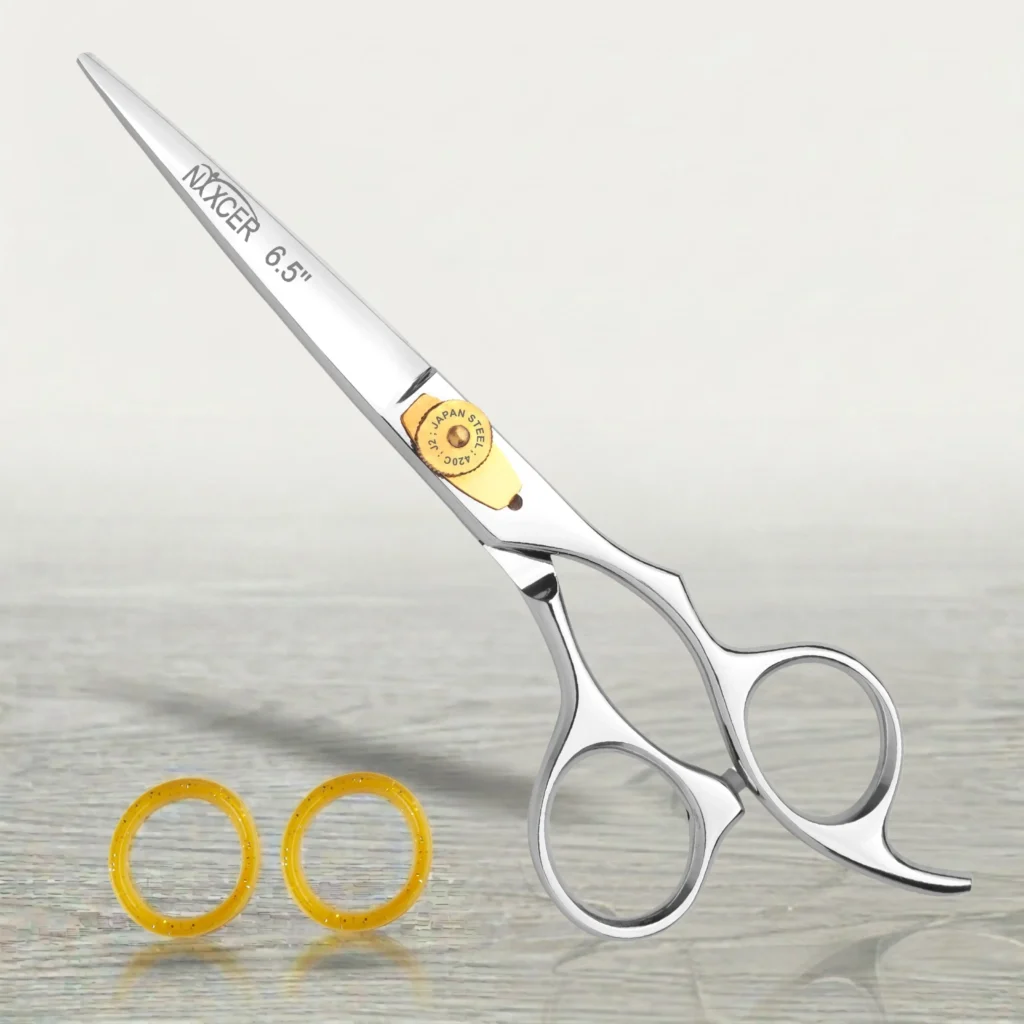
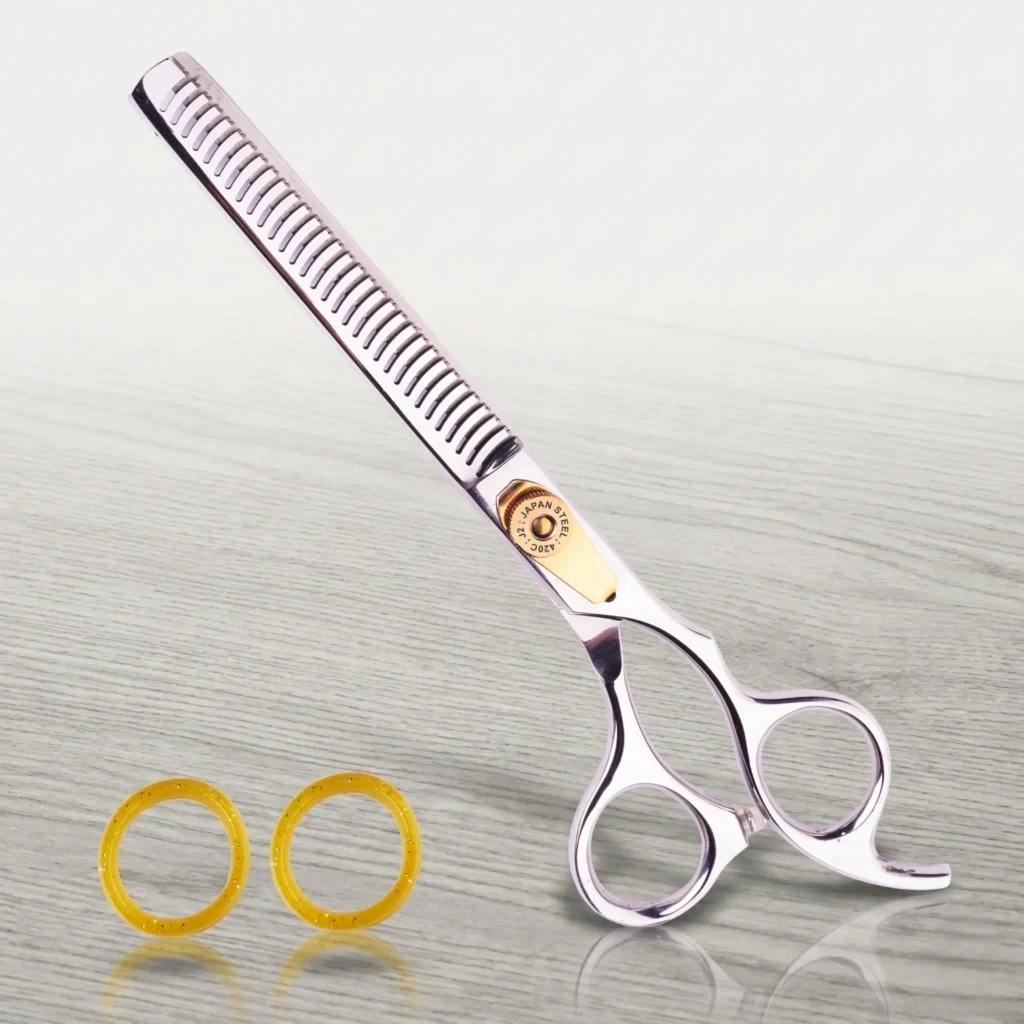
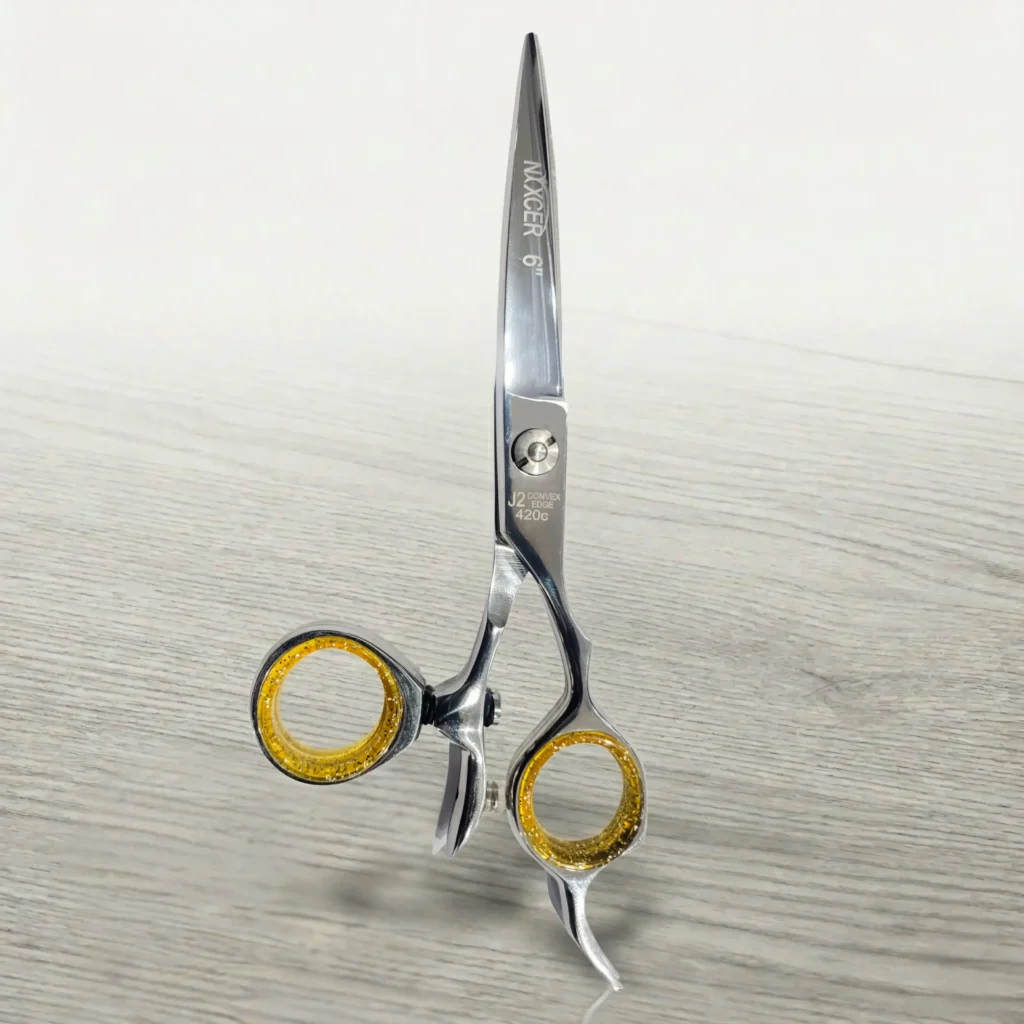
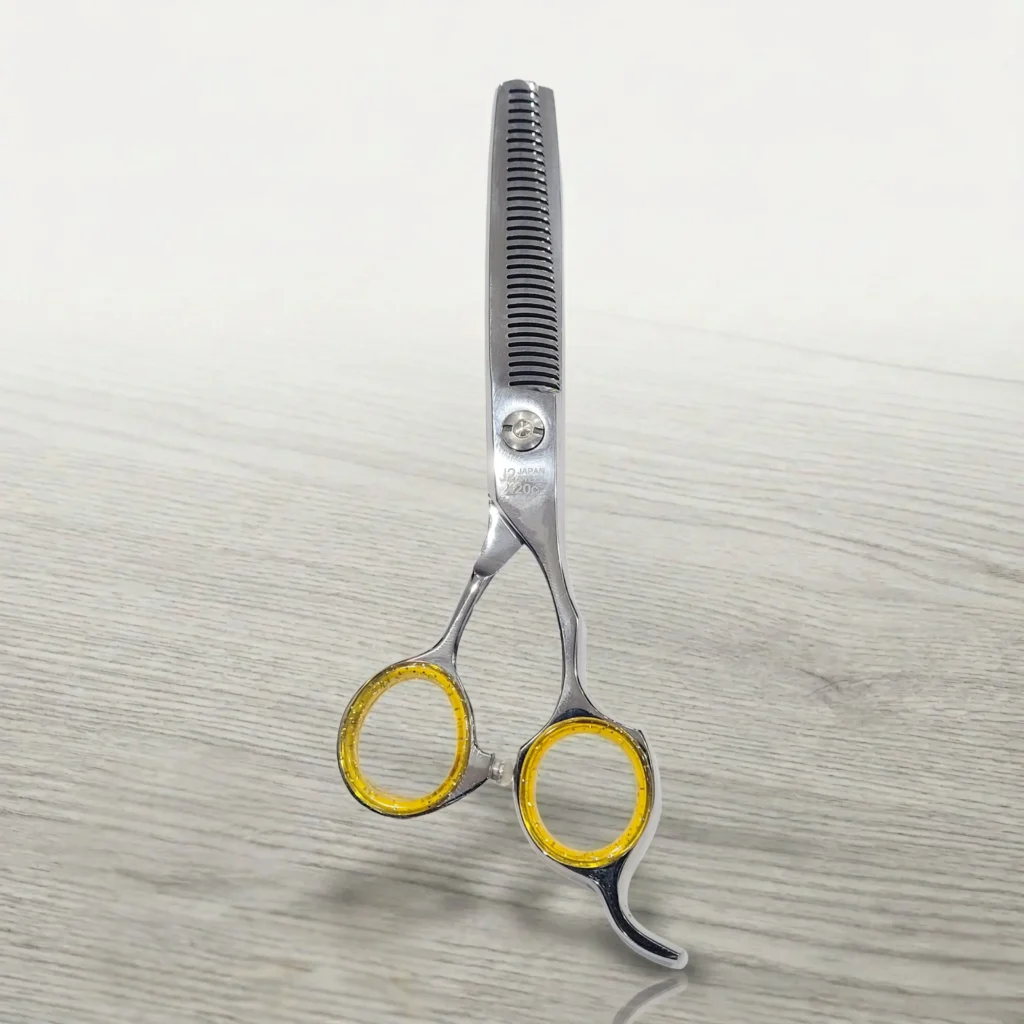
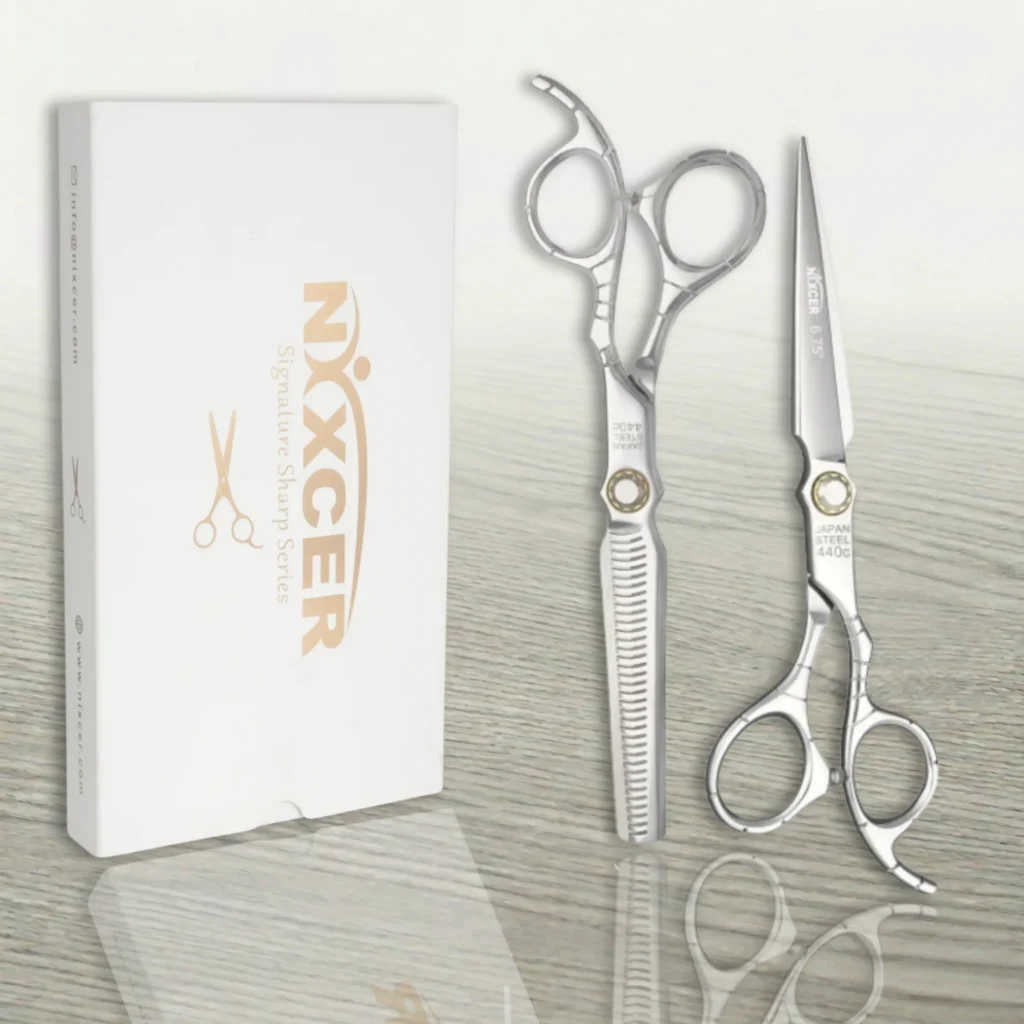
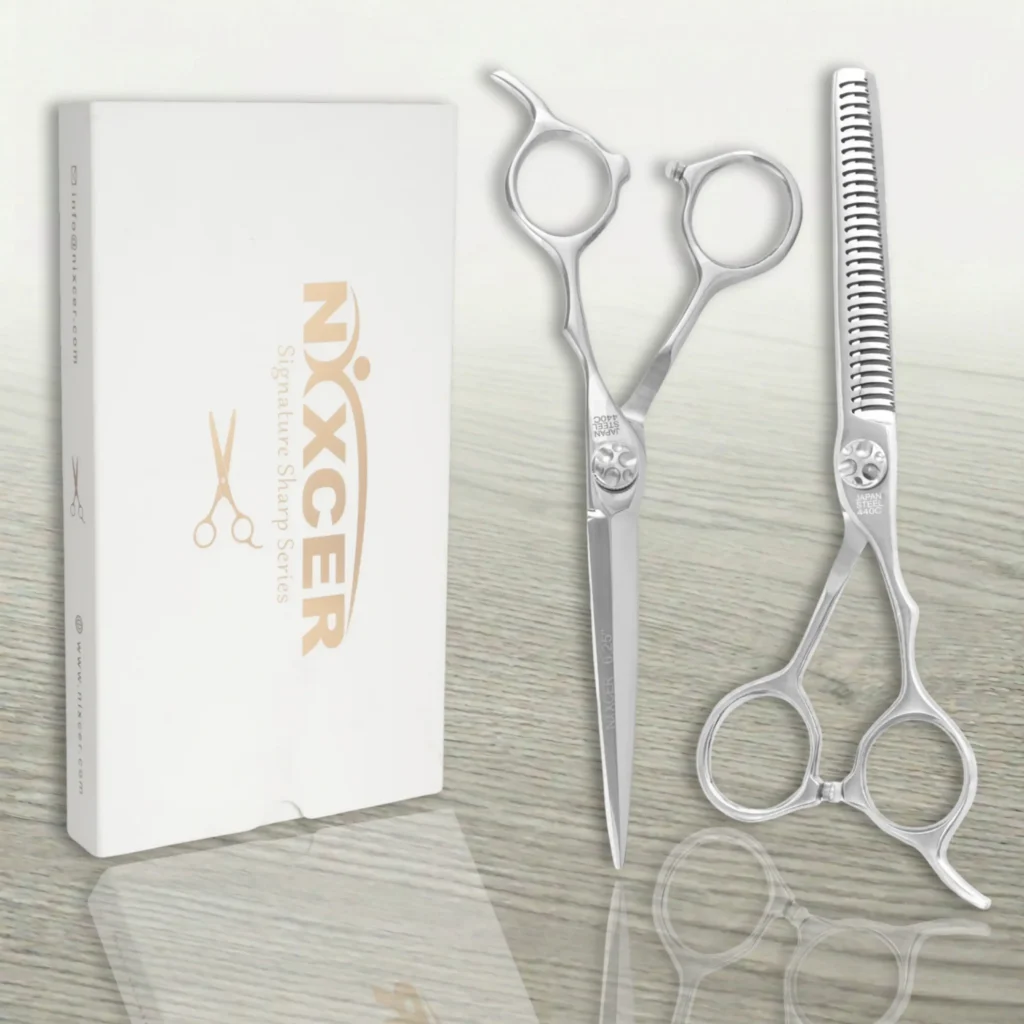
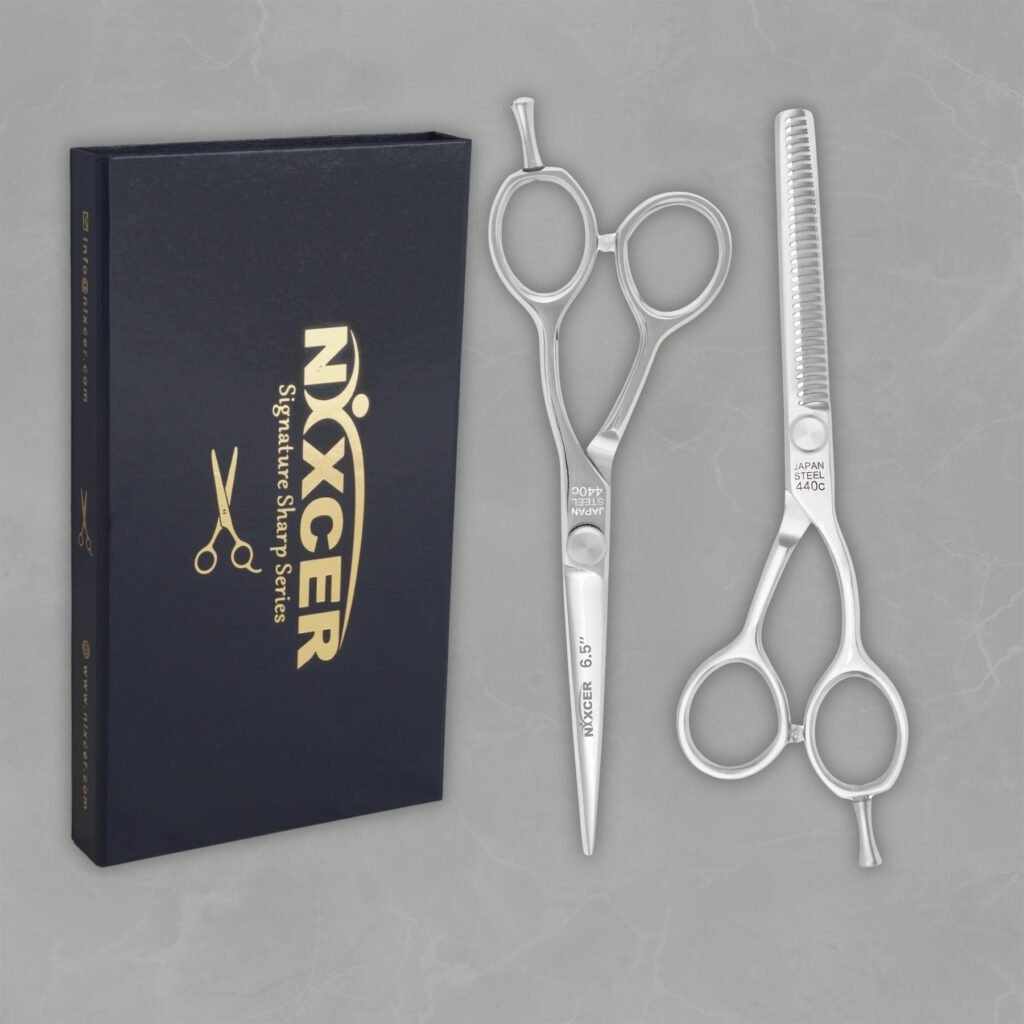
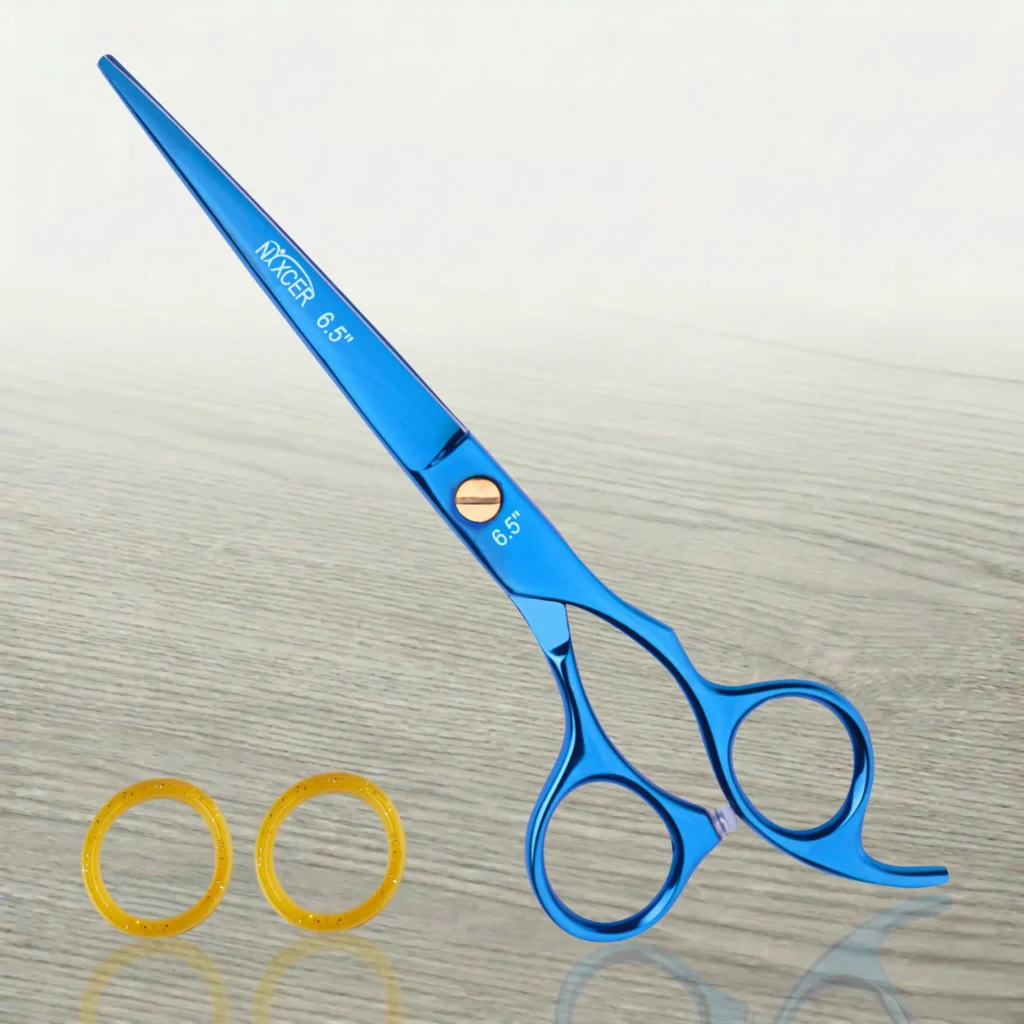
Nixcer offers several cutting shear formats that illustrate the selection criteria in this guide. These are options to compare, not independent performance rankings.
- The Nixcer Arc Hair Cutting Shears are listed at 6.25 inches for stylists considering a versatile salon length.
- The Nixcer Korean Hair Cutting Shears are listed at 6.5 inches for users comparing slightly longer coverage.
- The Nixcer Sword Hair Cutting Shears are listed at 6.75 inches for those evaluating a longer sword style design.
- The Nixcer Broad Blade Hair Cutting Scissors are listed at 6.25 inches for stylists comparing broad blade stability.
Review dimensions and specifications on the current product page, and confirm fit, handedness, service requirements, availability, and suitability for your technique before buying. You can also browse the complete hair cutting scissors collection.
Common Buying Mistakes
- Choosing a shear only because of a steel label, hardness number, or country associated with the material.
- Assuming the longest blade will always create the straightest line.
- Ignoring handle fit, handedness, balance, and the visibility of the guide.
- Using a micro serrated or specialty edge without confirming how it should be serviced.
- Trying to solve oversized sections or inconsistent elevation by buying a more powerful shear.
- Continuing to use blades that fold, pull, catch, or push hair.
- Asking a general knife sharpener to alter a professional shear edge without scissor specific expertise.
For a broader buying framework, read how to choose scissors for precision cutting.
Final Selection Checklist
Before choosing hair cutting scissors for blunt cuts, confirm that:
- The blade line controls hair during a straight closing action.
- The edge type suits your technique and can be serviced correctly.
- The length matches your hand, working area, and typical section width.
- The blade has enough stability for the hair densities you cut.
- The handle supports a controlled thumb movement and comfortable working position.
- The orientation is correct for your dominant hand.
- The pivot tension and blade alignment are correct.
- The shear can be maintained by a qualified technician.
- You have tested control and visibility rather than relying on specifications alone.
The strongest choice is the shear that helps you repeat a clean line without forcing the blades, stretching the section, or fighting the handle.
Frequently Asked Questions
Best Scissors for Blunt Cuts
The best scissors for blunt cuts have sharp aligned blades, a stable blade line that controls the hair, an appropriate length for the section, correct pivot tension, and a handle that fits the user. A specific edge or size is not universally best.
Convex or Beveled Scissors for Blunt Cuts
Both can work. Convex edges can feel exceptionally smooth, while beveled edges can provide a firm controlled action. Manufacturing quality, blade geometry, sharpness, alignment, tension, and the stylist’s technique are more useful selection factors than the edge label alone.
Best Scissor Length for a Blunt Bob
A medium length shear is a versatile starting point for many stylists, while a longer blade may make broad perimeter work more efficient. Choose the longest size you can control comfortably from pivot to tip without losing sight of the guide.
Straight Blade Requirement for Blunt Cuts
A completely straight blade is not mandatory, but a relatively straight blade line can help hold hair in place during a straight across closure. Highly curved blades are more likely to encourage sliding and may be better suited to moving techniques.
Reasons Hair Pushes During Blunt Cutting
Common causes include sections that are too large, excessive tension, a poor cutting angle, loose pivot tension, blade misalignment, or a dull or damaged edge. Reduce the section and inspect the shear instead of adding force.
Blunt Cutting on Curly Hair
Blunt shapes can be created on curly hair, but the stylist should account for shrinkage, pattern, density, and natural fall. Use conservative tension and verify the silhouette dry before making final refinements.
Sharpening Frequency for Blunt Cut Scissors
There is no safe universal schedule because use, steel, edge geometry, care, and accidental damage vary. Service the shear when performance changes and follow the manufacturer’s guidance. Use a technician experienced with professional hair scissors and the original edge type.