The Role of Hair Cutting Scissors in Creative Haircuts
Quick answer: Hair cutting scissors turn a creative haircut plan into controlled changes in line, length, weight, texture, and movement. The result depends on more than sharp blades. A stylist must match the shear to the technique, hair characteristics, section size, cutting angle, and amount of hair being removed.
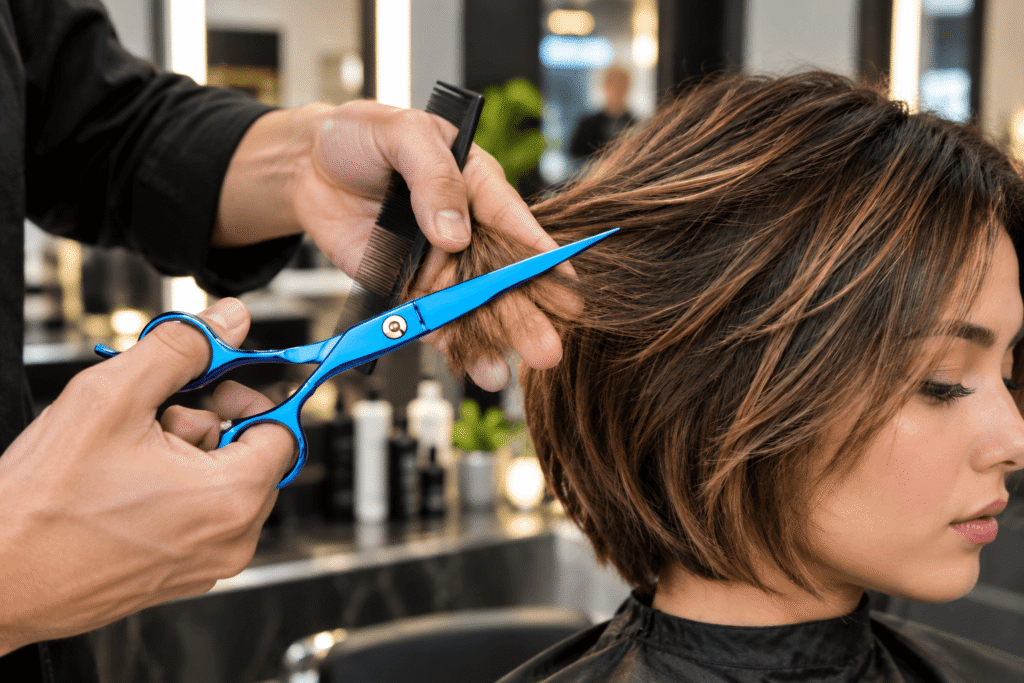
Creative haircutting is deliberate design. A sharp perimeter can make an asymmetrical bob look architectural, while a broken edge can make the same outline feel softer. Internal layers can build lift, release weight, or create separation. Hair cutting scissors give the stylist direct control over those choices, which is why they remain central even when clippers, razors, or texturizing tools are also used.
The scissors do not create the haircut by themselves. Consultation, hair analysis, sectioning, elevation, overdirection, tension, guides, and cross checking determine where the hair is cut and how it will fall. The tool affects how accurately and comfortably the stylist can carry out that plan.
Why Scissors Matter in Creative Haircut Design
Creative cuts often combine a clear foundation with selective disruption. The foundation establishes the silhouette and balance. Refinement then changes the perimeter, internal weight, or surface texture without losing the intended shape.
Professional hair cutting scissors support this process in five practical ways.
- Line control lets the stylist create a strong blunt edge, a soft perimeter, or a deliberate change in length.
- Weight control determines where density is preserved and where bulk is released.
- Texture control changes how individual sections separate, blend, or move.
- Access and visibility allow close work around short sections, fringes, ears, and contours.
- Repeatability helps the stylist follow a guide and reproduce the design across related sections.
JOEWELL groups blunt cutting, point cutting, slide cutting, dry cutting, scissors over comb, thinning, and texturizing as distinct haircutting techniques. Each method changes the hair differently. Treating them as interchangeable can make a creative haircut look random instead of intentional.
Creative Haircuts Begin with Shape
The first job of cutting scissors is to establish shape. A blunt or club cut creates a clear line and can form the base of a bob, fringe, geometric crop, or disconnected section. JOEWELL describes blunt cutting as a basic method for creating shape. The creative decision comes from where that line sits, how it relates to the head, and whether the sections connect.
Layering and graduation change the distribution of length and weight. Elevation generally removes more weight as sections are lifted away from their natural fall, while overdirection preserves length toward the direction from which the section is pulled. These mechanics can create roundness, expansion, collapse, movement, or a deliberate weight line. The Nixcer guide to layering with hair cutting scissors provides more detail on building and blending layers.
A creative shape still needs a readable structure. Texturizing cannot reliably repair an inaccurate foundation. Establish the major perimeter and internal guides first, then add texture only where it supports the design.
How Scissor Techniques Change the Result
| Technique | Creative result | Scissor and control notes |
| Blunt cutting | Strong perimeter and visible geometry | Stable blades and consistent tension help maintain a clean guide |
| Point cutting | Softer edge and controlled separation | Tip shape, insertion depth, section size, and angle change the amount of texture |
| Slide cutting | Flowing length variation and internal movement | Very sharp smooth blades and light control reduce snagging and unintended removal |
| Scissors over comb | Short contours and graduated shapes | A longer blade can improve efficiency while the comb controls length and angle |
| Deep point cutting and notching | Strong separation and negative space | Use small test sections because deeper cuts remove more structure |
| Thinning and texturizing | Selective bulk reduction or diffusion | Tooth design and cut ratio affect how much hair is removed in each pass |
| Dry refinement | Adjustment based on natural fall and visible balance | Work conservatively because the finished length and weight are immediately visible |
Blunt Cutting for Graphic Lines
Blunt cutting creates a solid edge by cutting across a section at the chosen guide. It is useful for geometric bobs, compact fringes, strong disconnections, and any design where the perimeter should read clearly.
The technique looks simple, but the line can shift when section tension varies, the head moves, or the stylist changes finger angle. Smaller sections improve visibility. Cross checking from another direction helps reveal uneven weight or a drifting guide.
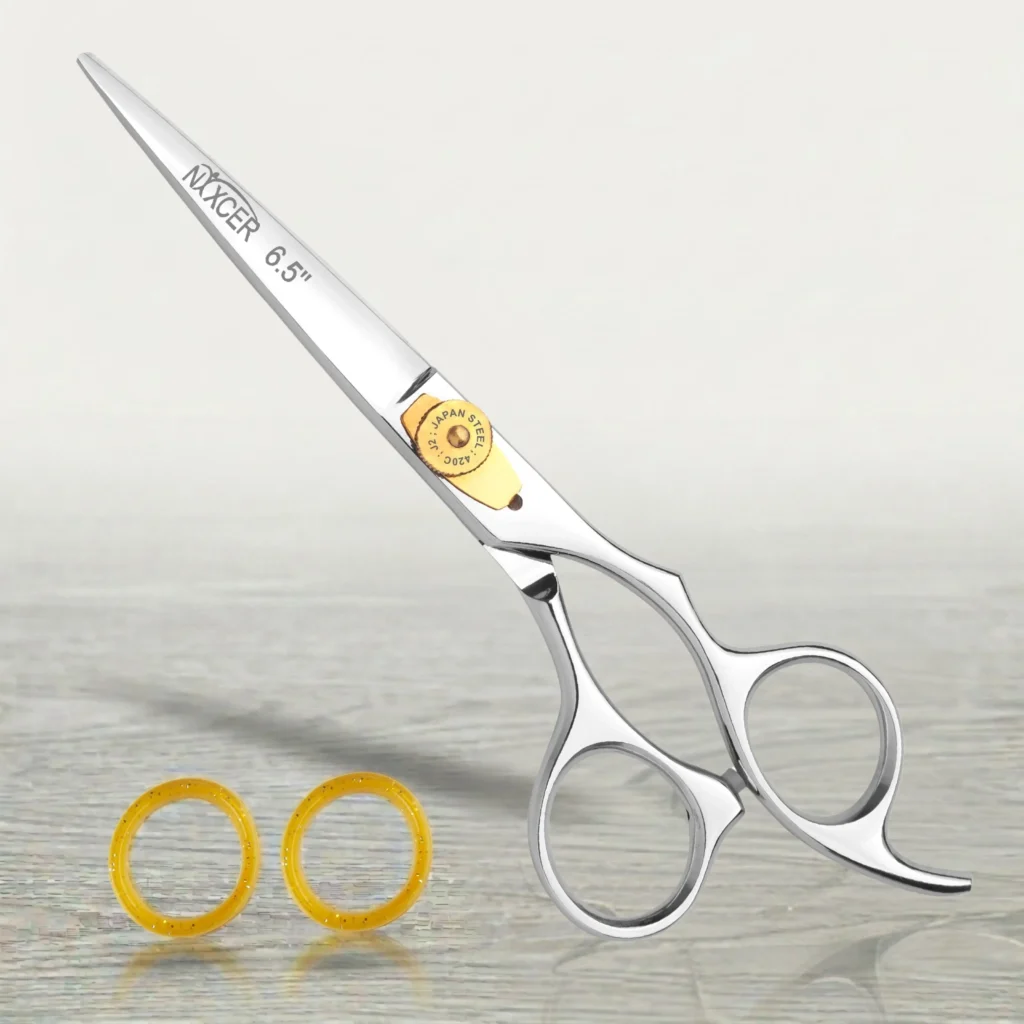
Blade length should match the area and the stylist’s control. A shorter shear can feel precise around a fringe or tight detail. A longer shear can cover more distance along a broad perimeter, but it should not encourage oversized sections.
Point Cutting for Softness and Separation
Point cutting inserts the tips of the scissors into the ends rather than cutting straight across. JOEWELL explains that point cutting can create a jagged look, form part of the base cut, or adjust delicate texture at the ends. In practice, shallow point cutting softens a line, while deeper and wider placements create stronger separation.
The result depends on four variables: the angle of the blades, the depth of entry, the width of the section, and the spacing between cuts. A stylist should decide these before cutting instead of making random snips. Fine hair or an already light perimeter usually needs less removal than dense hair with a heavy edge.
For a step by step explanation, see using hair cutting scissors for point cutting techniques.
Slicing for Movement
Slicing and slide cutting create gradual changes in length within a section. JOEWELL defines slide cutting as moving the scissors through a section while opening and closing the blades, and slicing as sliding the open scissors along the surface of the hair. Both approaches can create mixed lengths and a textured result.
These methods demand a smooth cutting action. A blade that catches, folds, or pushes hair makes the result harder to control. Convex edges are often chosen for motion cutting because their fine edge can move through the hair with less resistance. Curved blade lines can also follow a section more naturally in some techniques.
Use light tension and a controlled path from the planned starting point toward the ends. Avoid dragging closed blades through the hair. Begin with limited removal, release the section, and assess the fall before repeating. The Nixcer guide to slicing techniques with hair cutting scissors expands on hand position, sectioning, and common errors.
Scissors Over Comb for Short Creative Shapes
Scissors over comb is useful when the hair is too short to hold securely between the fingers. The comb lifts and controls the section, while the scissors cut the hair that extends beyond it. This makes the method valuable for tapered sides, tight contours, short crops, and transitions between disconnected areas.
JOEWELL recommends longer scissors for this technique because they can cover the comb efficiently. Efficiency still depends on control. The comb angle sets the shape, and each new section should overlap the previous one enough to prevent visible steps. Moving too quickly or opening the blades too widely near the ear increases risk.
Thinning and Texturizing for Weight Control
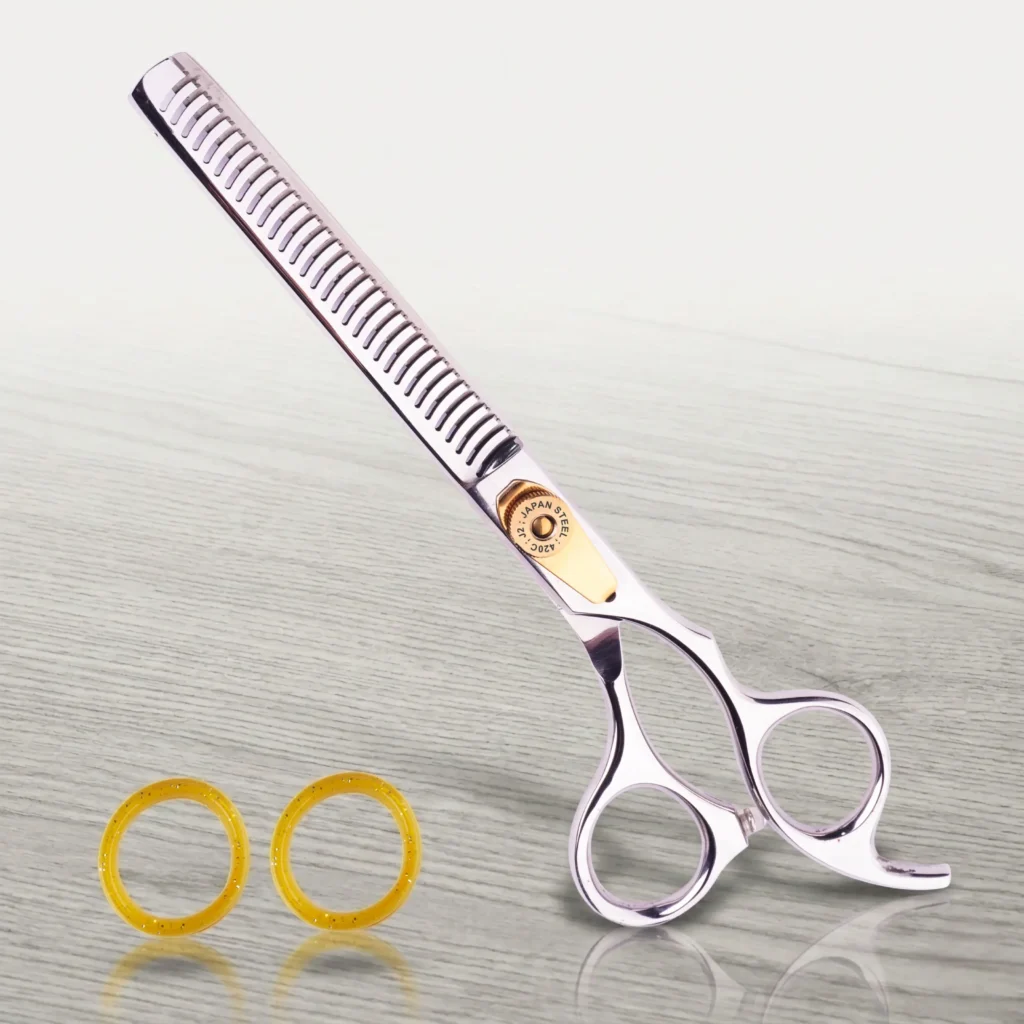
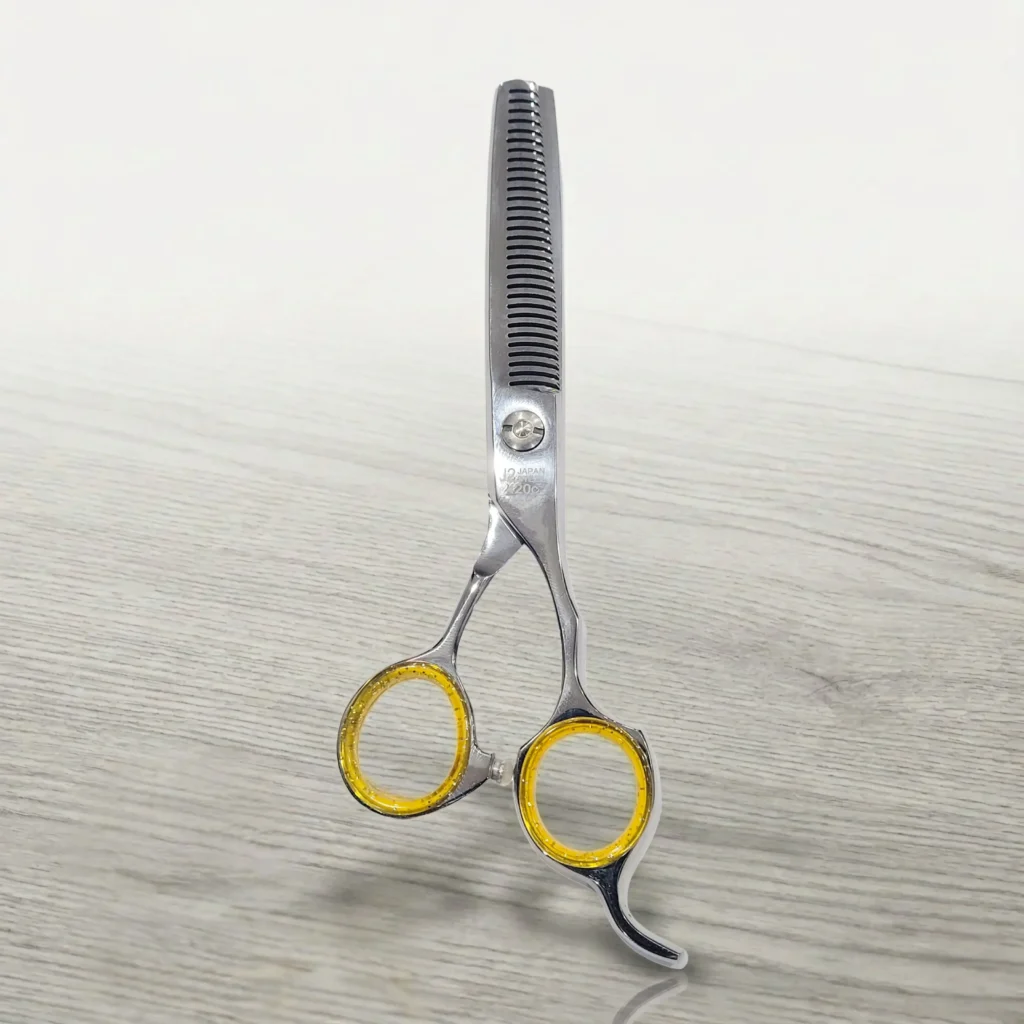
Thinning and texturizing shears cut only part of the hair captured between the blades. They can diffuse a hard line, reduce selected density, or create separation, but they do not produce one universal effect. Tooth count, tooth spacing, cut ratio, blade orientation, section thickness, and the number of passes all matter.
For example, JOEWELL lists texturizing models with different cut ratios, which shows why the label texturizing shears is not enough to predict the result. A low removal rate can create subtle diffusion. A higher removal rate can make a visible change quickly.
Keep the perimeter and structural support in mind. Repeated cuts in the same area can create short internal hairs, holes, or ends that look thin. Curly hair, fine hair, fragile hair, and heavily lightened hair need especially conservative assessment because density and spring can change the visible result after the section is released.
Dry Cutting for Visual Refinement
Dry cutting allows the stylist to see the hair closer to its finished fall. JOEWELL notes that dry cutting can be used to check the final state of a style while cutting. It can help refine a fringe, balance an asymmetry, personalize curl placement, or remove isolated weight that becomes visible after drying.
Dry refinement should follow a clear plan. The stylist needs to account for styling, natural movement, growth patterns, and curl spring. Cutting individual curls or surface pieces without checking the complete silhouette can create gaps that are difficult to see until the hair moves.
Choosing Scissors for Creative Techniques
The best shear is the one that fits the planned method, the stylist’s hand, and the hair being cut. Price or steel origin alone does not determine suitability.
Blade Edge
Convex edges are commonly selected for slide cutting, point cutting, and other techniques that benefit from a smooth, low resistance action. Beveled edges can provide a stable and durable feel for direct cutting. The Nixcer comparison of convex and beveled scissor edges explains the practical differences, while the guide to hair cutting scissor blade types covers blade profiles in more detail.
Blade Length and Shape
Shorter scissors can improve access for close detail and compact sections. Longer scissors can be efficient for broad lines, deep point cutting, and scissors over comb. Curved or bamboo leaf style blade lines may support smooth motion cutting by following the direction of the section.
Choose length based on control rather than a universal rule. A long blade is useful only when the stylist can open and close it smoothly without losing the guide.
Handle and Handedness
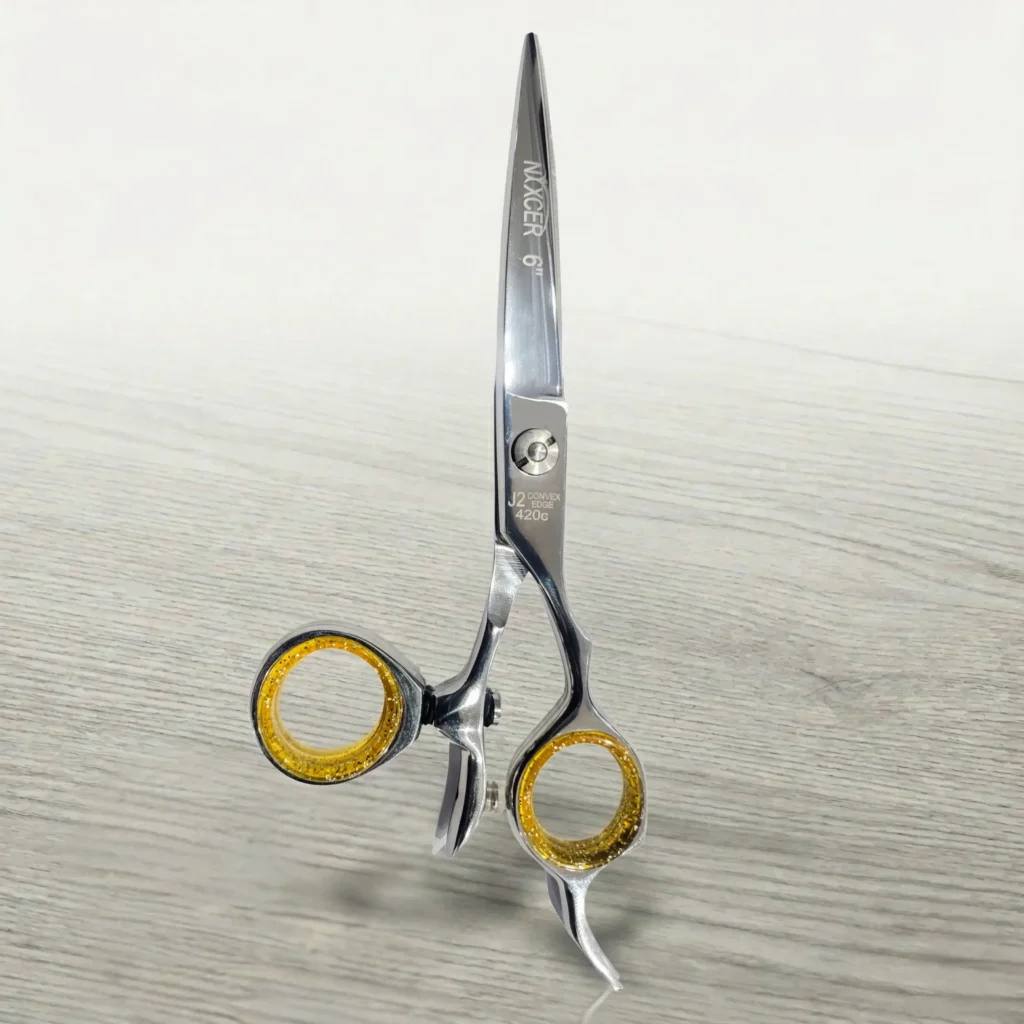
Opposing, offset, crane, and swivel handles place the thumb, wrist, and elbow differently. A comfortable handle can make it easier to maintain a stable cutting angle through detailed work. It does not automatically improve technique, but it can reduce unnecessary repositioning and help the stylist work with a lighter grip.
Left handed stylists should use true left handed scissors when possible because the blade orientation and handle are designed for the left hand. The Nixcer guide to professional scissor handle design explains how handle geometry affects control and working posture.
Balance and Tension
A balanced shear should feel stable in the hand without forcing the fingers to compensate for a heavy blade or handle. Tension should let the blades open and close smoothly while maintaining correct contact. Tension that is too loose can let hair fold or push. Tension that is too tight can make the action heavy and accelerate wear.
Sharpness matters most when the technique uses motion through the hair. If the shear pushes, folds, or catches hair, stop and inspect it. The Nixcer hair cutting scissor sharpness test offers a structured check before the tool returns to service.
A Controlled Workflow for Creative Haircuts
- Define the result. Agree on the silhouette, perimeter, length, texture, maintenance, and how much daily styling the client accepts.
- Read the hair. Check density, strand size, elasticity, condition, growth patterns, natural fall, curl behavior, and previous chemical services.
- Build the foundation. Establish guides, sectioning, elevation, overdirection, and the main weight distribution before decorative texture work.
- Match the tool to the method. Select blade edge, length, handle, and tooth pattern according to the planned technique and removal rate.
- Test a small section. Release and observe the section before repeating a strong texturizing or motion cutting technique.
- Cross check the shape. Comb the hair in more than one direction and compare balance, connection, and weight.
- Refine in the finished state. Dry and style the hair, then make limited adjustments based on natural fall and movement.
- Record the method. Note sections, guides, tools, and areas of disconnection so the result can be maintained or evolved at the next visit.
Common Mistakes in Creative Scissor Work
Adding Texture Without a Reason
Texture should solve a design problem such as a hard perimeter, excess weight, weak movement, or insufficient separation. Random point cutting and thinning make the result harder to reproduce and can weaken the silhouette.
Removing Too Much Hair at Once
Deep notching, repeated thinning, and aggressive slicing can remove support quickly. Work in small sections, use fewer passes, and reassess after the hair returns to natural fall.
Using One Shear for Every Technique
A general cutting shear can perform many tasks, but it may not be ideal for every motion, length, or hair density. A stylist who regularly performs long slide cutting, detailed dry work, and high volume scissors over comb may benefit from separate tools chosen for each job.
Ignoring Hair Behavior
Wet hair can stretch, curls can spring upward, and growth patterns can redirect a short section. The same cutting angle can look different on fine, dense, straight, wavy, and tightly curled hair. The design must be assessed after each important release of weight.
Working with Poorly Maintained Scissors
Dirty pivots, incorrect tension, edge damage, and dull blades can change how hair enters and leaves the cut. Clean the tool according to the maker’s instructions, oil the pivot as recommended, and use a qualified sharpener who understands professional hair shears.
Safety and Professional Limits
Creative techniques often place sharp tips close to the fingers, face, ears, or scalp. Use stable sections, keep the noncutting hand clear, and slow down around contours. Do not use a damaged shear or force a blade that catches.
This guide explains principles, not a substitute for supervised cosmetology or barber training. Licensing and sanitation rules vary by location, so professionals should follow the rules that apply in their jurisdiction.
Frequently Asked Questions
Best Scissors for Creative Haircuts
There is no single best pair for every creative haircut. A sharp general cutting shear can establish the foundation, while a smooth convex shear may suit slicing and refined point cutting. Texturizing or thinning shears are separate tools for selective weight removal. Fit, handedness, balance, tension, and the planned technique should guide the choice.
Scissors Used for Point Cutting
Point cutting can be performed with a sharp straight cutting shear. Narrow tips help with fine detailing, while longer or wider blades can create deeper separation when the stylist has suitable training and control. The depth and spacing of the cuts matter as much as the scissor model.
Difference Between Cutting and Texturizing Shears
Cutting scissors have two continuous blades and cut all hair captured at the closing point. Texturizing shears use teeth or gaps so only part of the section is cut. Their removal rate varies by design, so tooth count alone does not describe the complete effect.
Convex Scissors for Creative Techniques
Convex edges are often useful for slide cutting, slicing, point cutting, and precision work because they can provide a smooth action with low resistance. They are not required for every technique. A stable beveled shear may suit direct blunt cutting, depending on the stylist’s preference and the tool’s quality.
Scissor Length for Creative Haircuts
Shorter scissors can support close detail and compact sections. Longer scissors can cover broad perimeters, deep point cutting, and scissors over comb more efficiently. The right length is the longest blade the stylist can control comfortably for the planned task.
Thinning Shears on Curly or Fine Hair
They can be used, but only after assessing density, curl pattern, condition, and the intended shape. Conservative placement and limited passes help protect the perimeter and internal support. Release and observe each test section before removing more.
Sharpness and Creative Cutting
Sharpness helps the blades cut where the stylist intends, especially during slicing and dry refinement. If hair bends, pushes, catches, or pulls, the shear should be inspected and serviced before continued use.
Final Takeaway
Hair cutting scissors are the main precision tool behind many creative haircuts because they let the stylist control line, weight, texture, and movement. Strong work begins with an accurate foundation, then uses point cutting, slicing, scissors over comb, dry refinement, or texturizing only where each method supports the design. The most suitable scissors are sharp, balanced, correctly tensioned, comfortable in the stylist’s hand, and matched to the technique rather than chosen by one specification alone.