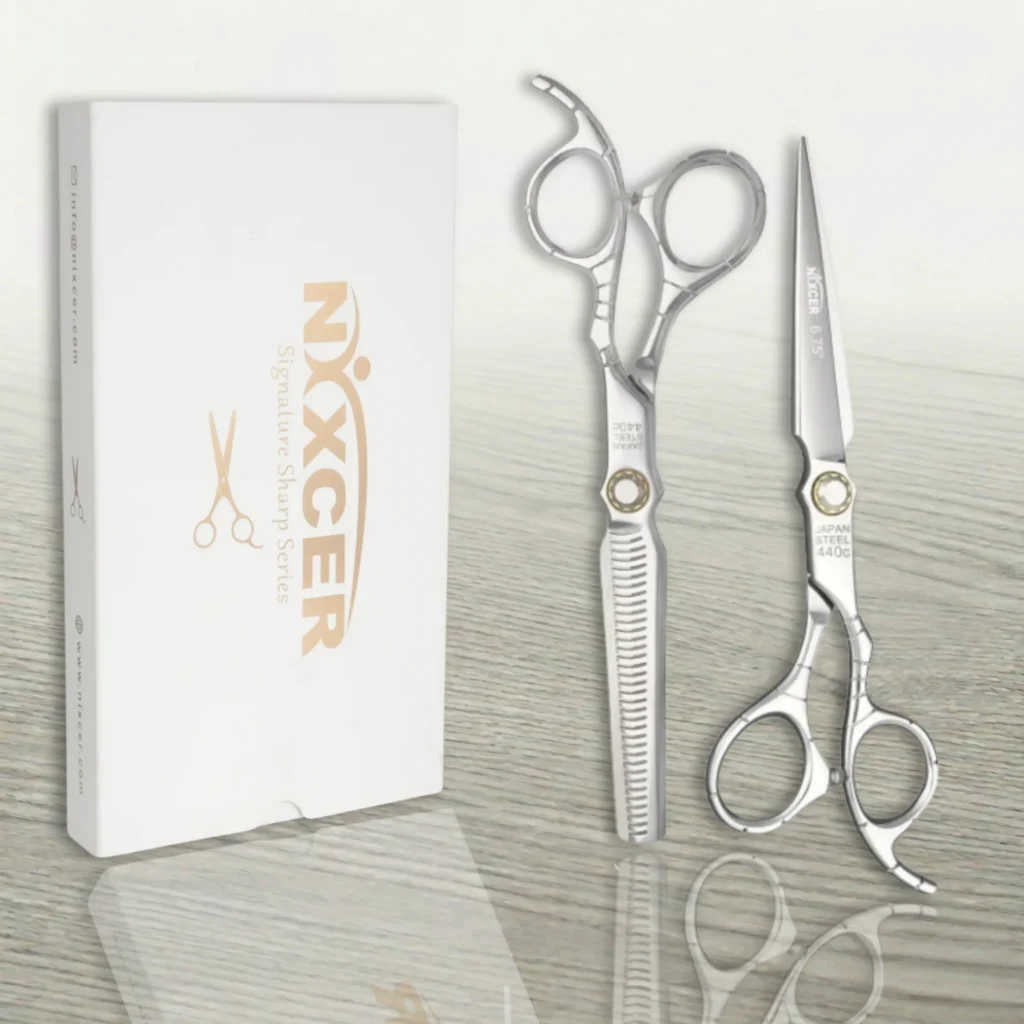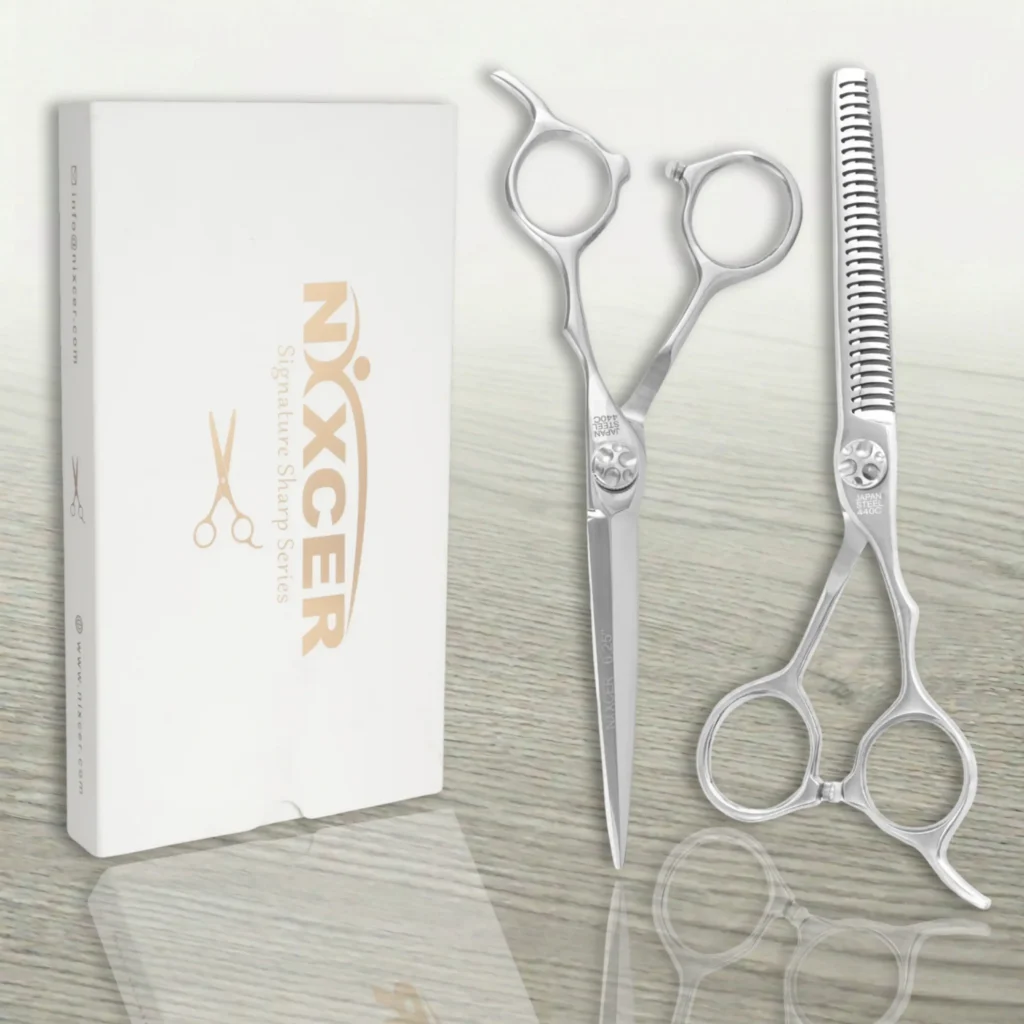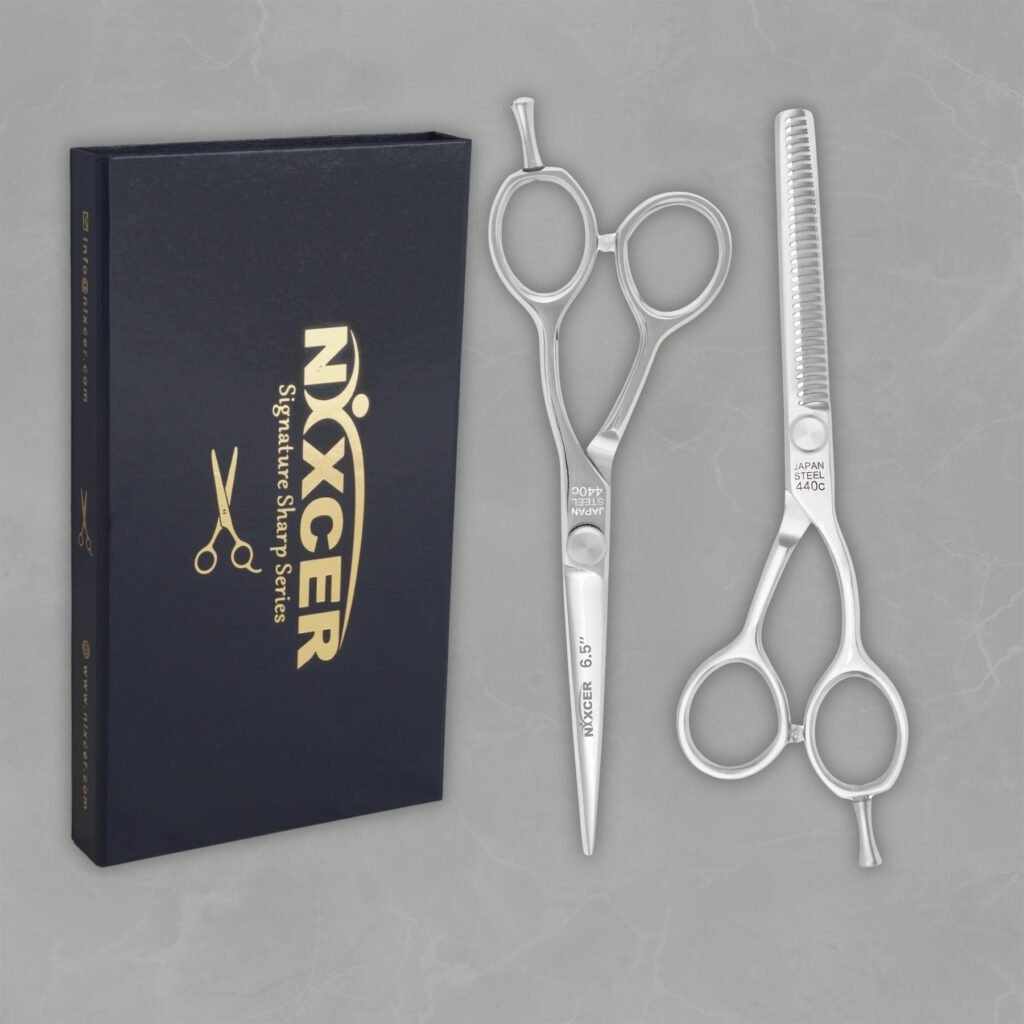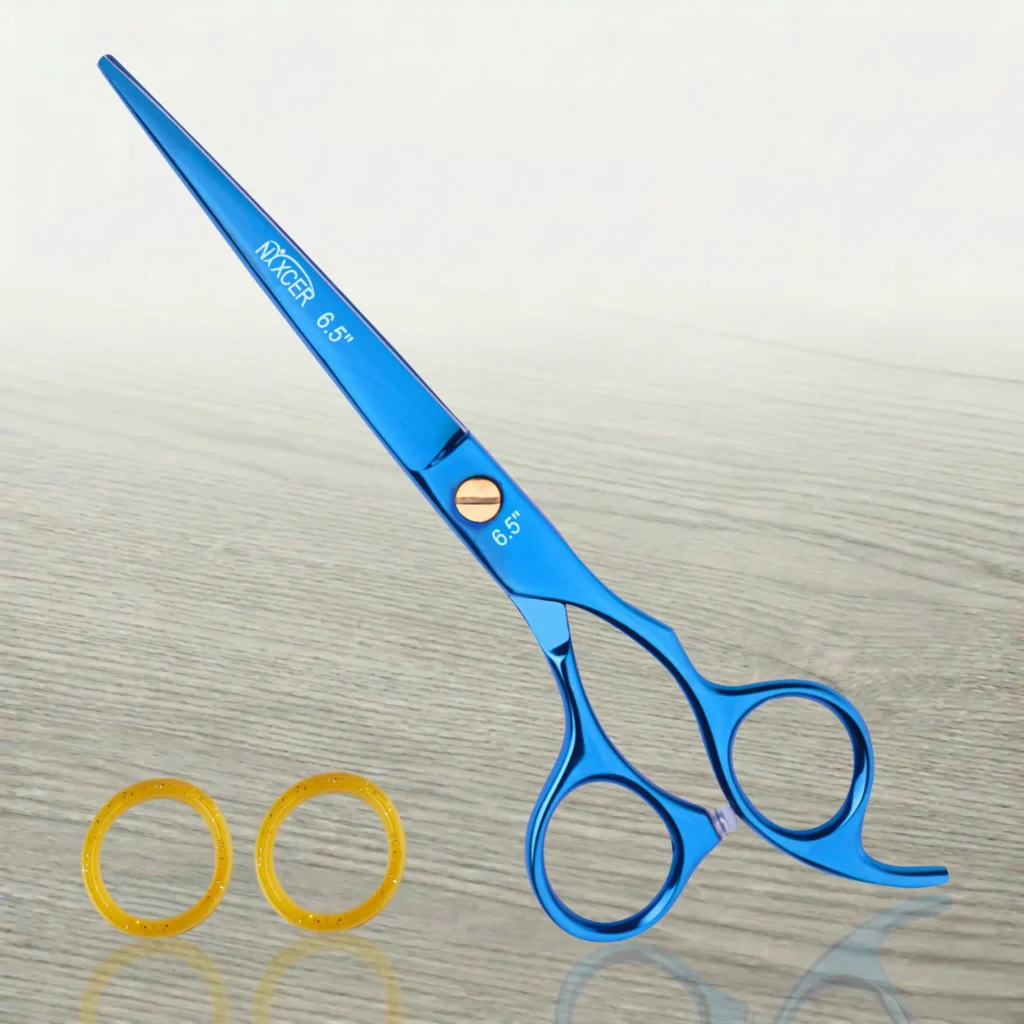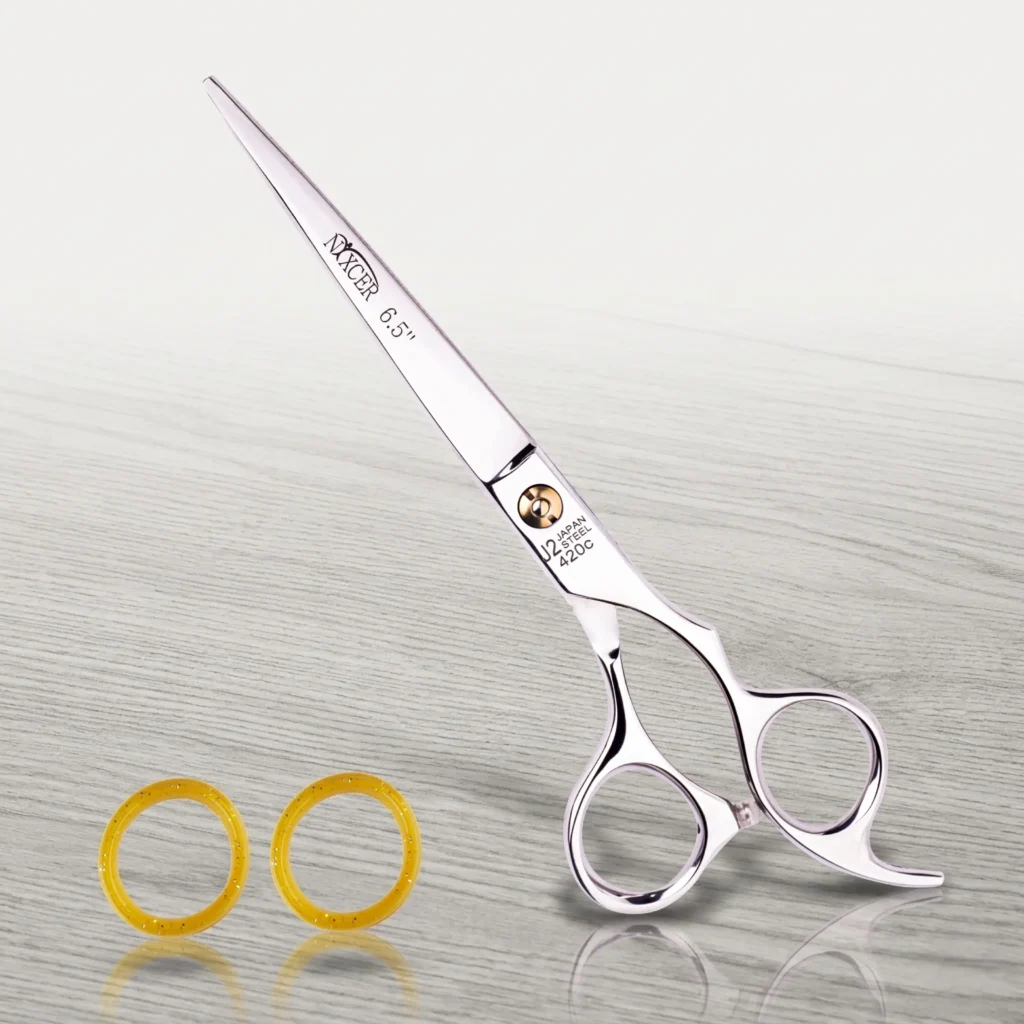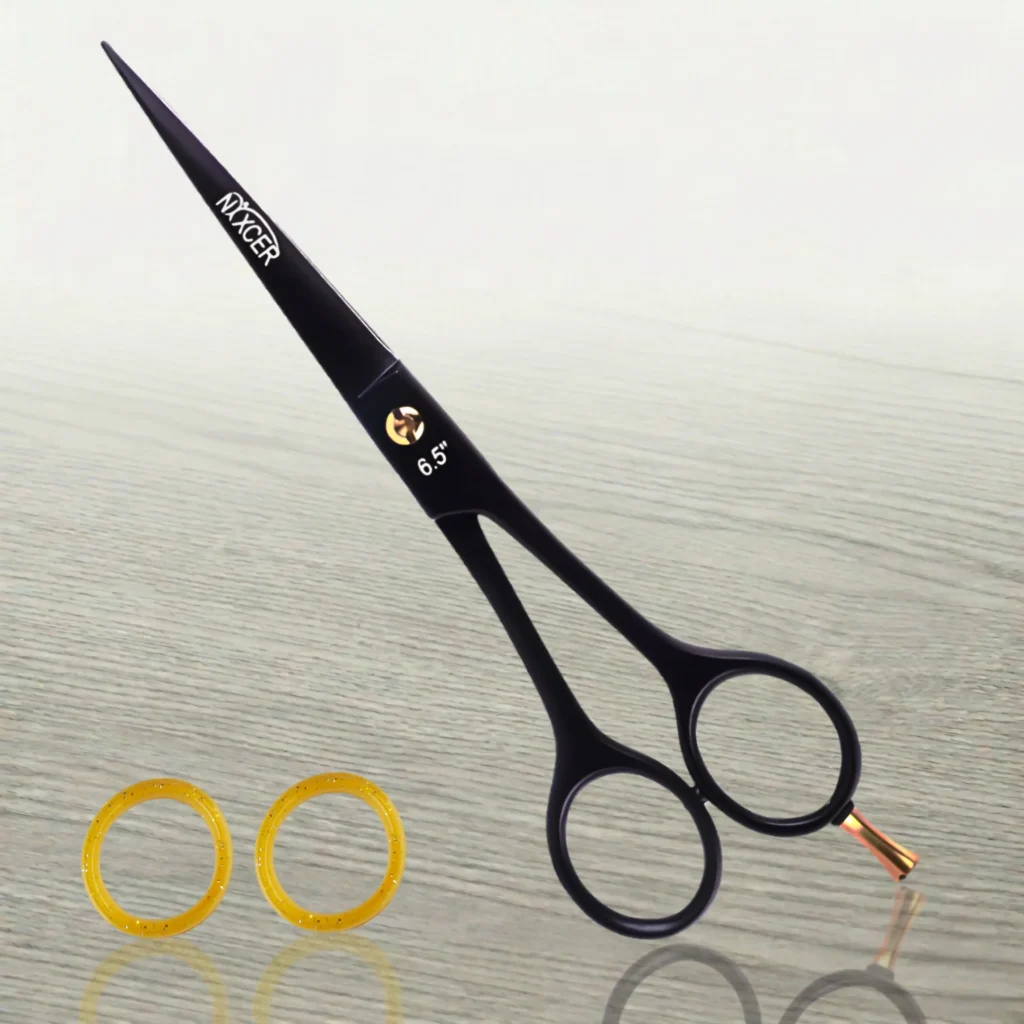
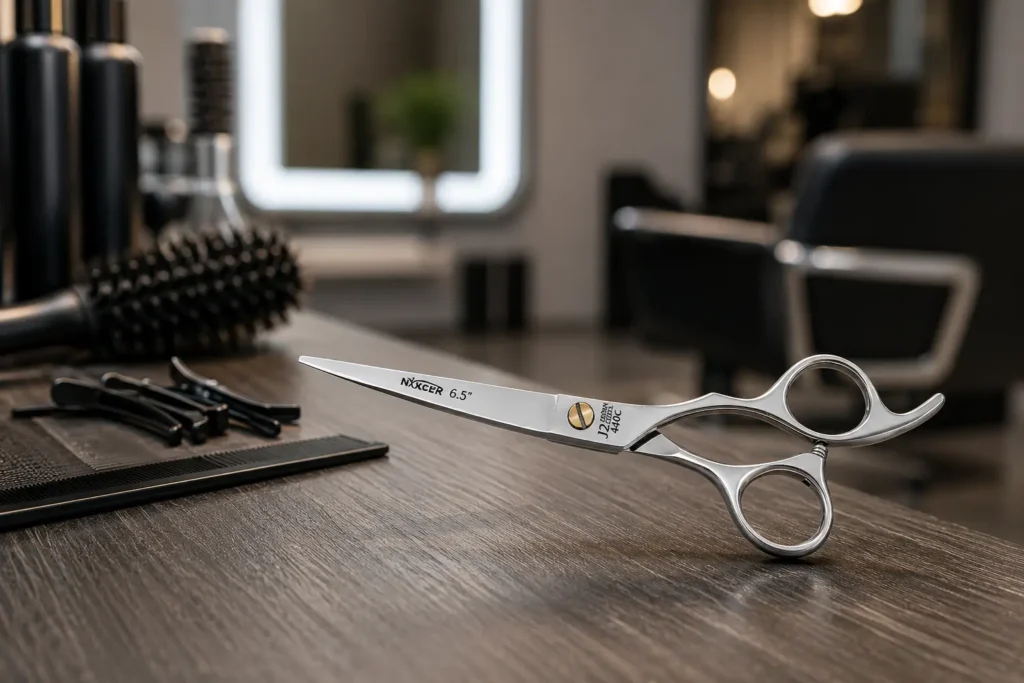
Hair cutting scissors should be a stylist’s most important tool because they directly control the shape, balance, texture, and finish of nearly every haircut. Clippers, combs, razors, brushes, and styling products all matter, but the shears in a stylist’s hand determine where the hair is removed and how accurately the intended design is translated onto the client.
Professional hair cutting scissors also influence how efficiently and comfortably a stylist can work. A sharp, well-balanced pair closes cleanly, follows the guide, and responds predictably at the tips. A poor fit, unstable tension, or damaged edge forces the hand to compensate. Over hundreds or thousands of cutting motions, that difference can affect consistency, fatigue, and confidence behind the chair.
Quick answer: Professional hair shears are a stylist’s primary precision instrument. The right pair supports clean cutting, repeatable control, advanced techniques, ergonomic hand positions, and a polished client result. No single model is perfect for every stylist, so the best scissors are the ones that fit the user’s hand, dominant side, cutting style, and maintenance routine.
1. Scissors Translate a Stylist’s Vision Into Shape
A haircut begins as a plan: preserve weight here, remove length there, open movement around the face, or build a strong perimeter. Hair cutting scissors turn that plan into a physical result one section at a time.
The stylist controls the opening of the blades, the angle of entry, the amount removed, and the direction of the cut. Small changes can soften a line, add separation, increase graduation, or shift the visual weight of the entire haircut. That level of control makes shears more than a general salon implement; they are the instrument through which technical judgment becomes visible.
This is especially clear in precision work. A bob requires a reliable line. A pixie depends on controlled detail around the ears and hairline. Long layers require consistent elevation and clean sectioning. Curly and textured hair often needs thoughtful, selective removal rather than indiscriminate thinning. In every case, the scissors must respond exactly where the stylist places them.
2. Sharp, Stable Blades Improve Precision and Consistency
Professional hair cutting scissors are designed to cut hair cleanly with controlled blade contact. Household scissors are built for mixed materials and do not provide the same edge geometry, balance, or pivot behavior required for repeatable salon work.
When a shear is sharp, aligned, and correctly tensioned, the blades meet smoothly from heel to tip. Hair is less likely to fold, push away, or snag before the cut is completed. The stylist can follow a guide with less corrective work and repeat the same movement across multiple sections.
Precision is not determined by sharpness alone. Blade profile, edge type, ride line, pivot condition, and the relationship between the two blades all affect performance. A high-quality edge cannot compensate for loose tension or poor alignment, just as an expensive steel cannot compensate for an unsuitable handle. The useful measure is the complete cutting system.
For a deeper look at how blade geometry changes cutting behavior, see the guide to different hair cutting scissor blades.
3. The Right Shears Help Preserve the Intended Finish
Scissors do not biologically heal hair, seal the cuticle, or guarantee freedom from split ends. They can, however, create a cleaner cut surface than a dull or damaged edge that bends, drags, or tears through the section.
That distinction matters in the finished haircut. Frayed-looking ends, pushed sections, and inconsistent lines can make fresh work appear rough. Clean cutting supports a neater perimeter, more deliberate texture, and better visual polish. It also reduces the need to revisit the same area repeatedly, which can remove more hair than the plan requires.
The stylist still has to account for chemical history, heat damage, density, curl pattern, and the condition of the client’s ends. Professional scissors are not a cure for damaged hair; they are the appropriate precision tool for executing the haircut without adding avoidable mechanical stress.
4. One Tool Supports Many Modern Cutting Techniques
A reliable cutting shear is remarkably versatile. By changing hand position, blade angle, section size, and motion, a stylist can use the same primary pair for multiple techniques.
| Technique | What the stylist is trying to achieve | Useful scissor qualities |
| Blunt cutting | A strong, clean perimeter or weight line | Stable blades, consistent tension, enough length to reduce repeated bites |
| Point cutting | Softer edges, separation, and controlled texture | Responsive tips, comfortable grip, precise closing action |
| Layering | Movement, volume, and balanced weight distribution | Smooth edge, good balance, maneuverable length |
| Slide cutting | Soft weight removal along the hair shaft | Refined convex or razor-style edge and very smooth action |
| Scissor-over-comb | Close, controlled shaping on shorter hair | Longer blade, stable tip, comfortable thumb movement |
| Dry refinement | Detail work based on the hair’s natural fall | Sharp edge, excellent tip control, predictable tension |
Technique must match the blade. A micro-serrated edge can grip hair for controlled straight cutting but is not intended to glide through slide-cutting motions. A convex edge can feel exceptionally smooth for advanced work but deserves careful handling and specialized sharpening. Our article on modern hairdressing techniques explains these applications in more detail.
5. Specialized Shears Expand Creative Control
The primary cutting scissor is the foundation, but many professionals build a small shear system rather than expecting one pair to perform every task.
Primary cutting shears
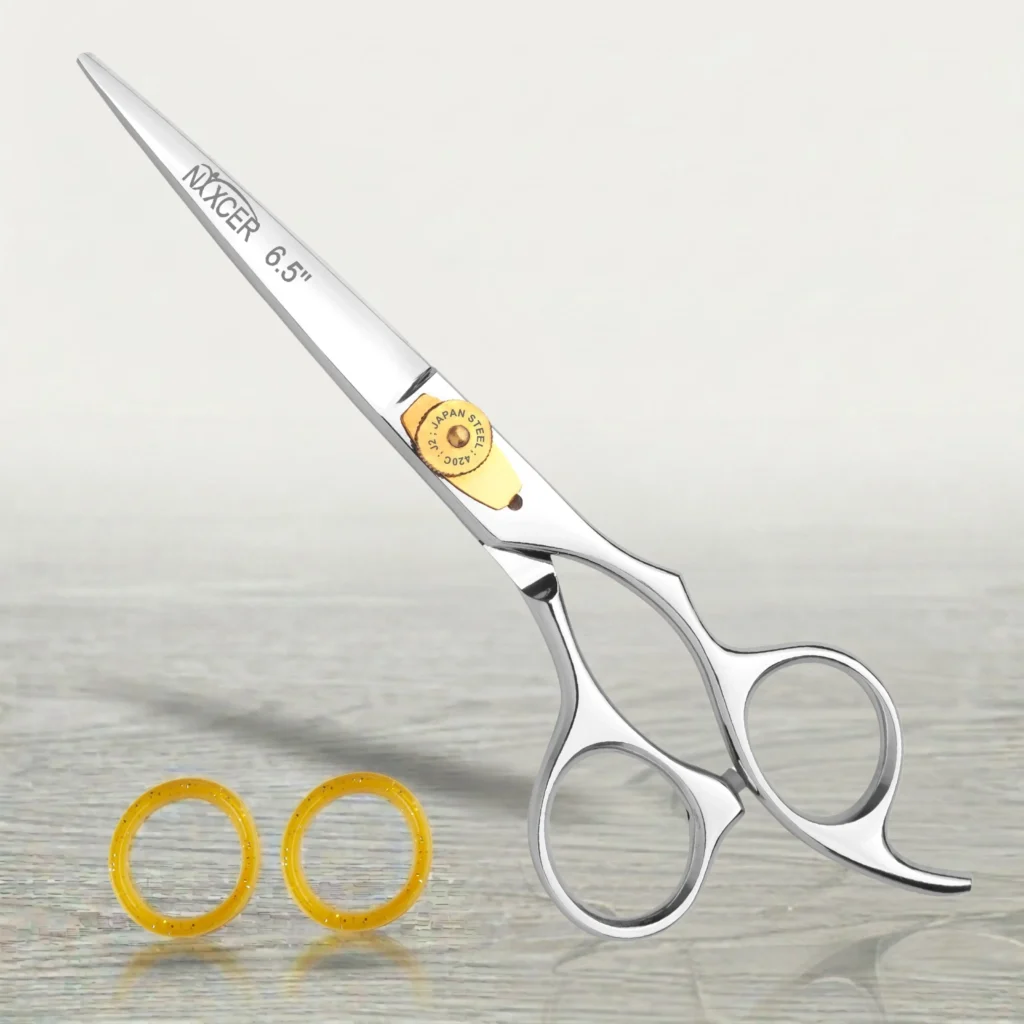
These handle most length removal, perimeter work, point cutting, and general shaping. For many stylists, a versatile size in the 5.5- to 6.5-inch range offers a practical balance between tip control and coverage, although hand size and technique should decide the final choice.
Longer cutting or barber shears
Longer blades can help with scissor-over-comb, broad sections, and strong lines. They cover more hair per closure, which can improve efficiency when the stylist has the control to use them safely.
Thinning and texturizing shears
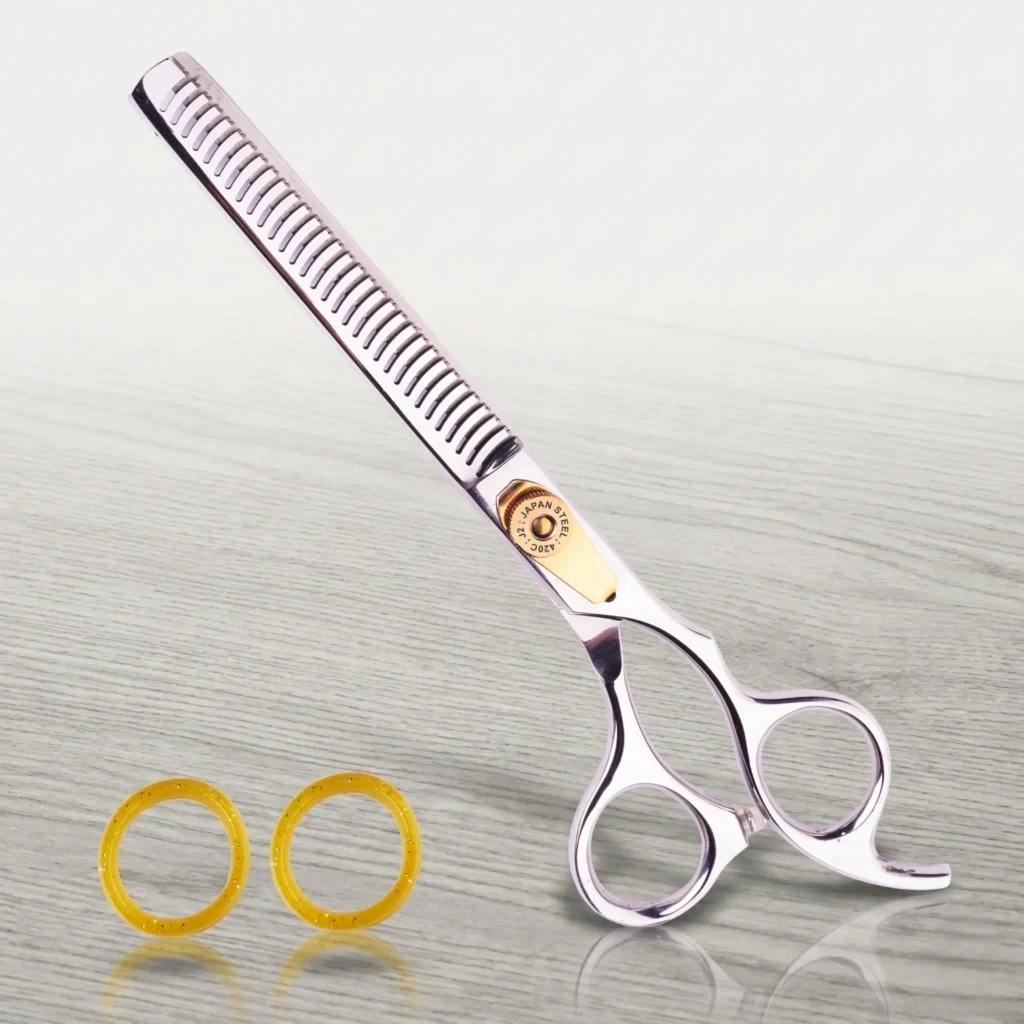
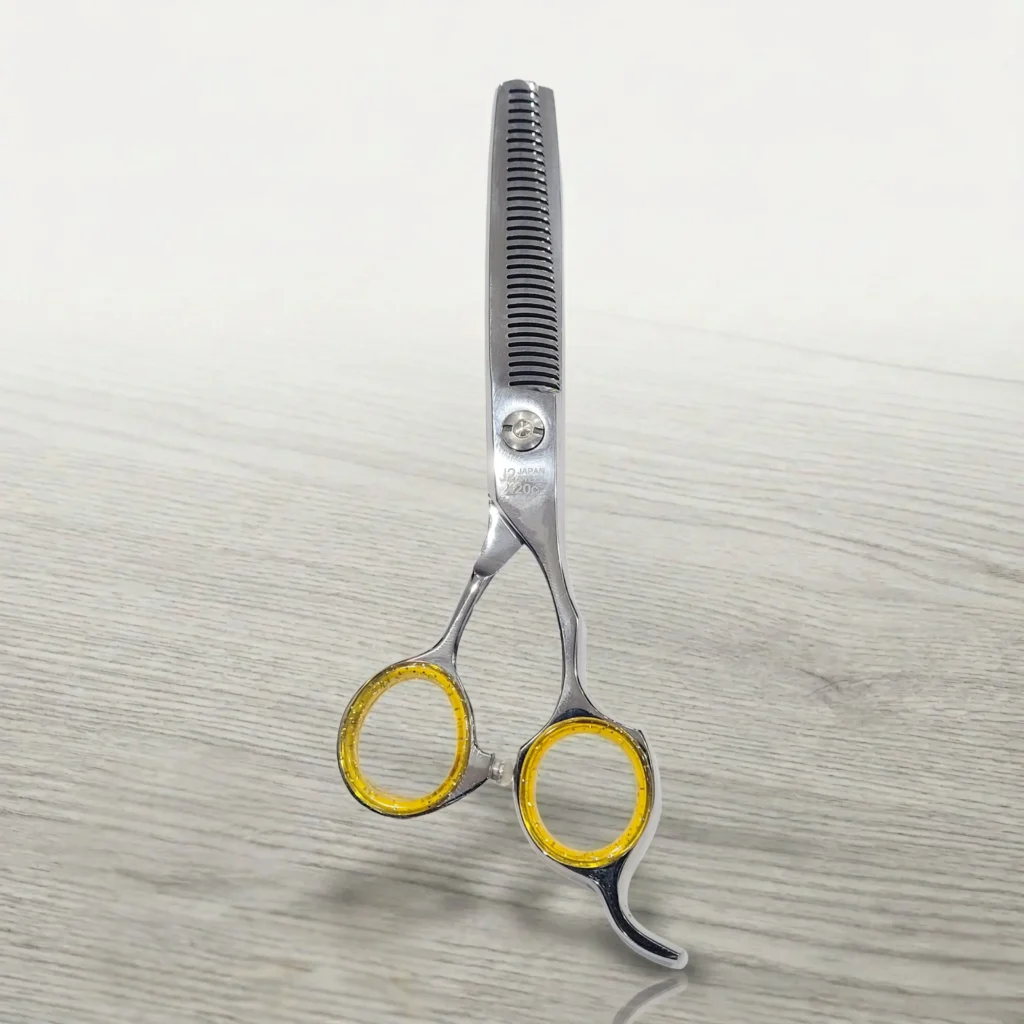
Toothed blades selectively remove hair rather than cutting the entire section. Depending on tooth count and design, they can blend weight lines, soften a shape, remove bulk, or create more visible separation. They should be chosen and used deliberately; repeated cuts in the same area can remove too much density. See the complete guide to texturizing and thinning scissors.
A serviced backup pair
A professional should not be forced to continue with dropped, damaged, or suddenly misaligned scissors. A maintained backup pair protects the day’s appointments while the primary shear is inspected or sharpened.
6. Ergonomics Can Affect a Stylist’s Working Life
Hair professionals repeat the same opening and closing motion throughout the day. Handle design, thumb position, blade length, weight, balance, tension, posture, and technique all influence how much effort that motion requires.
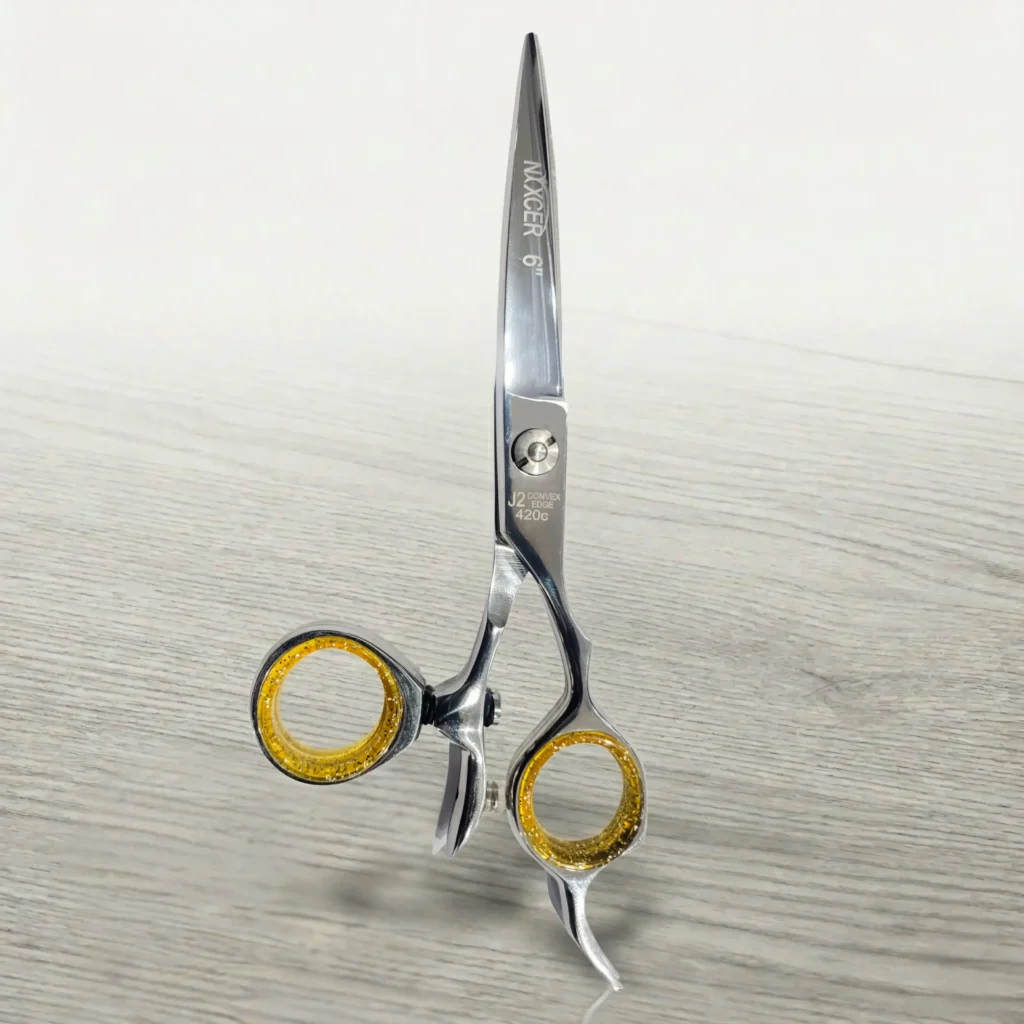
Offset handles can reduce the need to open the thumb widely. Crane handles may help some users keep the elbow lower. A swivel thumb can permit the hand and wrist to change position with less compensation. True left-handed scissors reverse blade orientation as well as handle placement, improving the sight line and natural closing action for a left-handed stylist.
Research supports taking ergonomics seriously. In a study of 44 volunteer hairstylists, an ergonomic scissor design was preferred over a traditional design and was associated with less wrist bending and lower reported discomfort in several areas. The study does not prove that one handle will suit every person, but it reinforces an important principle: the shape of a frequently used hand tool can affect posture and perceived strain.
Comfort should not be judged by appearance. A handle can look ergonomic yet feel wrong for a particular thumb length, grip habit, or cutting position. The best test is a controlled trial using the motions the stylist performs most often.
7. Better Fit Can Improve Speed Without Sacrificing Control
Salon efficiency is not simply cutting faster. It is completing deliberate work with fewer corrections, less hesitation, and less physical effort.
A properly fitted shear lets the ring finger sit securely while the thumb moves with minimal travel. The tool should feel balanced rather than blade-heavy or handle-heavy. Tension should be firm enough for stable blade contact but not so tight that the thumb must force every closure.
When these elements work together, the stylist can establish a rhythm. Sections are cut where intended, the guide stays visible, and finishing work becomes more selective. Minutes saved through consistency can add up across a full schedule, while rushed technique with an unsuitable tool often creates more corrective work.
8. Professional Tools Strengthen Client Confidence
Clients may not know the difference between a convex and beveled edge, but they notice professionalism. Clean tools, smooth operation, controlled technique, and careful storage signal that the stylist treats the service seriously.
The result matters even more. A haircut that sits correctly, grows out predictably, and suits the client’s texture builds trust. Tools alone do not create that outcome; consultation, sectioning, technique, and experience remain essential. Professional scissors support those skills by giving the stylist a reliable way to execute them.
Consistency strengthens reputation. When clients can expect the same standard across appointments, they are more likely to return, recommend the stylist, and accept expert guidance about maintenance or future shape changes.
9. What Makes Professional Hair Cutting Scissors Worth Using?
The best scissors for hairstylists are not defined by price, decoration, or one specification. Evaluate the complete tool.
Blade edge and geometry
Convex and refined razor-style edges are known for a smooth cutting feel and are often selected for slide cutting, point cutting, and other precision techniques. Beveled or micro-serrated edges can offer durability and grip for controlled straight cutting. Choose the edge for the work, not for a marketing label.
Steel and heat treatment
Steel composition influences corrosion resistance, toughness, and wear behavior, while heat treatment establishes the finished blade’s mechanical condition. A claim such as “Japanese steel” is useful only when paired with credible model details and good manufacturing. Nixcer’s main site describes professional models made with Japanese 440C steel, while individual product pages should remain the authority for model-specific specifications.
Hardness can support edge retention, but the highest number is not automatically best. Read the guide to the Rockwell hardness scale for hair cutting scissors before comparing HRC claims.
Handle fit and handedness
The thumb and finger rings should stabilize the shear without pinching. Removable inserts can improve fit, but they should not force the fingers into an unnatural position. Left-handed professionals should test true left-handed blade orientation rather than relying on a symmetrical handle alone.
Balance and weight
Balance affects how the scissor responds during detailed work and repeated closures. Two shears with the same listed weight can feel different if their centers of gravity are in different places. The correct tool feels controlled without requiring a tight grip.
Tension and alignment
An adjustable pivot lets the user tune blade contact within the manufacturer’s guidance. Very loose tension can let hair fold or push; excessive tension increases effort and wear. If the blades catch, grind, or close unevenly after adjustment, stop using the tool and consult a qualified scissor technician.
Blade length
Shorter shears can offer detailed tip control, while longer shears can improve coverage for broad sections and scissor-over-comb work. Length is measured for the complete scissor, not just the cutting edge, so a hands-on test is more useful than choosing by number alone.
10. How to Choose the Right Primary Shear
Use a repeatable selection process instead of buying on appearance.
- Start with your dominant hand. Choose a true right- or left-handed blade arrangement so the natural closing pressure and sight line support your technique.
- List your most frequent services. Precision bobs, long layers, dry curl work, and short scissor-over-comb cuts place different demands on blade length and edge design.
- Check finger and thumb fit. The rings should feel secure without squeezing, and the thumb should enter and exit easily.
- Test neutral posture. Mimic your common cutting positions. Watch whether the wrist bends sharply, the elbow lifts, or the shoulder tenses.
- Assess balance and closing effort. Open and close the shear slowly. It should feel controlled and smooth, not loose, gritty, or forced.
- Inspect the tips and cutting path. The tips should meet accurately, and the blades should close consistently from heel to tip.
- Confirm service requirements. Ask what sharpening method the edge needs, whether replacement parts are available, and who can service the model.
- Plan a backup. Keep another suitable pair clean, sharp, and ready for use.
For a more technique-focused buying checklist, read how to choose hair cutting scissors for precision cutting.
11. Why Maintenance Is Part of Professional Performance
Even excellent salon scissors will lose performance if hair, moisture, product residue, or incorrect tension is allowed to accumulate.
After each client or service
- Follow applicable salon hygiene and disinfection rules for your location.
- Remove loose hair and visible residue with a suitable soft cloth.
- Dry the scissors completely, including the pivot area.
- Check for an unusual sound, drag, or change in closing feel.
At the end of the working day
- Inspect the edge and tips under good light without running a finger along the sharp blade.
- Apply the manufacturer’s recommended scissor oil at the pivot when needed.
- Open and close the blades carefully so the oil reaches the contact area, then wipe away excess.
- Store the scissors closed in a protective case where they cannot strike other tools.
When performance changes
Stop and inspect the shear if it pushes hair, catches, folds a section, makes a new grinding sound, or requires more thumb pressure. First rule out contamination and inappropriate tension. If performance does not return, use the backup pair and arrange professional service.
Convex and specialized edges should be sharpened by a technician familiar with professional hair shears. General-purpose grinding can change the edge profile, remove too much metal, or disrupt blade alignment. Review Nixcer’s guide to sharpening and maintaining professional hair cutting scissors and the article on regularly oiling hair cutting scissors.
12. Common Mistakes That Undermine a Good Pair of Scissors
- Using salon shears on non-hair materials. Paper, packaging, thread, and general salon tasks can dull or damage the cutting edge.
- Choosing by appearance alone. Color and engraving do not reveal blade geometry, fit, balance, or heat treatment.
- Overtightening the pivot. Excessive tension increases closing effort and can accelerate wear.
- Continuing after a drop. A fall can nick the edge, bend a tip, or disturb alignment even when damage is not immediately visible.
- Sharing one setup among multiple stylists. Finger fit, dominant hand, tension preference, and technique are personal.
- Waiting for severe dullness. Addressing a change in performance early can reduce strain and prevent poor cutting behavior.
- Expecting one shear to do everything. Specialized work may require a longer blade, texturizing shear, or dedicated dry-cutting pair.
A Practical Nixcer Starting Point
Stylists comparing options can begin with Nixcer’s collection of professional hair cutting scissors, then narrow the choice by length, edge, handle, steel, and intended technique.
The Signature Sharp Series ARC Hair Cutting Shears are listed with a 6.25-inch size, convex edge, adjustable tension, C440 Japanese steel, and an ergonomic arc design. Those features make the model relevant to stylists seeking a versatile precision shear, subject to personal fit.
For broader sections or stylists who prefer more blade presence, the Broad Blade Razor Edge Hair Cutting Scissors provide another current option to compare. Product availability and specifications can change, so verify the live product page before purchasing.
Frequently Asked Questions
Why are professional hair cutting scissors so important?
They are the stylist’s main precision tool for removing length, building shape, creating texture, and refining the finish. Their sharpness, alignment, balance, fit, and tension influence control and consistency throughout the haircut.
What is the difference between hair cutting scissors and regular scissors?
Hair cutting scissors use blade geometry, edges, balance, and pivots designed for controlled work on hair. Household scissors are made for general materials and may fold, push, or tear a hair section instead of cutting it predictably.
What size scissors are best for a hairstylist?
Many stylists use a primary shear between 5.5 and 6.5 inches, but there is no universal best size. Shorter models can improve detailed tip control, while longer models can suit broad sections and scissor-over-comb work. Hand size and technique should decide.
Are convex-edge scissors best for professionals?
Convex edges are popular for smooth, precise techniques such as slide and point cutting. They are not automatically best for every user. A beveled or micro-serrated edge may offer more grip or durability for particular cutting methods and experience levels.
How do ergonomic scissors help hairstylists?
An appropriate offset, crane, or swivel design may help some stylists maintain a more neutral hand, wrist, elbow, or shoulder position. Benefits depend on individual anatomy, grip, posture, tension, and technique, so the shear should be tested rather than chosen by label alone.
How often should professional hair shears be sharpened?
There is no reliable universal calendar. Service frequency depends on workload, edge type, steel, cutting technique, care, and accidental damage. Arrange qualified sharpening when performance changes, and never continue using a nicked or misaligned blade.
How should a stylist maintain hair cutting scissors?
Keep them clean and dry, oil the pivot as recommended, check tension and cutting feel, protect them from drops, use them only on hair, and store them in a fitted case. Follow local hygiene requirements and the manufacturer’s care instructions.
Should a stylist own more than one pair of scissors?
Yes. At minimum, a working professional benefits from a dependable primary cutting shear and a serviced backup. A longer shear and a thinning or texturizing shear can expand the kit when the stylist’s services require them.
Final Thoughts
Hair cutting scissors deserve to be a stylist’s most important tool because they sit at the point where knowledge, creativity, and client expectations become a finished haircut. The right pair supports accuracy without fighting the hand, performs the techniques the stylist actually uses, and remains dependable through appropriate care.
Treat the purchase as a professional fit decision, not a search for the highest price or hardest steel. Compare blade geometry, length, handedness, handle shape, balance, tension, service needs, and cutting style together. When the complete tool fits the complete job, the scissors become what they should be: a precise extension of the stylist’s judgment.