A full appointment book asks a lot of your hands. By the last haircut, a thumb ring that felt slightly awkward in the morning can become difficult to ignore. You may notice yourself gripping more tightly, changing your wrist position, or repeatedly opening and closing the blades to finish a section.
The useful question is not simply, “Which scissors are ergonomic?” It is, “What is making this particular cutting movement harder than it needs to be?” Sometimes the answer is handle fit. Sometimes it is the pivot, the blade condition, or where you are standing.
This guide explains how to evaluate ergonomic hair cutting scissors and build a practical comfort routine around them. It is general tool and workplace guidance, not a diagnosis or treatment plan for hand pain.
Why Your Hand Gets Tired When Cutting Hair
Hairdressing combines repetitive hand movements with tool gripping and changing working positions. The Canadian Centre for Occupational Health and Safety’s hairdresser guidance identifies forceful gripping, awkward postures, reaching, poorly adjusted workstations, and demanding schedules as workplace concerns.
Use that broader picture when assessing fatigue. A new handle will not address every source of effort in a busy salon.
Start by noticing when the problem appears:
- During every blade closure: Check whether the action feels unusually heavy or uneven.
- At the finger rings: Look for slipping, pressure, or restricted thumb movement.
- Only in a particular cutting position: Compare your grip and working position with a position that feels easier.
- Late in the working day: Review the overall pattern of appointments and recovery opportunities, not only the scissors.
These observations are troubleshooting clues, not a way to identify a medical condition. If discomfort persists, do not keep experimenting with equipment as a substitute for professional assessment.
What Makes Hair Cutting Scissors Ergonomic?
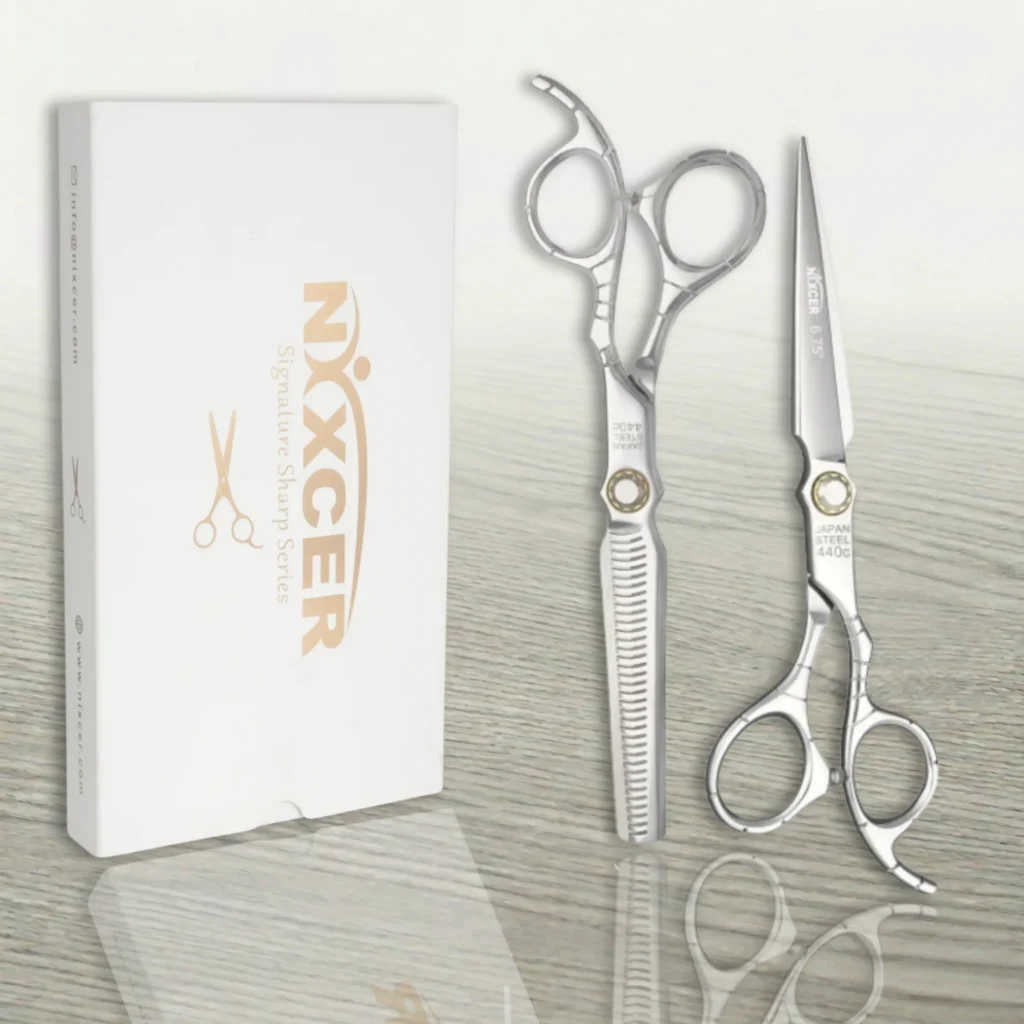
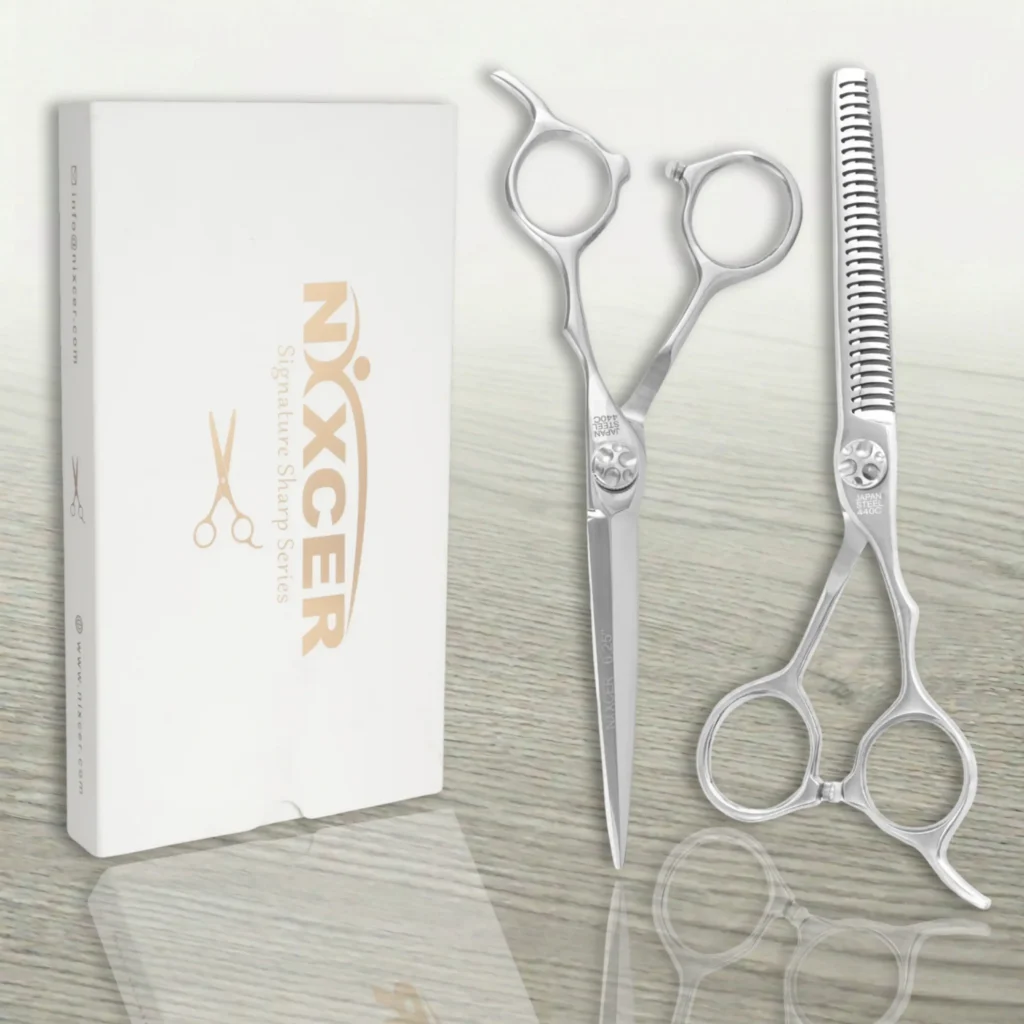
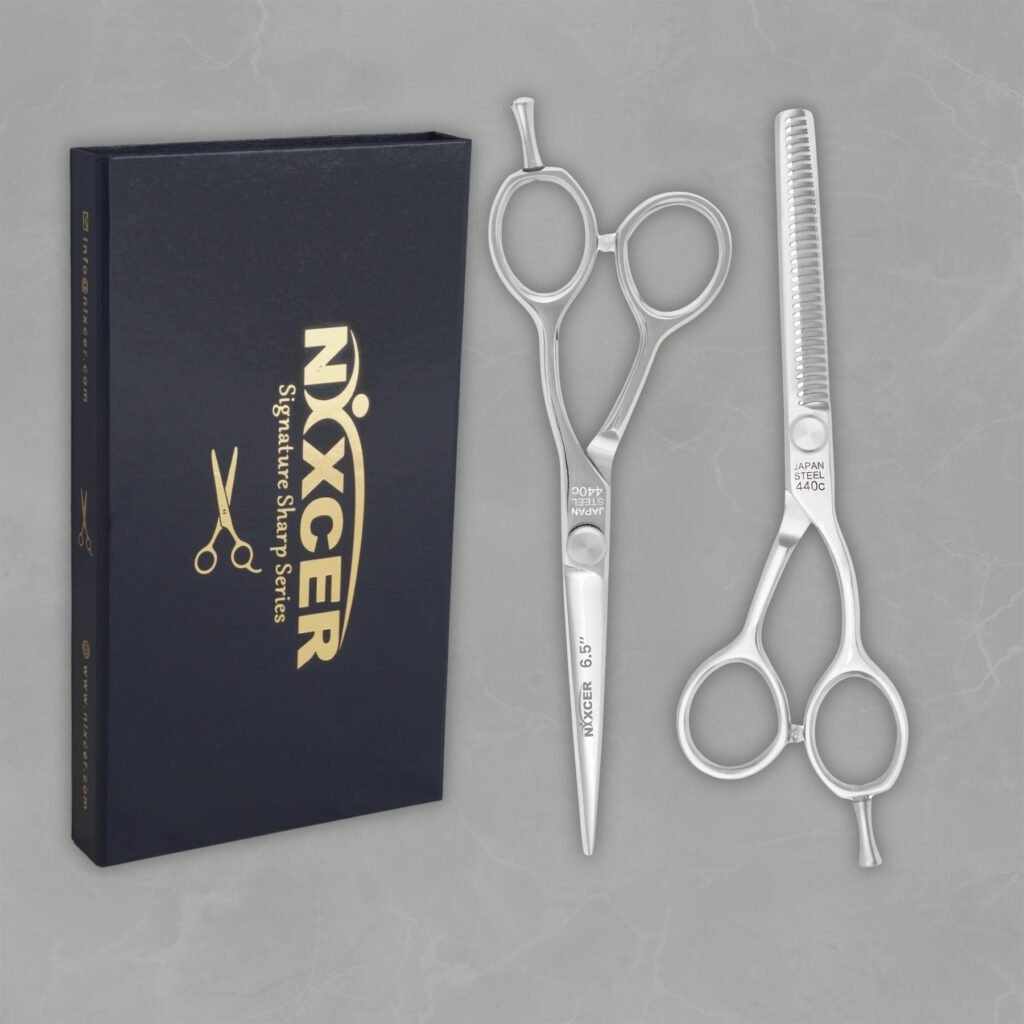
Ergonomics means fitting tools and work to the person using them. In scissors, that includes handle geometry, finger-ring fit, blade action, and how the tool behaves during your normal technique.
The word “ergonomic” on a product page is a starting point for comparison, not proof that the scissors fit your hand. Two models with the same nominal length can have different ring positions and feel different in use.
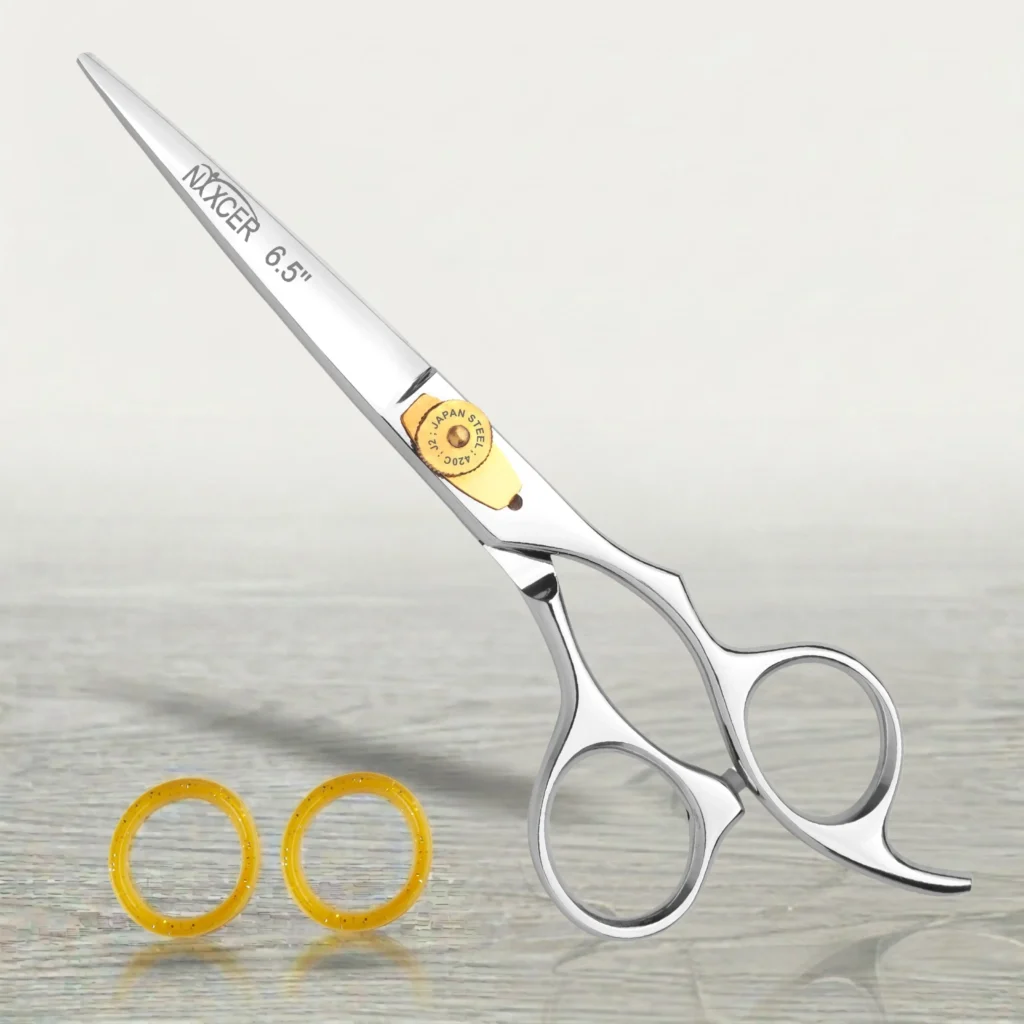
Offset, Crane, and Swivel Handles Compared
| Handle design | Distinguishing feature | What to check in a trial |
| Symmetric or opposing | Finger and thumb handles have a more level arrangement | Whether your familiar grip stays comfortable |
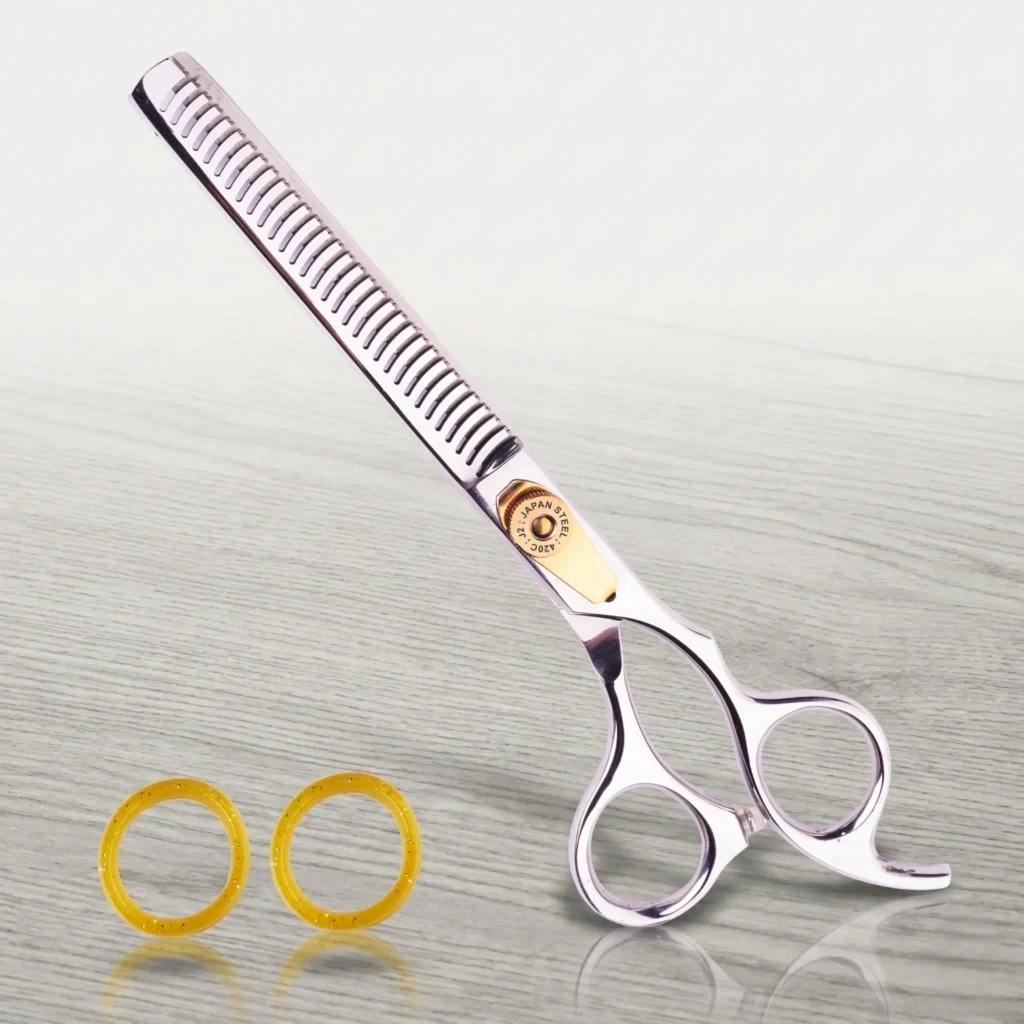
| Offset | Unequal handle geometry changes the thumb-ring position | Whether thumb reach feels easier |
| Crane | Angled handle arrangement changes the hand-to-blade relationship | Whether your working position feels less awkward |
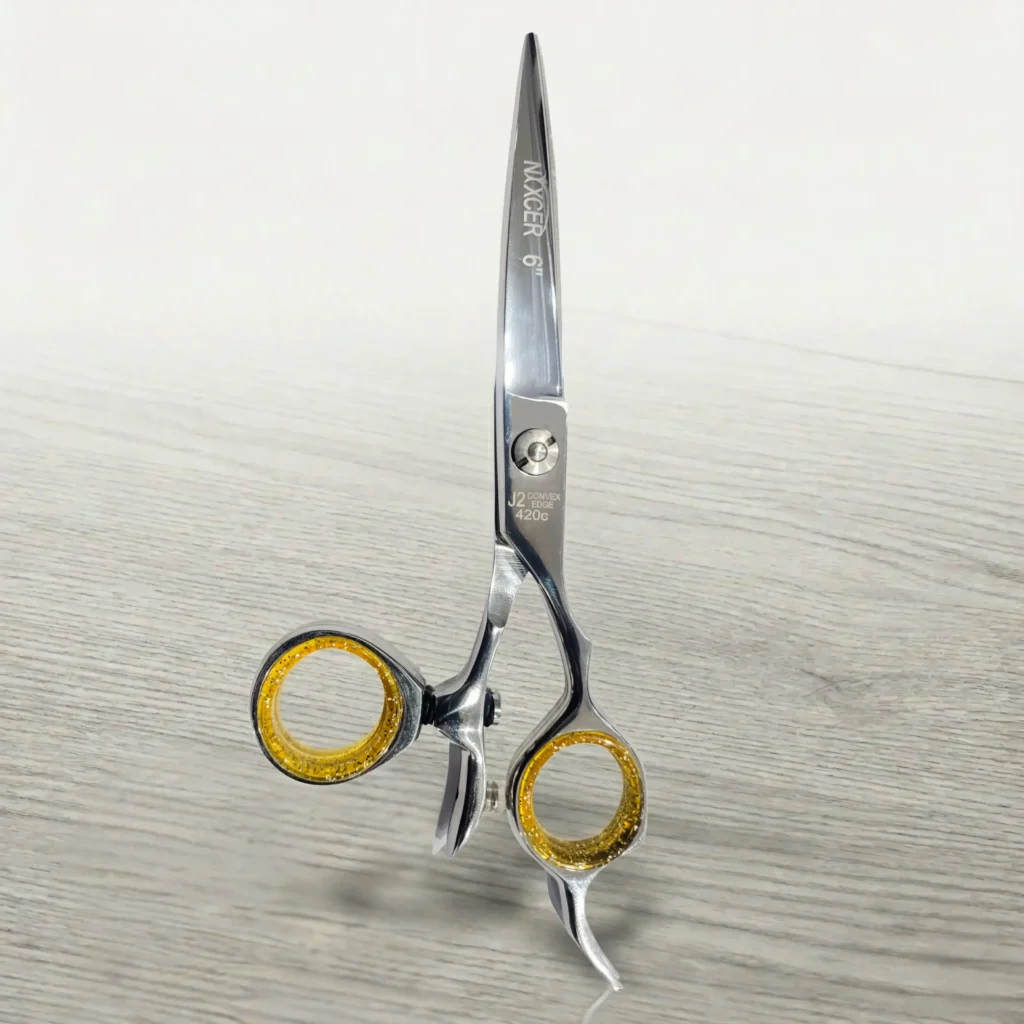
| Swivel thumb | Thumb ring rotates as your grip changes | Whether added movement improves control |
Manufacturers use these labels with some variation. JOEWELL’s handle specifications describe symmetric and offset configurations, including different offset angles. Sam Villa’s swivel shear specifications show that a rotating thumb can also be combined with a crane handle. “Crane” and “swivel” are therefore not always mutually exclusive categories.
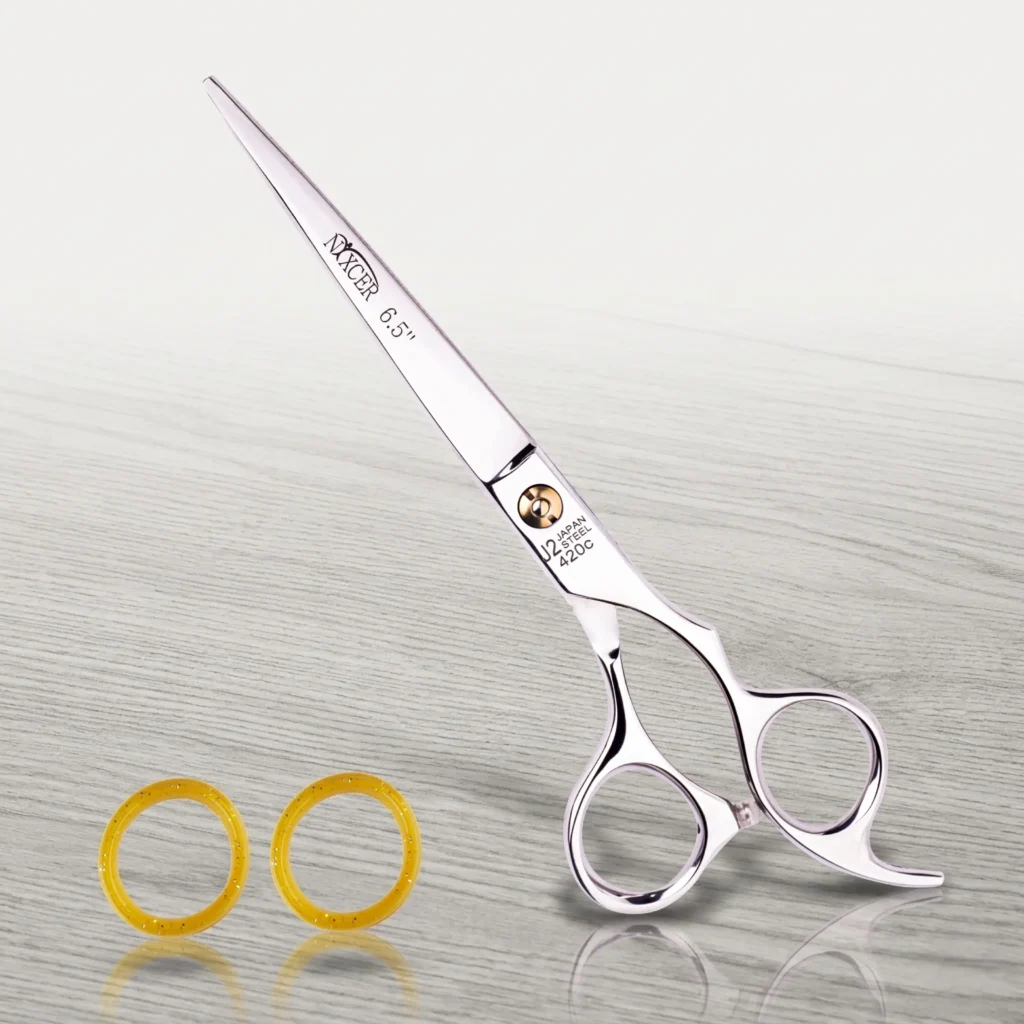
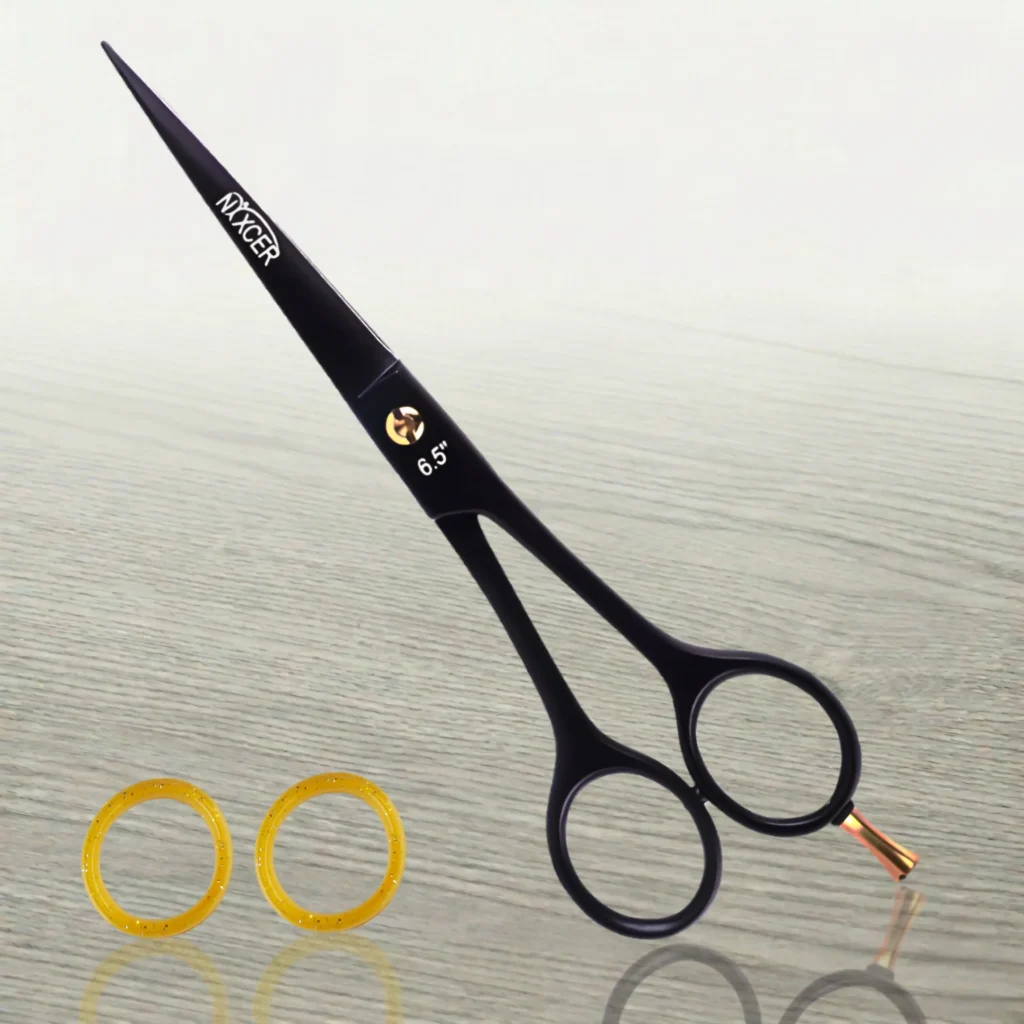
An offset handle is worth comparing if your current thumb reach feels awkward. A swivel model is worth trying if you want the thumb ring to move with changes in cutting position. Neither is automatically the best choice for every stylist.
If a swivel design is unfamiliar, learn its movement away from a client first. Additional freedom is useful only when you can maintain deliberate blade control. There is no universal adjustment period that every stylist must meet.
For a closer look at that handle category, read Nixcer Outlet’s guide to offset handle hair cutting scissors.
Choose Finger Fit Before Chasing Scissor Size
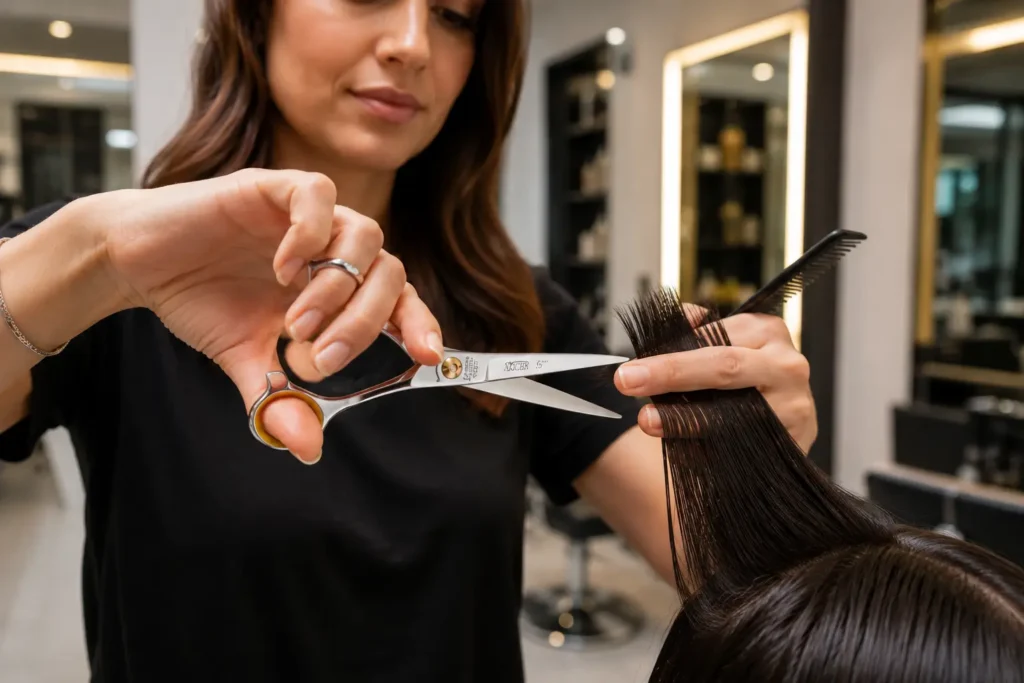
Begin with the rings and grip, not an assumed “perfect” blade length. With a conventional professional grip, the ring finger stabilizes the finger ring while the thumb operates the moving blade. Your training and the model’s design should guide the exact placement.
The fit should feel secure without trapping your fingers. If you need to clamp down to stop the tool moving, the ring may be too loose. If your thumb cannot move comfortably or withdraw easily, the opening or angle may not suit you.
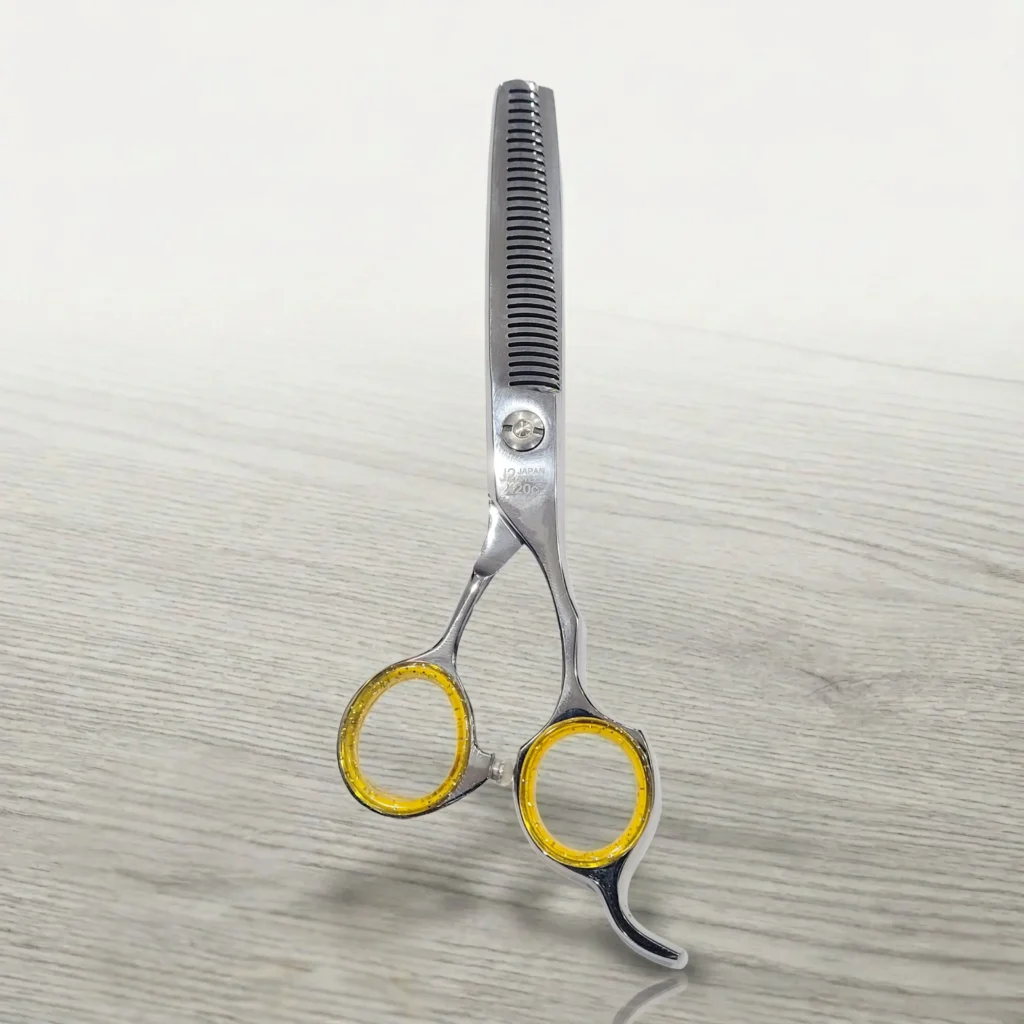
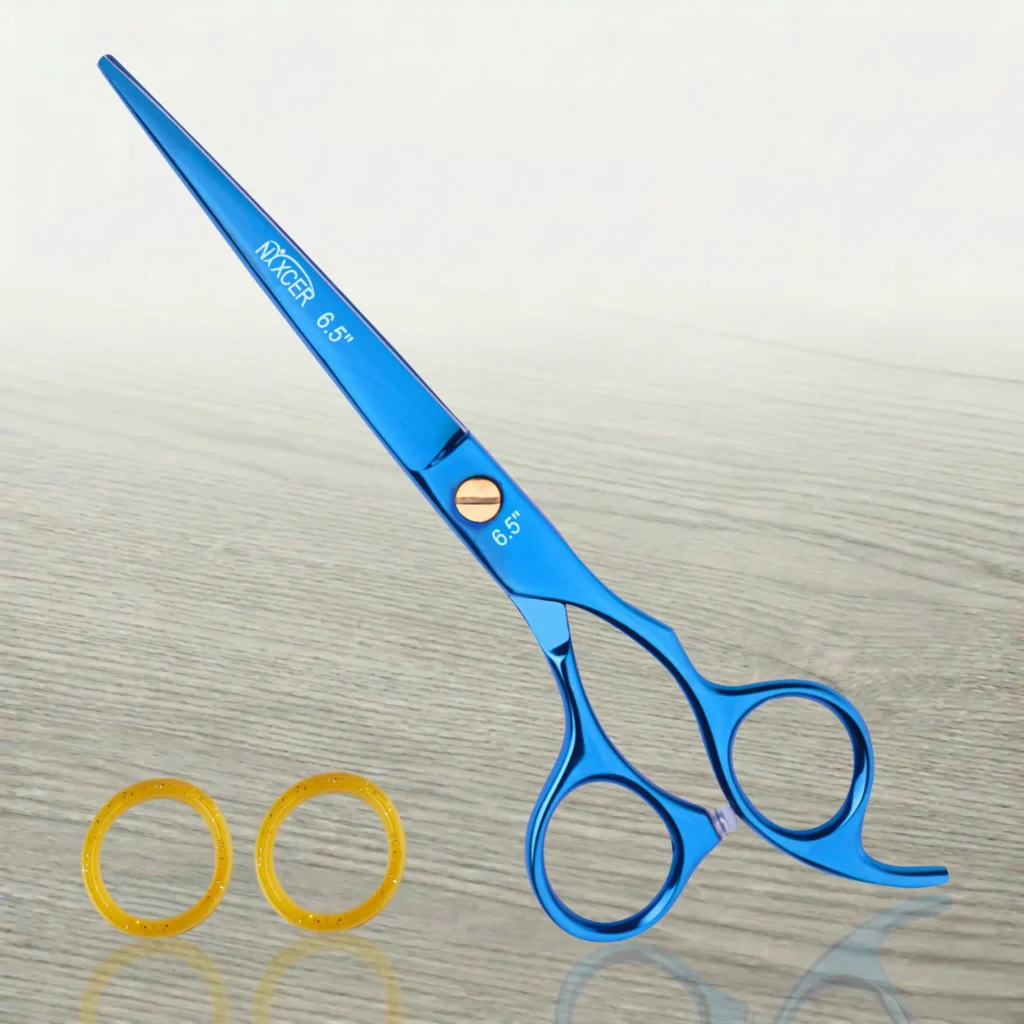
Compatible finger inserts can reduce excess space in a ring. They cannot make every unsuitable handle a good fit. Compare the scissors with and without the appropriate insert and choose the arrangement that supports controlled movement without pinching.
The finger rest should also feel usable, not force your little finger into an uncomfortable stretch. For a fuller explanation, see how to find the right finger holes for hair cutting scissors.
A Useful In-Hand Comparison
If a supplier offers a permitted demonstration or trial, bring the same comparison questions to each model:
- Can I position my fingers without adjusting my grip repeatedly?
- Can I see and control the blade tips in my usual working position?
- Does the tool feel stable when I change direction?
- Does the handle suit the techniques I actually perform?
- What fitting, servicing, and return support is available?
Do not assume the shortest, lightest, or most expensive option will win this comparison. Ask how the stated size is measured, and compare actual handling rather than relying on a single specification.
Check Balance and Handedness
Weight and balance are related, but they are not identical. A specification sheet cannot tell you everything about how a pair feels during repeated movements. Compare whether you are constantly correcting a blade-heavy or handle-heavy feel.
Left-handed stylists should also confirm that a model is genuinely built for left-handed cutting. Reversed blade orientation matters, not just the appearance of the handles. Ichiro’s ergonomics guidance explains both this distinction and why weight distribution affects handling.
Before ordering, ask the seller to confirm handedness and the exact handle configuration. This is particularly useful when a shop offers several variants under one product name.
Keep the Cutting Action Smooth
Even a well-fitting handle can feel tiring if the scissors do not operate properly. The California Board of Barbering and Cosmetology recommends checking shear lubrication, sharpness, and tension daily to reduce cutting effort in its SafeSalon ergonomics guide.
Make this a tool-condition check, not a reason to keep adjusting a damaged pair.
Set Tension for the Specific Model
Excessive pivot tension can make opening and closing feel heavy. Insufficient tension can interfere with blade contact and cutting control. Loosening the screw as far as possible is not an ergonomic solution.
Follow the manufacturer’s method, use the correct adjustment tool, and make small changes. Do not force a mechanism that will not turn. A drop test may be a starting check, but one closing angle is not a universal standard for all shears.
If you need a refresher, see Nixcer Outlet’s hair cutting scissor tension test guide, while giving your model’s instructions priority.
Clean, Oil, and Inspect the Blades
Remove residue and follow the manufacturer’s cleaning, disinfection, drying, and lubrication instructions. Use the recommended lubricant, and remove excess before cutting hair. Oiling does not replace disinfection or repair a damaged cutting edge.
Read why regular scissor oiling matters for the maintenance context.
If the scissors fold, push, pull, or repeatedly catch hair, do not solve the problem by squeezing harder. Check the tool and seek help from a qualified scissor technician if the problem continues. Nixcer Outlet’s sharpness test guide is a related starting point; never run a finger along the cutting edge to test it.
Keep a service record that identifies the pair, the concern, and the work performed. It can help you distinguish a recurring mechanical issue from a fitting preference when you speak to a technician.
Adjust Your Working Position, Not Just Your Grip
A comfortable grip is harder to maintain if you are reaching across the client or working at an unsuitable height. CCOHS recommends positioning clients appropriately, keeping frequently used items within reach, and avoiding prolonged work with the arms above shoulder height.
As you move between sections, reconsider your position instead of holding one stance for the entire haircut. Where appropriate, adjust the chair and reposition around the client. Any change in the client’s head position should remain comfortable for them too.
Aim for comfortable movement rather than a rigid “perfect posture.” A deliberately frozen wrist or elbow is not the goal. If you repeatedly struggle with one cutting position, ask an educator to review the technique and an occupational-health professional to assess persistent discomfort.
Build Breaks and Task Variation into the Day
Regular breaks and changes in posture are part of workplace ergonomics; they should not depend on buying a particular shear. Where the schedule allows, create pauses between demanding services and discuss workload patterns with the salon manager.
Changing scissors is not the same as giving your hand a break. Nor does switching from cutting to another grip-intensive task necessarily provide meaningful relief.
When you pause, safely put the tool down. Use comfortable, unforced movement rather than aggressive stretching. Do not copy a rehabilitation routine just because it is labeled “for hairstylists.” If you already have pain or a diagnosed condition, get individual advice about activity and exercises.
A Practical Start-of-Day Routine
Use this short sequence as an organizational checklist, not a medical test:
- Inspect the tool. Confirm it is ready for use and check anything that felt different during the previous session.
- Check the grip. Notice ring pressure, thumb freedom, and whether the scissors feel stable.
- Set up the station. Put frequently used tools where you can reach them easily and confirm the chair adjusts properly.
- Review the day. Identify where breaks or changes in task are possible.
- Record concerns. Note recurring tool problems or discomfort so you can describe them accurately when seeking help.
If you try a new handle, keep the comparison simple. Record what changed and what did not: for example, “thumb ring feels roomier, but the blade action is still stiff.” That is more useful than assuming the entire problem is solved because the new pair carries an ergonomic label.
When Hand Fatigue Needs Professional Attention
Do not dismiss recurring pain as an unavoidable part of hairdressing. Seek advice from a qualified healthcare professional if symptoms persist or worsen, particularly if you have tingling, numbness, weakness, swelling, or difficulty using your hand normally.
The NHS guidance on repetitive strain injury describes symptoms including aching or burning pain, stiffness, weakness, tingling, numbness, and swelling. These symptoms do not establish a diagnosis on their own.
An equipment seller can explain handles and servicing. A clinician can assess symptoms and advise on treatment or changes to activity. Keep those roles separate: ergonomic scissors are not a treatment for carpal tunnel syndrome or other injuries.
Frequently Asked Questions
Are ergonomic hair cutting scissors worth considering?
Yes, especially if your current handle feels awkward or poorly fitted. Compare models in your normal grip and working position. A useful change should improve handling; price and ergonomic branding alone do not establish that it will suit you.
Are swivel shears better than offset scissors?
Neither design is universally better. A swivel thumb adds movement, while a fixed offset handle offers a different, more familiar feel for some stylists. Some swivel models also use offset or crane geometry. Compare the actual model, not just the category name.
Can tight scissor tension cause hand fatigue?
An overly tight pivot can add unnecessary resistance to blade movement. Correct it using the manufacturer’s instructions, not by making the blades excessively loose. If the action remains uneven or cutting performance is poor, have the scissors assessed.
What size scissors are best for preventing tired hands?
There is no single size that guarantees comfort. Consider finger fit, thumb position, balance, blade control, handedness, and your usual techniques together. A comfortable trial is more informative than choosing only by the length printed on the product page.
Should I keep cutting if my fingers become numb?
Do not ignore numbness or try to push through it by changing your grip. Safely pause the task and seek medical advice, especially if symptoms persist, recur, or are accompanied by weakness. Do not use this guide to diagnose the cause.
Will ergonomic scissors prevent carpal tunnel syndrome?
No pair can guarantee prevention or treat an existing condition. Tool fit is one part of a wider work setup. Symptoms and injury concerns require qualified healthcare advice, not a product promise.