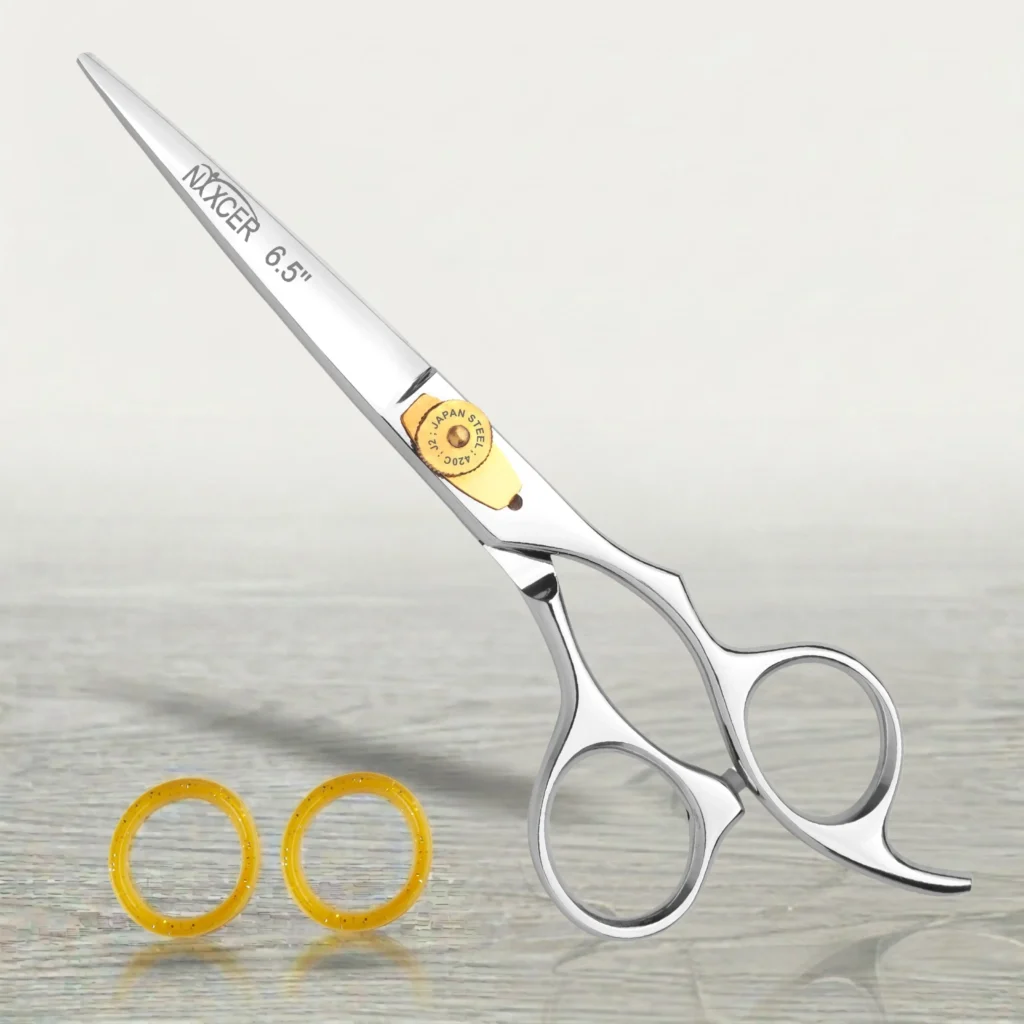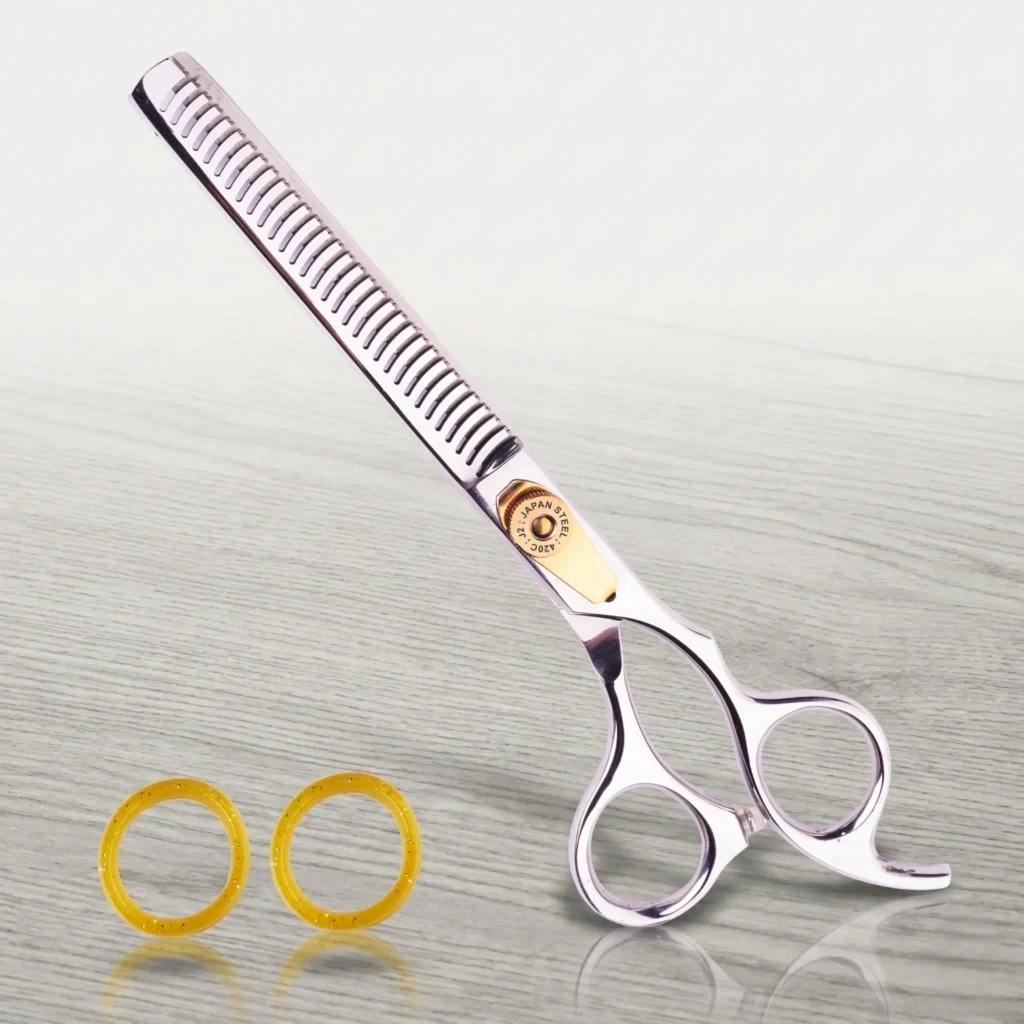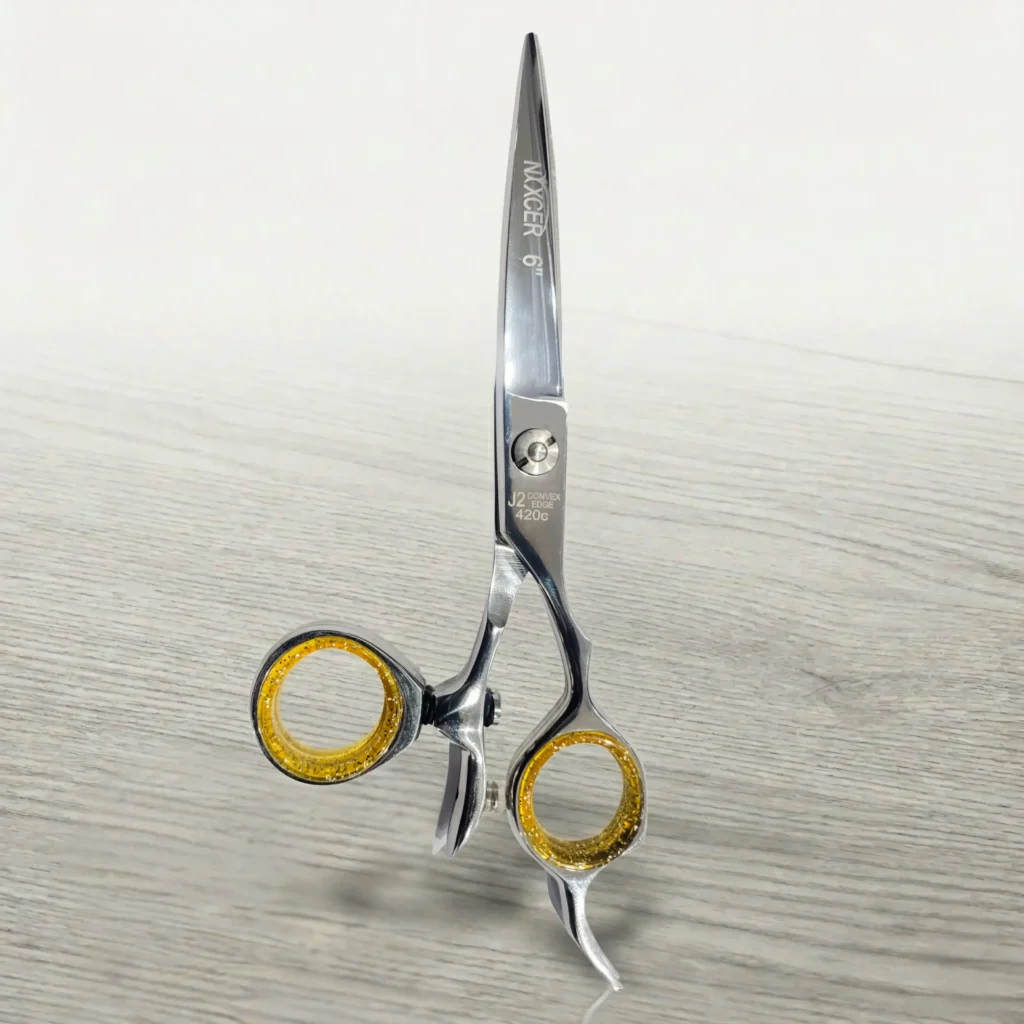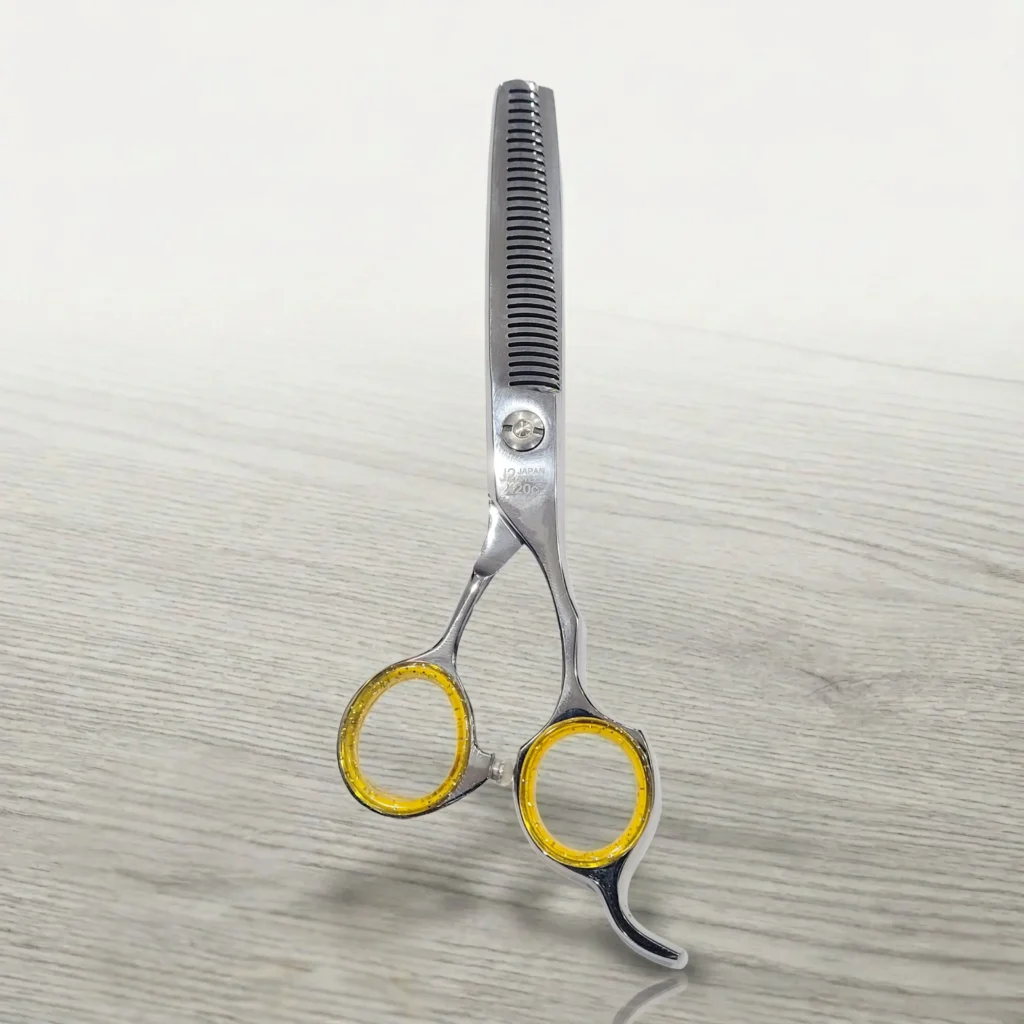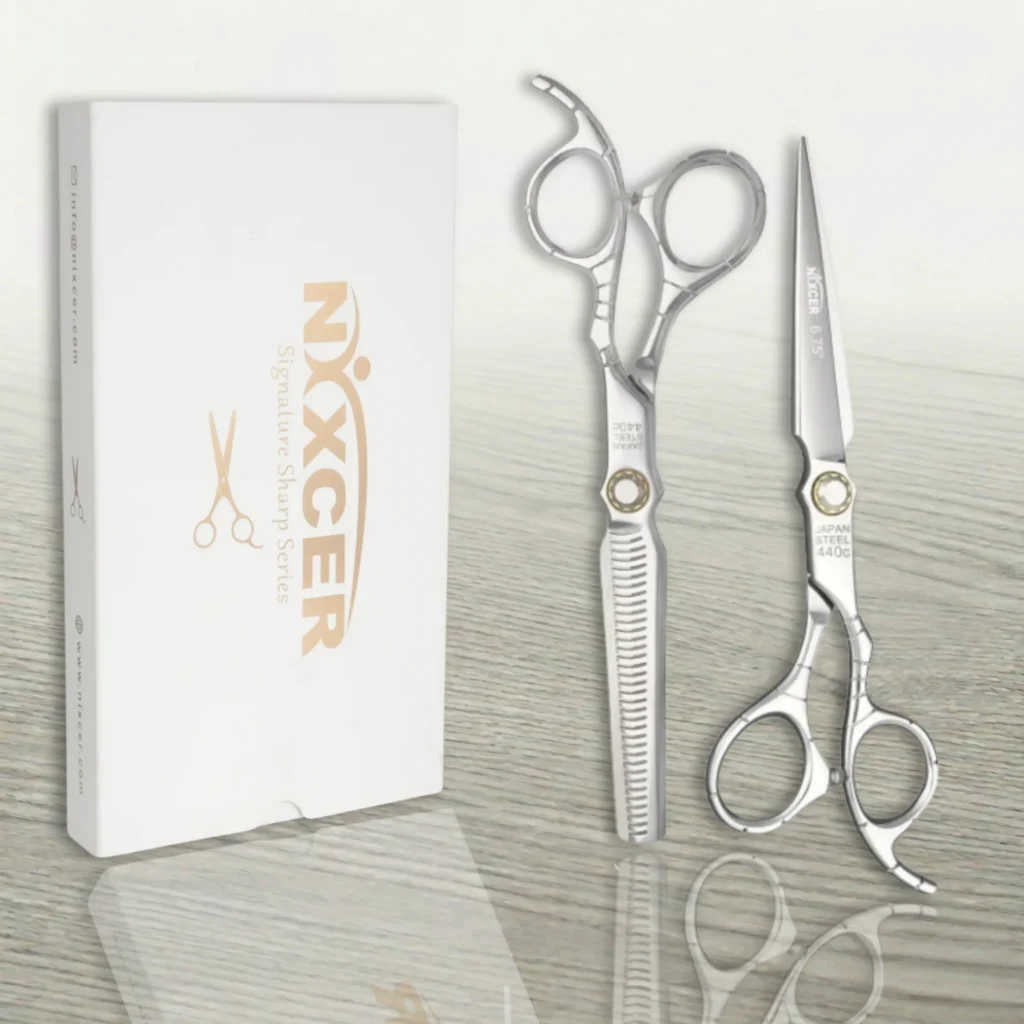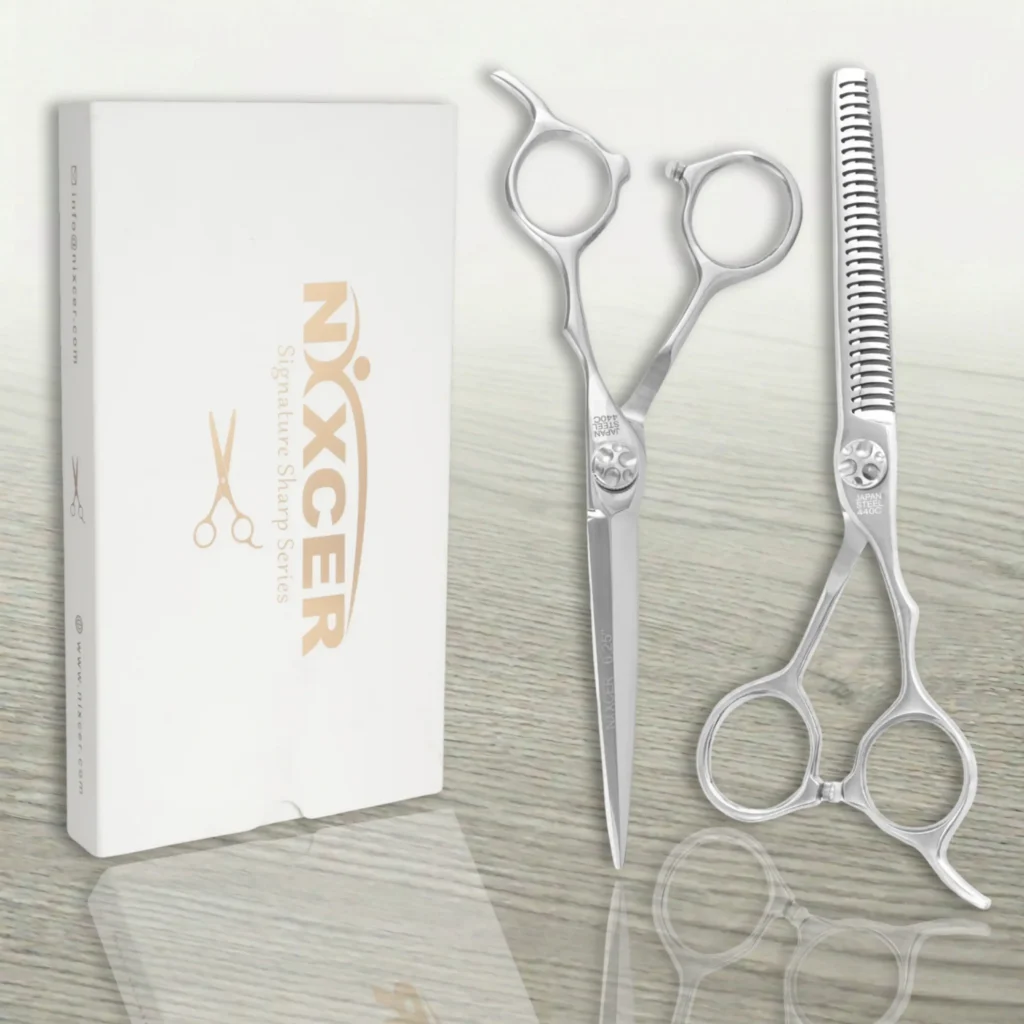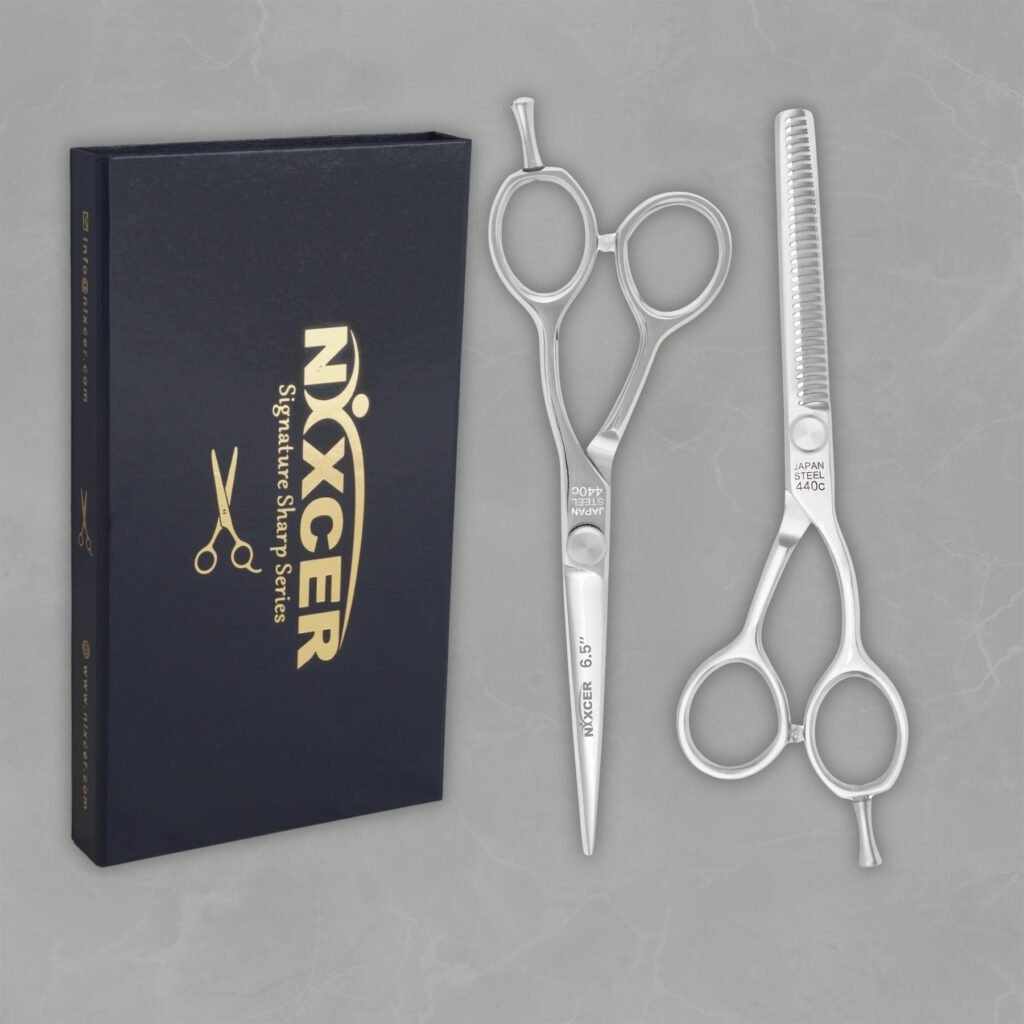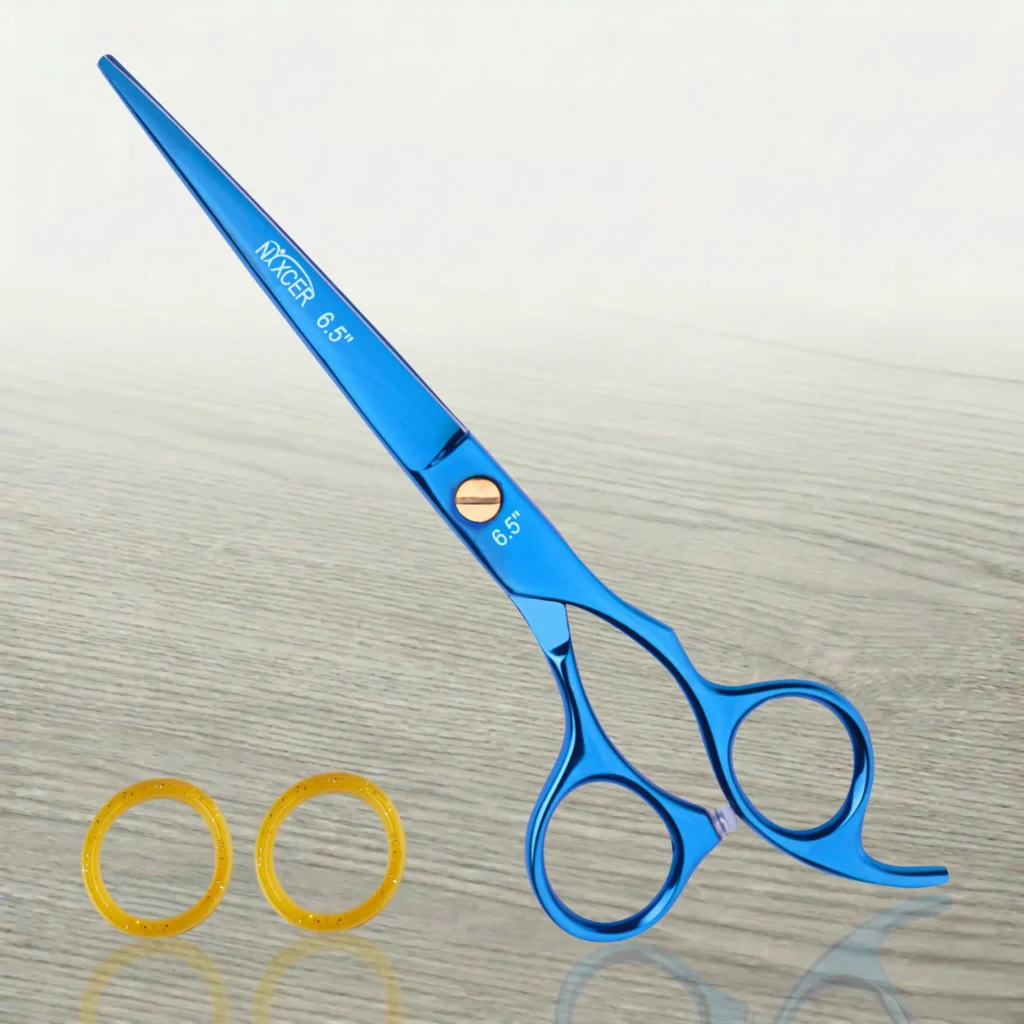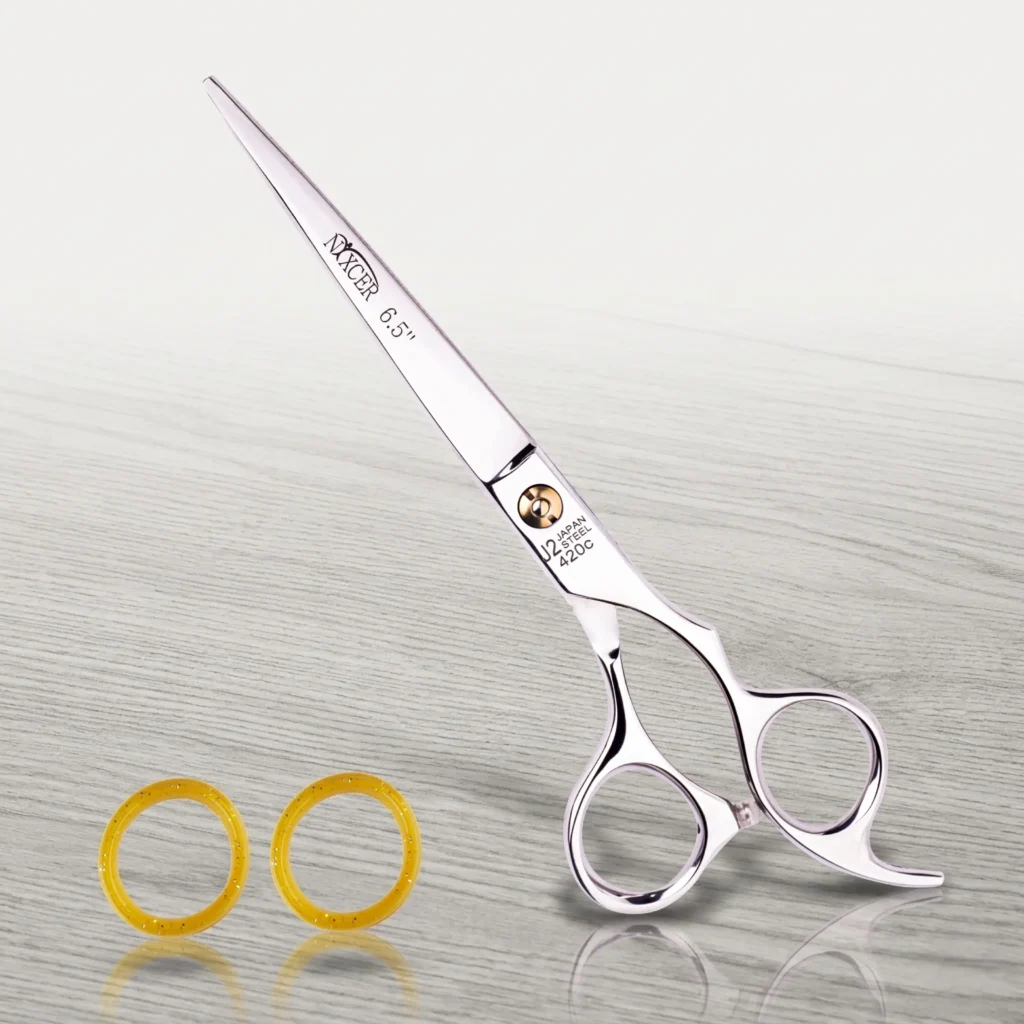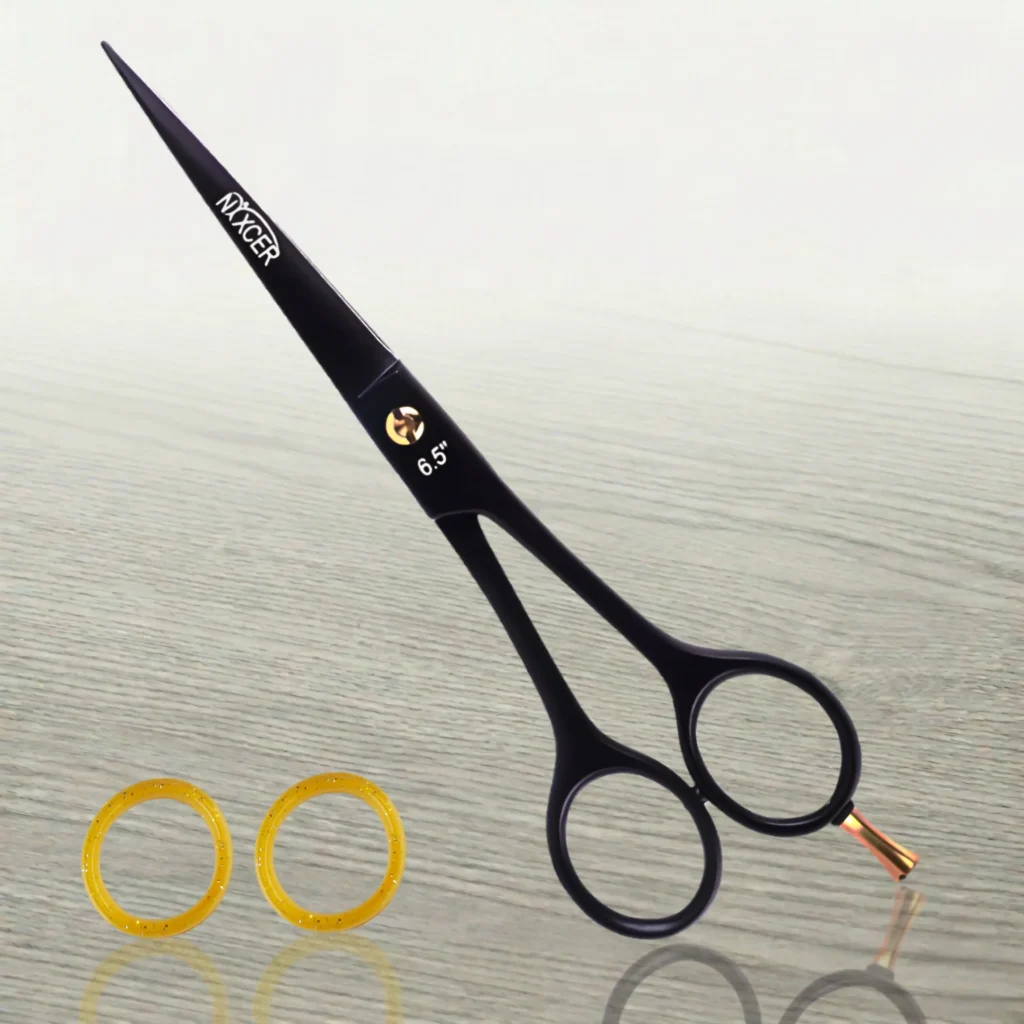
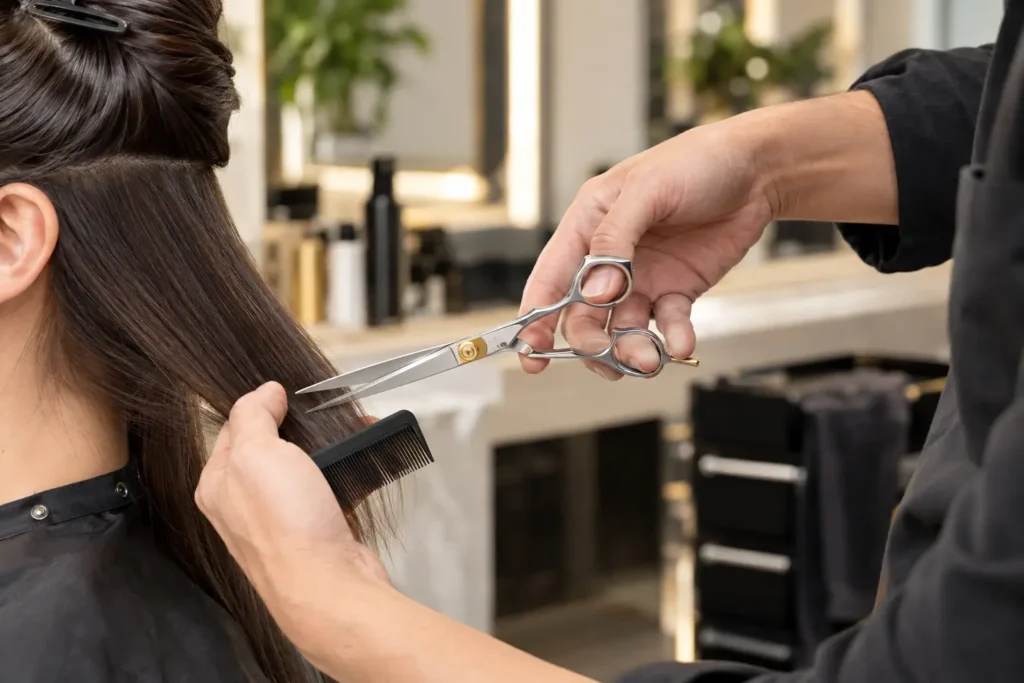
Offset handle hair cutting scissors place the thumb ring lower or farther forward than the finger ring. This reduces how far the thumb must open compared with a classic opposing handle. For many stylists, that geometry supports a more relaxed grip and a straighter wrist during common cutting positions. It may also improve control because the hand can operate the blades without excessive stretching or squeezing.
The benefit depends on fit and technique. An offset handle is not automatically comfortable for every hand, and it cannot prevent an injury by itself. Blade length, finger hole size, balance, pivot tension, chair height, client position, pace, breaks, and tool maintenance all affect the physical demand of professional haircutting.
Quick Answer
The main benefits of offset handle hair cutting scissors are shorter thumb reach, the potential for a more neutral wrist position, a lighter grip, and stable control during repeated cutting. Offset shears suit many salon techniques and usually require less adjustment than a pronounced crane or swivel design. Choose them by testing the actual handle angle, finger hole fit, balance, blade length, tension, and cutting position rather than relying on the word ergonomic alone.
What Is an Offset Handle
On classic or opposing scissors, the thumb and finger rings sit across from each other at similar distances from the pivot. On an offset shear, the thumb side is shorter and positioned forward relative to the finger side. The fingers can remain more open while the thumb makes a smaller movement to operate the moving blade.
Offset is a category rather than one fixed shape. Some models have a subtle semi offset, while others move the thumb ring much closer to the pivot. The angle of the rings, shape of the shanks, finger rest, inserts, and total weight can make two offset scissors feel very different.
JOEWELL describes offset handles as designs with different grip lengths on the still and moving blade sides. Its guide notes that several offset angles are available and recommends selecting by personal preference. That variation is why the tool should be evaluated in the positions used behind the chair.
Main Benefits of Offset Handle Scissors
Shorter Thumb Reach
The lower or forward thumb ring reduces the distance between the thumb and the finger ring. A stylist may be able to open and close the blades with less thumb extension. This is useful during repeated precision cutting because it can reduce the need to spread the hand widely on every stroke.
The thumb should sit shallowly enough to enter and leave the ring without sticking. If the ring is loose, a correctly sized insert may improve control. If it pinches, changing inserts will not make an undersized ring suitable.
More Neutral Wrist Position
An offset handle can make it easier to keep the wrist closer to a neutral position in many standard cutting angles. Neutral does not mean the wrist never moves. It means the tool and workstation allow the hand to work without spending long periods at an extreme bend.
Occupational safety guidance identifies awkward posture, repeated hand and wrist movement, and forceful gripping as ergonomic hazards. Tools that promote neutral joint positions can form part of a broader risk reduction approach. The benefit is conditional because the wrist can still bend if the client is too low, the section is hard to reach, or the stylist raises the elbow and rotates the forearm unnecessarily.
Lighter Grip and Controlled Movement
When the handle fits, the stylist may not need to squeeze as hard to stabilize the shear. A lighter grip lets the thumb operate the moving blade while the ring finger and finger rest support the tool. This can make the cutting action feel more predictable.
Control still depends on sharp blades, correct alignment, and suitable pivot tension. A stiff, dull, or damaged offset shear may require more force than a well maintained classic shear. Handle geometry cannot compensate for mechanical problems.
Comfort During Repeated Cutting
Hairdressers make repeated hand, wrist, and arm movements and may work in awkward positions for long periods. An offset handle can reduce one source of unnecessary reach, making it a practical option for frequent cutting. It should be treated as one part of the setup, alongside an adjustable client chair, suitable working height, task variation, regular pauses, and good tool care.
Comfort is evidence from the individual user, not a promise printed on a product page. A shear that feels natural for five minutes should also be assessed through normal techniques and working angles before becoming the primary daily tool.
Stable Control Around the Head
The compact thumb position can help some stylists maintain a consistent grip while moving around the perimeter, nape, ears, fringe, and crown. This may support accurate blade placement because the hand does not need to repeatedly reset an overstretched grip.
Offset handles are widely used for blunt cutting, layering, point cutting, and general salon work. The handle does not determine the finish by itself. Blade shape, edge geometry, length, section size, and the stylist’s movement remain central to the result.
Offset Handle Comparison
| Handle design | Main characteristic | Practical consideration |
| Classic opposing | Thumb and finger rings sit at similar lengths | Offers holding freedom but may require greater thumb reach in some positions |
| Semi offset | Small difference between thumb and finger ring positions | Familiar transition for users who prefer modest handle asymmetry |
| Offset | Shorter forward thumb side with asymmetric rings | Can reduce thumb reach and support a relaxed grip during general cutting |
| Crane | More pronounced offset with an angled handle relationship | May encourage a lower elbow but can require a larger technique adjustment |
| Swivel thumb | Thumb ring rotates as the hand changes angle | May increase freedom of movement but adds a mechanism and different learning curve |
The best choice is the design that keeps the hand stable without trapping the thumb, forcing the little finger upward, or making the wrist compensate for the handle.
Offset Versus Straight Handle Scissors
Classic opposing handles remain useful. Their symmetry allows several holding positions and may feel natural to a stylist trained with that design. Barbers and hairdressers who rotate the shear or use specific traditional methods may prefer the freedom of an opposing grip.
Offset scissors reduce thumb reach by changing the relationship between the rings. Many users find this easier for routine salon cutting, particularly when the palm faces downward or the blade works across a horizontal section. The tradeoff is that a deeply offset handle can feel unfamiliar and may not rotate in the hand the same way as a classic design.
Neither shape is universally superior. The decision should be based on natural wrist position, cutting visibility, grip pressure, balance, and control through the full blade.
Offset Versus Crane Handle Scissors
A crane handle takes the offset concept further. The thumb ring sits closer to the pivot and the handle angle is designed to let the elbow remain lower in more positions. Some stylists prefer this pronounced geometry for extended precision work or techniques that otherwise raise the arm.
A standard offset provides a moderate change and may feel easier to adopt. A crane can create a more open hand position, but its balance and movement may require practice. Test both with the client or mannequin positioned at the correct working height. If the workstation forces the shoulder upward, changing the handle alone will not correct the complete posture.
For a broader overview, read how handle design affects professional hair scissors.
Cutting Techniques That Suit Offset Handles
Blunt Cutting
Offset handles are commonly recommended for ordinary blunt cutting because the lowered thumb position can support a stable opening and closing motion. A strong perimeter still requires clean sections, a visible guide, consistent elevation, and a blade line that controls the hair.
Layering and Graduation
Layering and graduation require repeated changes in hand and body position. An offset handle may help the stylist maintain a lighter grip as sections move around the head. The client chair should be adjusted so the arm does not remain raised for long periods.
Point Cutting
Point cutting depends on tip visibility and controlled blade entry. The handle can support a relaxed grip, but blade length and tip shape determine how easily the shear enters a small section. Keep fingers clear of the blade path and work with deliberate movements.
Slicing and Slide Cutting
An offset grip can feel mobile during slicing, but the cutting edge and blade curve must be designed and maintained for the technique. Do not force a dry or unsuitable edge through the hair. Learn more in the guide to slicing techniques.
Scissor Over Comb
For scissor over comb work, some barbers prefer longer offset shears, while others favor classic or crane handles. The correct choice depends on the working height, wrist angle, blade length, and how the shear tracks across the comb. Evaluate the complete movement rather than the handle in isolation.
How to Test the Fit
Check the Finger Rings
Place the ring finger in the fixed ring and the thumb lightly in the moving ring. The rings should support control without pinching. The thumb should not be pushed deeply into the ring. Use removable inserts only when the original hole is too large and the insert does not restrict release.
Observe the Wrist
Hold the shear at the heights and angles used for a fringe, perimeter, crown section, nape, and scissor over comb. Look for repeated side bending or flexion in the wrist. Adjust the client or mannequin height before blaming the tool.
Watch the Elbow and Shoulder
The shoulder should not remain lifted during ordinary cutting. A standard offset may help in many positions, while a crane handle may allow a lower elbow in others. Handle design, body position, and chair height work together.
Use a Light Grip
Open and close the blades with the thumb while the rest of the hand remains stable. If the shear only feels controlled when squeezed hard, check ring fit, balance, blade length, and tension. A stiff pivot or poor alignment needs maintenance rather than more grip force.
Check Balance Through the Full Blade
The shear should feel predictable from pivot to tip. A heavy blade paired with a light handle may pull the hand forward. A heavy handle may feel slow when changing angles. Follow the hair scissor balance test and judge the result during real cutting motions.
Fit Features That Matter
Finger Hole Size
Finger holes that are too large allow unwanted movement. Holes that are too small can trap or pinch. Inserts can reduce excess space, but they should not be used to force an unsuitable handle to fit.
Finger Rest
A finger rest supports the little finger and can stabilize the tool. It should not force the finger upward or create tension across the hand. Test removable rests in both positions and retain the setup that allows a light, secure grip.
Blade Length and Weight
Long blades can cover broad sections efficiently, while shorter blades improve detailed control. The handle must balance the chosen blade. Select length according to hand size, technique, and working area instead of assuming that an ergonomic handle makes every length manageable.
True Left Handed Orientation
Left handed users should choose true left handed scissors with the blade orientation and handle geometry made for the left hand. Turning a right handed offset shear over does not provide the same sightline or natural closing pressure.
Pivot Tension
Excessive tension increases the force needed to open and close the blades. Tension that is too loose may let hair fold or push. Follow the maker’s instructions and make small adjustments only when the pivot is designed for user adjustment.
Ergonomic Claims and Realistic Expectations
Offset scissors can support a more neutral position, but they should not be described as a treatment or a guarantee against carpal tunnel syndrome, tendon problems, shoulder pain, or other conditions. Work related discomfort can involve repetition, force, posture, pace, previous injury, workstation height, and recovery time.
The Canadian Centre for Occupational Health and Safety lists repetitive hand, wrist, and arm movement, forceful gripping, reaching, and poorly adjusted workstations among the ergonomic hazards faced by hairdressers. Its preventive guidance includes positioning clients at an appropriate height, keeping tools within easy reach, taking breaks, varying tasks, and choosing equipment that is easy and safe to use.
If pain, weakness, tingling, or numbness persists, stop treating the issue as a product selection problem and seek advice from a qualified health professional or workplace ergonomics specialist.
Maintenance Supports the Handle Benefit
A comfortable handle cannot overcome blades that are dirty, dry, damaged, misaligned, or incorrectly tensioned. Resistance at the pivot encourages a harder grip and more thumb effort.
- Remove loose hair and residue after use according to the manufacturer’s care instructions.
- Apply an appropriate scissor lubricant at the pivot on the recommended schedule.
- Store the shear closed in a protective case where the edge cannot strike another tool.
- Test tension carefully and avoid overtightening the pivot.
- Use a professional sharpener who understands the original hair scissor edge.
- Remove damaged scissors from service until they have been inspected.
See the Nixcer guide to regularly oiling hair cutting scissors and the article on testing scissor sharpness.
Nixcer Scissors to Compare
Handle geometry should be confirmed on the current product page because designs, specifications, and availability can change. These Nixcer cutting shears provide useful starting points for comparing size, blade style, weight, and handle fit.
- Nixcer Arc Hair Cutting Shears
- Nixcer Korean Hair Cutting Shears
- Nixcer Broad Blade Hair Cutting Scissors
- Nixcer hair cutting scissors collection
Before buying, confirm handedness, ring size, finger rest, pivot system, blade length, return terms, and access to suitable sharpening. A label such as offset or ergonomic does not replace a fit test.
Common Buying Mistakes
- Assuming every offset handle has the same angle and ring placement.
- Choosing by appearance without testing thumb release and wrist position.
- Expecting a handle to correct a dull edge, poor alignment, or unsuitable tension.
- Selecting a blade length that feels unstable because the handle seems comfortable.
- Ignoring client chair height and repeatedly working with a raised shoulder.
- Using a right handed shear in the left hand by turning it over.
- Believing an ergonomic product can prevent or treat a medical condition.
- Continuing to work through persistent pain, tingling, weakness, or numbness.
For a complete setup review, use the Nixcer guide on preventing hand fatigue with ergonomic scissors.
Final Selection Checklist
Choose offset handle hair cutting scissors when you can confirm that:
- The thumb reaches the moving ring without stretching.
- The finger rings support control without pinching or trapping.
- The wrist stays close to neutral in your common cutting positions.
- The shoulder and elbow remain relaxed after adjusting the client height.
- The shear opens and closes with a light grip.
- The blade length and weight remain stable from pivot to tip.
- The handle orientation matches your dominant hand.
- The pivot tension and blade alignment are correct.
- The edge and pivot can be maintained by a qualified technician.
An offset handle is most useful when it improves the complete cutting movement. The right shear should let the stylist guide the blades without fighting the rings, overextending the thumb, or squeezing the handle for stability.
Frequently Asked Questions
Benefits of Offset Handle Scissors
Offset handles shorten the distance the thumb must travel and may support a more neutral wrist and lighter grip. Many stylists find them comfortable for repeated salon cutting, but the benefit depends on hand fit, balance, blade length, tension, and working position.
Offset Scissors and Wrist Comfort
Offset scissors can help some users avoid excessive thumb reach and awkward wrist angles. They are one part of an ergonomic setup and do not guarantee freedom from pain or injury.
Offset Scissors for Beginners
Beginners can use offset scissors successfully. A moderate offset often feels intuitive, but students should learn a shallow thumb position, relaxed grip, correct chair height, and safe blade control under qualified instruction.
Difference Between Offset and Crane Handles
Both are asymmetric. A standard offset makes a moderate change to thumb position, while a crane design uses a more pronounced handle angle intended to let the elbow stay lower in more cutting positions.
Offset Scissors for Every Technique
Offset scissors can support blunt cutting, layering, point work, slicing, and other techniques. Some stylists prefer a classic, crane, or swivel handle for specific movements, so the best design depends on the task and user.
Offset Scissors and Carpal Tunnel Syndrome
Offset scissors cannot be claimed to prevent or treat carpal tunnel syndrome. They may support a more neutral hand position, but repetitive work, force, posture, workload, and individual health also matter. Persistent symptoms require professional assessment.
Correct Fit for Offset Scissors
The thumb should enter and leave the moving ring easily, the ring finger should stabilize the fixed side without pinching, and the finger rest should support rather than lift the little finger. The wrist should remain comfortable through the user’s normal cutting angles..