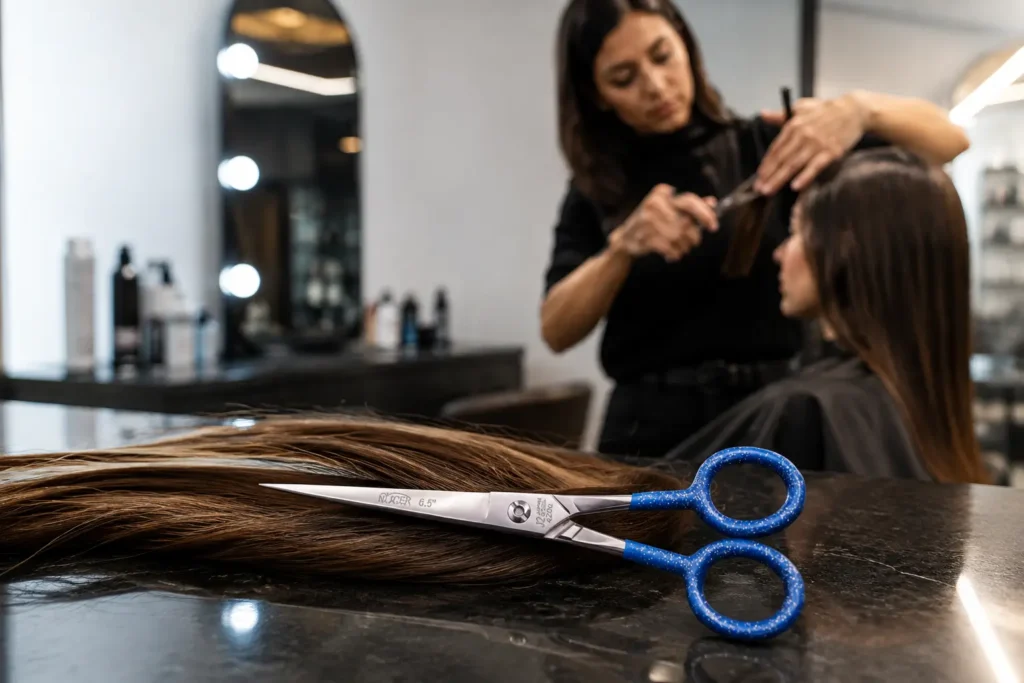
Hair cutting scissors are central to modern hairdressing because they translate a stylist’s hand movement into line, shape, texture and movement. The best tool is not simply the sharpest or most expensive pair. It is the scissor whose blade geometry, length, tip, handle, balance and tension match the technique being performed.
For a clean bob perimeter, the priority is stability and a decisive close. For point cutting, the tips must enter and exit the hair predictably. Slide cutting requires a smooth cutting action that can travel through the section without pulling. Dry refinement demands sharpness, control and careful tension because dry hair offers more resistance than wet hair. Texturizing requires a deliberate tooth pattern and removal rate rather than a standard cutting blade.
Modern hairdressing therefore relies on a system: trained technique, an appropriate scissor and consistent maintenance. When these three elements work together, a stylist can create precise geometry, soft lived-in texture and highly personalized results without forcing the tool.
Quick answer: Professional hair cutting scissors support modern techniques by giving the stylist controlled sharpness, predictable blade movement and an ergonomic working position. The correct choice changes with the task: compact, accurate tips suit detail work; smooth convex or semi-convex edges can support slicing and refinement; stable blades help blunt cutting and scissor-over-comb; and toothed shears control density and blending.
Why Scissors Still Matter in Contemporary Hairdressing
Clippers, razors and electric tools have expanded the modern stylist’s options, but scissors remain the most adaptable manual cutting tool. They can create or refine a perimeter, remove length, build layers, soften a hard line, reduce weight, blend transitions and customize the result around the client’s texture and growth pattern.
Scissors also provide immediate tactile feedback. A stylist can feel resistance, adjust section size, change the cutting angle and make very small corrections. That responsiveness is especially important in customized work, where the goal is not merely to reproduce a shape but to adapt it to the client’s density, curl pattern, head shape, styling routine and desired finish.
The modern question is not whether scissors are important. It is which scissor design best supports the intended technique.
Technique-to-Scissor Match at a Glance
| Modern hairdressing technique | Main cutting goal | Helpful scissor characteristics |
| Precision and blunt cutting | Clean lines and exact shape | Stable blade, consistent alignment, controlled tension and decisive cutting edge |
| Point cutting | Soften ends and add separation | Accurate tips, manageable length and smooth open-close action |
| Slide cutting and slicing | Remove weight and create flowing movement | Smooth edge geometry, clean ride line and low-resistance action |
| Layering and graduation | Build shape, elevation and movement | Balanced all-purpose shear with predictable tips |
| Dry cutting | Refine the natural fall and texture | Sharp, well-maintained edge with precise tension and strong control |
| Scissor-over-comb | Blend short sections and refine contours | Stable blade, comfortable reach and a length suited to the user’s hand |
| Thinning and texturizing | Control density and soften transitions | Purpose-built toothed shear with a suitable tooth count and removal rate |
| Creative or asymmetric work | Customize angles, weight and visual balance | Precise tips, reliable alignment and an ergonomic handle |
This comparison is a starting point, not a universal rule. A stylist’s hand size, cutting position and preferred feel can change the ideal length or handle. Before choosing a model, review the differences among hair cutting scissor blade types.
1. Precision Cutting and Strong Geometric Lines
Precision cutting creates controlled outlines, deliberate angles and repeatable shapes. Bobs, one-length cuts, pixies, fringes and geometric sections reveal even small inconsistencies, so the scissor must close evenly from the pivot to the tip.
A stable straight blade can help establish a clear perimeter. Fine, accurate tips improve work around the ears, fringe and face frame. The scissor should feel secure in the hand without requiring excessive thumb pressure. If the blade pushes hair before it closes, folds the section or misses at the tips, first inspect cleanliness, tension, alignment and sharpness.
Shorter scissors often give more tip control for detail, while a longer blade can cover a broader section with fewer closures. Neither is automatically more precise. Precision comes from matching the blade length to the stylist’s hand and the scale of the work.
2. Point Cutting for Softness and Separation
Point cutting directs the tips into the ends of a section instead of cutting straight across it. Shallow point work softens a hard perimeter; deeper point cutting can remove more weight and create stronger separation. The effect depends on the angle, depth, section size, hair density and the number of cuts.
An effective point-cutting scissor needs tips that enter the section accurately and close without snagging. A manageable 5.5- to 6-inch length often offers close control, but the correct size remains personal. The stylist should be able to see the tip position clearly and make small, intentional movements.
Point cutting is not the same as randomly chopping into the ends. Work systematically, keep fingers and skin outside the cutting path and check the result in the hair’s natural fall. For a technique-focused walkthrough, read using hair cutting scissors for point cutting.
3. Slide Cutting, Slicing and Slithering
Slide cutting and slicing are used to create movement, remove weight and connect lengths without leaving a hard step. The blades travel along or through the section with limited closing action. Because the scissor is moving while it cuts, smoothness and control are critical.
Many professionals prefer a convex or refined semi-convex edge for low-resistance movement. However, blade profile, polishing, ride line, tension and the stylist’s technique affect the result as much as the edge label. The blades should not pull, scrape or jump through the section.
These methods are best performed with purpose-built professional shears and trained control. Do not fully clamp and drag closed scissors down the hair shaft. That can create unnecessary friction and an uneven finish. Our guide to slicing techniques with hair cutting scissors explains the motion and common applications.
4. Layering and Graduation
Layering changes the relationship between lengths to create movement, volume or weight distribution. Graduation builds weight through controlled elevation and cutting angle. Both techniques depend on consistent sectioning, body position, finger angle and scissor control.
A balanced all-purpose shear is useful because the stylist may alternate between establishing a guide, cutting a section and refining the ends. Accurate tips help connect small areas, while a blade with enough stability supports repeatable lines. For many salon professionals, a 5.5- to 6.25-inch scissor offers a practical balance of maneuverability and coverage.
The tool should follow the cutting line without twisting the wrist. If the handle forces the thumb too far back or causes the elbow to lift unnecessarily, an offset, crane or swivel configuration may offer a more neutral position.
5. Dry Cutting and Texture-Aware Refinement
Dry cutting lets the stylist observe the hair’s natural fall, shrinkage, density and movement while refining the shape. It is especially valuable when the finished texture is difficult to predict from wet hair alone. Curly, coily and highly textured hair may be assessed curl by curl or section by section, depending on the method and desired result.
Dry hair generally creates more cutting resistance than wet hair. The scissor should therefore be sharp, clean and correctly tensioned. Small sections and deliberate movements provide better control than forcing a large dry section through the blades. A smooth convex edge is a common choice for dry refinement and slide work, while other edge profiles may suit stylists who want more grip.
Dry cutting does not mean every head should be cut entirely dry. Many modern services combine wet foundation work with dry personalization. The correct approach depends on the hair, the style and the stylist’s training.
6. Scissor-Over-Comb and Modern Barbering
Scissor-over-comb blends and shapes short hair by using the comb as a moving guide. It remains important in contemporary barbering, short crops, tapers and detailed perimeter work. The method can create a softer, more customized finish than a guard alone and can refine areas that require close visual control.
The blade should track the comb predictably and close cleanly without pushing the hair. A longer shear can increase coverage and reduce the number of closures, while a shorter shear may feel more controlled around tight contours. The ideal length depends on hand size, comb size, section width and experience.
Keep the moving blade away from the comb and skin, work in small zones and cross-check the blend from multiple angles. A stable handle and smooth pivot reduce unnecessary hand force during repeated openings and closings.
7. Texturizing, Thinning and Blending
Modern texture is not created by indiscriminate thinning. A toothed shear removes a controlled percentage of hair, and different tooth patterns produce different effects. Fine teeth can soften transitions with subtle removal; wider or fewer teeth can create stronger separation or remove more bulk.
The tool must match the objective:
- Use a standard cutting scissor to establish the main shape and perimeter.
- Use thinning or blending shears to reduce density gradually and connect weight lines.
- Use texturizing shears when more visible separation or chunkier texture is intended.
- Test the removal rate on a discreet section and reassess before repeating.
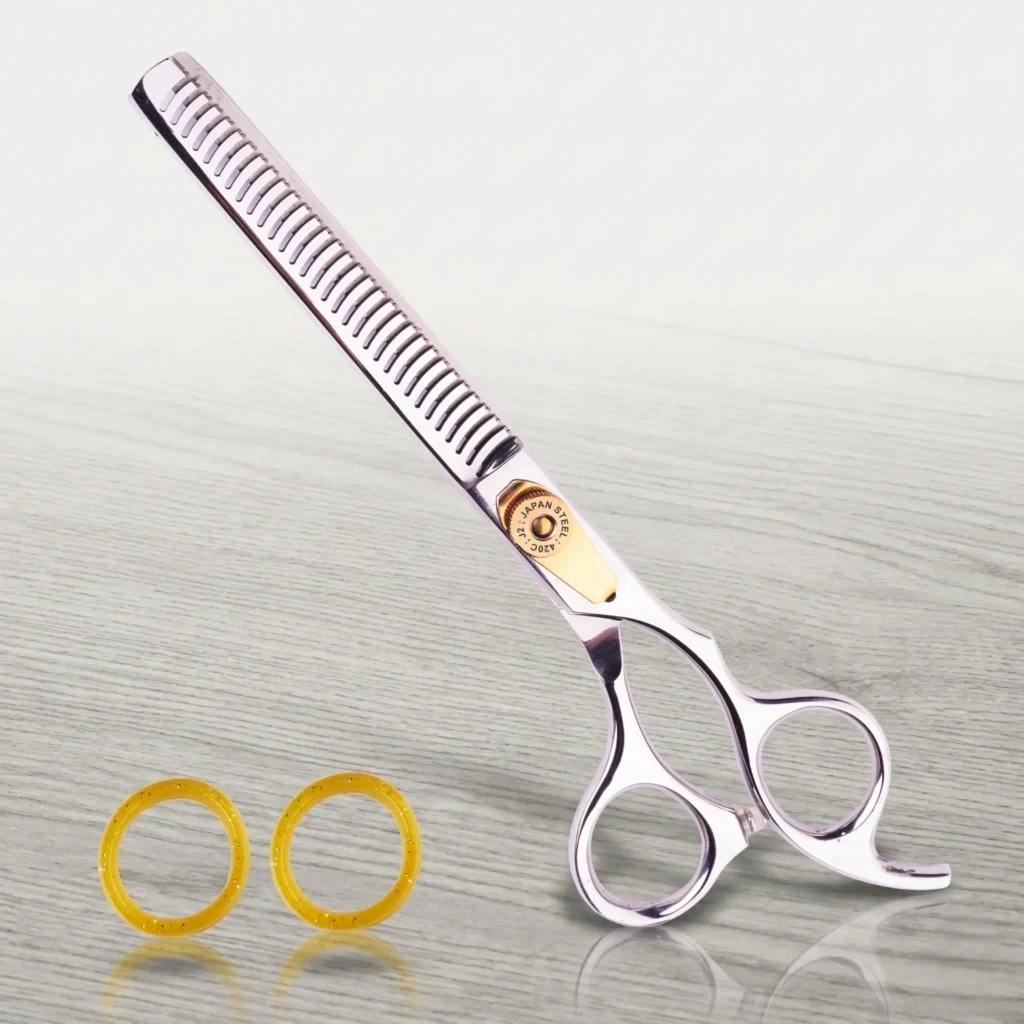
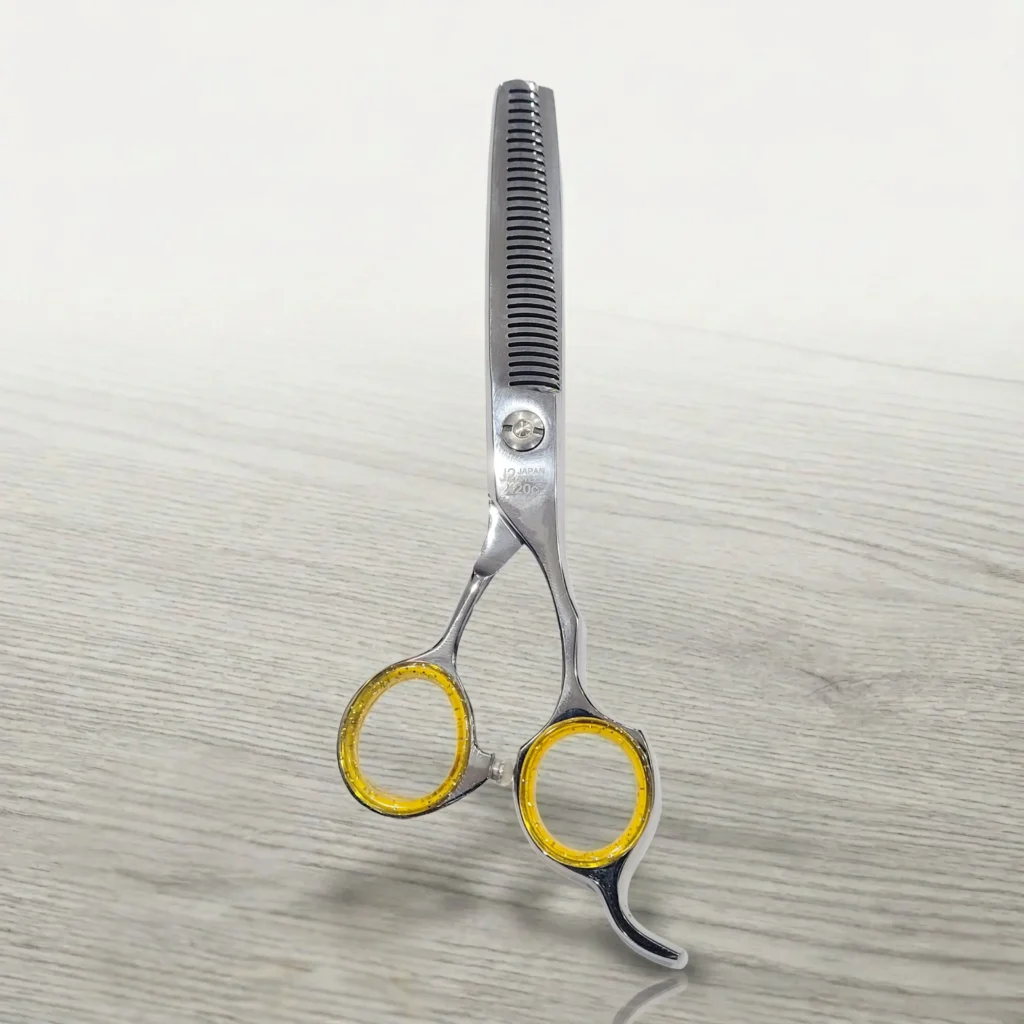
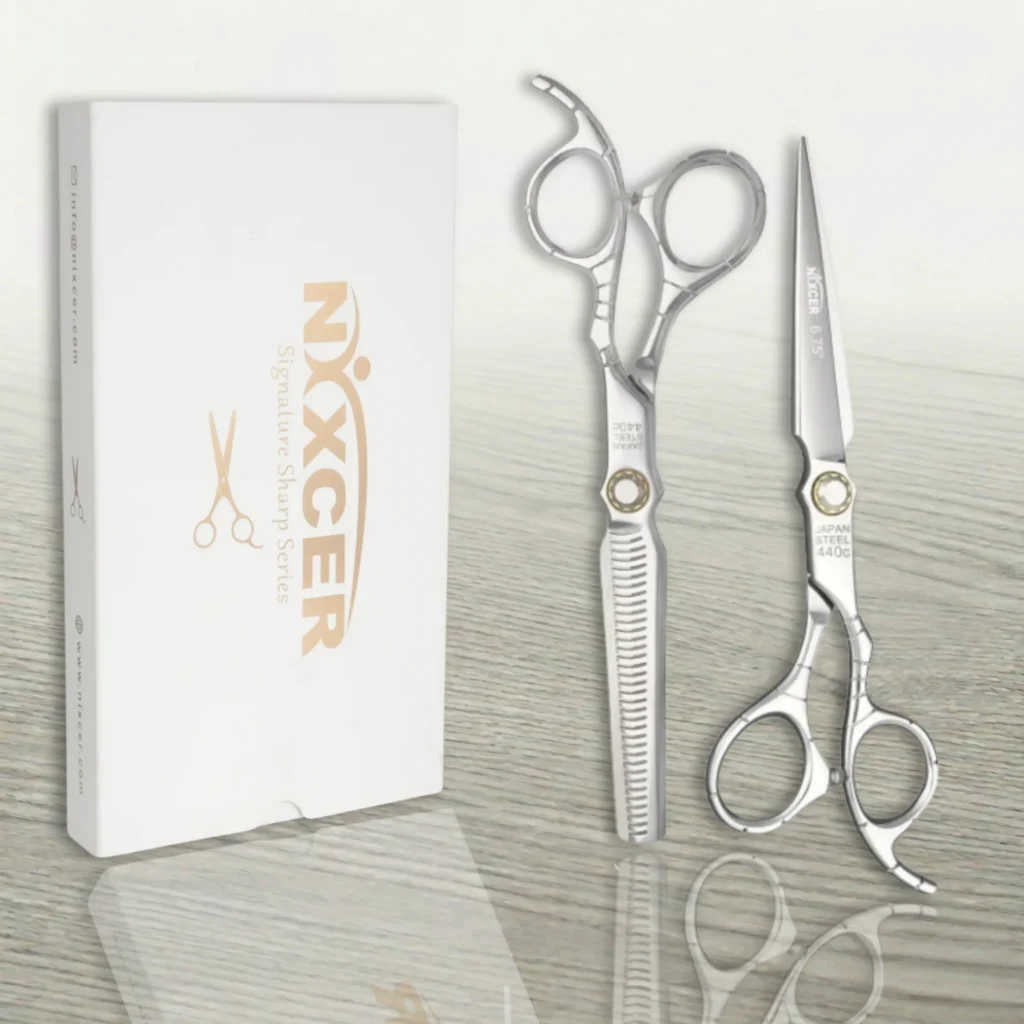
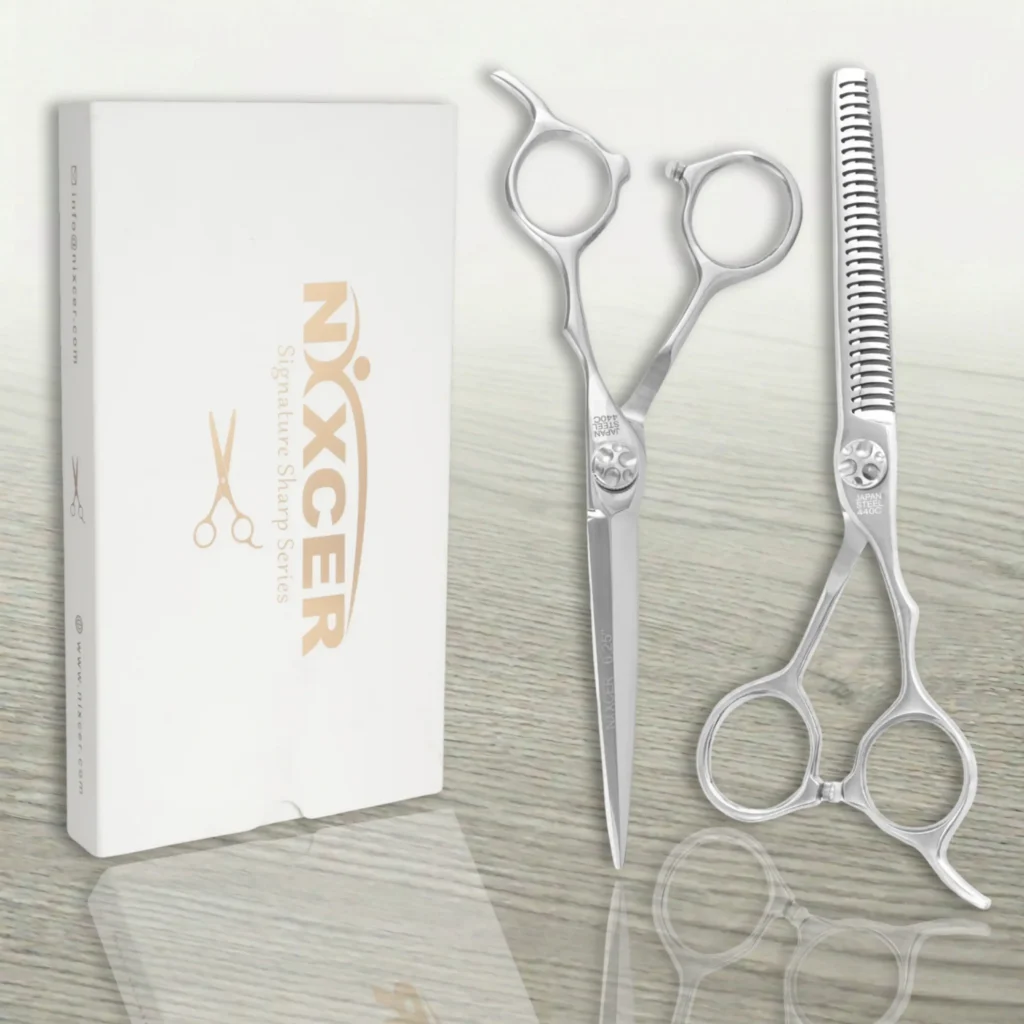
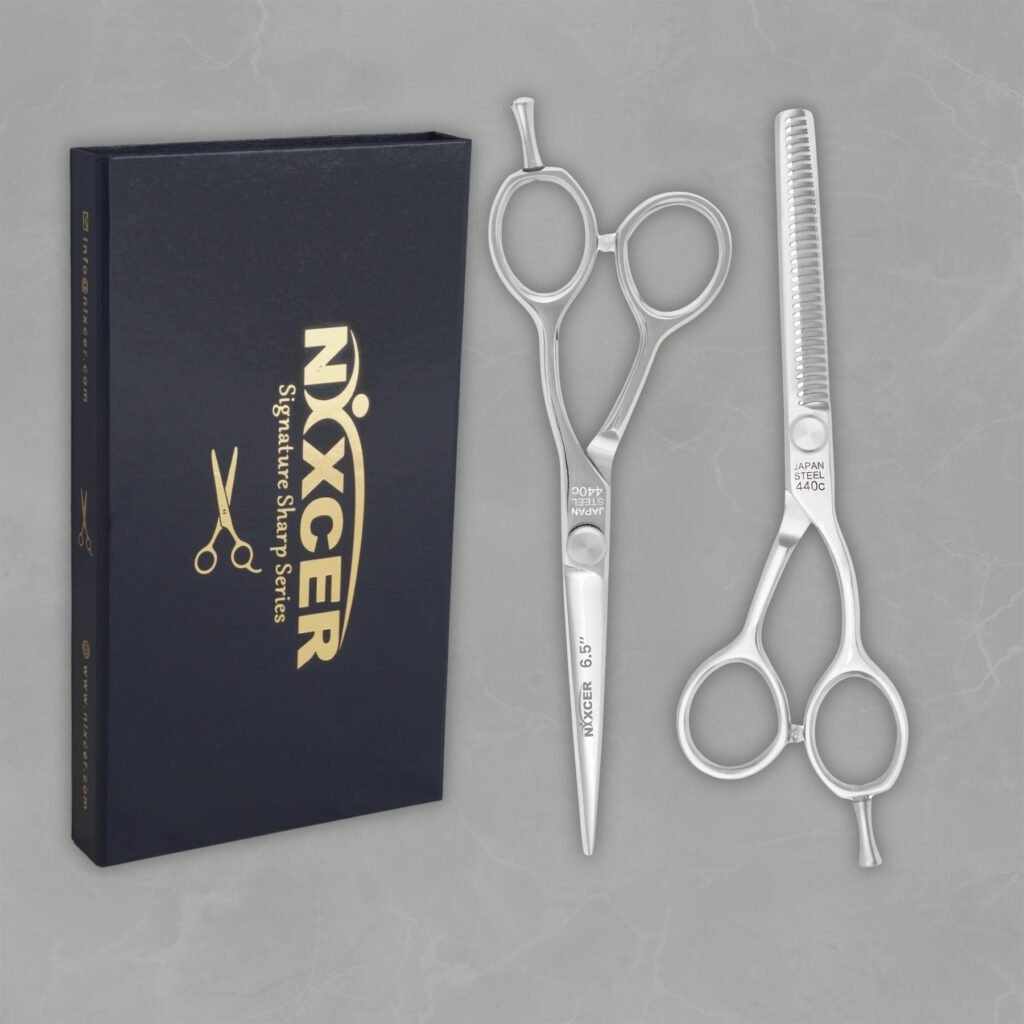
Overusing a toothed shear can leave short regrowth, visible steps, frizz or a hollow shape. Curly and coily hair require particular care because removing weight can change spring, grouping and silhouette. Nixcer’s Professional Series Hair Thinning Scissors are listed in 6- and 6.5-inch sizes with adjustable tension; the product page should be checked for current availability and specifications.
8. Personalization Across Hair Types
Modern hairdressing prioritizes an individual result rather than applying the same cutting pattern to every client. The stylist considers strand thickness, density, porosity, curl pattern, growth direction, previous chemical services and daily styling habits.
Fine or slippery hair may benefit from an edge that offers controlled grip when building a hard line. Thick or dense hair can require smaller sections and a stable blade to avoid pushing. Curly and coily hair often need a texture-aware approach that respects shrinkage and curl grouping. Damaged or highly processed hair should be handled conservatively with clean, sharp tools and minimal unnecessary passes.
This is why a single “best professional scissor” does not exist for every technique and texture. Many working stylists keep a small, purposeful kit: an all-purpose cutting shear, a detail or dry-cutting option, a longer scissor for broader sections or over-comb work and a controlled texturizing shear.
How Modern Scissor Design Supports the Stylist
Edge Geometry
A convex edge has a rounded outer profile and can provide a smooth, low-resistance cutting feel. It is commonly selected for slide cutting, slicing and refined professional work. A semi-convex edge balances smoothness with additional edge support. Beveled or micro-serrated edges can provide grip and may suit stable blunt cutting or hair that tends to move away from the blade.
Edge names are not complete performance guarantees. The quality of the grind, blade set, ride line, polishing and maintenance determine how the scissor actually behaves.
Blade Length and Profile
Shorter blades can improve visibility and tip control in detailed zones. Mid-length scissors are versatile for general salon cutting. Longer blades cover more distance and can support broad sections and scissor-over-comb work. Broad or sword-style profiles may add stability and cutting power, while slimmer profiles can feel more agile.
Choose length from the finger rest to the tip according to the manufacturer’s measurement method, then test whether the scissor feels balanced in your natural working position.
Handle Design and Ergonomics
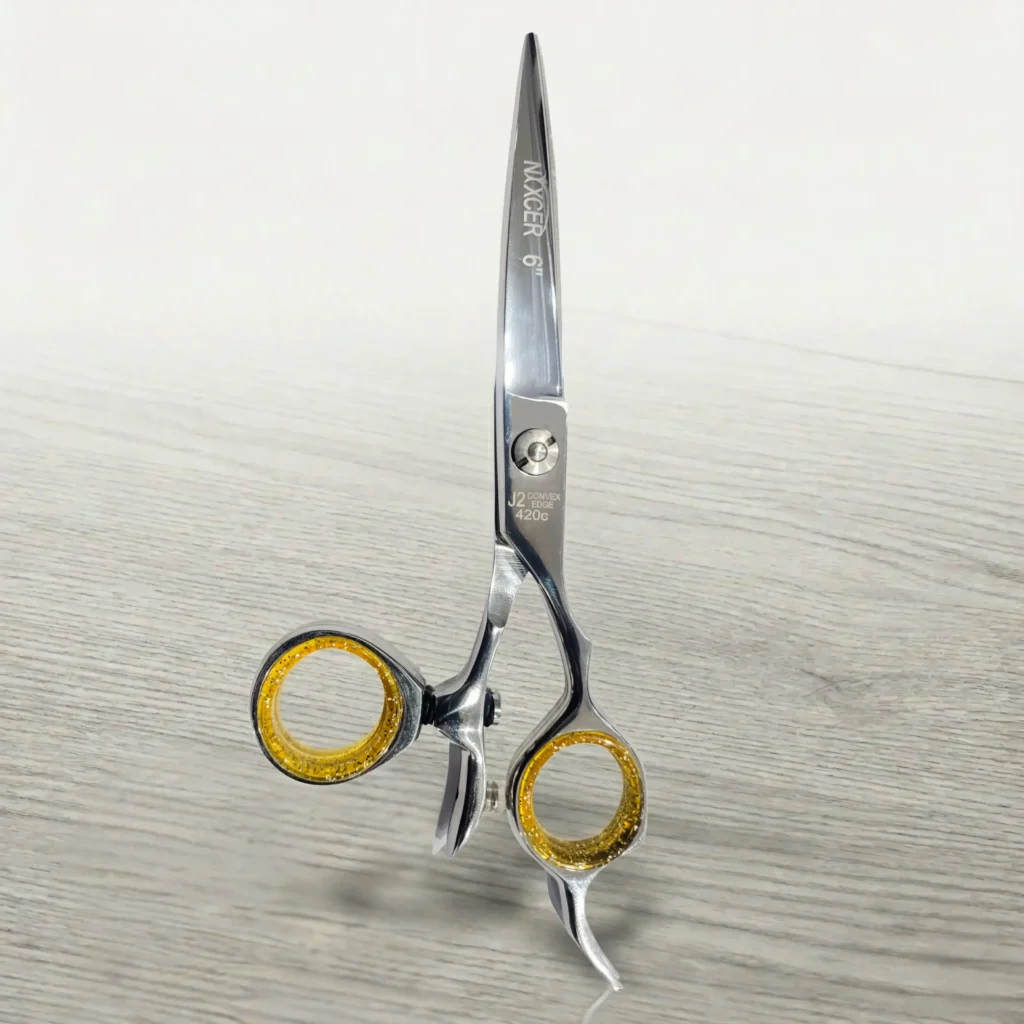
A classic handle aligns the finger rings. An offset handle shortens the thumb side and can reduce how far the thumb must reach. A crane handle lowers the elbow and can support a more neutral wrist in some positions. A swivel thumb allows the thumb ring to rotate as the hand changes angle.
Ergonomics are individual. A handle that helps one stylist may feel unstable to another. The best fit keeps the grip light, allows controlled thumb movement and avoids pinching, slipping or pressure points.
Tension, Alignment and Balance
Correct tension keeps the blades in working contact without making the action stiff. Tension that is too loose can let hair fold or push; tension that is too tight increases friction and hand effort. Alignment and blade set also matter, so a tension screw cannot correct a bent or improperly serviced scissor.
Adjust only in small increments after cleaning and oiling the pivot. Follow the model’s instructions and re-test the action. See how to adjust a hair scissor tension screw for a step-by-step check.
Choosing a Nixcer Scissor for Modern Techniques
Nixcer offers different blade, size and handle configurations, so the choice should begin with the technique rather than the finish or color.
For Versatile Precision and Smooth Cutting
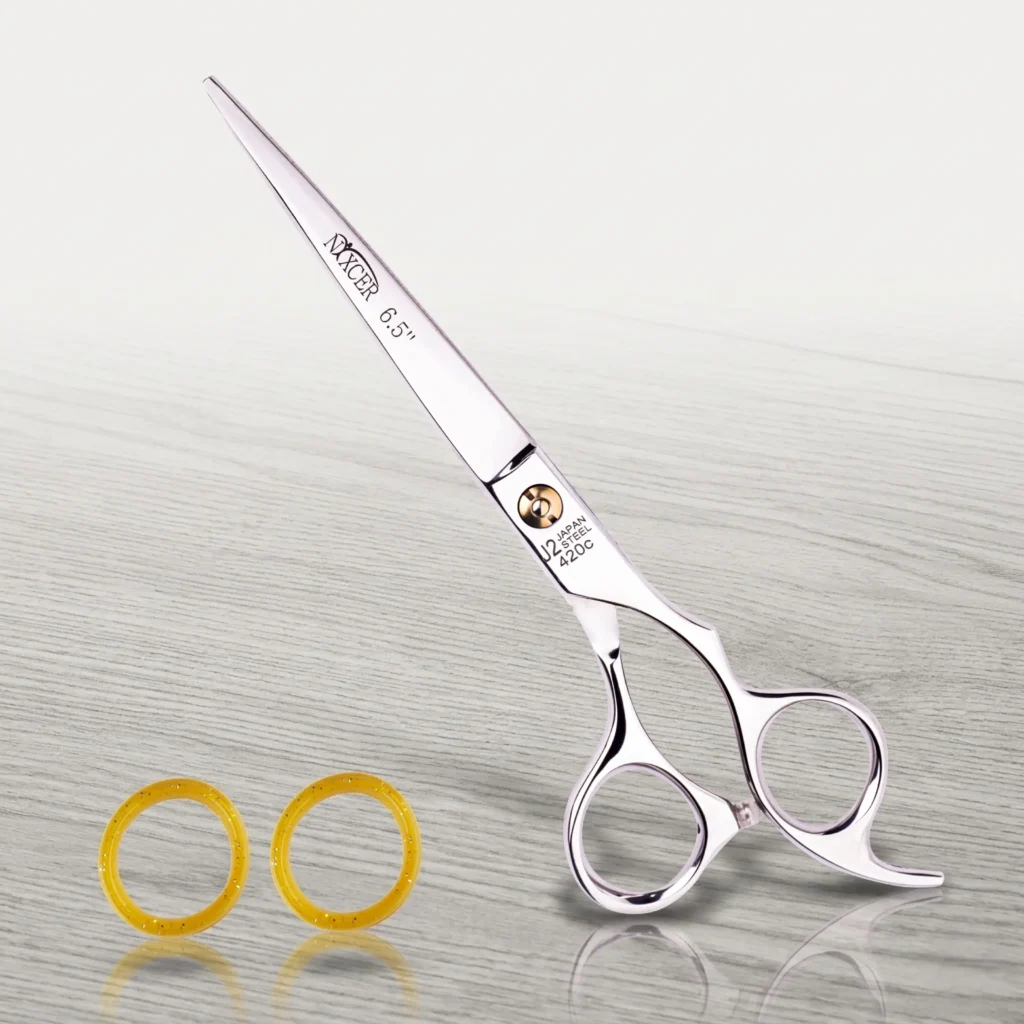
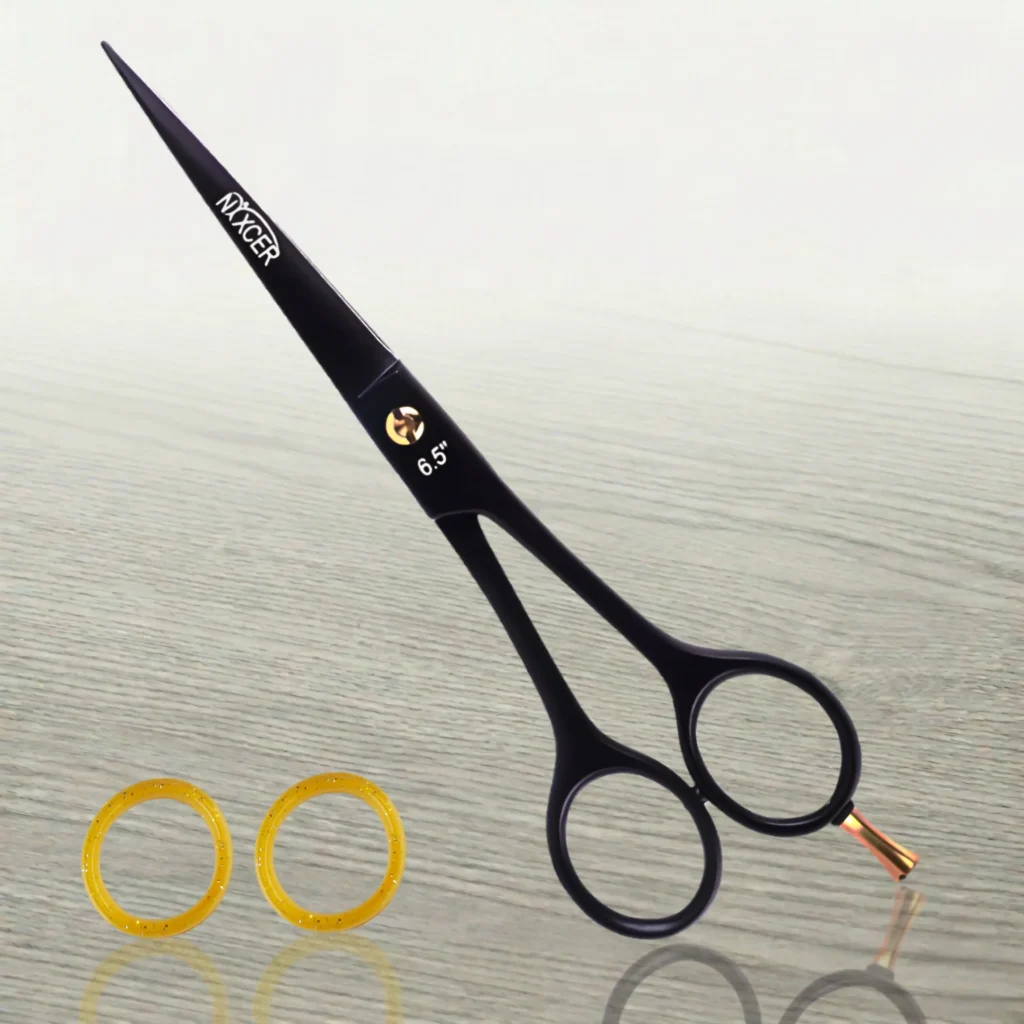
The Signature Sharp Series ARC Hair Cutting Shears are currently listed with a 6.25-inch length, convex edge, adjustable tension and ergonomic ARC design. That combination may suit trained users seeking a mid-length professional shear for precision work, general cutting and smooth refinement.
For Everyday Cutting and Broader Coverage
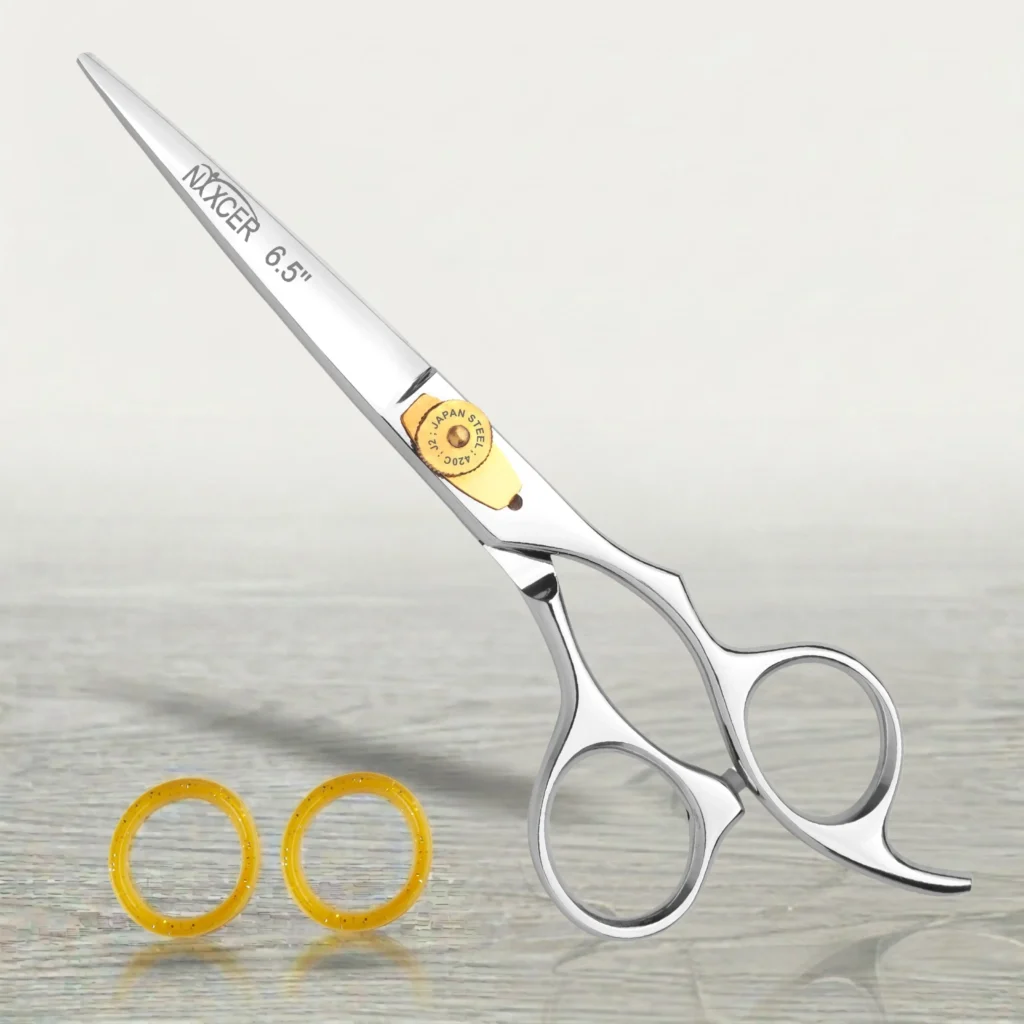
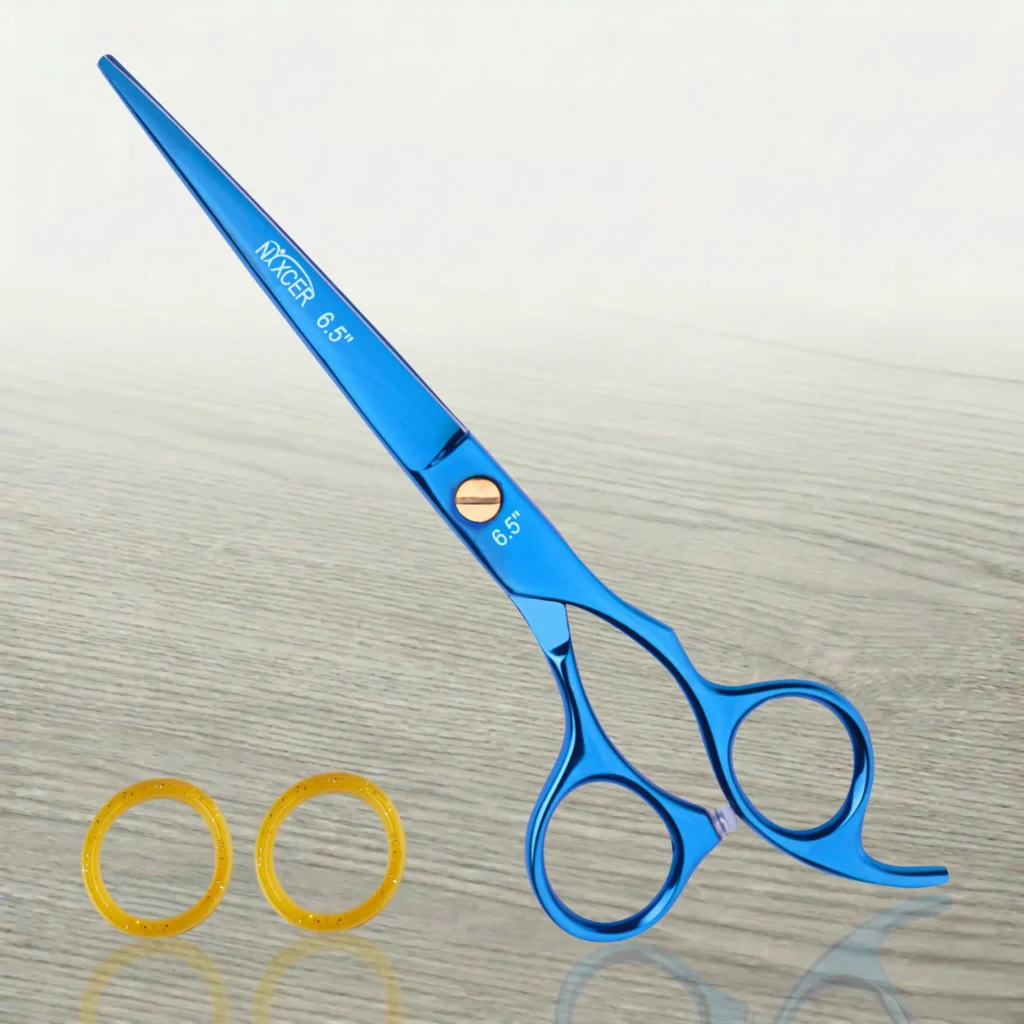
The Professional Sharp Series Razor Edge Hair Cutting Scissors are listed in 6- and 6.5-inch sizes with an adjustable tension screw. The 6-inch option may favor general control, while 6.5 inches can provide additional coverage for longer sections or over-comb work.
For Controlled Density Reduction
A purpose-built thinning shear is preferable when the objective is blending or gradual density reduction rather than removing full sections. Compare the tooth pattern, estimated removal rate, size and tension before use.
Browse the current Nixcer hair cutting scissors collection and treat each product page as the final source for exact specifications, price and availability.
A Practical Selection Checklist
Before buying professional hair cutting scissors for modern techniques, check the following:
- Identify the main task: precision, slide cutting, dry work, over-comb, detail or texturizing.
- Choose an edge geometry that supports the intended movement and level of grip.
- Select a blade length that feels controlled in your hand and covers the sections you commonly cut.
- Inspect tip accuracy, blade alignment and the smoothness of the open-close action.
- Confirm the handle supports a neutral wrist and a relaxed thumb.
- Choose true left-handed scissors if you cut left-handed; a reversed right-handed handle is not the same blade arrangement.
- Verify that the tension can be adjusted and that instructions or tools are available.
- Plan for professional sharpening appropriate to the edge geometry.
- Use a dedicated texturizing shear when controlled partial removal is the goal.
- Confirm current product specifications rather than relying only on category labels or steel names.
Maintenance Is Part of Technique
Even a well-designed scissor cannot perform modern techniques consistently when it is dirty, dry, misaligned or dull. Wipe the blades after use, remove trapped hair from the pivot area, apply the recommended oil and store the scissors dry in a protective case.
Do not cut paper, plastic packaging or other non-hair material with professional hair shears. Those materials can affect the edge and contaminate the tool. If the scissor pulls, folds hair, becomes noisy or stops cutting cleanly at the tip, discontinue use and have it inspected by a qualified sharpener. Convex edges require servicing that preserves their original geometry.
Regular lubrication supports smoother movement and reduces friction at the pivot. Read why regularly oiling hair cutting scissors matters for daily performance.
Common Mistakes to Avoid
- Buying by appearance or steel label without checking edge, length, fit and intended technique.
- Using a heavy texturizing shear where subtle blending is required.
- Forcing thick sections through a short or poorly maintained blade.
- Slide cutting with a scissor that pulls, scrapes or has incorrect tension.
- Assuming longer scissors are automatically better for scissor-over-comb.
- Using right-handed blade geometry in the left hand and losing visibility of the cutting line.
- Tightening the tension screw to compensate for dullness or damaged alignment.
- Continuing to cut when the blades push, fold or snag hair.
Final Thoughts
The role of hair cutting scissors in modern hairdressing techniques is to give the stylist controlled options. Precision lines need stability. Point cutting needs accurate tips. Slicing and slide cutting need smooth movement. Dry cutting needs sharpness and careful control. Scissor-over-comb needs predictable blade tracking, while thinning and texturizing require a tooth pattern matched to the amount of hair being removed.
No single specification creates a perfect scissor. The strongest choice combines the right edge, blade length, profile, handle, tension and balance with professional technique and maintenance. When the tool matches the method, modern hairdressing becomes more precise, creative and personalized.
Frequently Asked Questions
What role do scissors play in modern hairdressing?
Hair cutting scissors create and refine line, shape, texture, weight and movement. Different blade and handle designs help stylists perform precision cutting, point cutting, slicing, dry refinement, scissor-over-comb and controlled texturizing.
Which scissors are best for modern hair cutting techniques?
There is no single best pair for every technique. A balanced 5.5- to 6.25-inch professional shear is a versatile starting point, but edge geometry, fit, tension and blade profile should match the stylist’s main cutting methods.
Are convex edge scissors good for slide cutting?
Yes. Many professionals choose convex edge scissors for slide cutting because the smooth blade geometry can move through hair with low resistance. Correct tension, polishing, maintenance and trained technique are still essential.
What scissors should I use for point cutting?
Choose a sharp, well-aligned shear with accurate tips and a length you can control easily. Many stylists prefer 5.5- to 6-inch scissors for detailed point work, although hand size and technique should guide the final choice.
Why are thinning scissors used in modern hairstyles?
Thinning or blending scissors remove only part of a section. They can reduce density, soften transitions and blend weight lines, but the tooth pattern and removal rate must suit the hair and desired finish.
Are longer scissors better for scissor-over-comb?
Longer scissors can cover more hair and reduce repeated closures, which may help over-comb work. They are not automatically better; the blade must remain stable and comfortable for the user’s hand, comb and cutting position.
Why does scissor tension matter?
Tension controls how the blades meet. Correct tension supports a smooth, clean close. Tension that is too loose can let hair fold or push, while overly tight tension increases friction and hand effort.
How often should professional hair scissors be sharpened?
Sharpening frequency depends on workload, edge type, hair condition, cleaning habits and storage. Service the scissors when performance changes, and use a professional who understands the original blade geometry instead of following a fixed calendar alone.
Can one pair of scissors handle cutting and texturizing?
A standard cutting shear can create texture through point cutting or slicing, but it does not duplicate the controlled partial removal of a toothed thinning or texturizing shear. Professionals often use separate tools for these jobs.
How can I make hair cutting scissors last longer?
Keep the blades clean and dry, oil the pivot regularly, maintain correct tension, avoid non-hair materials, store the scissors in a protective case and use a qualified sharpener when the cutting action changes.