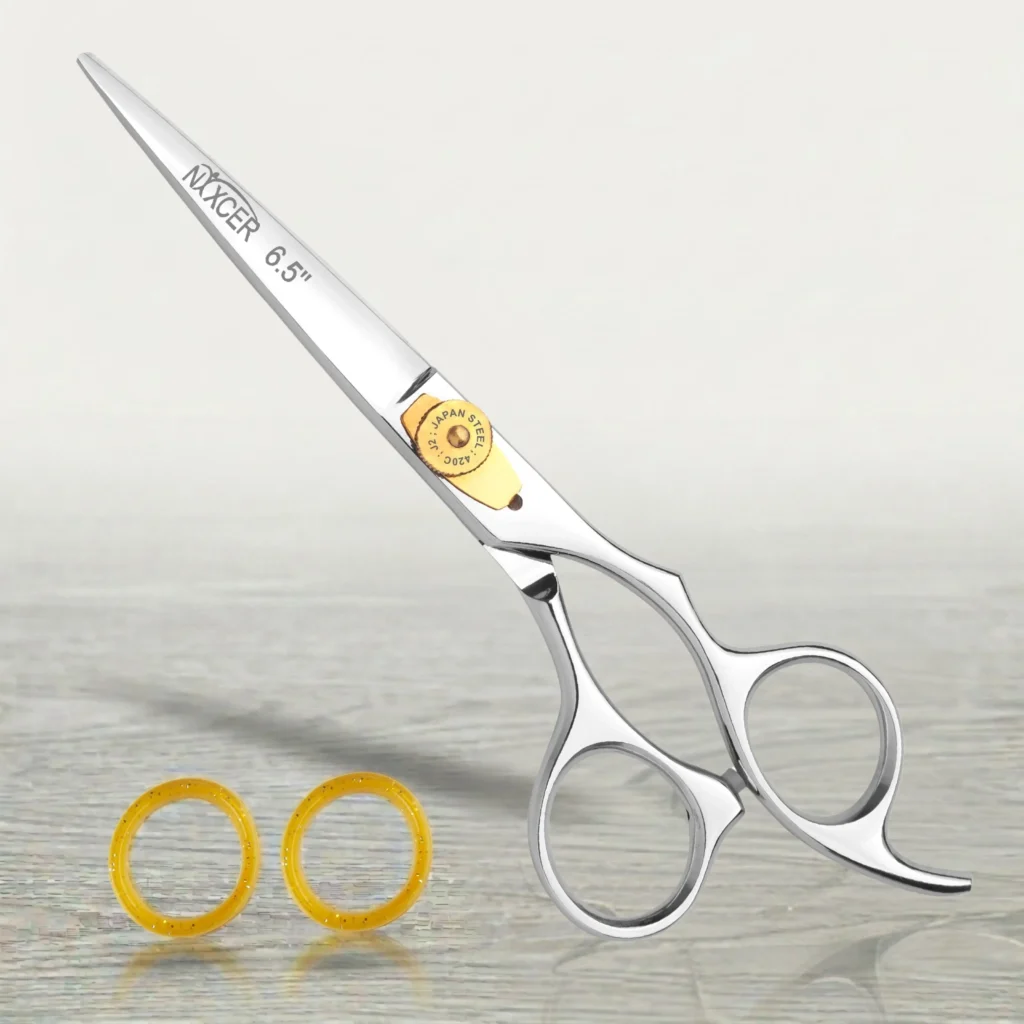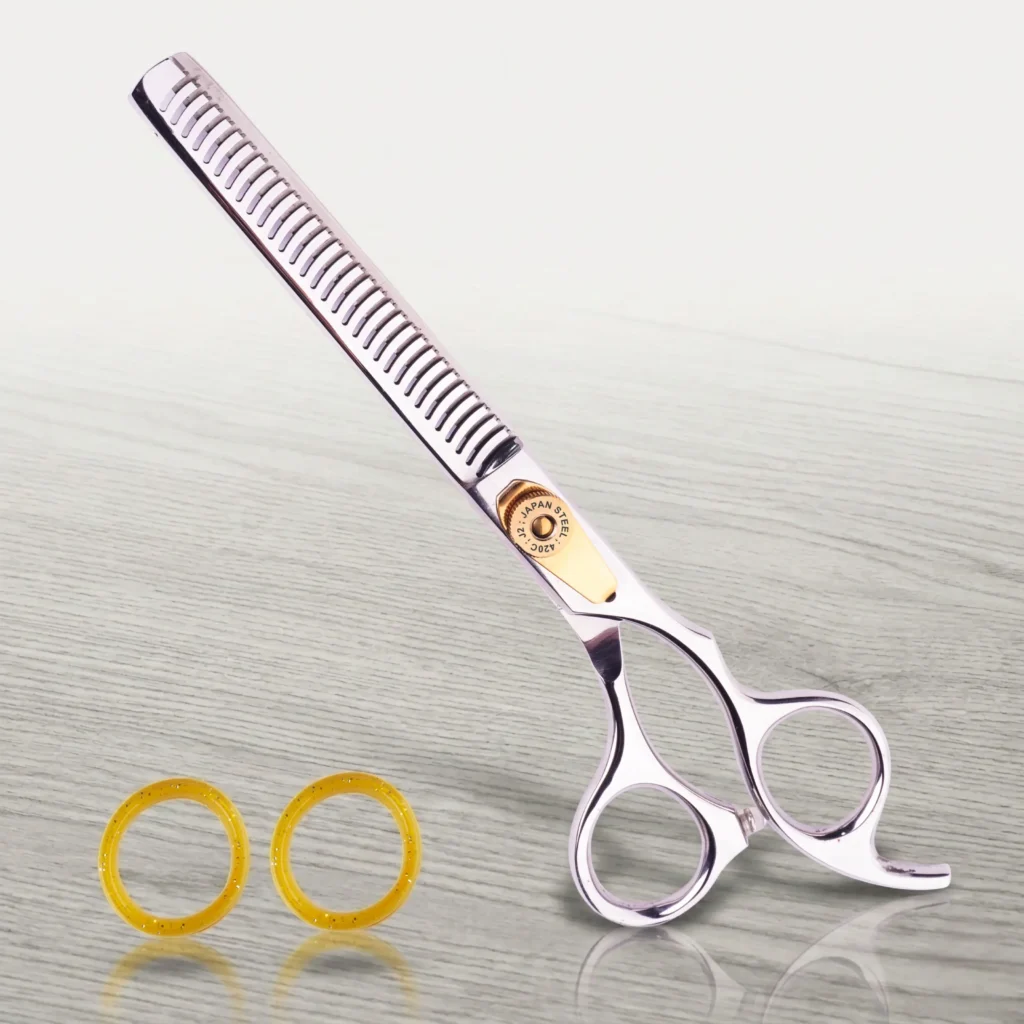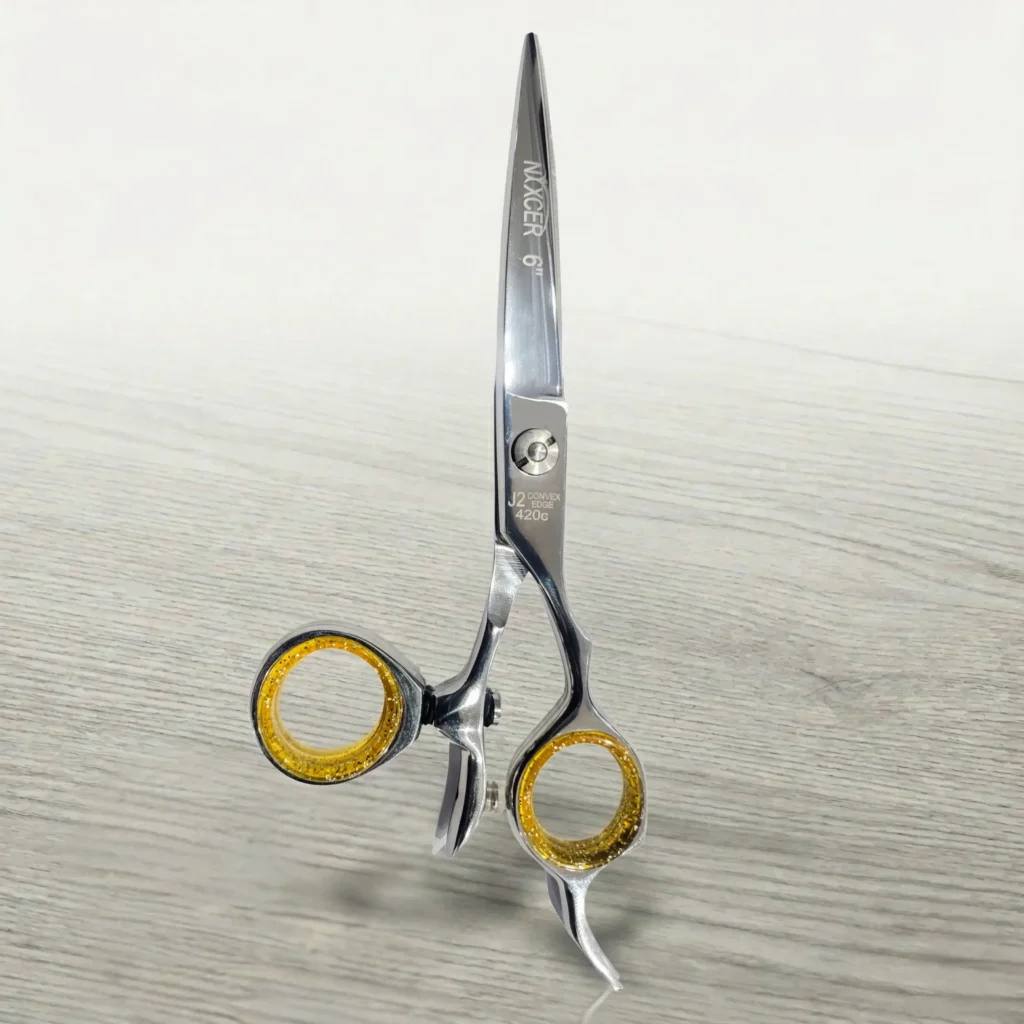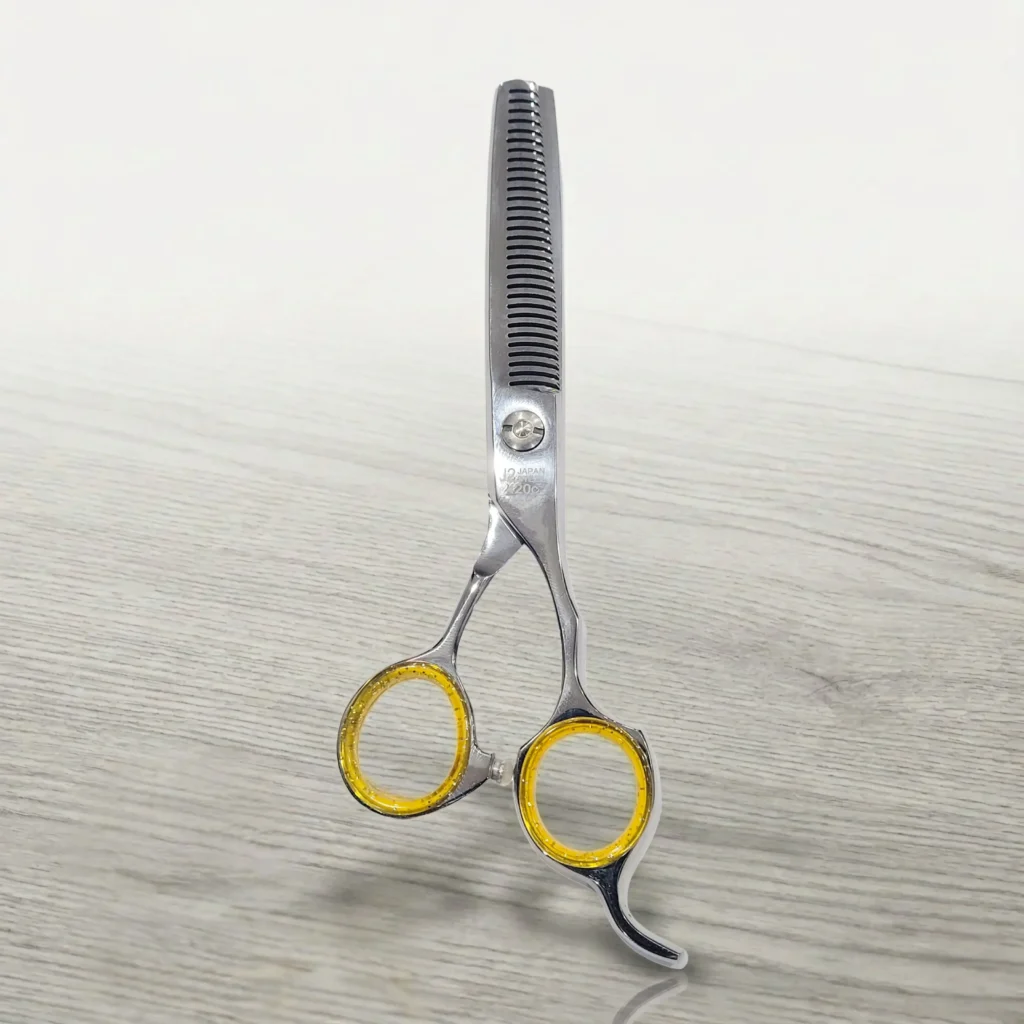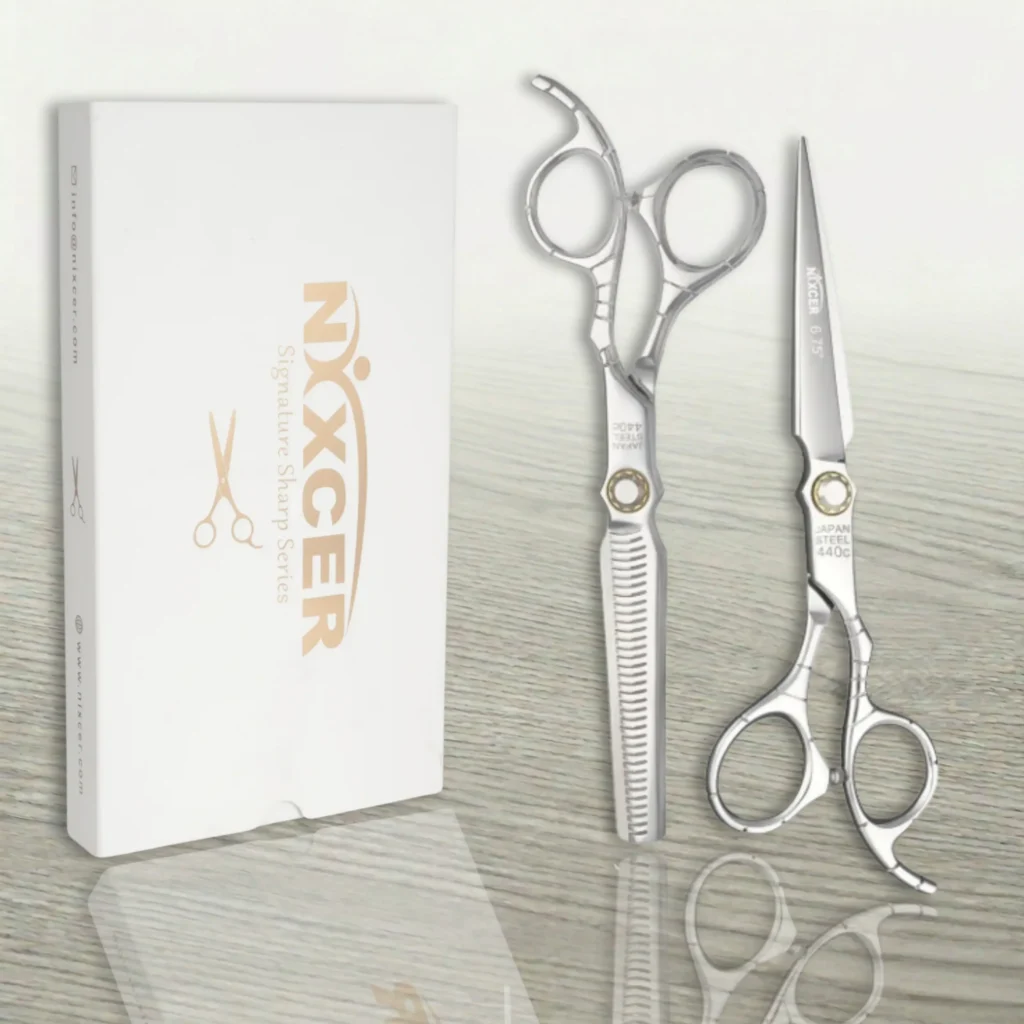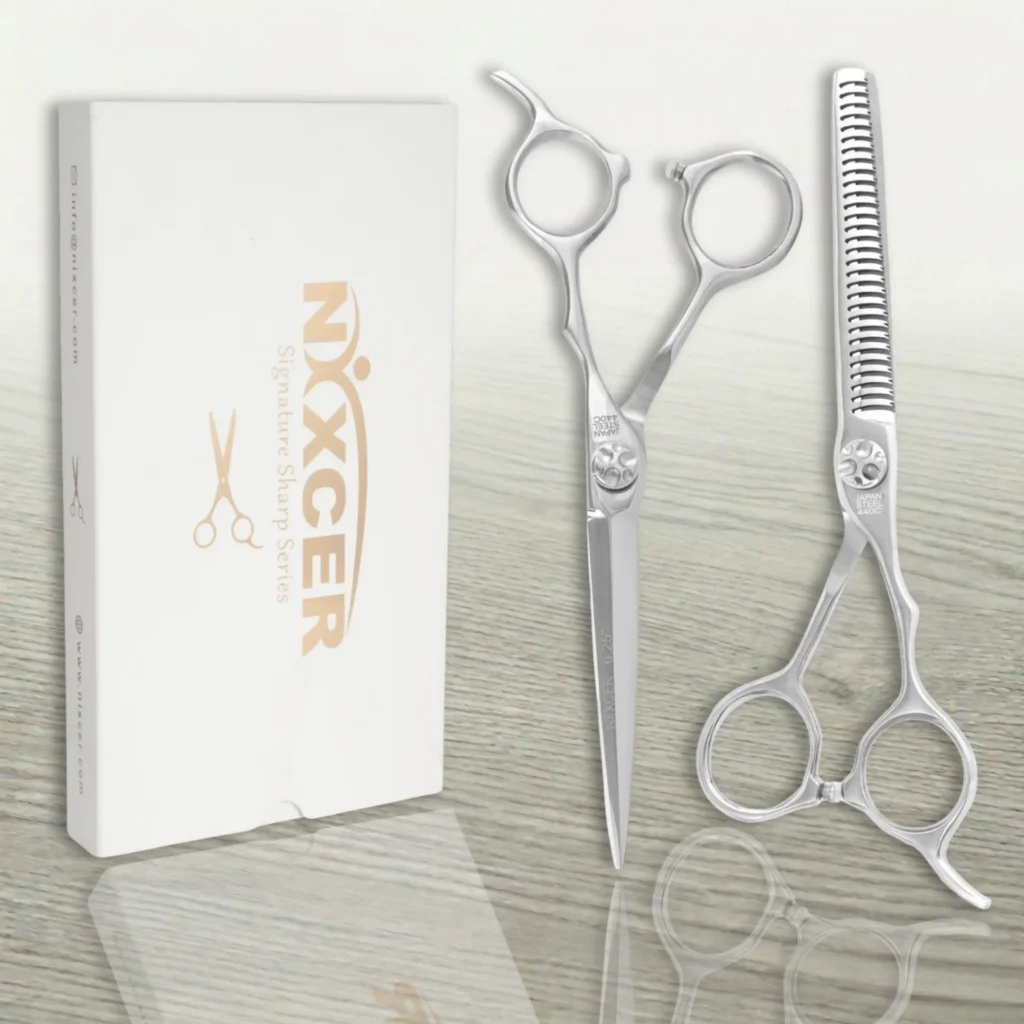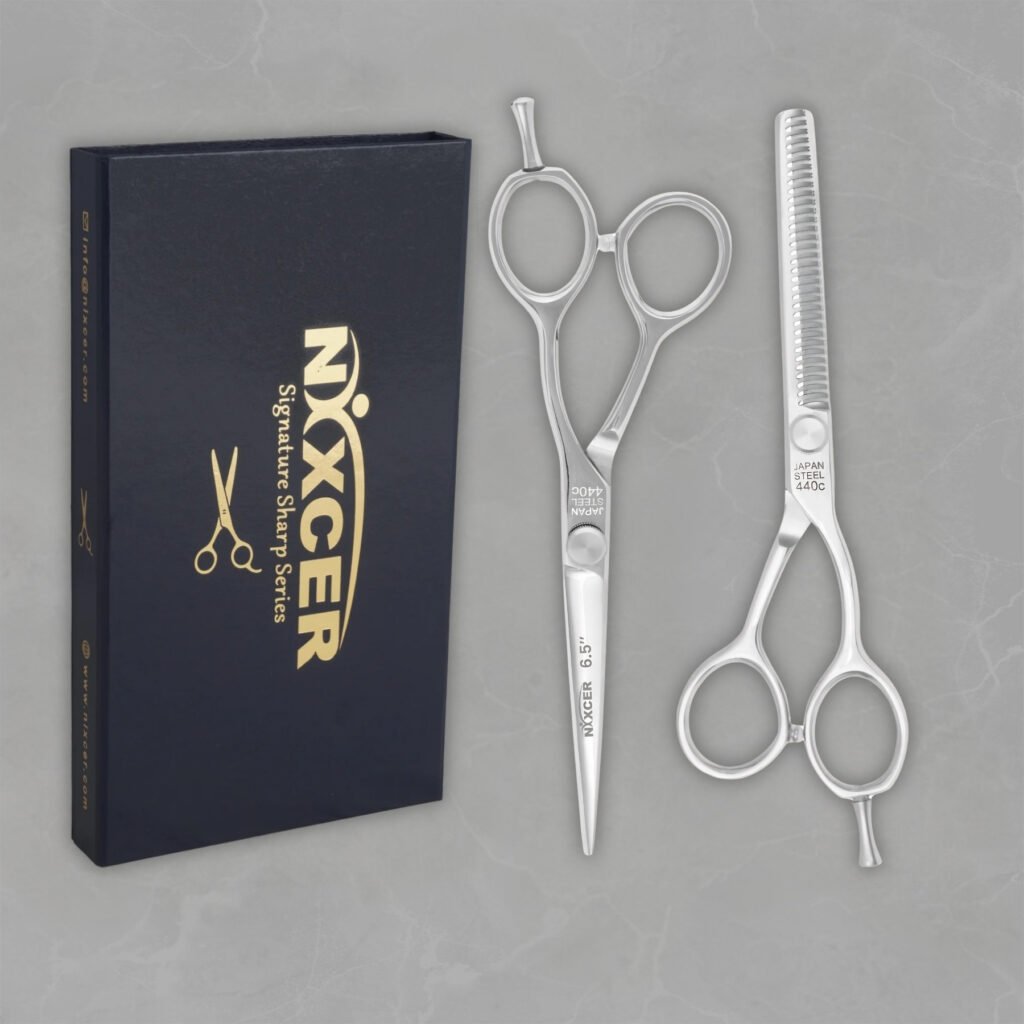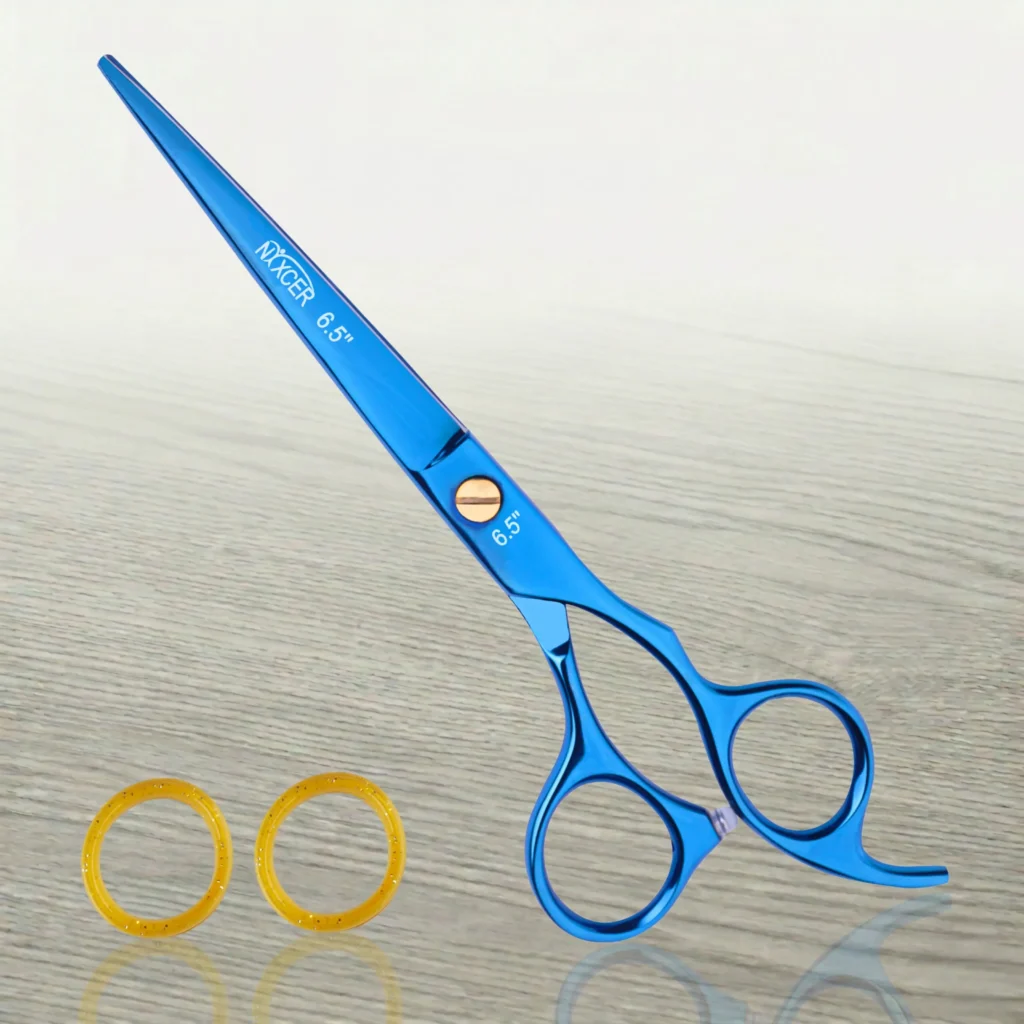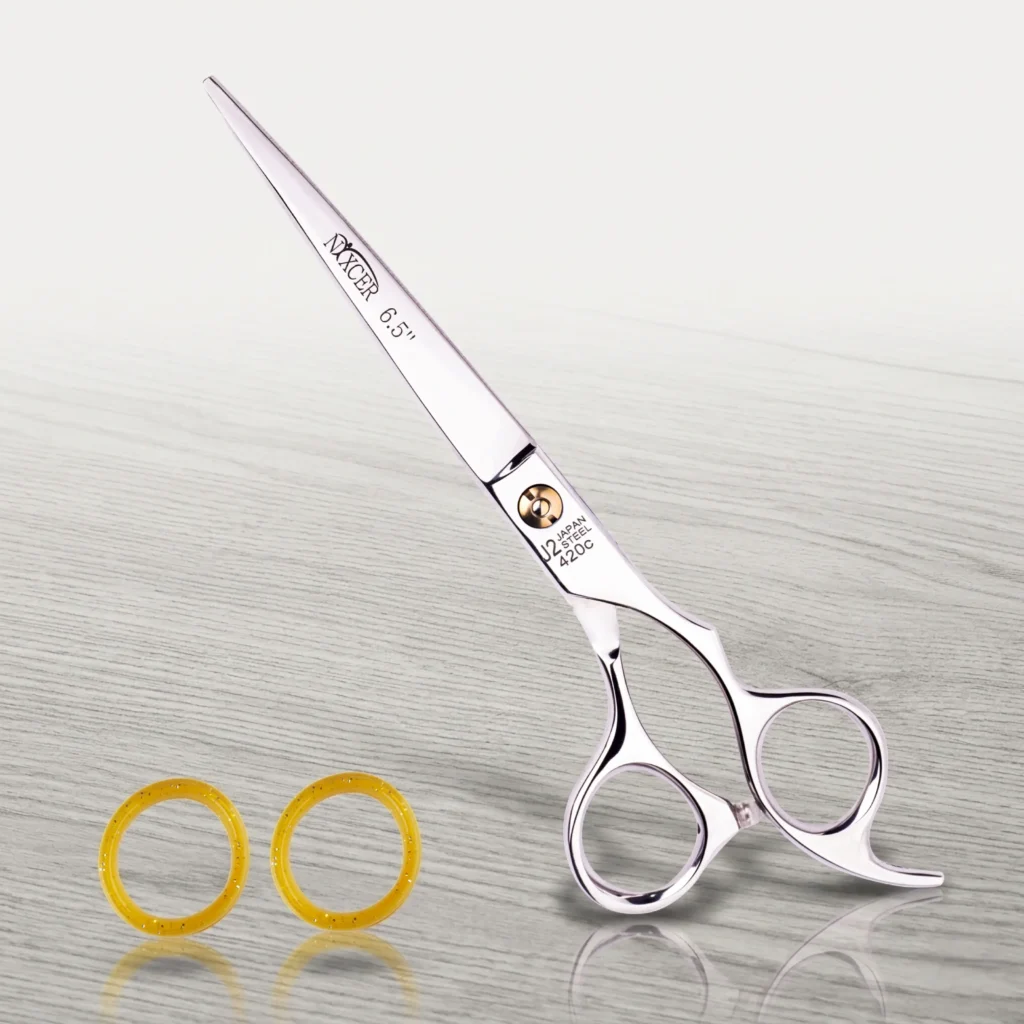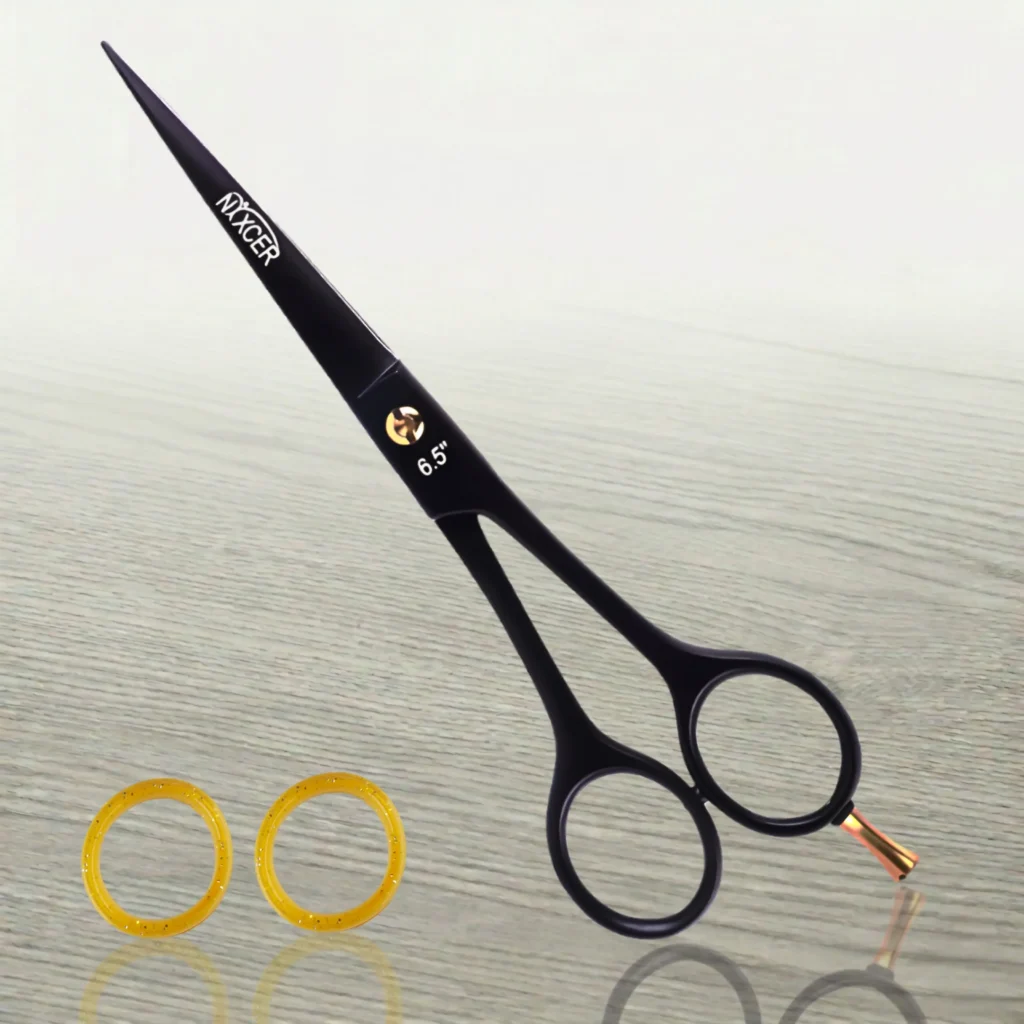

To care for professional hair cutting scissors, remove hair and residue after use, complete the required disinfection process, and dry the tool before storing it. Lubricate it and check pivot tension as the manufacturer directs. If it still folds hair, catches at the same point, or behaves differently after a drop, take it out of service for inspection rather than tightening or sharpening it by guesswork.
Cleaning, disinfection, oiling, and sharpening solve different problems. A wiped blade may look clean without having been disinfected. An oiled pivot can feel smoother without a dull edge becoming sharper. Treat each task separately so you can tell what has changed.
Hair Scissor Care at a Glance
| When | What to do | What to avoid |
| After a client | Remove debris and complete the required cleaning and disinfection process | Returning a wiped but untreated shear to the clean station |
| When lubrication is due | Use the specified shear oil at the points named in the manual | Flooding the pivot or using an improvised lubricant |
| When movement changes | Inspect and use the model’s approved tension check | Tightening by feel alone or chasing a universal drop angle |
| Before storage | Confirm the tool is dry and protect its closed blades | A damp pouch or a drawer shared with hard tools |
| After an impact or persistent fault | Set the pair aside and arrange an assessment | Bending blades or forcing a rough stroke |
Clean Before You Disinfect
Hold the tool by the handles at a well-lit station. Remove loose hair and visible residue from the blades, pivot area, and handle openings using the maker’s approved cleaning method. A soft cloth is a useful starting point for routine debris removal. Keep fingers away from the edges and do not disassemble the screw assembly just to reach trapped hair.
For a thinning shear, inspect the spaces between the teeth before moving on. Use only a cleaning tool compatible with the finish and tooth design. If residue is lodged where you cannot reach it safely, ask the manufacturer or service provider rather than scraping it out with a hard object.
Follow the Disinfectant Label and Salon Requirements
Select a disinfectant suitable for the implement and the required salon procedure. Follow applicable rules, the product label, and the shear manufacturer’s compatibility guidance. Do not assume an alcohol wipe, a quick spray, or plain water is an acceptable substitute. If the specified process appears incompatible with the shear, ask the relevant authority and the maker for an appropriate method before returning the tool to use.
Use the label’s specified preparation, application method, and contact time. The U.S. EPA’s disinfectant guidance explains that treated surfaces need to stay visibly wet for the full labeled contact time. Do not wipe the tool dry early. After that period, follow the label’s instructions for any required rinse or drying and keep treated tools apart from used ones.
See our scissor cleaning and disinfection guide for the separate hygiene workflow. No single soak duration or chemical suits all products and settings.
Lubricate Only Where the Maker Specifies
Once the cleaning and disinfection process is complete and the shear is dry, apply approved oil as needed. Use the quantity and location stated in the model’s manual. If directed, move the handles gently to distribute it and wipe away excess so the grip does not become slippery. Do not add oil to compensate for a catch that occurs at the same point in every stroke.
JAGUAR’s care instructions give guidance for its own screw systems and explain that oiling need not follow every use. Other makers specify different maintenance routines. Use the directions for your model rather than treating a fixed number of days or drops as a universal standard. Our scissor oiling guide explains why lubrication matters.
Check Pivot Tension Before Adjusting
Tension affects how the two blades meet and how the tool moves. Too little contact can contribute to folding hair; excessive resistance can make the stroke harder to control. Neither symptom proves the screw is at fault. Dirt, a nick, or a change in alignment may also affect the cut.
Start with the manufacturer’s test position and expected result. MIZUTANI’s manual and Hikari’s maintenance instructions use different checks, so a halfway stop is not a universal pass. If the model allows adjustment, use the correct key, make the smallest permitted change, and retest. Leave a satisfactory setting alone. Do not disassemble the pivot or compensate for impact damage by tightening it.
Read our tension test guide for help interpreting the result. A gravity check measures movement in a specific setup; it does not tell you whether the blade is sharp.
Know When a Shear Needs Service
If hair folds only near the tips or the blades catch halfway through closure, note the location and when the problem began. A technician can use that description along with any history of a drop or chemical exposure. Do not run a finger along the edge to find a nick or force the blades closed to test a suspected fault.
If approved cleaning and a correct tension check do not resolve poor cutting, ask a qualified shear technician to inspect the edge, alignment, and pivot. ARC Scissors’ care guidance recommends experienced professional sharpening and ties the need to usage. A fixed sharpening interval cannot account for condition, cutting volume, or damage. Avoid household sharpeners unless the manufacturer specifically approves the equipment and method.
Protect the Blades Between Appointments
Close dry shears before putting them in a clean protective case. Keep them away from clips, combs, and other tools that can strike the edges. At a shared station, label pairs awaiting cleaning or repair and keep them separate from shears that are ready to use.
Keep a service note for each frequently used pair: the model, last service date, symptom, and any approved adjustment made. A compatible backup lets you set aside a dropped or malfunctioning shear without pressing it back into service for the next client. If a technician recommends replacement, compare the Nixcer hair cutting scissors collection by fit, handedness, and care requirements.
Frequently Asked Questions
How Often Should I Oil Hair Cutting Scissors
Follow the schedule and lubricant specified by the manufacturer. Pivot designs differ, so a fixed daily or weekly rule does not fit every pair.
Is Wiping With Alcohol Enough to Disinfect Shears
Do not assume it is. Use an appropriate product and process that meet the applicable salon requirements and follow the label’s application and contact time.
Why Do My Scissors Still Fold Hair After Oiling
Oil can improve movement but does not repair dullness, nicks, or misalignment. Check tension the maker’s way and seek inspection if the cutting problem continues.
What Should I Do If I Drop My Shears
Set them aside, check for visible damage without touching the edges, and arrange inspection if movement or cutting has changed. Do not bend the blades back or force a closure.
Can I Cut Paper to Test Sharpness
Use only a test material approved for the model. Hikari, for example, specifies human hair for its shears. Do not use paper, fabric, or a synthetic wig as a universal test.