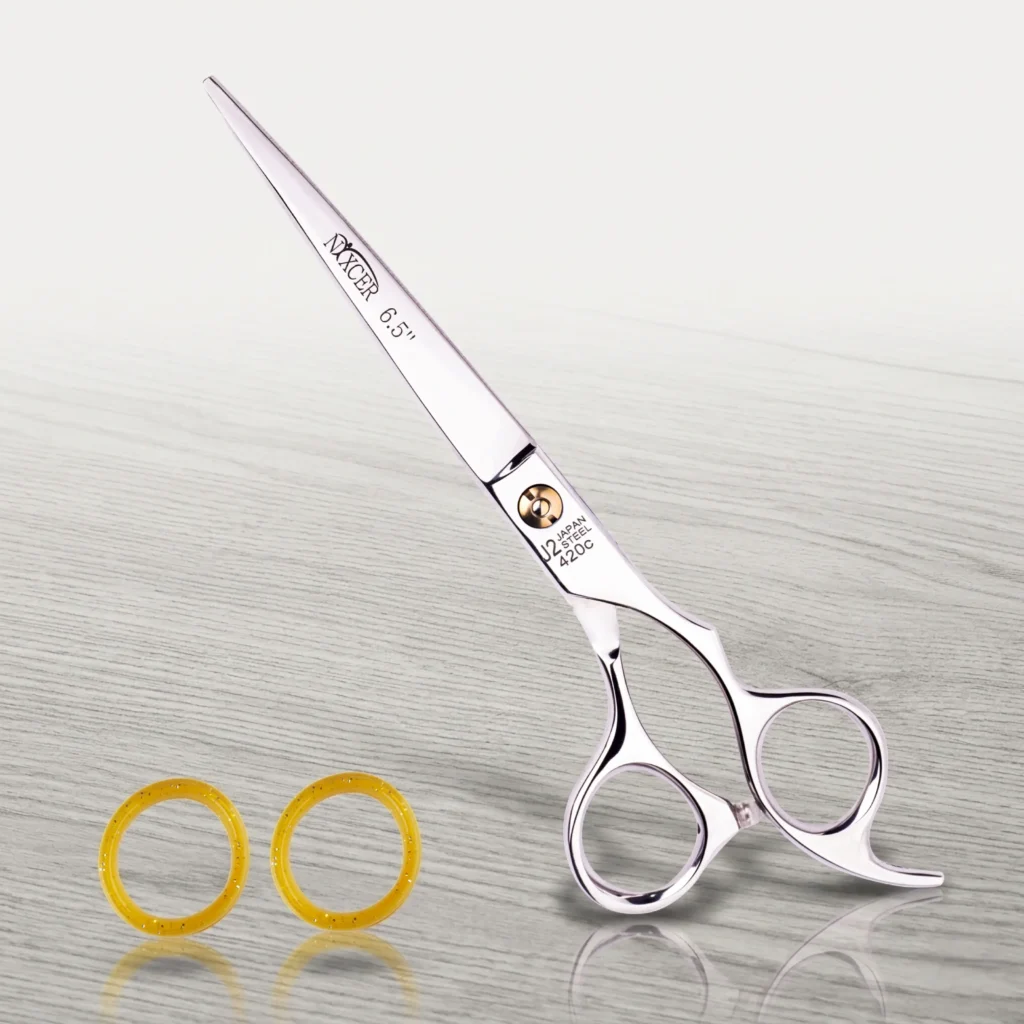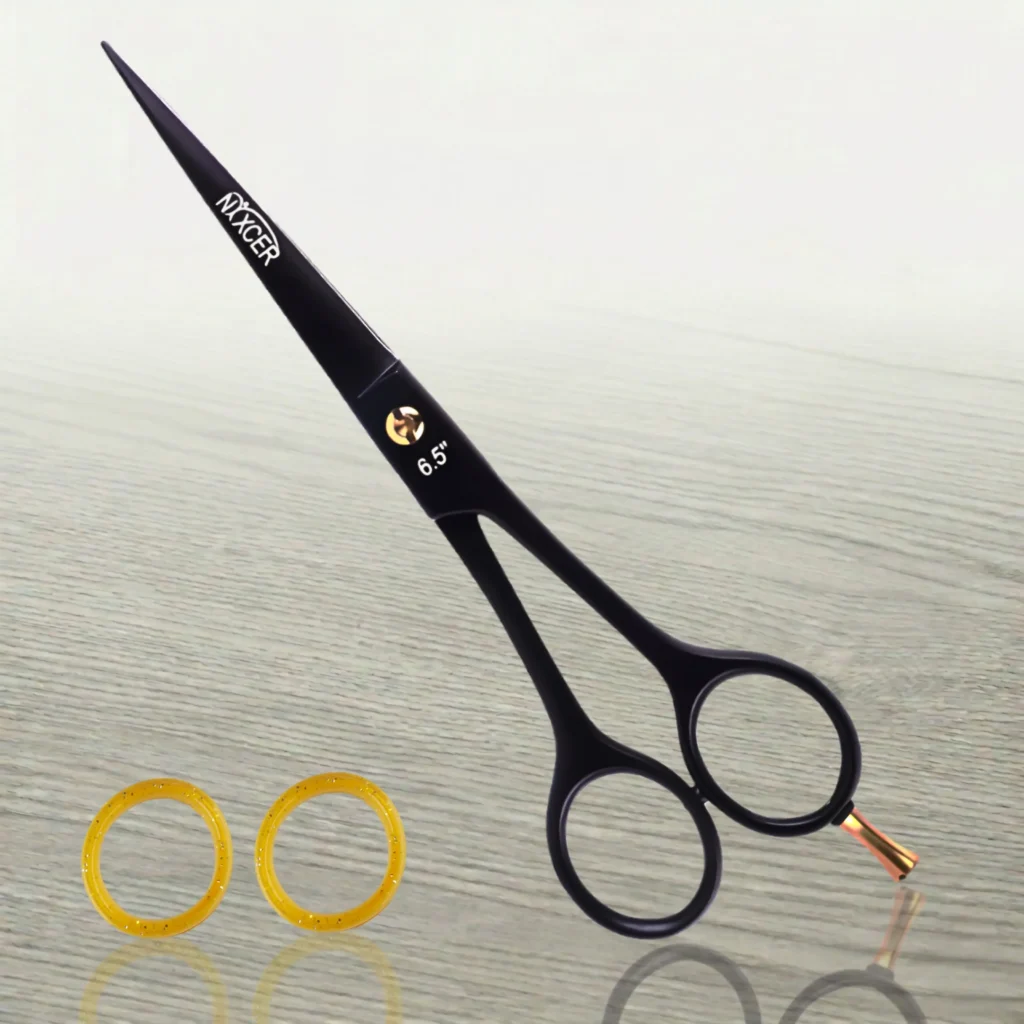

Hair cutting scissors evolved through changes in metalworking, blade geometry, manufacturing, and handle design. Today’s professional shears combine a familiar pivoted mechanism with specialized edges, different blade lengths, adjustable tension systems, and grips designed around the user’s hand. The result is a wider choice of tools for specific cutting techniques, rather than one universally superior design.
Understanding that evolution helps you compare scissors on useful details. A polished finish may catch your attention, but the blade profile, fit, and service requirements tell you more about how a tool belongs in your kit. Historical records also help separate documented developments from stories about a single inventor creating the complete modern shear.
A Timeline of Documented Milestones
These examples show stages in the wider scissor trade and the later professional hair tool industry. They are not dates for the first haircut or the first scissors ever made.
| Period or date | Documented example | What it tells us |
| Iron Age | British Museum iron shears from Kosd | Metal shearing tools predate the modern salon |
| 199 to 500 CE | Roman bronze scissors in the Science Museum Group collection | Scissor forms existed long before modern professional shears |
| 1761 | Cast steel milestone attributed to Robert Hinchliffe in Sheffield histories | Material and manufacturing development mattered alongside mechanism |
| 1886 | Hendrichs drop forge established in Solingen | Industrial production expanded scissor blank manufacturing |
| 1921 | Tokosha began barber scissor production and MIZUTANI records its first scissors | Specialist Japanese production has documented early twentieth century roots |
| 1975 | JOEWELL brand established | Company founding and brand launch dates are different milestones |
| Present day | Multiple alloys, edges, handles, and pivot systems | Specialization creates choices that need model specific comparison |
Ancient Tools and the Limits of the Evidence
The British Museum’s iron shears from Kosd are classified as Iron Age. The Science Museum Group’s Roman bronze scissors are dated 199 to 500 CE. These records establish the presence of old cutting tools, but neither record identifies its object as a modern hairdressing shear.
That distinction matters. A tool’s age does not establish its exact use, and an archaeological example cannot by itself identify the invention date of a whole tool family. The story of scissors includes general cutting implements as well as later tools built expressly for barbers and stylists.
A modern pivoted shear has two blade halves that rotate around a joint. Its working character depends on the relationship between those blades, not simply on the presence of two rings. Our scissor anatomy guide explains the parts. For the broader chronology, read the history of hair cutting scissors.
Steelmaking and Industrial Production
The Hawley Collection account of Robert Hinchliffe reports a historical attribution that he produced hardened and polished cast steel scissors in 1761. It cites later Sheffield histories, so the careful description is a documented attribution, not proof that one person invented every feature of today’s salon scissors.
The importance of this episode is its focus on materials and manufacture. Changing the metal and the way a part is formed can be as significant as changing its outline. A recognizable scissor shape still needs edges and blade contact suitable for its intended work.
Industrial production is visible in the history of the Hendrichs works in Solingen. The factory was founded in 1886 and produced scissor blanks until 1986. The preserved site now demonstrates the process through the LVR Industrial Museum. A blank is an intermediate component, not a finished shear ready for a haircut. Forming the part and finishing its cutting surfaces are distinct tasks.
This history helps explain why “forged” alone is an incomplete buying description. Ask how the finished tool is specified and supported, rather than treating one production word as a complete quality assessment.
Specialist Japanese Scissor Production
Tokosha’s corporate history separates three dates: the company began making medical cutting tools in 1917, started barber scissors in 1921, and launched JOEWELL in 1975. Keeping these dates separate avoids presenting a brand launch as the beginning of the entire professional shear industry.
MIZUTANI’s own history places its first scissors in Asakusa, Tokyo, in 1921. The company also describes continuing hand fitting and finishing. Its account shows how research into materials can coexist with skilled manual work rather than replacing it.
These examples demonstrate documented manufacturing traditions, not a guarantee that every shear associated with a country has the same quality. Compare the actual maker, specifications, and servicing arrangements. A country label cannot substitute for those details.
Modern Materials and Controlled Processing
Current professional ranges include stainless alloys, cobalt based alloys, and powder metal options. JOEWELL describes computer controlled vacuum heat treatment for its stainless blade materials, while treating cobalt base alloys as a separate material category. Its product information also lists powder metal models.
The practical lesson is to ask for an exact specification. A reference to cobalt may describe a cobalt based alloy or an addition to a steel; those are not automatically the same material. Likewise, an alloy name does not describe the finished edge, the handle fit, or the available maintenance service.
Modern materials have broadened design choices, but they have not removed the need to match a shear to its task. When comparing models, read the care instructions and ask who can service the edge. Those questions remain useful even when a product carries an impressive materials description.
Blade Geometry Became More Specialized
Modern catalogs separate edge geometry from the blade’s overall shape. Convex and beveled describe different edge forms; straight and curved describe the lengthwise blade line. A convex edge does not necessarily mean the complete blade is strongly curved.
JOEWELL’s blade guide explains that straighter blade lines hold hair more readily, while more curved lines encourage sliding. Its range also includes fine points, wider blades, and sword shaped profiles. These features address different handling and cutting requirements.
This variety is more useful than a simple old versus new ranking. A firm blunt line and a sliding technique do not ask the blade to behave in exactly the same way. For a closer comparison, see our guide to different scissor blades and convex versus beveled edges.
Handle Design Expanded the Choice of Fit
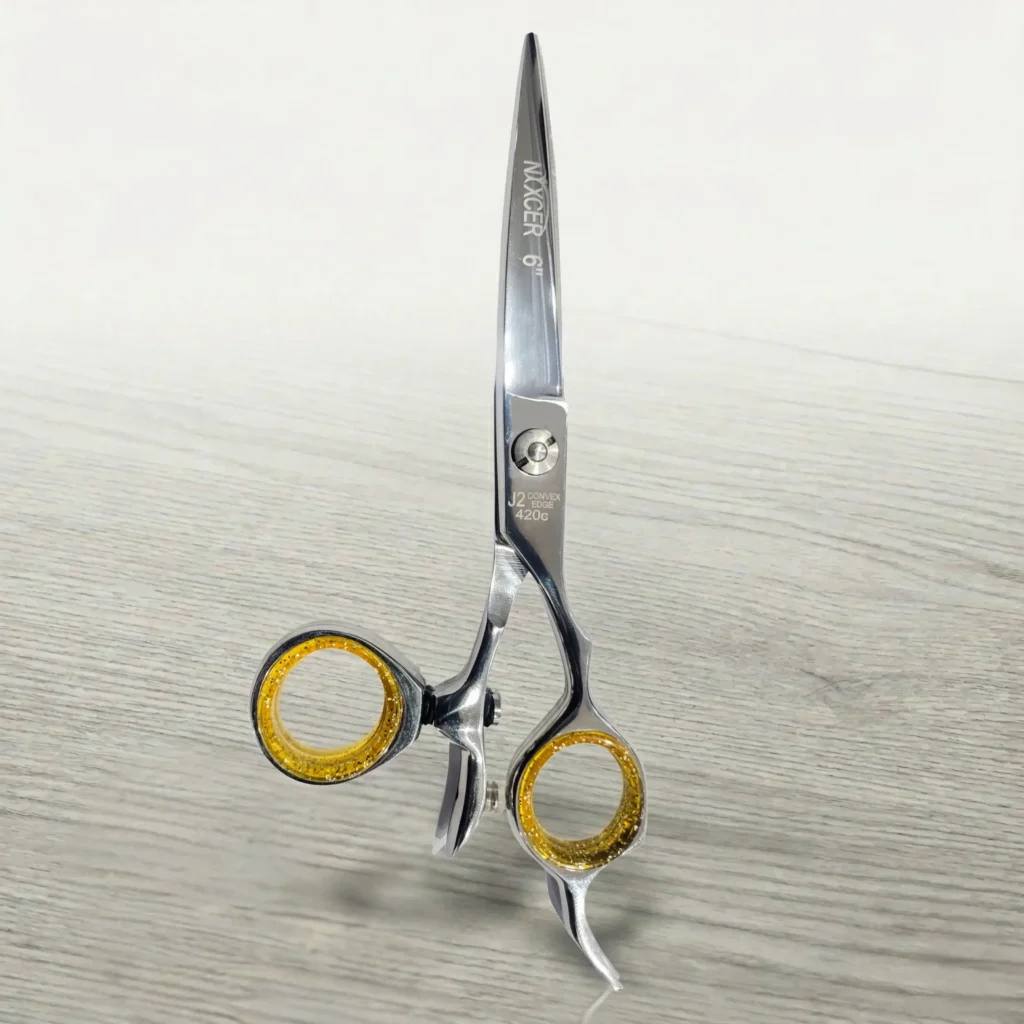
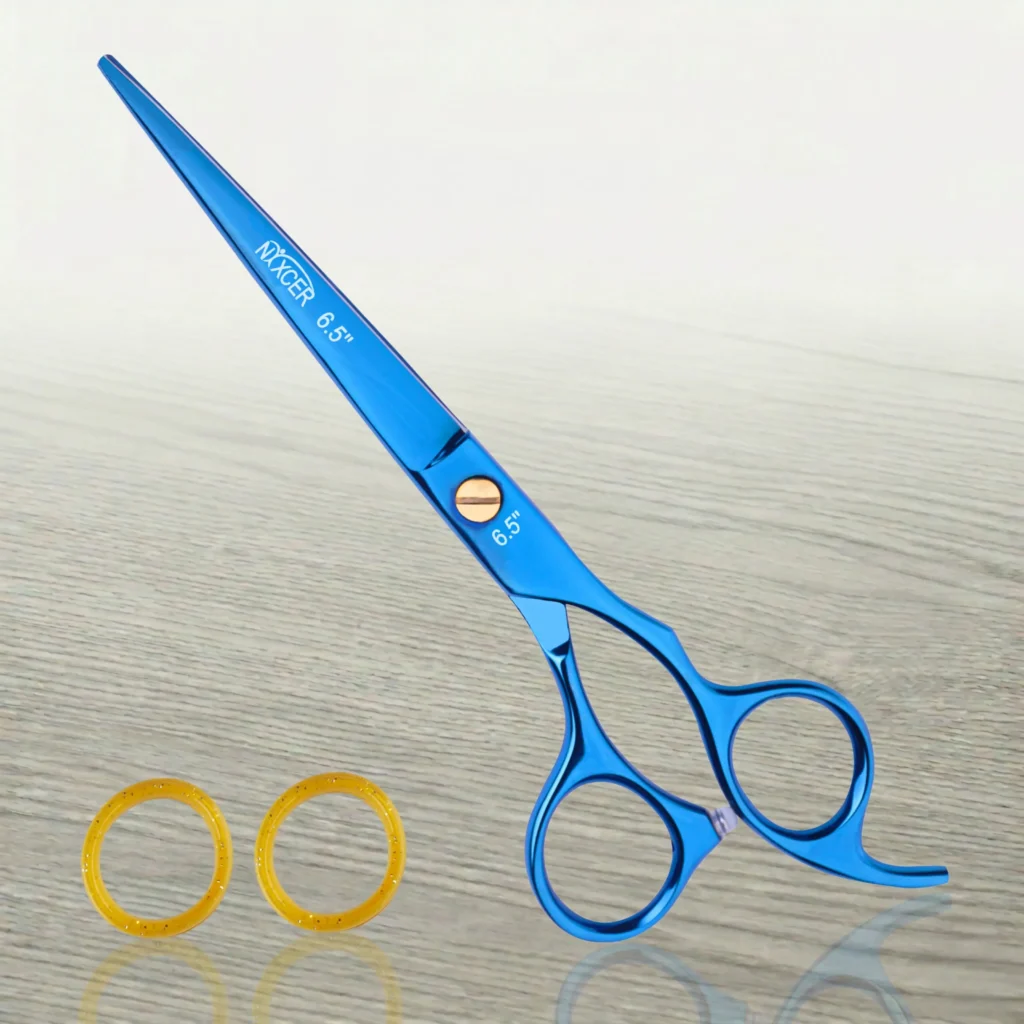
Symmetric handles remain available alongside offset arrangements. Offset designs change the relationship between the thumb and finger openings. Ring inserts can reduce an opening that is too large. These details make the grip a design choice rather than an afterthought attached to a blade.
JOEWELL’s handle guidance recommends choosing according to fit and technique. Apply that principle when comparing tools: check thumb reach, ring size, and the positions in which you normally cut. A handle described as ergonomic still needs to suit your hand.
Read our offset handle guide to understand the layout. Do not assume one grip arrangement will be ideal for every stylist or every working position.
Pivot Systems and Specialist Shears
The pivot is another area of refinement. JOEWELL documents flat adjustment screws and a dry bearing system designed for smooth movement. Different mechanisms bring different adjustment and care instructions. Appearance alone does not tell you which tool fits an adjuster or how it should be lubricated.
Use the instructions for the exact model when performing a scissor tension test. There is no reason to transfer another brand’s pass angle to an unfamiliar shear.
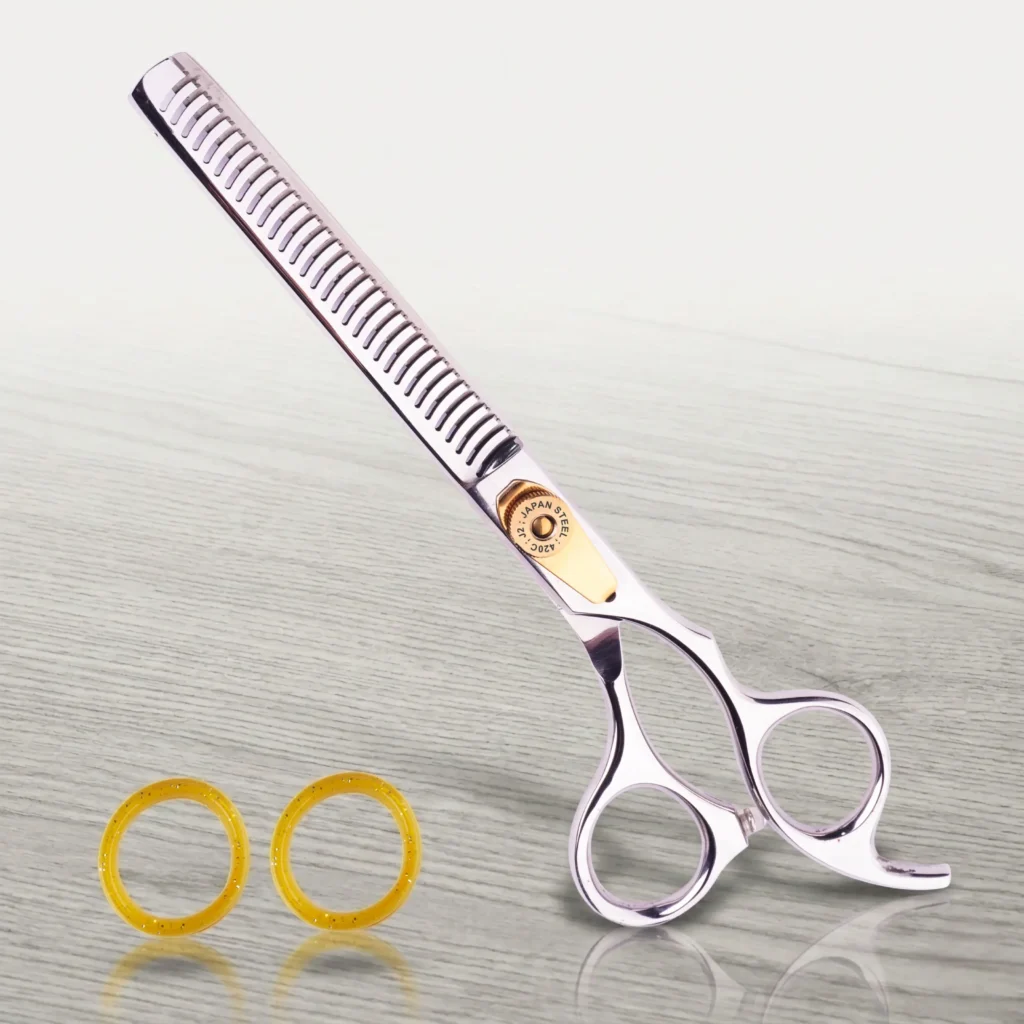
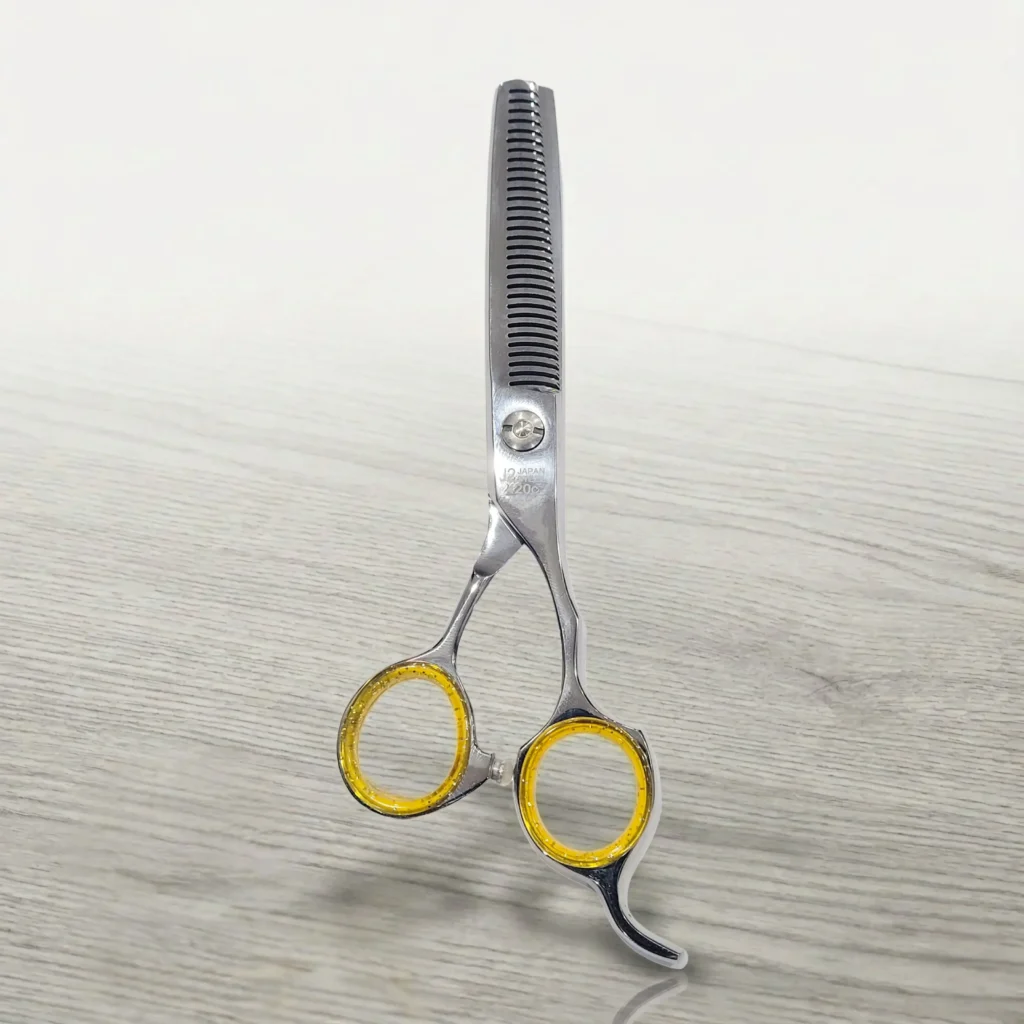
Specialization also includes thinning shears. Their teeth select strands rather than cutting the complete section like a continuous edge. JOEWELL explains that the cut ratio depends on tooth shape as well as tooth count. Compare the intended removal pattern rather than counting teeth alone. Our thinning and texturizing guide covers their role in a working kit.
What This Evolution Means When You Buy
Compare today’s scissors against the work you actually perform. Identify the technique, inspect the blade and handle specifications, and confirm the care routine before deciding. Treat an unfamiliar feature as a question to investigate, not an automatic upgrade.
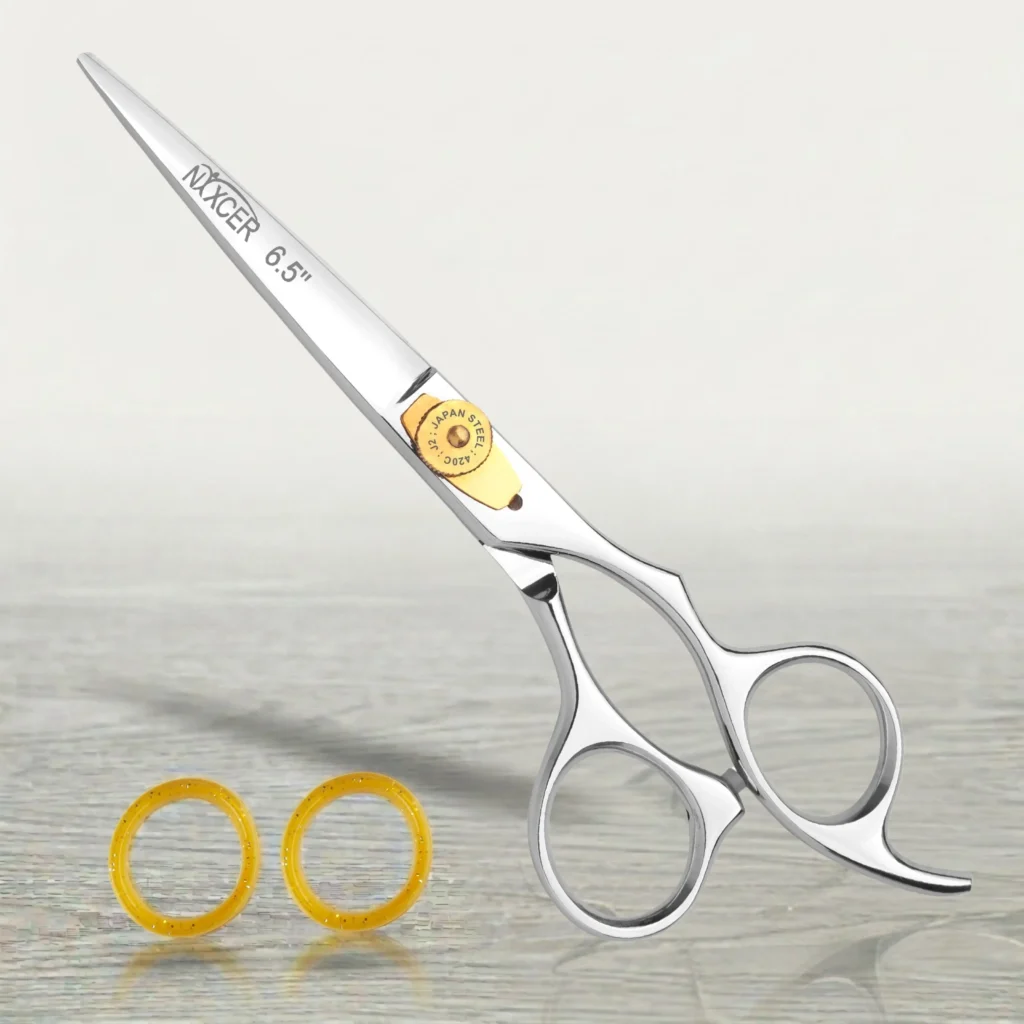
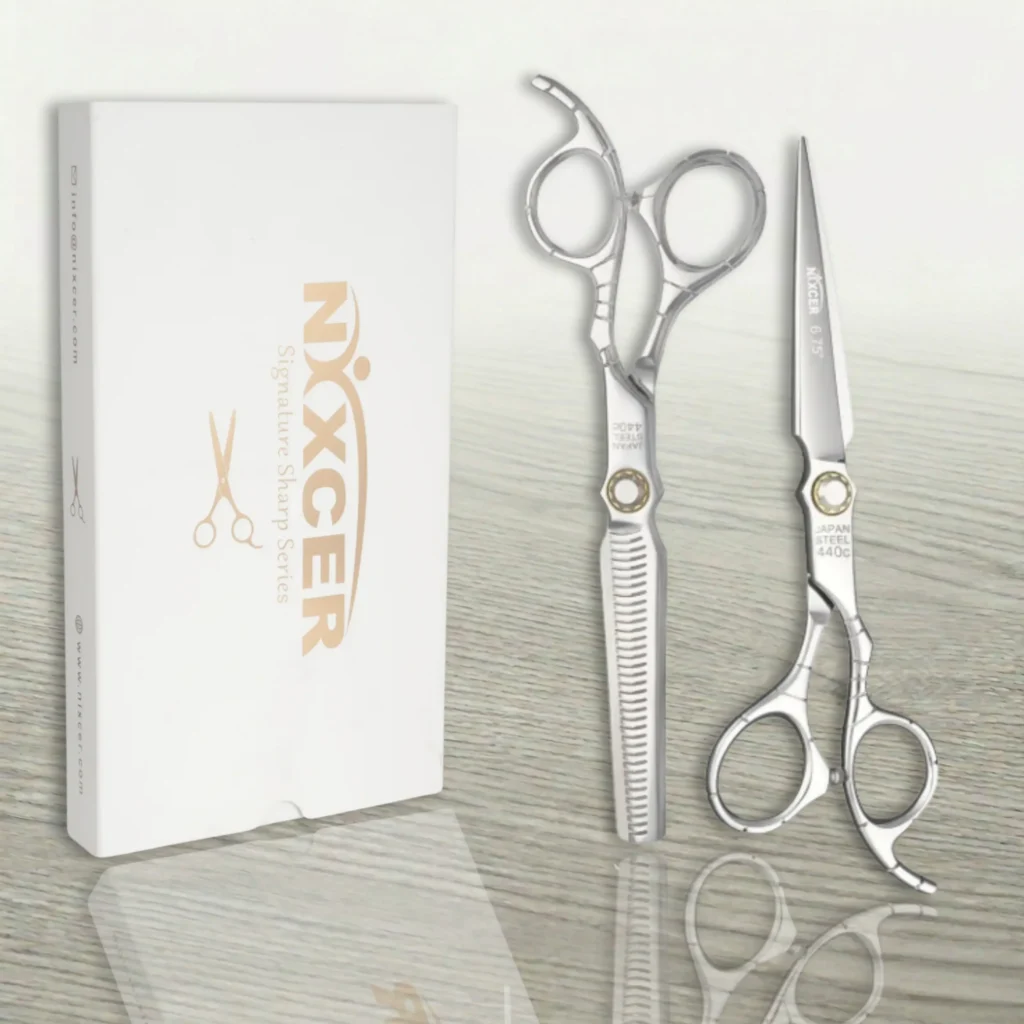
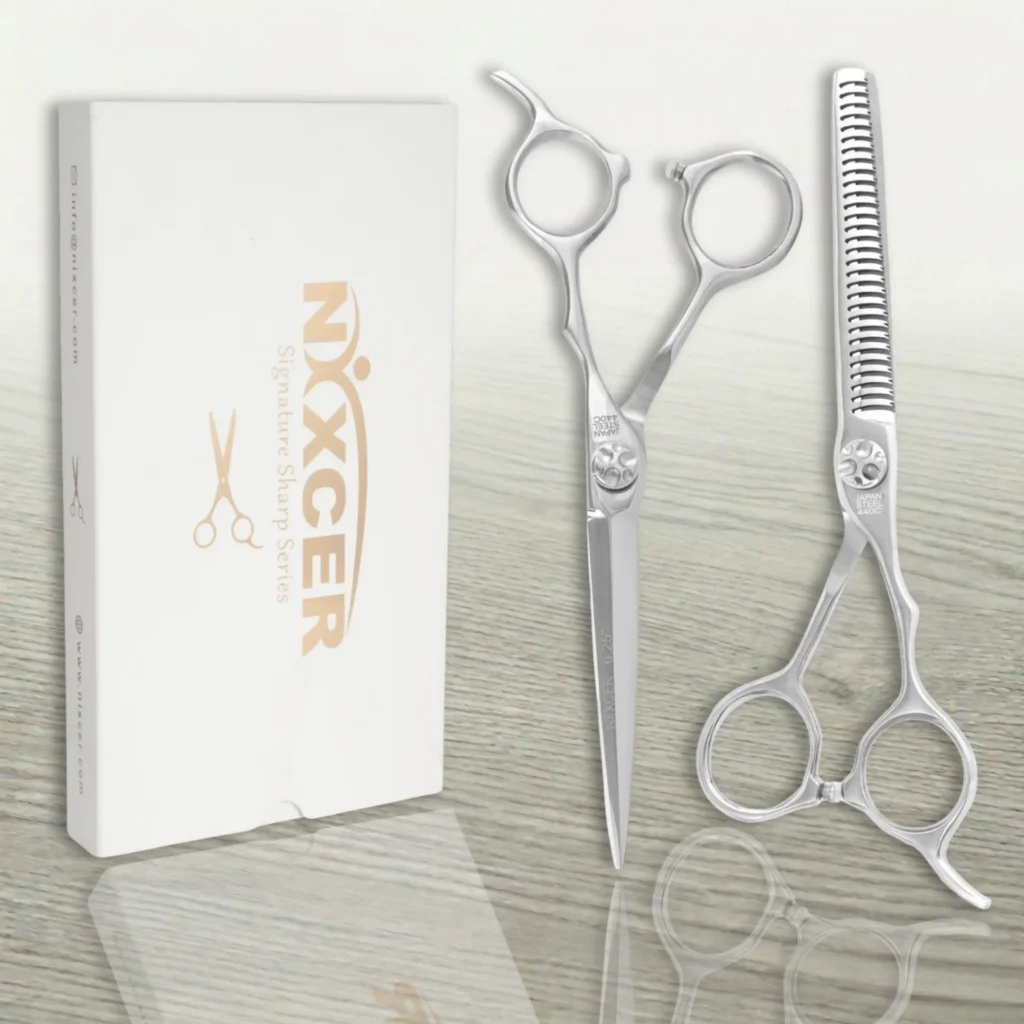
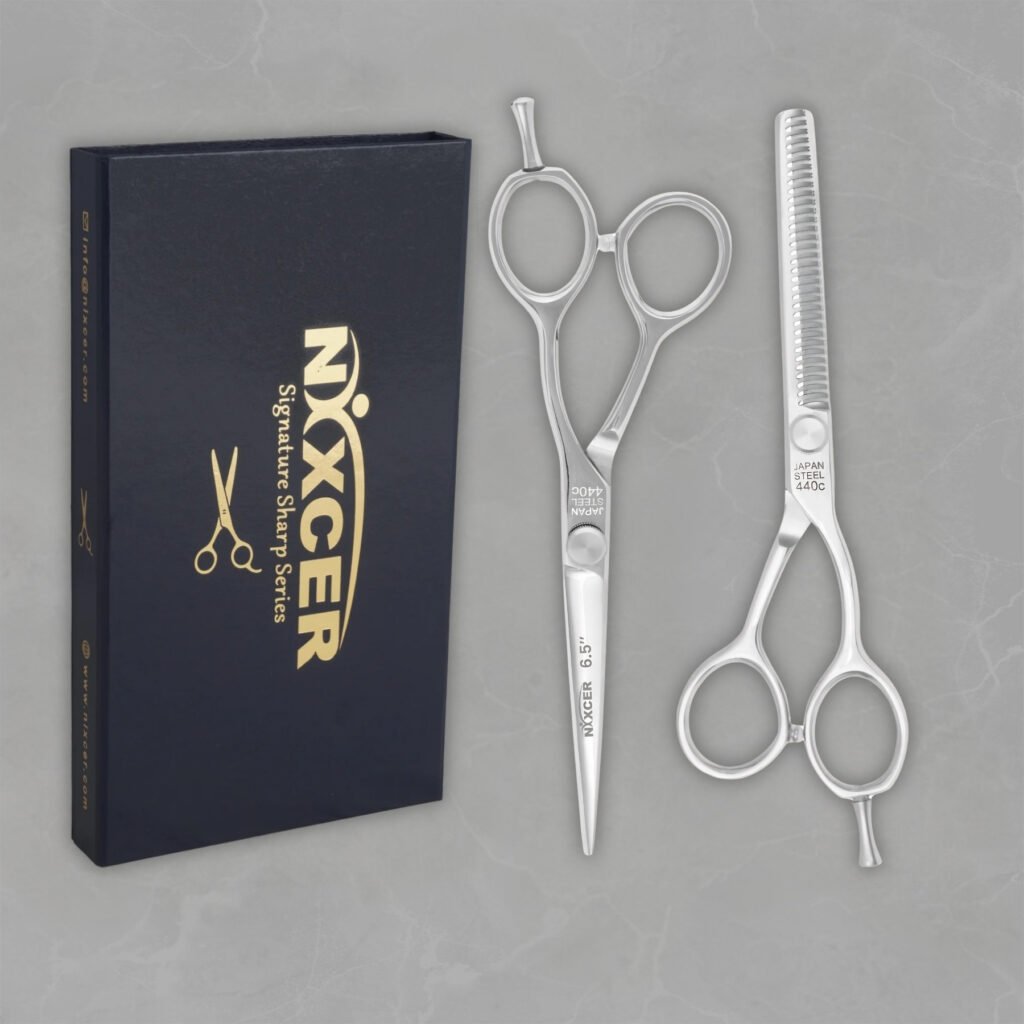
The Nixcer hair cutting scissors collection includes different blade formats. The Broad Blade scissors and SWORD shears are examples to compare by their current specifications. A model name or finish is not an independent performance ranking.
The history points toward a practical conclusion: refinements give stylists more choice, and that choice requires informed comparison. The useful shear is the one whose design suits your work and whose condition you can maintain.
Frequently Asked Questions
Who Invented Hair Cutting Scissors
The sources here do not establish a single inventor of the complete modern hair cutting shear. Ancient objects, later steelmaking developments, and documented professional manufacturers belong to different stages of its development.
What Did Robert Hinchliffe Contribute
The Hawley Collection reports the historical attribution of hardened and polished cast steel scissors to Hinchliffe in 1761. This is a manufacturing milestone, not evidence that he invented all scissors or every modern hair shear feature.
Are Modern Scissors Always Better Than Traditional Designs
No single design is best for every user. Modern catalogs still include several blade and handle forms. Compare the specific tool, its condition, and its suitability for your technique.
Did Convex Edges Replace Beveled Edges
Both remain available. They represent different edge geometries, and the finished shear’s intended use matters more than treating one label as universally superior.
Why Do Professional Shears Have Different Handles
Different layouts change how the hand reaches and guides the blades. Ring size and thumb position affect fit. Choose a handle by trying the actual model in the working positions you use.
Does More Thinning Shear Teeth Mean a Higher Cut Ratio
Not necessarily. Tooth shape as well as count influences the cut ratio. Use the manufacturer’s specification and assess the removal pattern on a suitable controlled section.