Choosing scissors for an asymmetrical haircut is different from choosing a basic trim tool. An asymmetrical hair cut needs control, clean angles, smooth cutting, and enough precision to make one side look intentionally different from the other. The right scissor or shear helps the stylist create sharp lines, soft graduation, and balanced imbalance without making the haircut look accidental.
At Nixcer Outlet, the goal is simple: help you choose the right hair cutting scissor, hair cutting shear, or cutting scissor for the cutting style you actually want. Whether you are a barber, hair stylist, salon professional, or careful home use buyer, the best hair cutting scissors should feel controlled, sharp, and balanced in your hand.
Why Asymmetrical Cuts Need the Right Scissors
An asymmetrical cut is built on contrast. One side may be longer, one side may be heavier, or one section may angle forward while another sits close to the head. Because the design depends on visible shape, the scissors must cut hair cleanly.
With low-quality scissors, the blade can push hair, chew the ends, or create uneven tension. That can make precise cuts look rough. A professional shear gives cleaner control and better cutting performance, especially around the outline, fringe, nape, and face-framing areas.
The shape must look intentional
The difference between edgy and uneven is precision. A sharp scissor helps each line land where you planned it.
Small mistakes are easier to see
Asymmetrical haircuts often have exposed corners, diagonal lines, and one-sided weight. If the cutting motion is shaky, the final style can look unbalanced.
The tool affects the finish
A smooth blade supports blunt cuts. Texturizing shears soften weight. Thinning scissors reduce bulk. The right shears make the haircut easier to refine.
What Makes the Best Hair Cutting Scissors for Asymmetrical Cuts
The best hair cutting scissors for asymmetrical work are sharp, balanced, comfortable, and matched to the hair types you cut most often. They should help you control tension and angle without fighting your hand.
Sharp blade
A sharp blade is the first requirement. Asymmetrical shapes need clean outlines, and dull scissors can drag or bend the hair before cutting it.
If the blade pulls, folds, or pushes hair away, it may need professional sharpening. A good edge helps reduce hair damage and gives a smoother finish.
Balanced feel
Scissors should feel balanced from the finger holes to the tip. If the handle feels too heavy or the blade feels too long, the cutting motion becomes harder to control.
Balanced professional scissors help you make clean diagonal sections, curved details, and short corrective cuts.
Ergonomic handle
Eronomic scissors help reduce wrist and hand fatigue during detailed work. Asymmetrical cutting often requires repeated angle changes, so comfort matters.
An offset handle, finger rest, and smooth tension screw can make a big difference for salon scissors and professional hair cutting scissors.
Strong steel
Many high-quality scissors use stainless steel or similar professional materials. Stainless steel hair cutting scissors are popular because they can hold a cutting edge well when maintained correctly.
Scissors are made in many grades, so always check the product listing before buying. Strong steel shears are usually better for repeated professional hair cutting.
Choose the Right Scissor Length
The length of the scissors affects control. Shorter shears and longer shears both have a place in asymmetrical haircuts.
Shorter shears
Shorter shears are useful for detail work, fringe control, short asymmetrical pixie cuts, and areas around the ear. They let you work with smaller sections and make precise cuts.
For delicate lines, shorter scissors may feel easier to manage.
Longer shears
Longer shears are helpful for cutting strong lines, bobs, and longer diagonal panels. They can create cleaner continuous lines because the blade covers more hair in one pass.
For long asymmetrical bobs, a longer professional shear may help create a smoother diagonal.
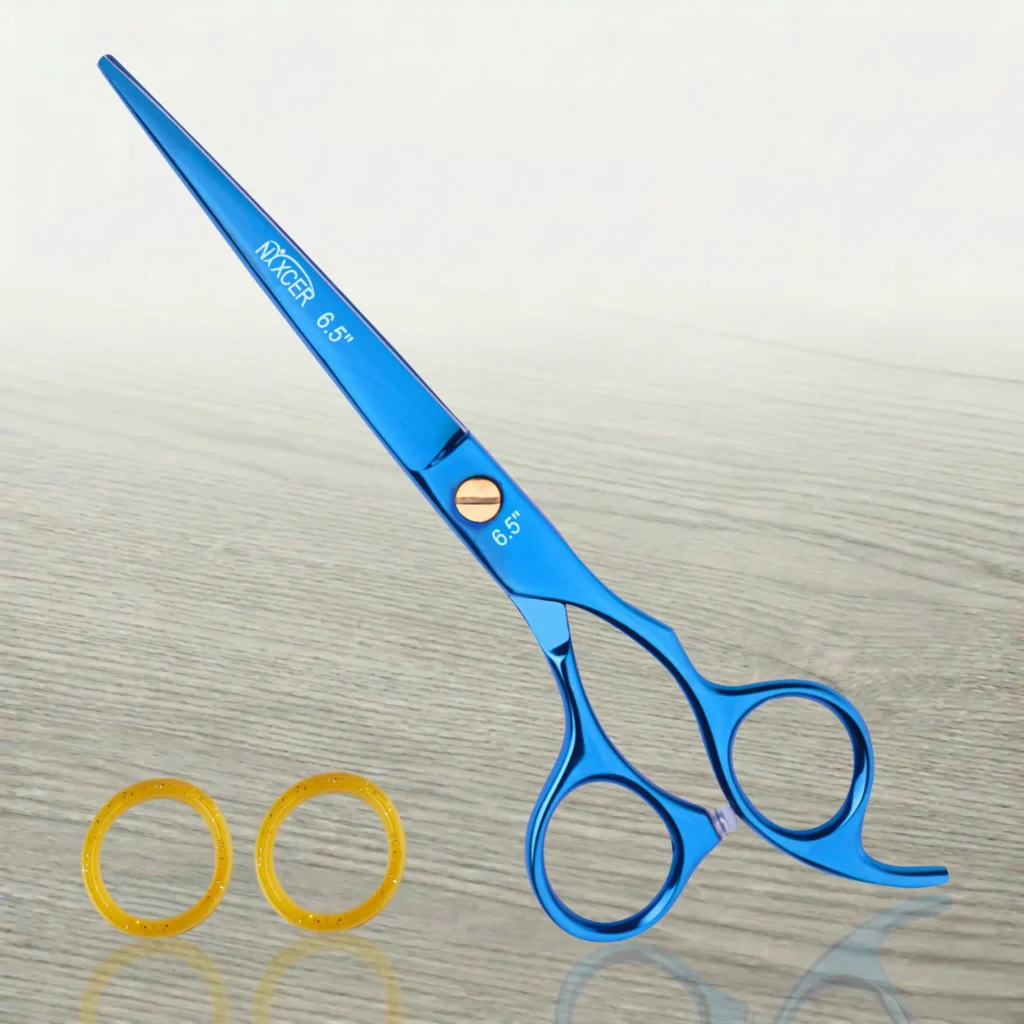
6.5-inch options
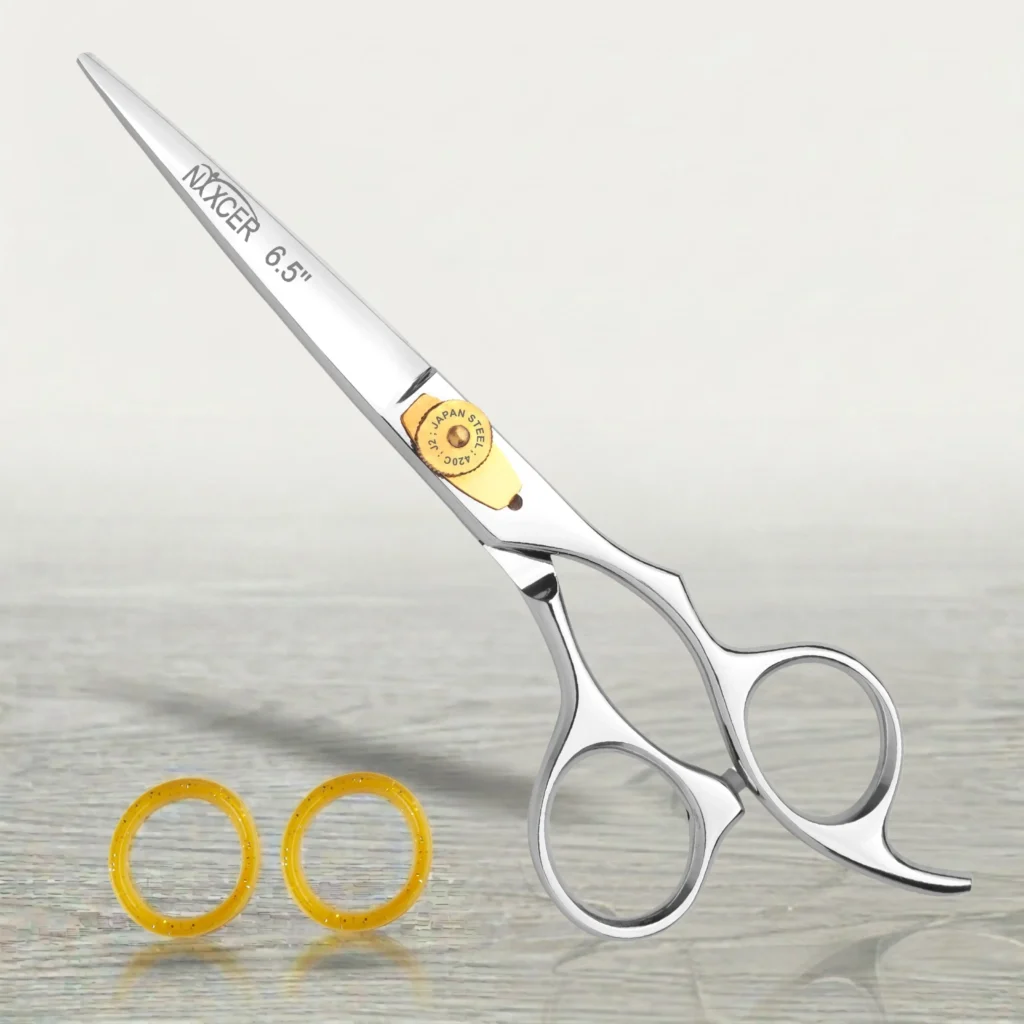
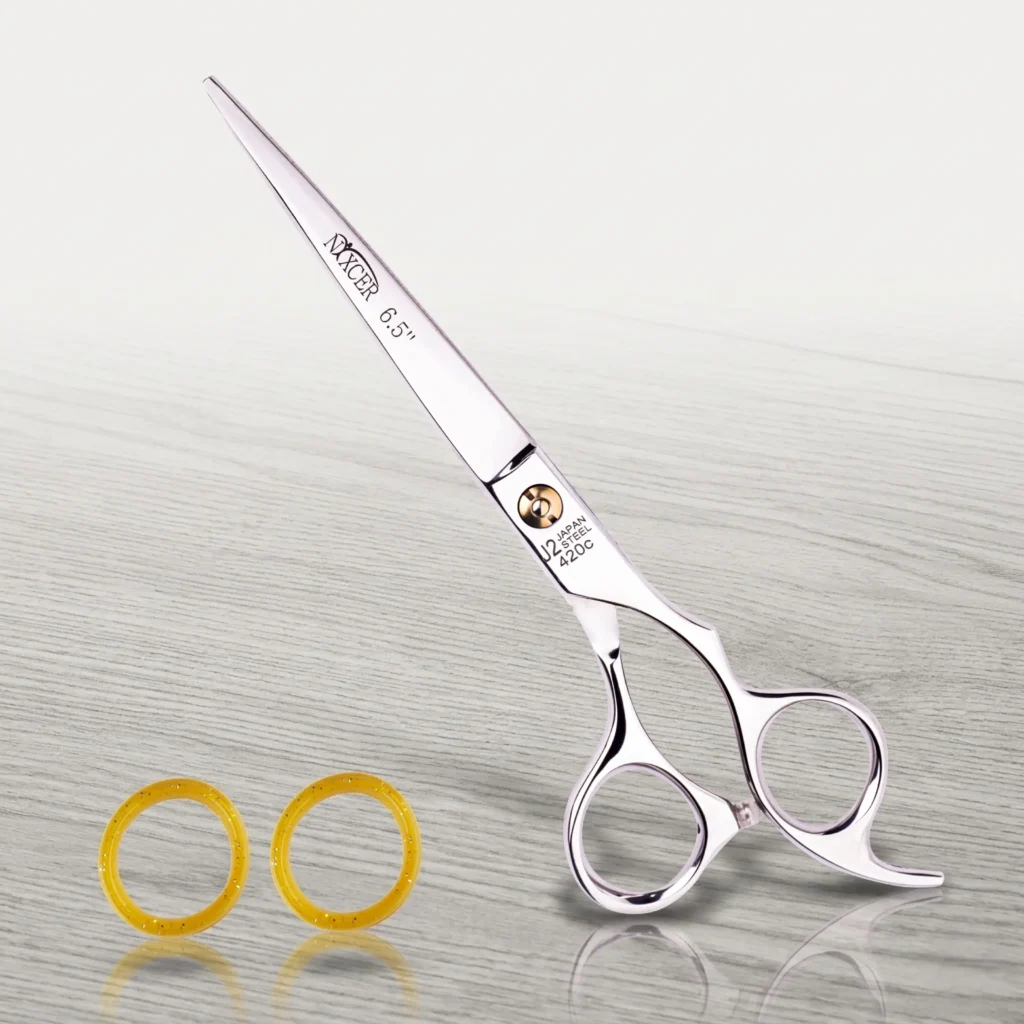
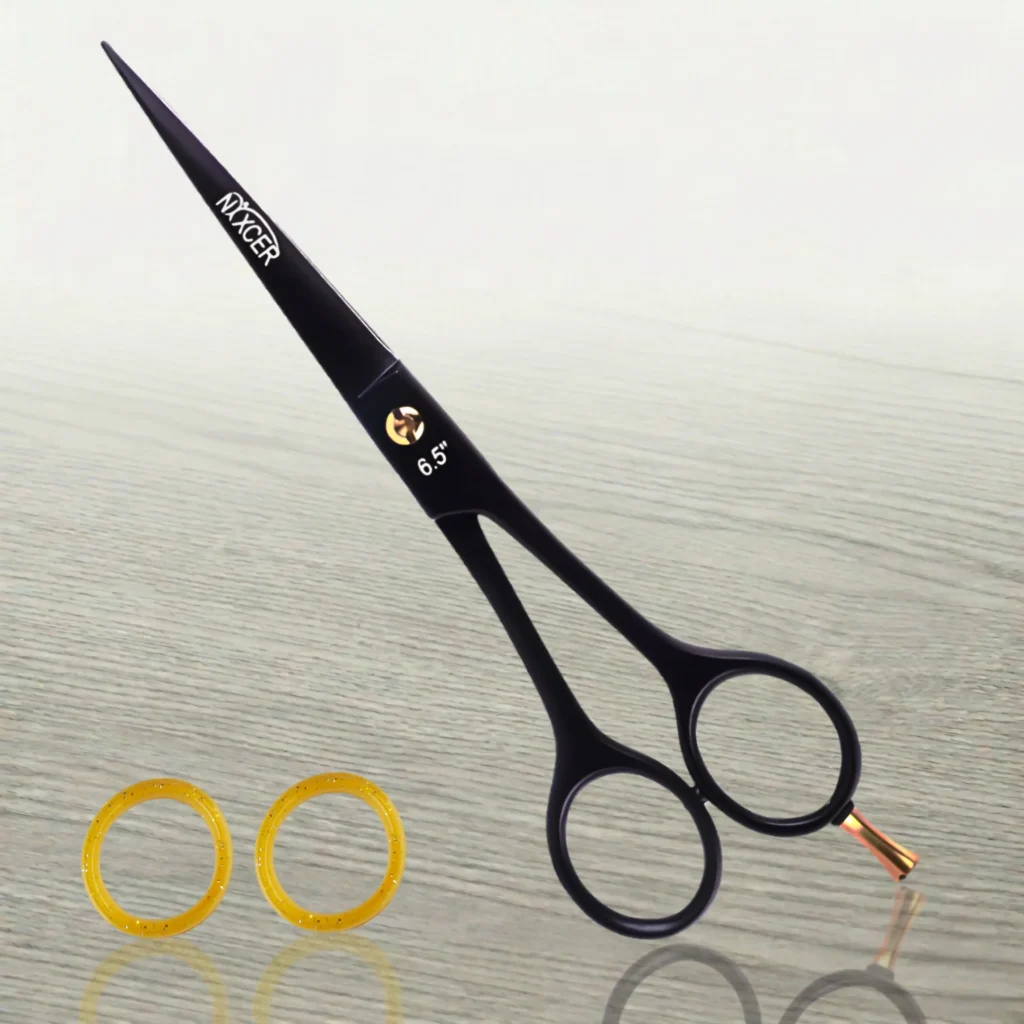
A hair cutting scissors 6.5 size is often useful for broader lines, barber work, and stronger perimeter cutting. It may be too long for tiny detail work, but it can be efficient for straight edges and long panels.
If you are choosing a good pair of scissors for both detail and line work, compare your hand size, cutting habits, and the length you usually cut.
Blade Type and Cutting Performance
The blade shape controls how the shear moves through the hair. For asymmetrical cuts, you want a blade that supports both clean lines and controlled refinement.
Convex-style cutting feel
A professional razor edge or convex-style edge can feel smooth during precision cutting and slide cutting. This type of blade is often preferred for advanced cutting techniques because it can glide through hair cleanly.
Beveled or standard cutting edge
Some shears have a more traditional cutting edge. These can be durable and useful for standard cutting, but they may not glide as smoothly during slide cutting.
Sharpness matters more than hype
The best shears are not only about buzzwords. They need to stay sharp, fit your hand, and match the cutting tasks you do every day.
Matching Scissors to the Cutting Style
Every asymmetrical cut has a different purpose. Some need a hard line. Some need soft movement. Some need hidden weight removal.
Blunt asymmetrical bob
A blunt asymmetrical bob needs strong cutting scissors with a sharp blade. The line should be clean from the shorter side into the longer side.
For this style, avoid overusing thinning shear tools on the outer line. Too much texture can weaken the shape.
Soft asymmetrical layers
Soft asymmetrical layers may need point cutting, slide cutting, and light texturizing shears. The goal is movement without losing the design.
Short asymmetrical pixie
A short pixie needs precision scissors, barber scissors, and possibly thinning and texturizing shears for soft edges. Short hair shows mistakes quickly, so work in smaller sections.
Barber-inspired asymmetry
Barber shears can help with clean outlines, controlled over-comb work, and short detail cutting. A barber may also use clippers, but the shear still matters for refined finish.
Hair Types and Scissor Choice
Different hair types need different tools. The right scissor for thick hair may not be the right scissor for fine hair.
Thick hair
Thick hair often needs strong hair shears and controlled weight removal. Use thinning scissors or texturizing shears only where bulk needs softening.
Use thinning shears carefully because removing too much weight can make one side collapse.
Best tool focus
For dense sections, shears for hair cutting should be sharp enough to move through bulk without pushing the line out of place.
Fine hair
Fine hair needs sharp professional hair scissors and very light texturizing. The goal is to keep fullness while shaping the angle.
Avoid heavy thinning because it can make the ends look sparse.
Keep the outline strong
Fine types of hair need a clean outer shape first, then only tiny texture adjustments where the line feels too hard.
Straight hair
Straight hair shows every line. Use sharp hair-cutting scissors and clean sectioning for the best result.
Detail matters
For straight asymmetrical shapes, haircutting scissors with a fine tip can help refine corners, fringe, and diagonal face-framing pieces.
Wavy or curly hair
Wavy and curly hair need careful dry cutting checks because the hair can shrink, bounce, or expand after cutting. A stylist should check the natural fall before finalizing the asymmetry.
Dry Cutting vs Wet Cutting
Both dry cutting and wet cutting can work, but each has a different purpose.
Wet cutting
Wet cutting helps control the hair during the foundation cut. It can make sectioning easier and helps create a clean first shape.
Dry cutting
Dry cutting is useful for final balance, texture, and real-life shape. Asymmetrical cuts often benefit from dry cutting because you can see how the longer and shorter sides actually sit.
Best practical approach
Many professional stylists build the foundation wet, then refine dry. This keeps the shape accurate while still respecting natural movement.
Left-Handed and Right-Handed Scissors
Handedness matters more than many buyers realize. If you use right-handed scissors in the wrong hand, the blade position can block your view and reduce cutting control.
True left-handed scissors
True left-handed scissors are designed with reversed handles and reversed blade layout. They help left-handed users see the cutting line and keep the blades working together.
Use right-handed scissors correctly
If you use right-handed scissors, use them in the right hand unless they are truly designed otherwise. For left-handed stylists, true left-handed scissors are usually more accurate than a simple handle swap.
Why it matters for asymmetry
An asymmetrical haircut depends on visual accuracy. If your hand position hides the cutting line, the shape becomes harder to control.
Why Regular Scissors Are a Bad Choice
Regular scissors are not made for clean hair cutting. They may be too dull, too thick, or poorly balanced for hair.
Using regular scissors can cause:
Rough ends
- Hair damage
- Uneven lines
- Pulling during the cut
- Poor cutting performance
If you want to cut hair cleanly, choose professional scissors, professional hair scissors, or professional hair cutting scissors designed for hair.
Choosing Scissors for Home Use
For home use, do not buy the most aggressive tool first. Choose hair cutting scissors that are sharp, comfortable, and easy to control.
Keep the job simple
Cutting hair at home should usually mean small trims, not a full technical asymmetrical redesign. If you want a dramatic shape, visit a salon.
Choose the best beginner setup
A simple scissors set may include cutting scissors, thinning scissors, a comb, clips, and a case. For home use, one high-quality pair is often better than many low-quality scissors.
Avoid over-texturizing
Do not use thinning shears all over the head. Use them only when you understand how much hair they remove.
Choosing Scissors for Professional Use
Professional hair work requires comfort, durability, and repeatable precision. A stylist may cut several clients in one day, so ergonomic scissors and quality steel matter.
Professional shears for daily work
Professional shears should feel smooth, balanced, and stable. They should open and close without clicking or grinding.
Professional hair shears for detail
Professional hair shears with a sharp tip are useful for precision cutting, fringe detailing, and diagonal shaping.
Professional hairdressing scissors
Professional hairdressing scissors should support different cutting techniques, including point cutting, slide cutting, blunt cuts, and trim hair work.
Hairdressing shears for salon speed
Hairdressing shears used in a salon need to stay comfortable through repeated use. If the tool fights your hand, your accuracy suffers.
How to Choose the Right Scissors Step by Step
If you are not sure how to choose the right scissors, use a simple decision process.
Step 1: Know your main cutting task
Are you cutting a blunt asymmetrical bob, a textured pixie, a soft layered shape, or a barber-inspired short cut? The task tells you which hair cutting scissor to choose.
Step 2: Match the shear length
Choose shorter shears for detail and longer shears for clean long lines. A mid-length shear can be a useful all-around option.
Step 3: Check the handle
The handle should feel natural. If the scissors twist your wrist, look for ergonomic scissors.
Step 4: Check the blade
The blade should close smoothly and cut without pushing hair. If the blade feels rough, it will not give precise cuts.
Step 5: Choose the best quality you can afford
The best scissors are not always the most expensive, but very cheap shears often lose sharpness quickly. Choose the best tool that fits your budget and skill level.
Nixcer Outlet Scissor Options to Consider
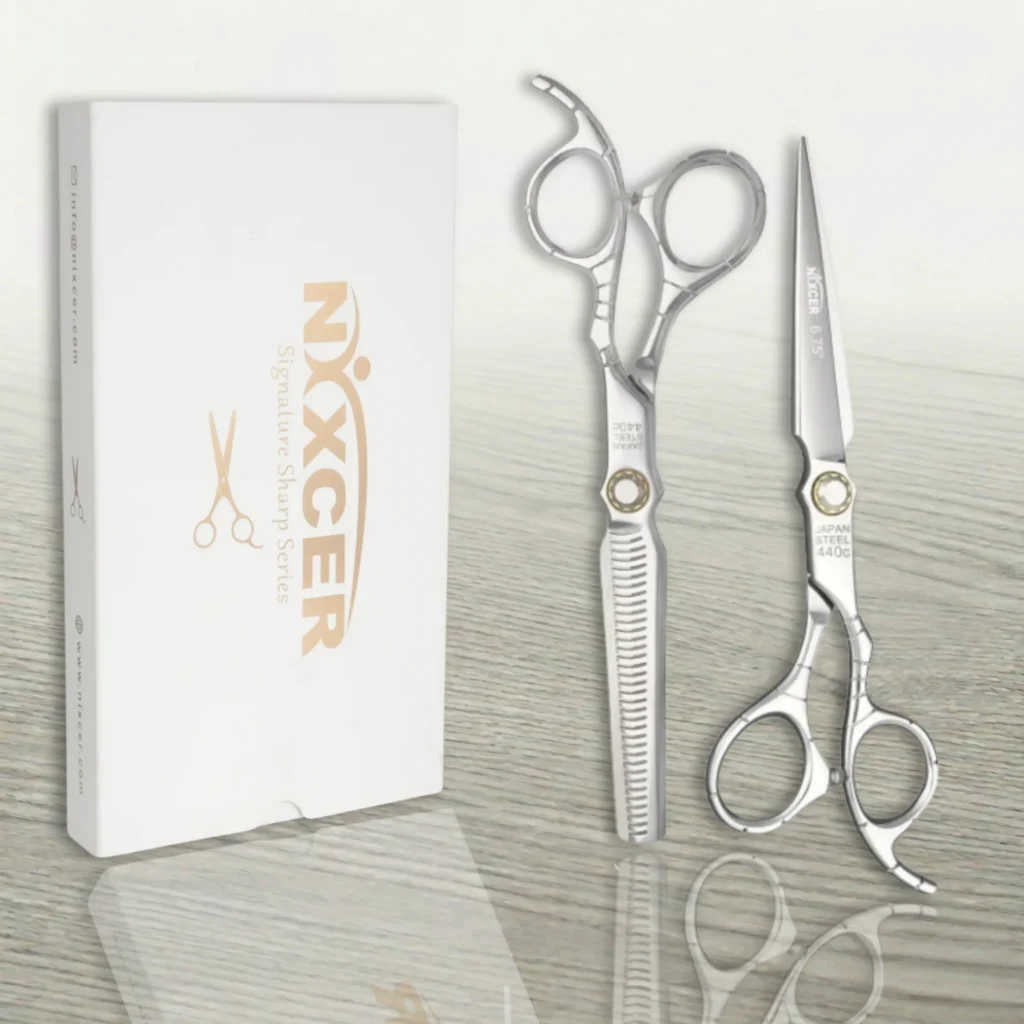
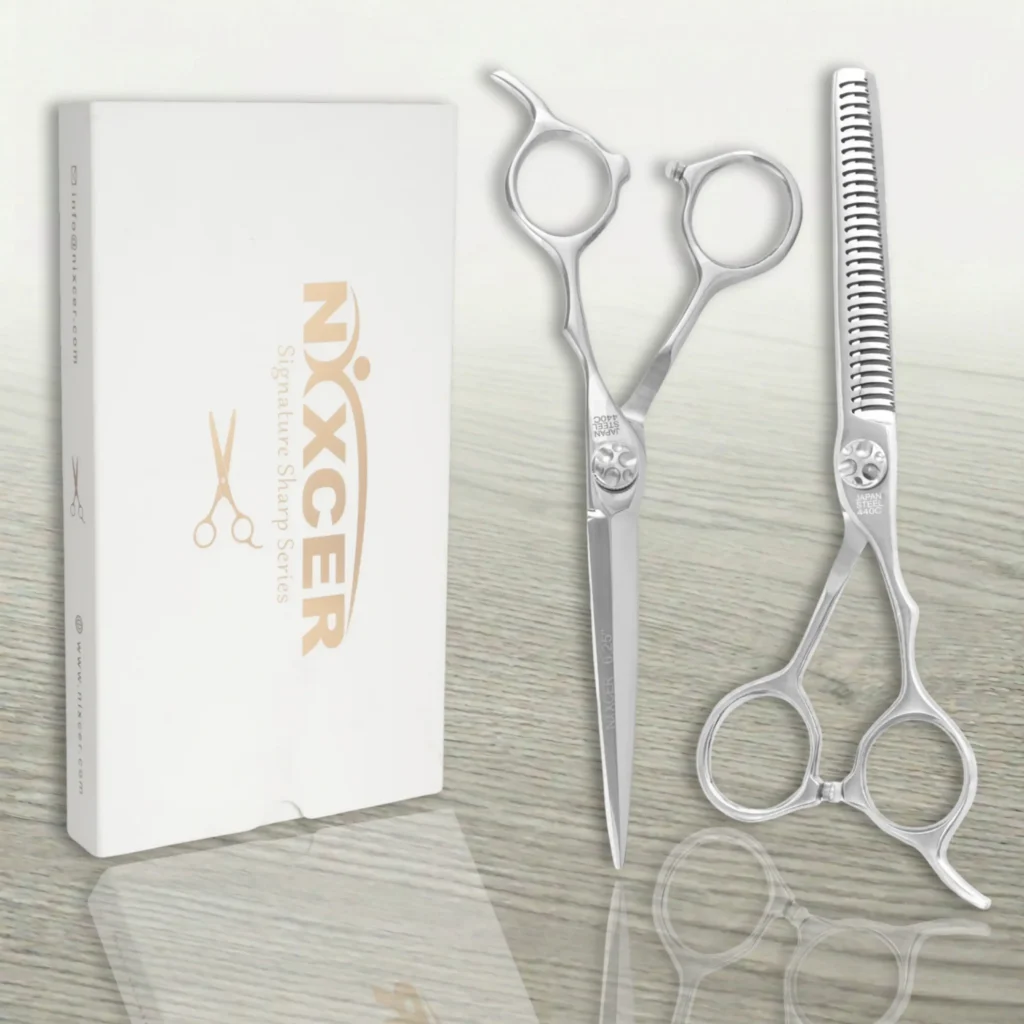
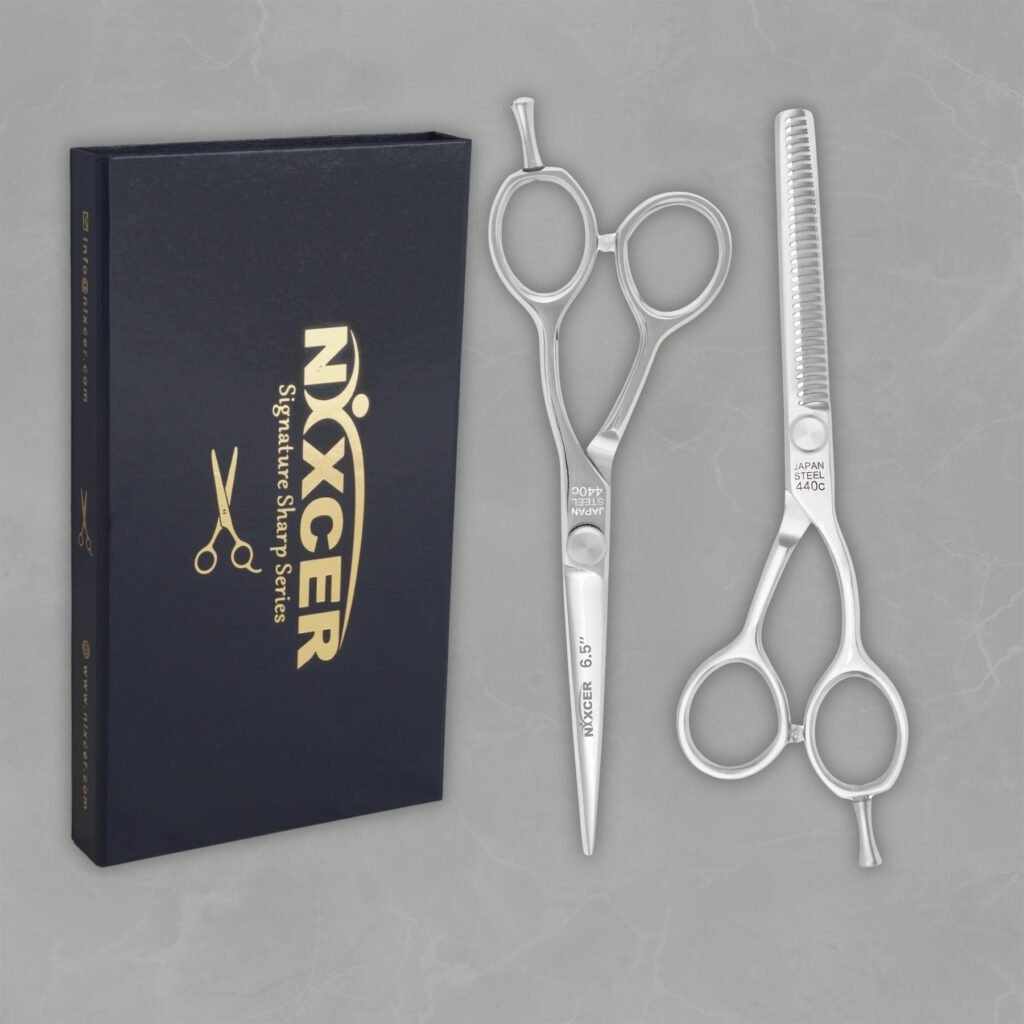
If you want to compare tools, visit the Nixcer Outlet shop and look at options for straight cutting, thinning, and detail work.
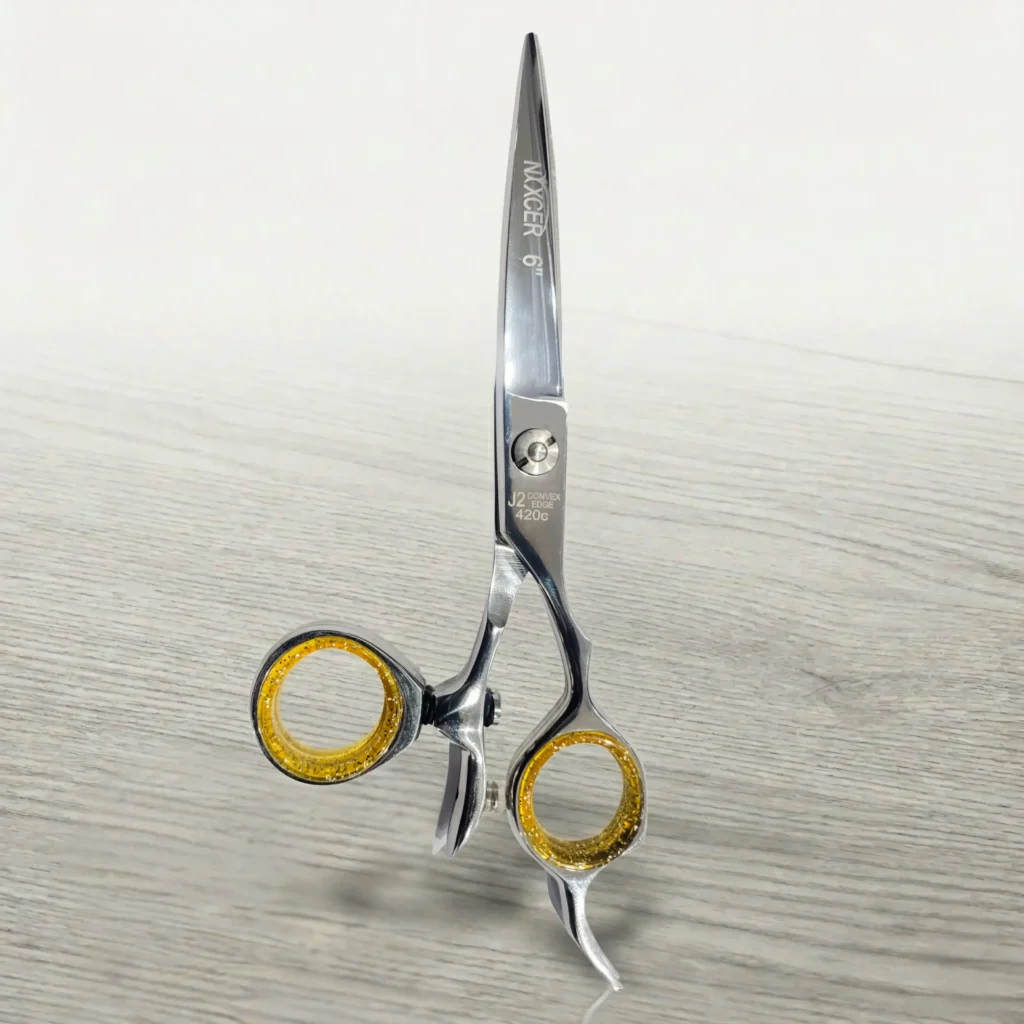
For clean line work, the Professional Sharp Series Razor Edge Hair Cutting Scissors can be useful for precision and smooth cutting.
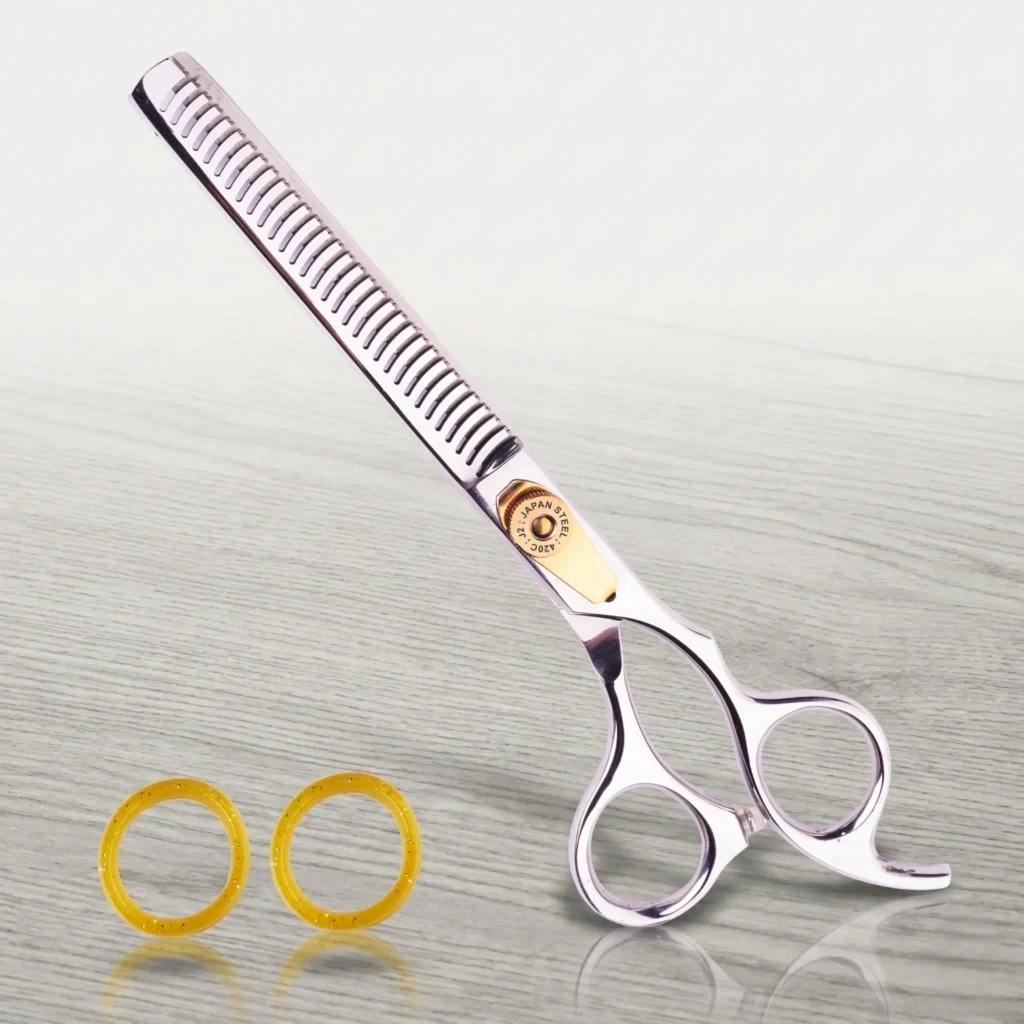
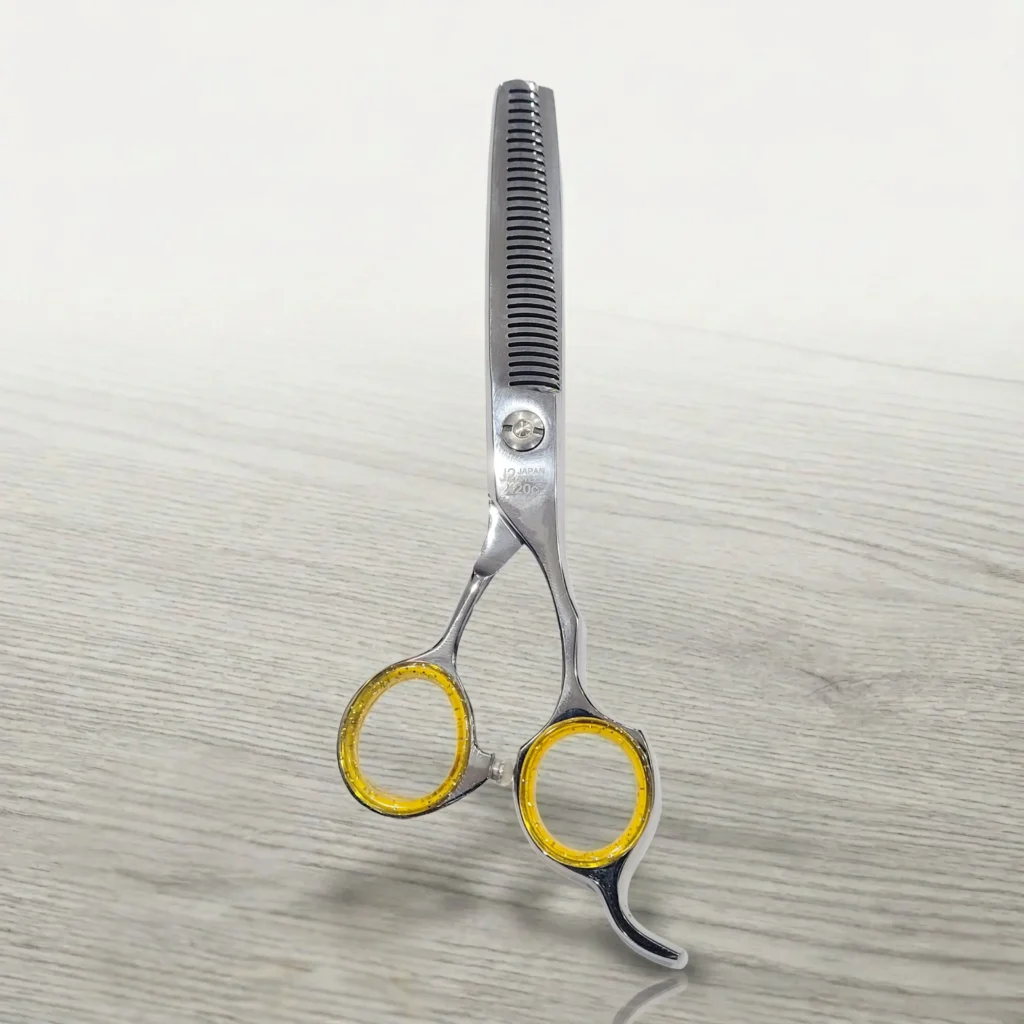
For controlled weight removal, the Nixcer Professional Series Hair Thinning Scissors may help refine thick areas when used carefully.
Always check the exact listing details before buying, especially size, steel type, handle style, and whether the tool is suitable for your hand.
Maintenance: Keep Your Scissors Cutting Cleanly
Even the best hair cutting scissors need care. A sharp tool gives cleaner work and helps prevent hair damage.
Clean after use
Wipe the blades after every haircut. Hair, product, and moisture can affect performance.
Oil the pivot
A small amount of scissor oil at the pivot can keep the cutting motion smooth.
Store safely
Keep scissors in a case. Do not toss them into a drawer with combs, clips, or other tools.
Sharpen professionally
Do not sharpen professional shears with random home sharpeners. Use professional sharpening to protect the blade geometry and cutting edge.
Common Buying Mistakes
Buying the wrong scissor can make an asymmetrical cut much harder.
Buying only by price
Cheap scissors can seem attractive, but low-quality scissors may pull hair and lose sharpness quickly.
Choosing the wrong hand orientation
Left-handed scissors and right-handed scissors are not just about comfort. Blade orientation affects visibility and control.
Picking the wrong length
Longer scissors can feel clumsy for detail work. Shorter scissors can take too many passes on long lines.
Ignoring balance
Scissors should feel balanced. If they feel tip-heavy or handle-heavy, precision becomes harder.
Using texturizing shears too early
Build the main shape first. Use thinning and texturizing shears only after the structure is correct.
A Quick Scissor Checklist Before You Buy
Use this checklist before choosing:
- Is it a real hair cutting shear, not regular scissors?
- Does the blade feel sharp and smooth?
- Is the length right for your cutting style?
- Is the handle ergonomic?
- Does it match your dominant hand?
- Can it make precise cuts?
- Is it suitable for your hair types?
- Will it be easy to maintain and sharpen?
- Is it appropriate for home use or professional hair work?
If the answer is yes, you are closer to choosing the right scissors.
Final Thoughts
To choose hair cutting scissors for asymmetrical cuts, focus on precision, comfort, sharpness, and control. A good scissor should help you build clean lines, refine texture, and protect the shape of the haircut.
For a salon professional, invest in professional shears that support daily work. For home use, choose the best simple tool you can control safely. The right shears make asymmetrical haircuts look intentional, stylish, and clean instead of uneven.
FAQs
What scissors are best for asymmetrical haircuts?
The best hair cutting scissors for asymmetrical haircuts are sharp, balanced, and comfortable. Choose a blade and length that match your cutting style.
Can I use regular scissors for an asymmetrical haircut?
No. Regular scissors can damage hair and create uneven lines. Use hair-cutting scissors made for clean hair work.
Are thinning shears good for asymmetrical cuts?
Thinning shears can help remove bulk, but they should be used carefully. They are best for refinement, not for building the main shape.
What length scissors should I choose?
Shorter shears are better for detail. Longer shears are better for long clean lines. A mid-length shear can work well for general cutting.
Do left-handed stylists need true left-handed scissors?
Yes, true left-handed scissors usually give better visibility and control than right-handed scissors used in the left hand.
Should asymmetrical cuts be done wet or dry?
The foundation can be done wet, but dry cutting is useful for final balance, texture, and natural movement.
How often should I sharpen hair scissors?
Sharpen them when they start pushing, pulling, or folding hair. Professional sharpening protects the blade and keeps the cutting edge clean.