Innovative hair cutting scissor designs are not decorative extras. Offset and crane handles support a more natural hand position, swivel rings increase mobility, convex blades reduce cutting resistance, and adjustable tension systems help the blades close cleanly. Together, these cutting tools can make hair cutting more controlled, efficient, and comfortable.
Choosing the right scissors still depends on the user, the type of hair, and the technique. This guide explains 10 important designs, shows where each one performs best, and links the features to practical salon, barber, and home use. It is not another generic “top 10 best” product roundup; it is a design-to-task guide for choosing tools that fit the work.
Quick Comparison: Which Scissor Design Solves Which Problem?
| Design | Main advantage | Best suited to |
| Offset handle | More relaxed thumb position | Everyday salon cutting and long sessions |
| Crane handle | Lower elbow and straighter wrist | Stylists managing shoulder or wrist fatigue |
| Swivel thumb | Greater wrist and thumb mobility | Direction changes and advanced cutting techniques |
| Double swivel or rotating rings | Maximum freedom of hand position | Intricate cutting techniques and experienced users |
| Convex edge | Low-resistance, smooth cutting | Slide cutting, point cutting, and precision cutting |
| Adjustable tension system | Personalized blade pressure | Different hair densities and cutting preferences |
| Lightweight balanced body | Less effort per repeated motion | Busy salon schedules and detailed work |
| Broad or longer blade | More coverage per closure | Scissor-over-comb, long hair, and bulk work |
| Thinning or texturizing teeth | Controlled weight removal | Blending, softening, and adding texture to hair |
| Modular fit features | Better ring and finger support | Personal comfort, control, and tool sharing limits |
How Innovative Hair Cutting Scissor Designs Improve Comfort
A hairdressing scissor is a small lever operated hundreds or even thousands of times during a working day. Handle geometry changes where the thumb and fingers contact that lever, so it can change the force and motion needed to open and close it.
A 2023 IEEE Access study modeled three types of hairdressing scissors: classic, offset, and crane handles. In its simulation, the crane design used 32.1% less rotational kinetic energy than the classic handle. The researchers treated lower energy use as a quantitative indicator of ergonomic performance, while also noting that posture and individual fit remain important (Hanyang University research copy).
That does not mean one design prevents or treats every wrist problem. It does show why handle shape deserves the same attention as sharpness. OSHA guidance on repeated scissor work also recommends tools that promote neutral joint positions, along with cleaning, oiling, and a sharpening program to reduce the force required (OSHA Scissor Work guidance).
1. Offset Handle Scissors: The Practical Everyday Upgrade
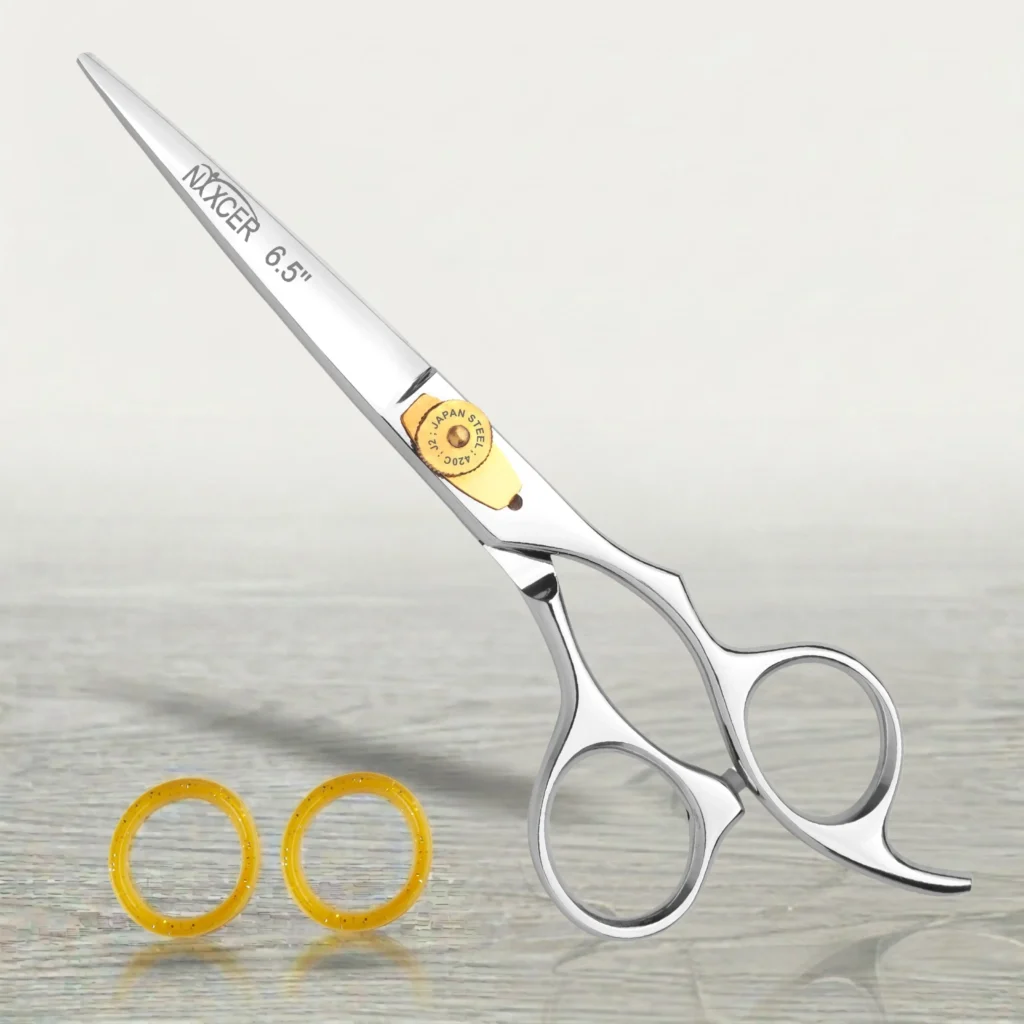
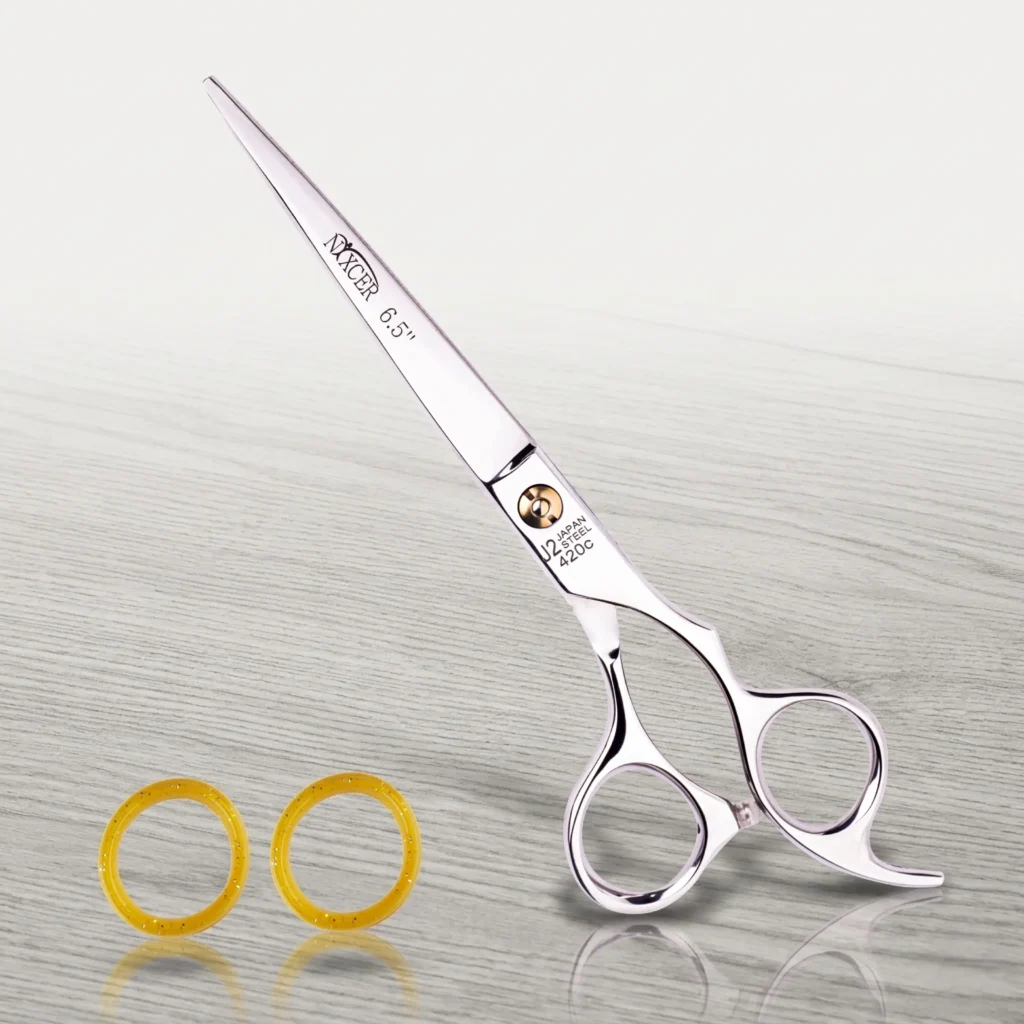
On straight scissors, the thumb and finger rings sit opposite each other. An offset hair cutting scissor moves the thumb ring forward and shortens the thumb handle. This lets the thumb work in a more open position and can reduce the need to lift the elbow.
Offset handles are among the best hair cutting designs for general salon work because they do not require a dramatic change in technique. They suit blunt cutting, layering, point cutting, trimming hair, and many types of hair cutting performed throughout the day.
Look for a ring size that holds the fingers securely without squeezing them. The right scissors should feel stable with a light grip; if the user must pinch the rings to control the tool, inserts or a different handle size may be needed.
2. Crane Handle Scissors: Stronger Ergonomic Positioning
A crane handle takes the offset idea further. The thumb ring sits closer to the pivot and the handle angle encourages the elbow to remain lower. For some users, this supports a straighter wrist and less shoulder elevation.
Crane-style ergonomic shears can be useful for professional hair cutting when the stylist works for long periods or frequently cuts at chest and shoulder height. They may also improve control during detailed perimeter work because the hand can stay quieter while the blades move.
Fit matters. A crane shear that is too short, too long, or poorly balanced will not provide the best result simply because it has an ergonomic label. Test the handle with the cutting motions used most often.
3. Swivel Thumb Scissors: More Freedom Without Regripping
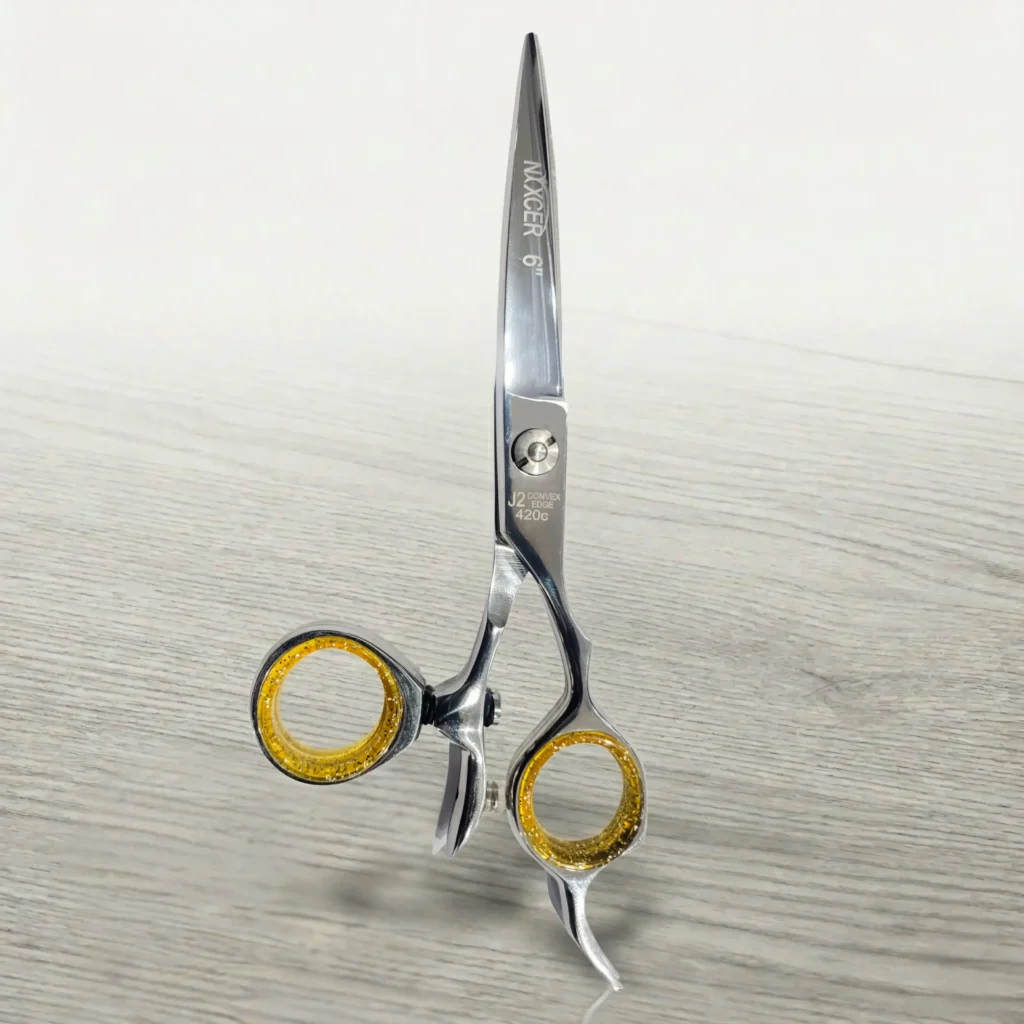
Swivel thumb scissors use a rotating thumb ring that follows changes in hand angle. The feature can help a stylist change direction without repeatedly twisting the wrist or repositioning the entire pair of scissors.
These scissors are perfect for users who perform a wide range of cutting positions, from face framing to work around the crown. They can support cutting techniques like slide cutting and scissor-over-comb, where blade direction changes while control must remain steady.
There is a learning curve. The swivel should move freely but predictably, and the user must learn to let the mechanism work instead of gripping it rigidly. Try the design slowly before using it for fast professional cutting.
4. Double Swivel and Rotating Finger Rings
Double swivel models allow more than one ring to rotate. Other designs use rotating finger rings or jointed components to adapt to the movement of the hand. These shears offer a larger range of motion than a standard swivel thumb.
That freedom can help with advanced cutting techniques and intricate cutting techniques, but more movement is not automatically better. Some professionals value a fixed reference point and may find a double swivel less predictable. The best scissors are the ones that improve control for the user’s actual work, not the ones with the most moving parts.
Before buying, inspect the mechanism for unwanted play. A premium scissor should rotate smoothly without making the blades feel loose or disconnected from the hand.
5. Convex Edge Blades for Smooth, Precise Cutting
A convex cutting edge curves toward a very fine edge rather than ending in a broad bevel. Convex scissors are known for a fluid feel, and well-finished convex hair cutting shears can glide with less resistance, making them suitable for slide cutting, slicing, and precision cutting.
Convex blades are often found on Japanese-style professional hair shears. When scissors are made from premium stainless steel and finished correctly, the blade can hold a refined edge while resisting routine corrosion. Steel grade alone does not guarantee the best quality; heat treatment, hollow grinding, alignment, and sharpening also matter.
A sharper edge needs careful handling. Do not use it on packaging, paper, or anything other than hair. If the blades are dropped or nicked, stop using them until a qualified sharpener checks the edge.
Convex vs. Beveled Cutting Scissors
Beveled or micro-serrated blades grip hair and can provide stable control for blunt work and dry hair. Convex blades favor a softer glide and a broader range of cutting techniques. Neither design wins every task.
Choose the best hair cutting edge by matching it to the technique:
- Convex: slide cutting, point cutting, soft lines, and fluid motion
- Beveled or micro-serrated: blunt cutting, dry cutting, and controlled grip
- Straight edge: clean lines and general-purpose cutting when properly sharpened
For a deeper blade comparison, see Nixcer Outlet’s guide to different types of hair cutting scissor blades.
6. Adjustable Tension Systems
The pivot determines how the blades meet. Modern cutting shears may use a dial, low-profile screw, ball-bearing pivot, or leaf-spring system to make tension adjustment easier and more consistent.
If tension is too loose, the shear may fold or push hair. If it is too tight, each closure requires extra thumb pressure and may accelerate wear. A good system lets the user tune the action so the blades close smoothly from heel to tip.
Adjustment is not a substitute for sharpening. If a cutting scissor keeps snagging after cleaning and correct tensioning, have it inspected. Do not overtighten the screw to force dull blades to cut hair.
7. Lightweight, Balanced, and Size-Specific Scissors
Light weight can reduce the effort of repeated opening and closing, but balance is more important than the number on a scale. A well-balanced shear feels supported around the pivot instead of pulling toward the tip or handle.
Shorter shears, often around 5.0 to 5.5 inches, favor control for detail, fringe, and work near the fingers. Longer shears, often 6.5 inches and above, cover more hair and can improve efficiency during scissor-over-comb, long layers, and barber work.
The best hair tool length also depends on hand size. A small professional hairdresser may prefer a longer blade for one type of cutting and a shorter one for another. A set of scissors with different lengths can be more useful than expecting one tool to handle every range of cutting techniques.
8. Broad-Blade and Long Barber Scissors
Broad blades add stability and cutting power across a larger section. Longer professional barber scissors reduce the number of closures needed for scissor-over-comb and can help create a clean line with fewer interruptions.
The Nixcer Broad Blade Razor Edge Hair Cutting Scissors offer a 6.25-inch format for controlled coverage. This type of shear can be perfect for cutting dense sections, but the user should still avoid overloading the blades.
Longer does not always mean faster. For detail around the ears or a short fringe, shorter shears may provide better access and safety. Match blade length to the section rather than forcing one pair of shears through every task.
9. Thinning and Texturizing Scissors
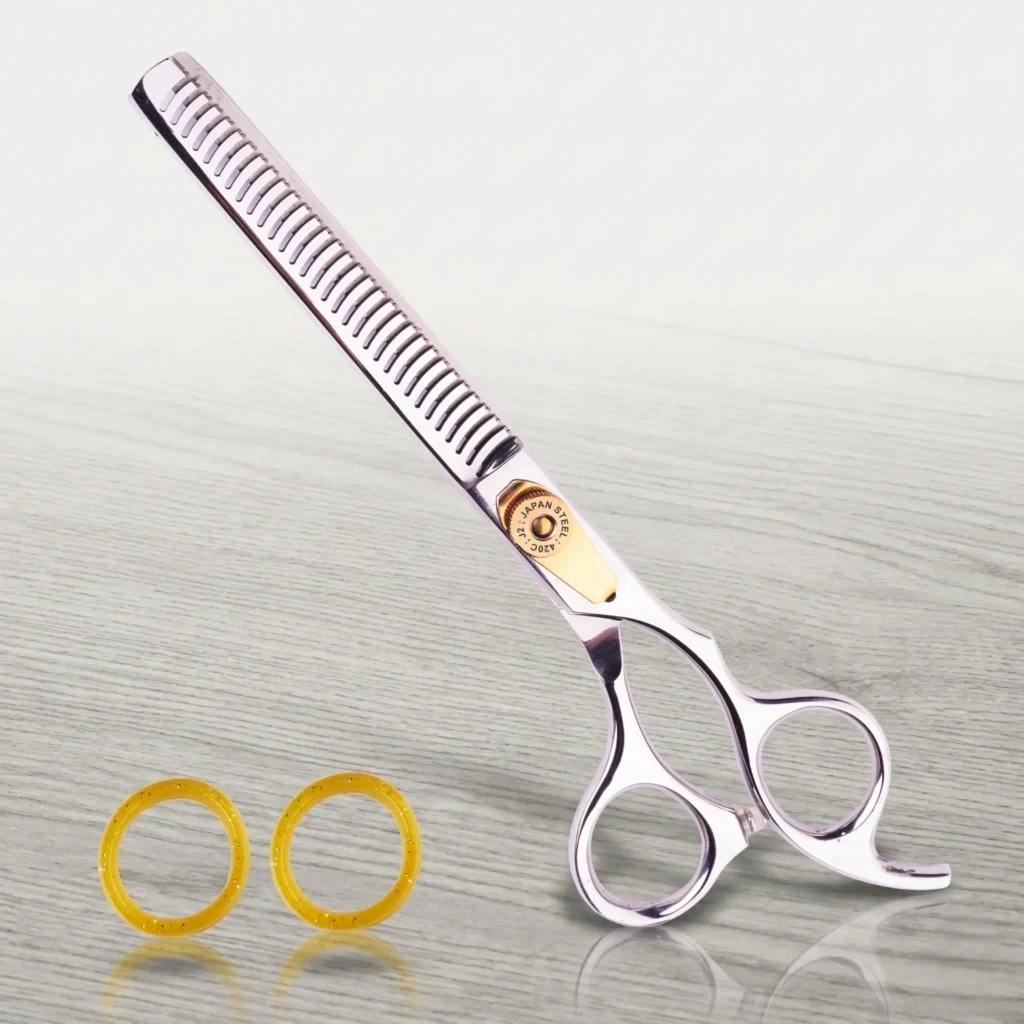
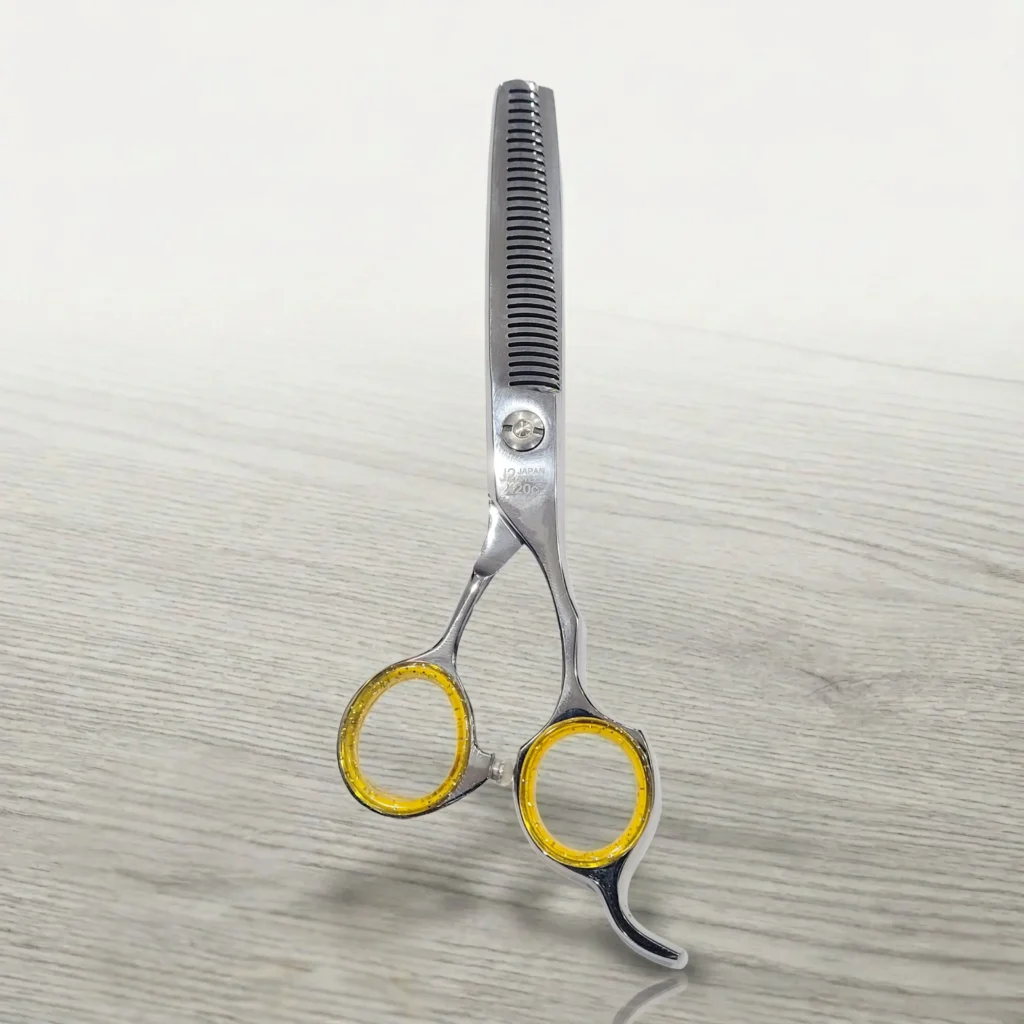
Thinning scissors use one toothed blade to remove only part of a section. Texturizing models vary in tooth count and spacing, allowing a stylist to soften lines, blend transitions, reduce bulk, or add texture to hair.
These shears are designed for controlled removal, not for building the entire haircut. Use thinning shears after the main shape is established, especially when working on dry hair where the final density is easier to judge.
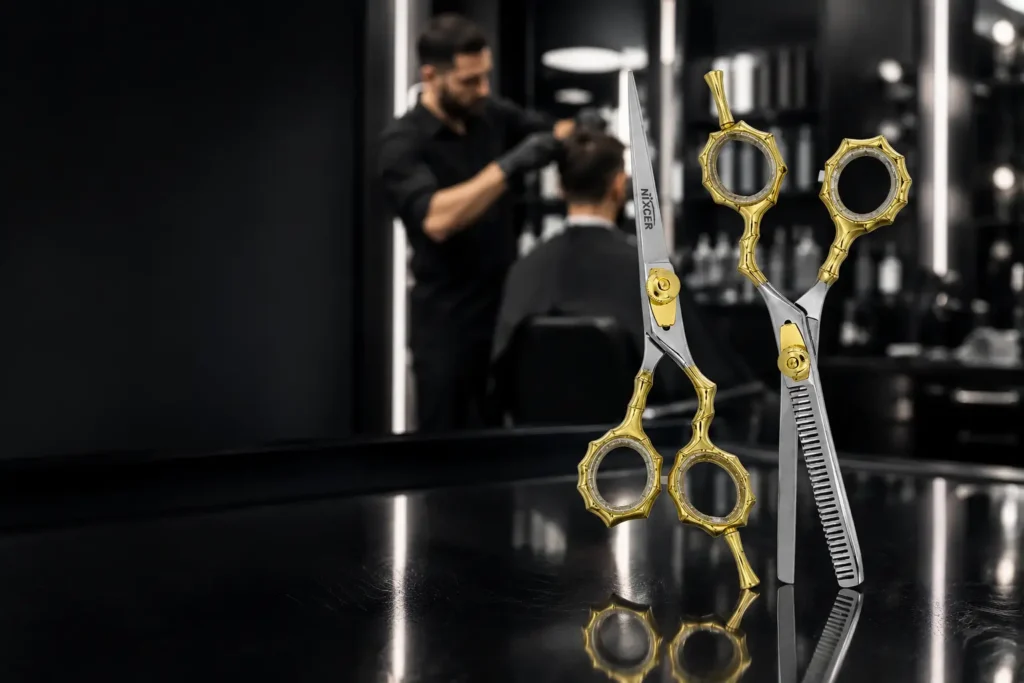
The Nixcer Professional Series Hair Thinning Scissors can complement a standard cutting shear. A coordinated pair of shears allows the stylist to switch between structure and texture without asking one blade design to do both jobs.
Avoid repeated closures in the same place. Over-thinning can create short pieces, weak ends, or visible gaps and may contribute to hair damage. The correct technique depends on the hair type, density, length, and desired finish.
10. Modular Fit: Finger Inserts, Rests, Silencers, and Handedness
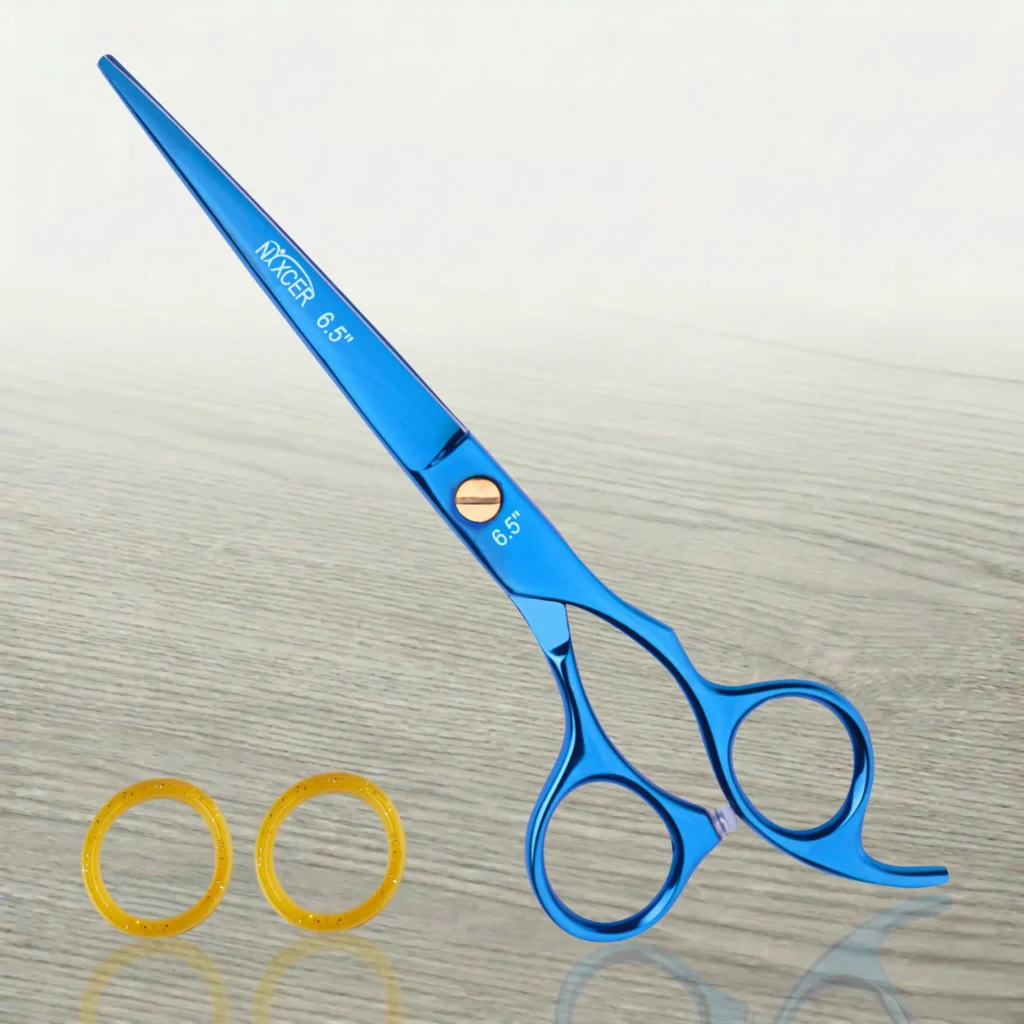
Small fit features can change how a tool feels more than a dramatic finish. Removable finger inserts reduce oversized rings, a finger rest supports the little finger, and a silencer softens contact between the handles.
True left-handed scissors reverse the blade arrangement so a left-handed user can see the cutting line and apply natural pressure. Turning a right-handed model over does not create the same geometry. Professional hairdressers and barbers should select handedness before comparing color or decorative details.
Modular features also make it easier to fine-tune comfort, but they should fit securely. Loose inserts and unstable finger rests interfere with control. Quality shears are crafted so these parts support the grip without rattling or shifting.
How to Choose the Best Design for Your Work
Choosing the right scissors is easier when the decision begins with the task. Use this five-step method to choose the best without being distracted by finishes or vague claims.
1. Start With the Main Cutting Technique
For point cutting and slide cutting, consider a smooth convex edge. For blunt work or dry hair, a beveled or micro-serrated edge may provide more grip. For scissor-over-comb, longer shears can improve coverage.
2. Match Length to the Work
Choose a blade that covers the intended section without reducing control. A short blade supports detail; a longer blade supports efficient over-comb work and long lines. Different cutting techniques may justify owning more than one length.
3. Match the Handle to the Hand
Compare straight, offset, crane, and swivel options. Keep the wrist neutral, the thumb relaxed, and the elbow as low as the technique allows. Finger holes should not pinch or force the user to squeeze.
4. Verify Material and Construction
Many professional models use stainless steel because it can balance edge retention and corrosion resistance. Some steel shears use grades such as 440C, while other premium stainless steel scissors use different alloys. Scissors are made through different forging, casting, heat-treatment, grinding, and finishing processes, so the steel name is only one part of quality.
Well-made shears are also aligned, balanced, and polished consistently. Claims that shears are made or shears made with “Japanese steel” should be checked against the exact product specification rather than assumed across an entire brand.
5. Test the Complete Action
Open and close the scissors slowly. The movement should feel smooth, the tips should meet, and there should be no wobble. The right shears should cut a test section cleanly without pushing, folding, or requiring excessive thumb pressure.
If shopping online, review size, handedness, edge, handle type, tension design, return terms, and care instructions. A recognizable name among scissor brands is useful, but fit and construction matter more than a logo. Compare brands of scissors using the same criteria.
Which Nixcer Outlet Designs Fit Common Needs?
Nixcer Outlet carries a focused selection rather than an overwhelming wall of tools. Different types of scissors are available for structural cutting, broad-blade coverage, and texture work. These examples connect common needs with relevant products:
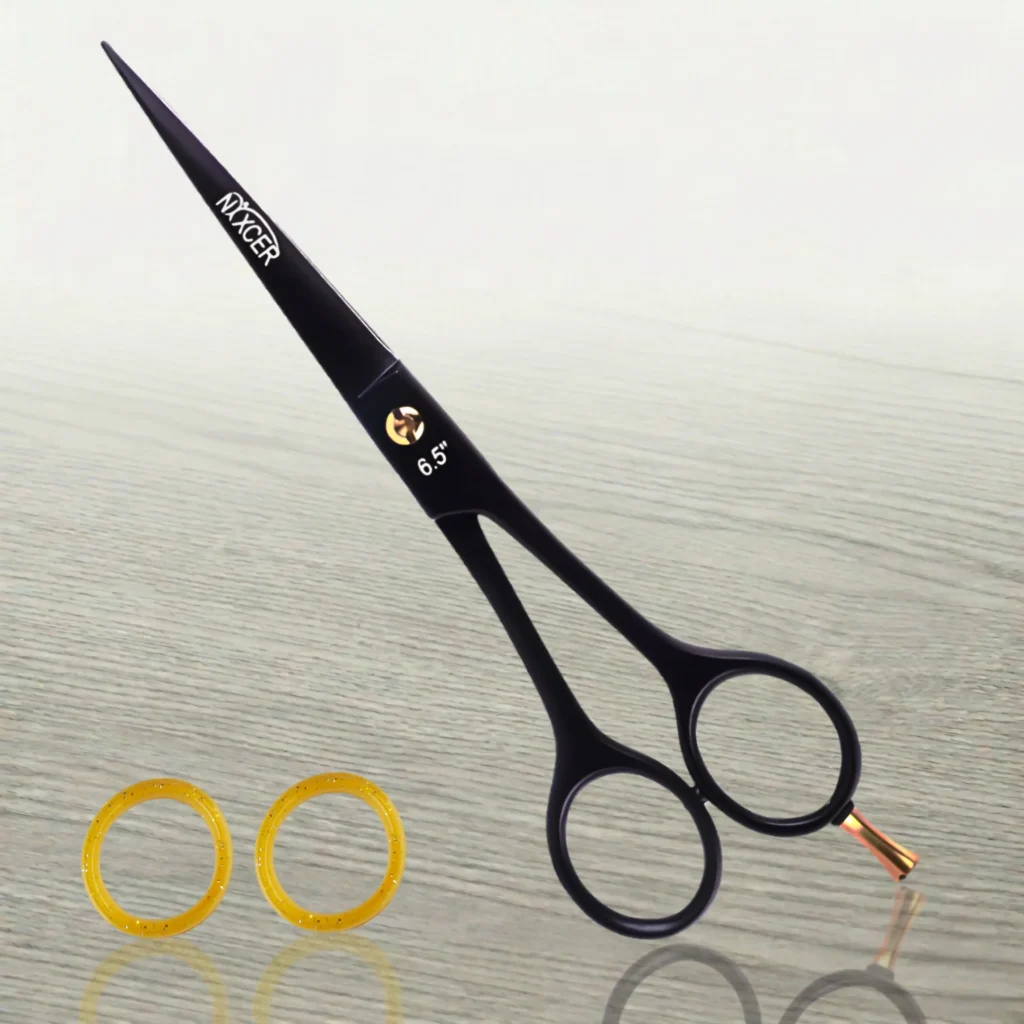
- Versatile everyday cutting: Professional Sharp Series Razor Edge Hair Cutting Scissors for general cutting, layers, and clean detail work.
- Broad-blade coverage: Nixcer Broad Blade Razor Edge Hair Cutting Scissors for dense sections and longer cutting lines.
- Controlled texture: Nixcer Professional Series Hair Thinning Scissors for selective weight removal and blending.
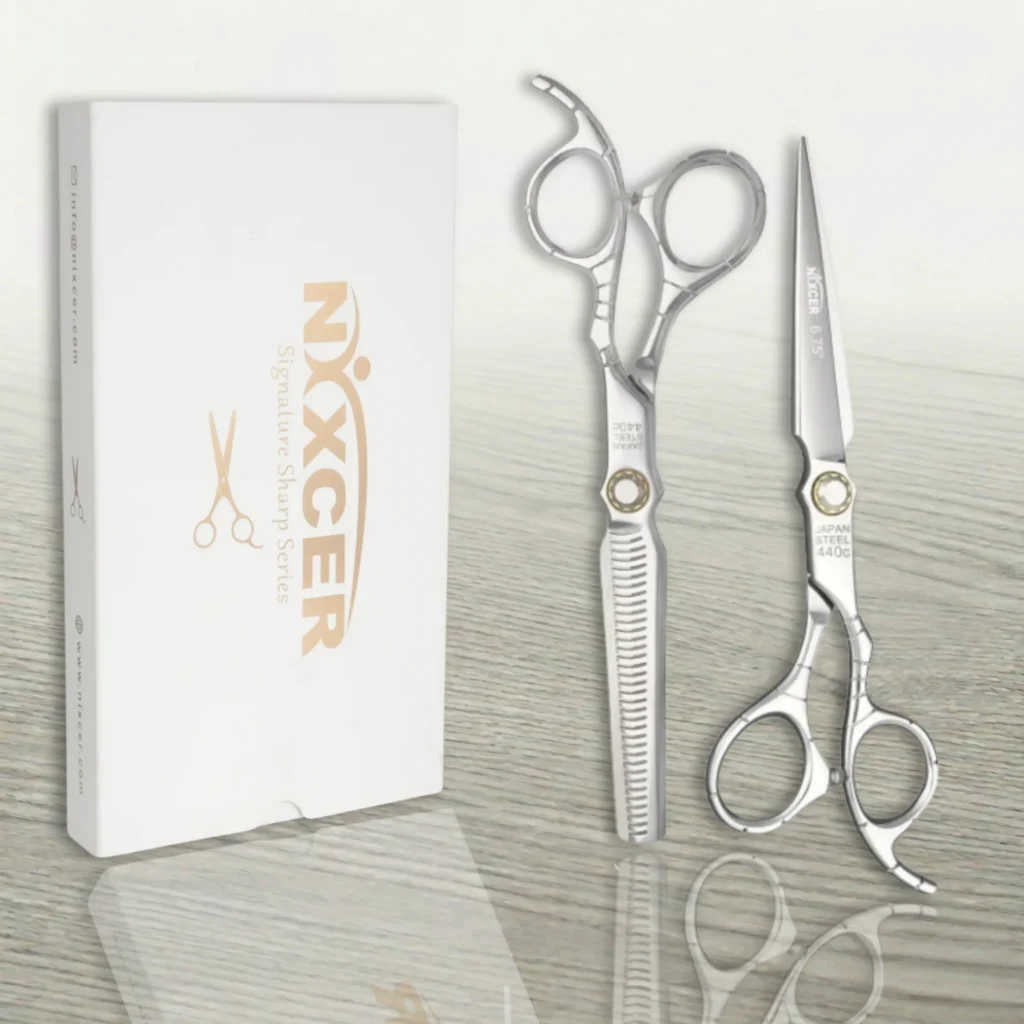
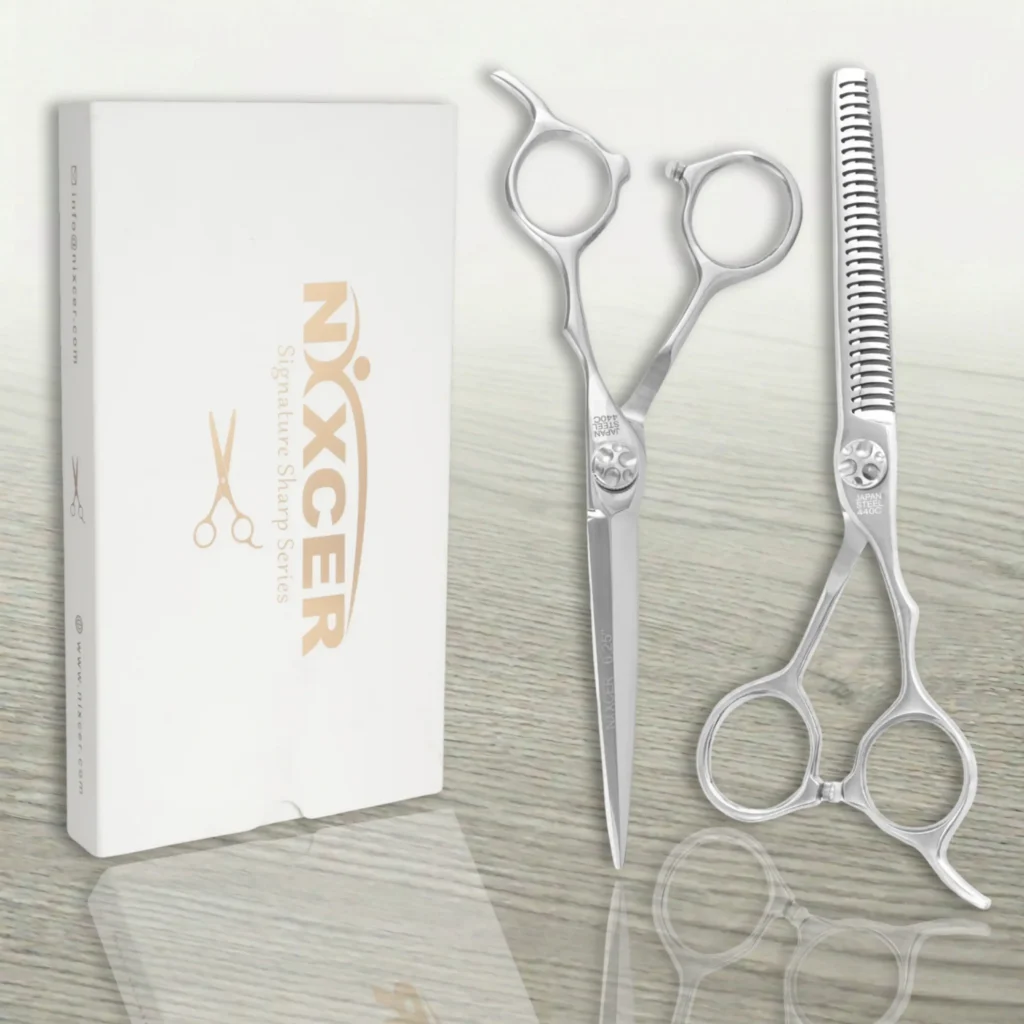
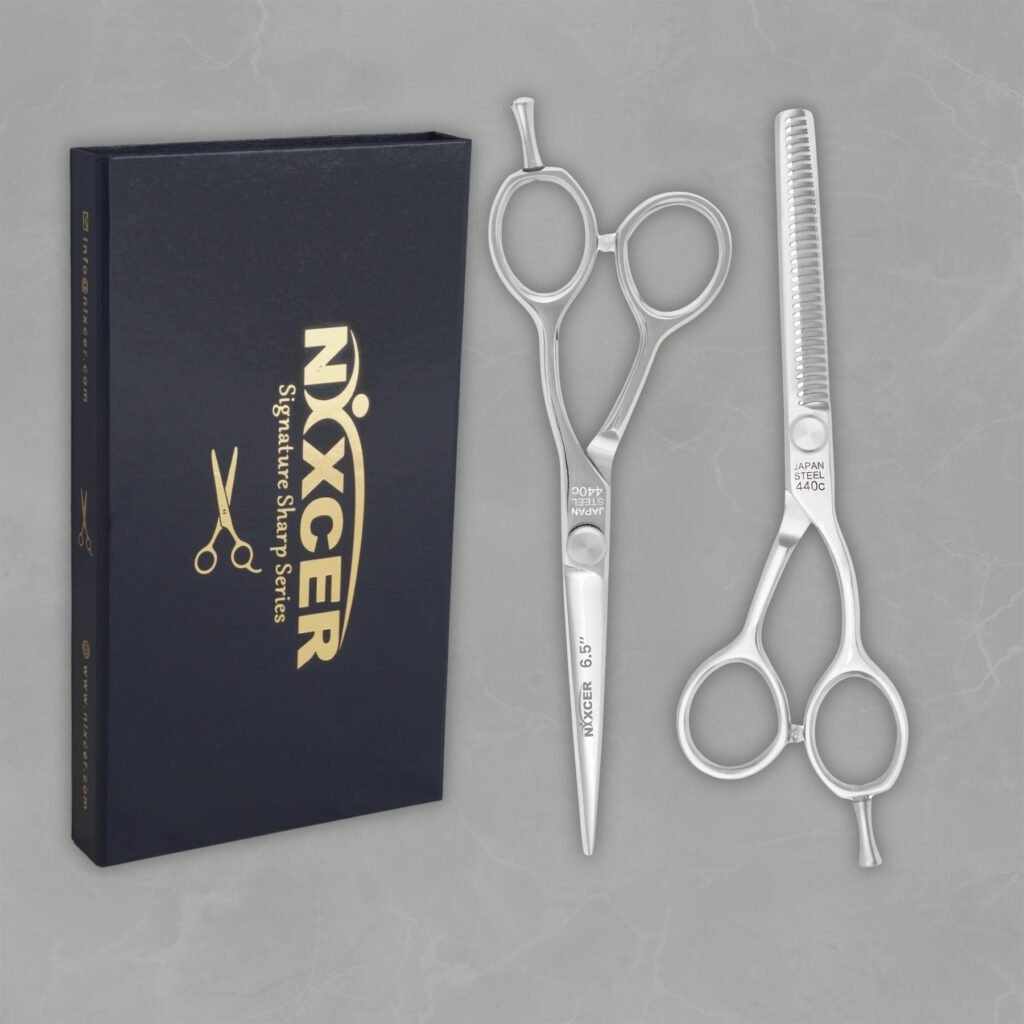
- Coordinated cutting and thinning: Signature Sharp Series SWORD Hair Cutting and Thinning Scissors for stylists who want separate structural and texture tools.
Specifications can vary by product. Confirm the exact size, steel, edge, and handedness on the listing before ordering. Browse all Nixcer Outlet scissors at affordable prices.
What About Scissors for Home Haircuts?
Scissors for home use should still be dedicated to hair. Household craft scissors can push, crush, or fray the ends because their edge and geometry are not designed for hair cutting.
If you cut your hair at home, choose a manageable length and a stable handle. Work in good light, take small sections, and make conservative changes. Cutting hair at home is safer when another person can check the back and when the user avoids working close to the ears or skin.
For trimming your own hair, begin with the perimeter rather than advanced layering or aggressive thinning. Hair at home should be clean, detangled, and arranged in its normal pattern before the first cut. If the change requires complex graduation, chemical damage correction, or major weight removal, book a professional.
Professional hair scissors can provide the best control, but a tool does not replace training. Even the best professional hair equipment can cause an uneven result or injury when used carelessly.
Care Habits That Protect Comfort and Performance
A well-designed tool will feel inefficient if product residue, poor tension, or a damaged edge increases resistance. Use this routine:
- Wipe loose hair from the blades after every service.
- Clean your shears using the manufacturer’s approved method, then dry them completely.
- Apply a small amount of suitable oil at the pivot.
- Check tension and alignment before fast cutting.
- Store each pair in a protective case with the blades closed.
- Keep the scissors away from paper, packaging, comb teeth, and hard surfaces.
- Make sure the scissors are sharpened by a technician who understands the specific edge geometry.
Quality hair shears need maintenance even when they are made from corrosion-resistant steel. Premium scissors may offer longer service life, but they still require cleaning, oiling, tension checks, and professional sharpening.
Final Verdict
The most efficient design is the one that keeps the hand controlled and the blade suited to the job. Offset and crane handles support a more natural grip, swivel rings improve mobility, convex edges support smooth precision work, and adjustable tension helps maintain clean blade contact.
To choose the best hair cutting shears, start with technique, then compare length, handle, edge, balance, steel, and fit. Do not buy on appearance alone. Among the best tools for one stylist may be the wrong choice for another because hand size, training, and daily services differ.
Nixcer Outlet’s professional hair range includes standard cutting, broad-blade, and thinning options for different types of hair and different cutting techniques. The goal is simple: use a tool that feels like an extension of the hand and supports clean, consistent work without unnecessary effort.
Frequently Asked Questions
What are the best hair cutting scissors for professional use?
The best hair cutting scissors match the stylist’s hand, primary technique, and usual client hair type. Look for a comfortable handle, clean blade alignment, suitable length, a reliable tension system, and an edge designed for the intended work.
Are ergonomic shears better than straight scissors?
Ergonomic shears often support a more relaxed hand and wrist position, especially during repeated cutting. Straight scissors remain useful for stylists trained on a classic handle. Comfort and control should decide between them.
What are the best scissors for cutting hair at home?
The best scissors for cutting hair at home are dedicated hair-cutting shears with a manageable blade, stable grip, and properly sharpened edge. Avoid craft scissors and keep the haircut conservative.
What is the difference between a cutting shear and thinning shears?
A standard shear cuts all hair captured between its blades. Thinning shears cut only part of the section through spaced teeth, making them useful for blending and controlled bulk removal.
Are hair-cutting shears different from ordinary scissors?
Yes. Hair-cutting shears are designed with blade geometry, balance, and handle features for clean, repeated cutting of hair. Ordinary scissors are made for other materials and may push or damage hair.
Do longer shears improve efficiency?
Longer shears cover more hair in one closure, which can improve efficiency during scissor-over-comb and long-line work. They are less convenient for tight detail areas, where a shorter blade may provide more control.
How often should professional hairdressing scissors be sharpened?
There is no universal schedule. Sharpening depends on workload, steel, technique, care, and whether the tool is used on wet or dry hair. Service the scissors when they push, fold, snag, or require extra pressure.
Which types of scissors should a stylist own?
A practical kit may include a versatile cutting scissor, longer haircutting shears for coverage, and thinning scissors for texture. The exact set depends on the stylist’s services and range of cutting work.