The best hair cutting scissors for wavy hair are sharp, balanced shears with a smooth cutting edge, an ergonomic grip, and a blade length that suits both the stylist and the cutting technique. For most wavy hair, a 5.5- to 6.5-inch professional hair shear with a convex or refined razor edge gives the control needed to preserve movement without dragging, folding, or fraying the ends.
Wavy hair can look straight in one section, curly in another, and completely different when wet. That makes tool choice especially important. This guide explains what to look for, which Nixcer Outlet products fit common needs, and how to use cutting or texturizing shears without flattening the natural wave pattern.
Quick Answer: What Scissors Work Best for Wavy Hair?
Choose a dedicated pair of hair cutting scissors rather than household scissors. A good pair should offer:
- An extremely sharp convex blade, semi-convex blade, or polished razor edge for smooth cutting
- A comfortable 5.5, 6.0, or 6.5 inch size, depending on hand size and technique
- Offset handles, a finger rest, and a balanced grip to reduce hand fatigue
- A responsive tension screw so the blades close cleanly without pushing hair
- Quality Japanese steel, 440C, or another clearly identified professional-grade stainless steel
- A matching thinning or texturizing shear only when controlled weight removal is needed
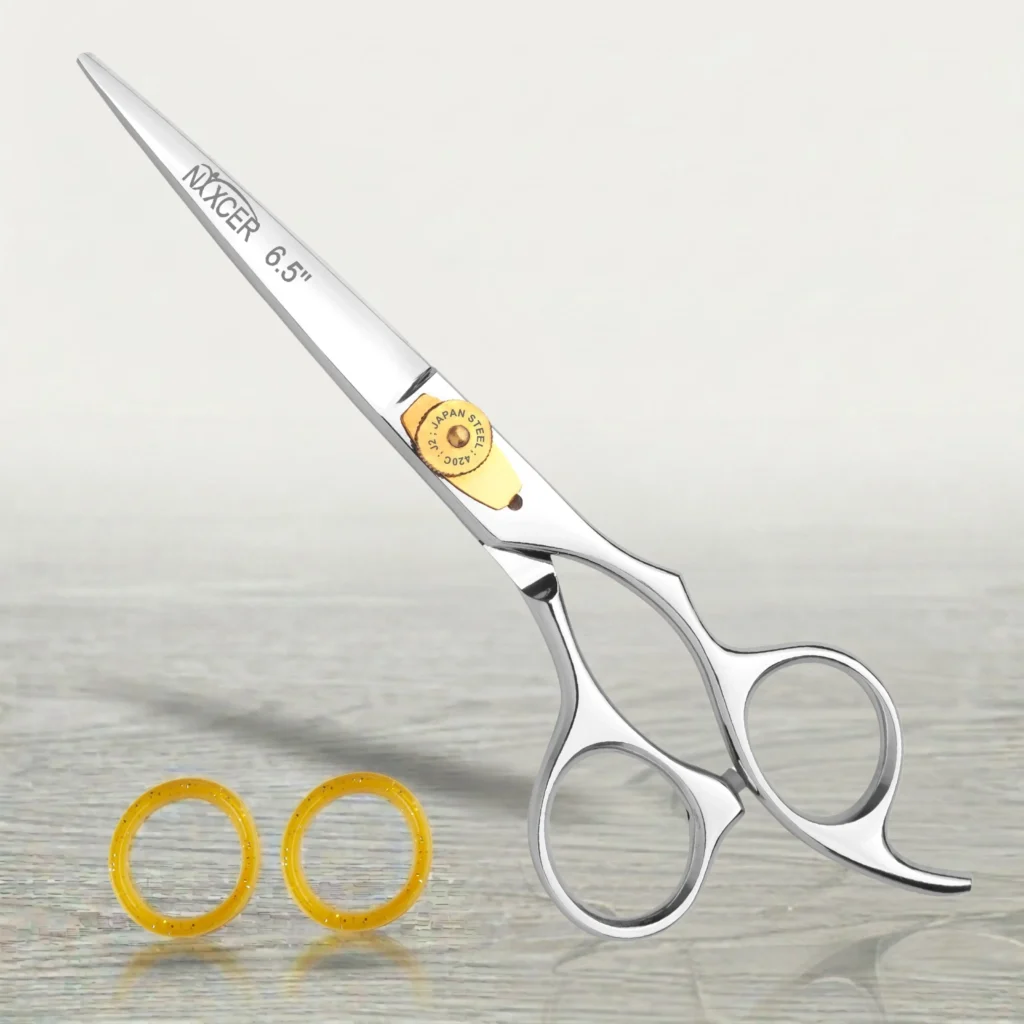
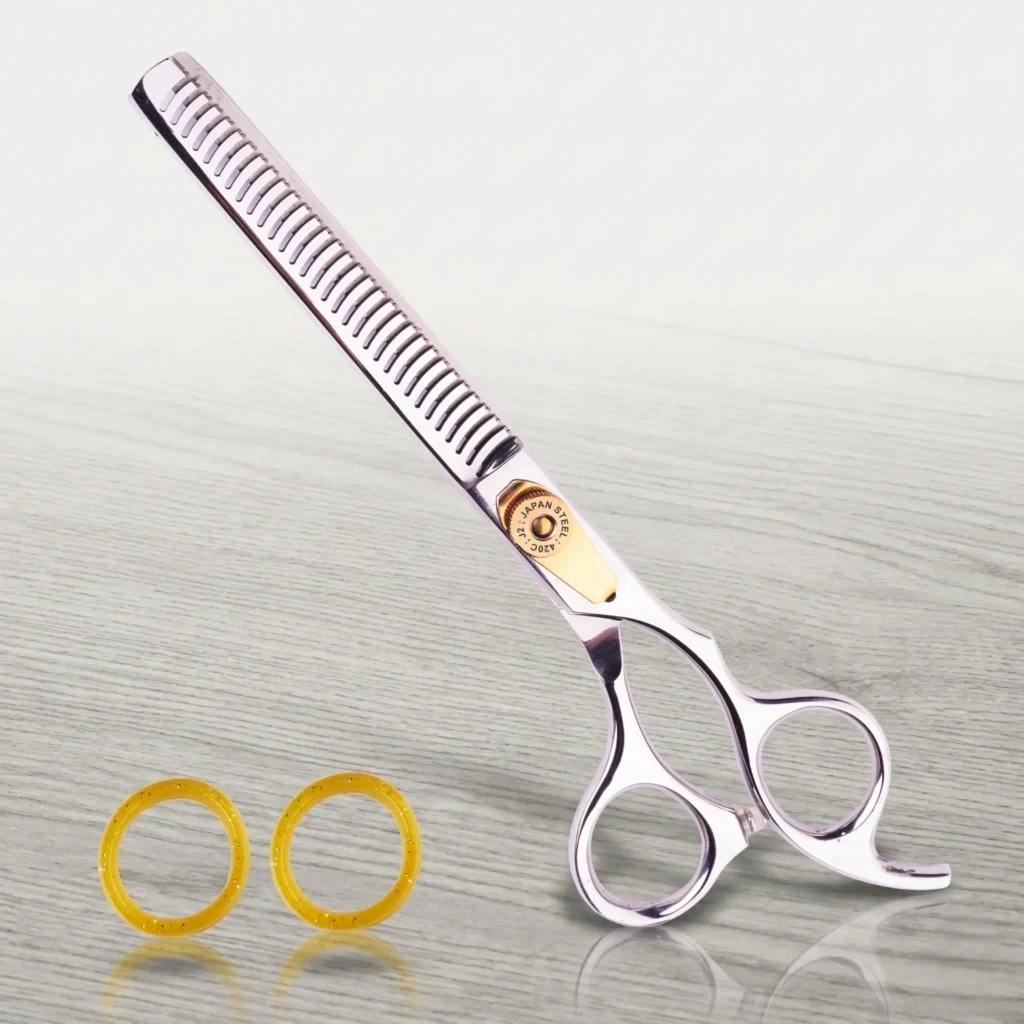
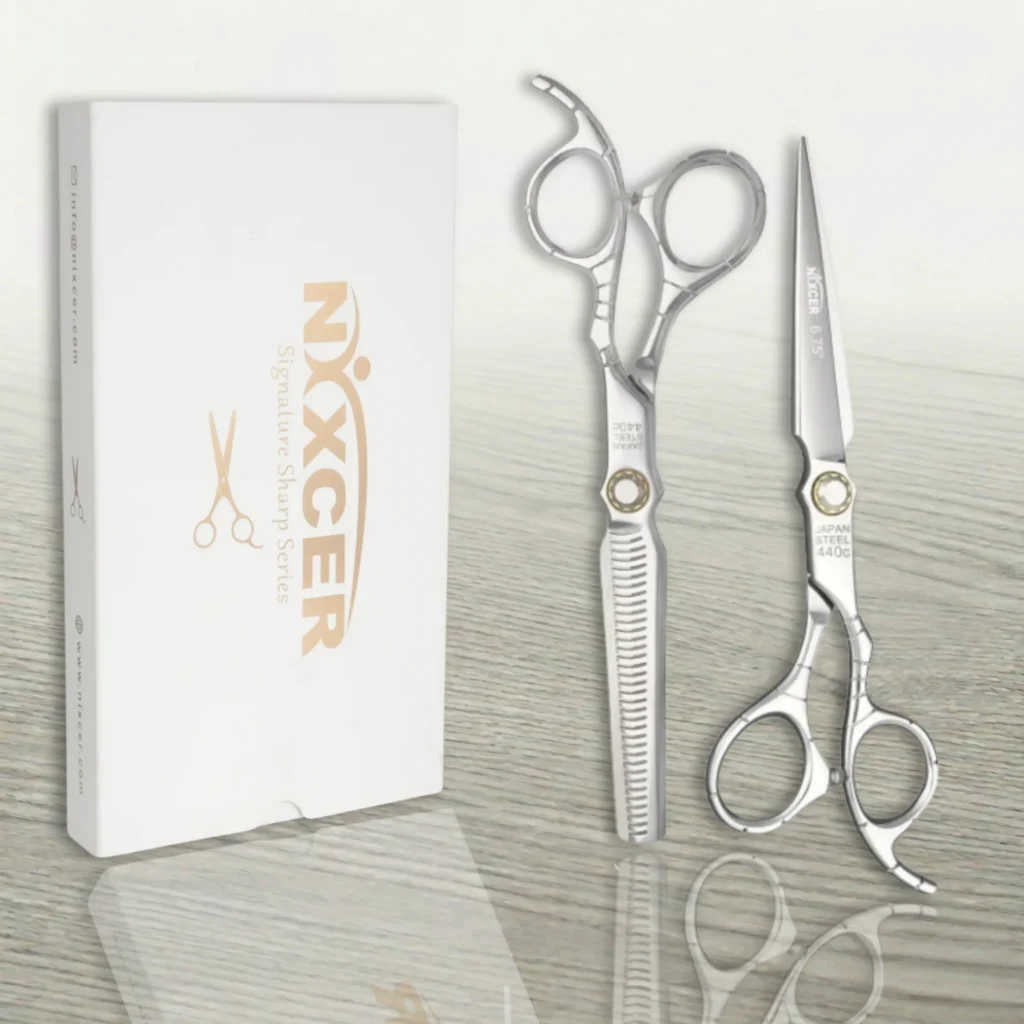
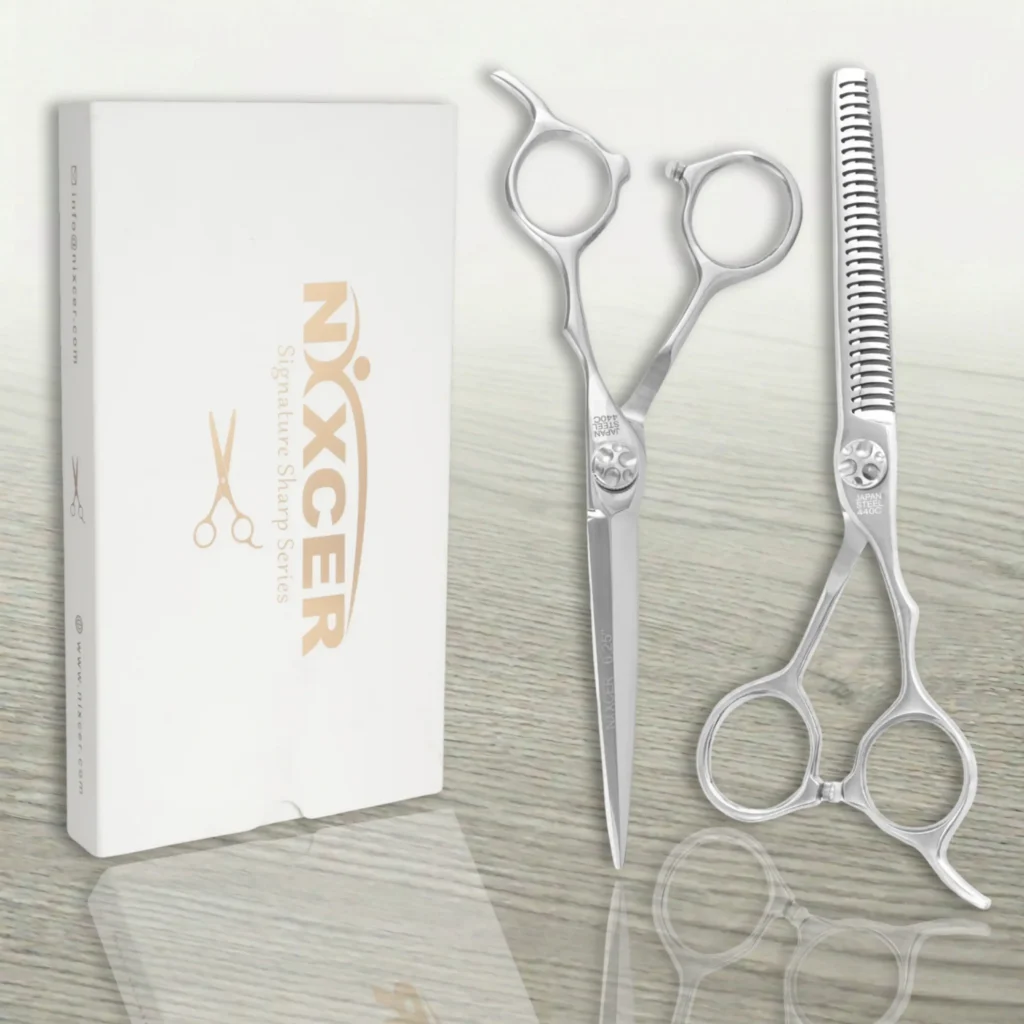
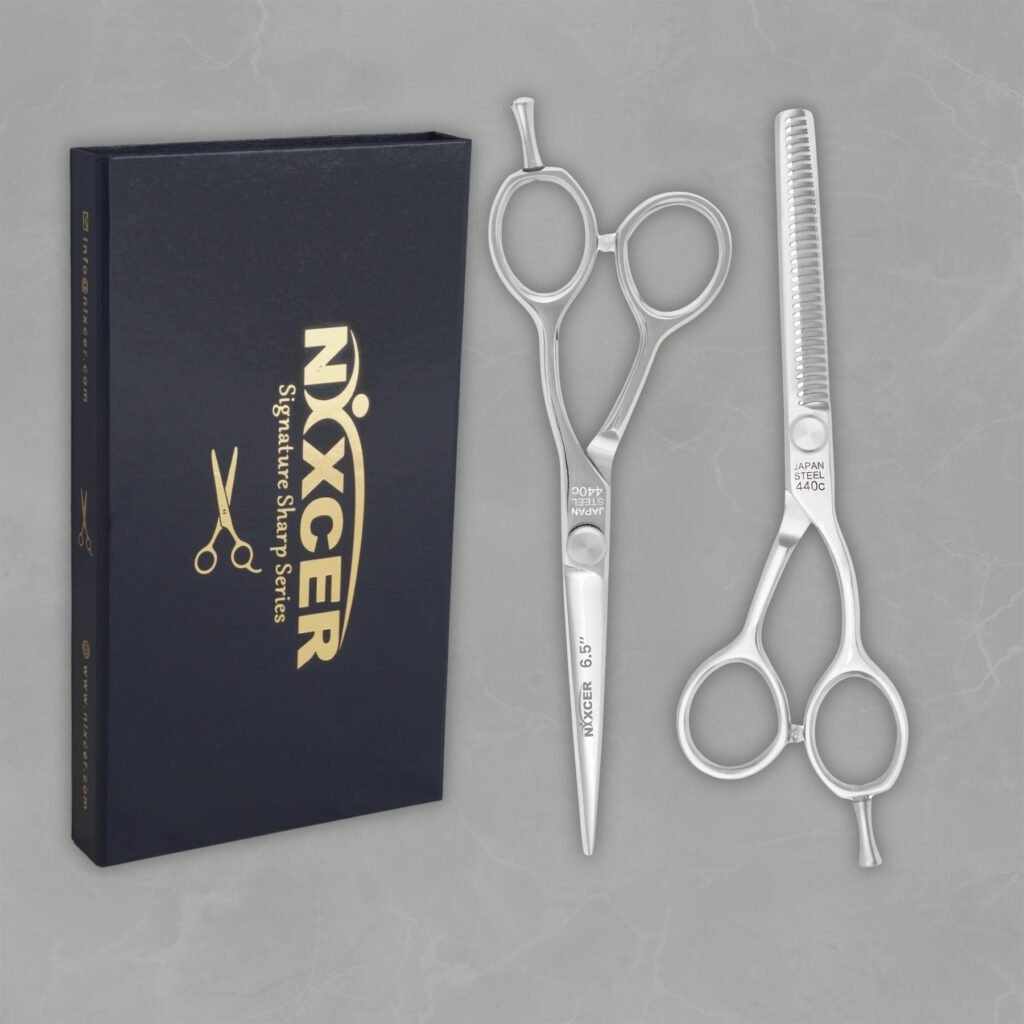
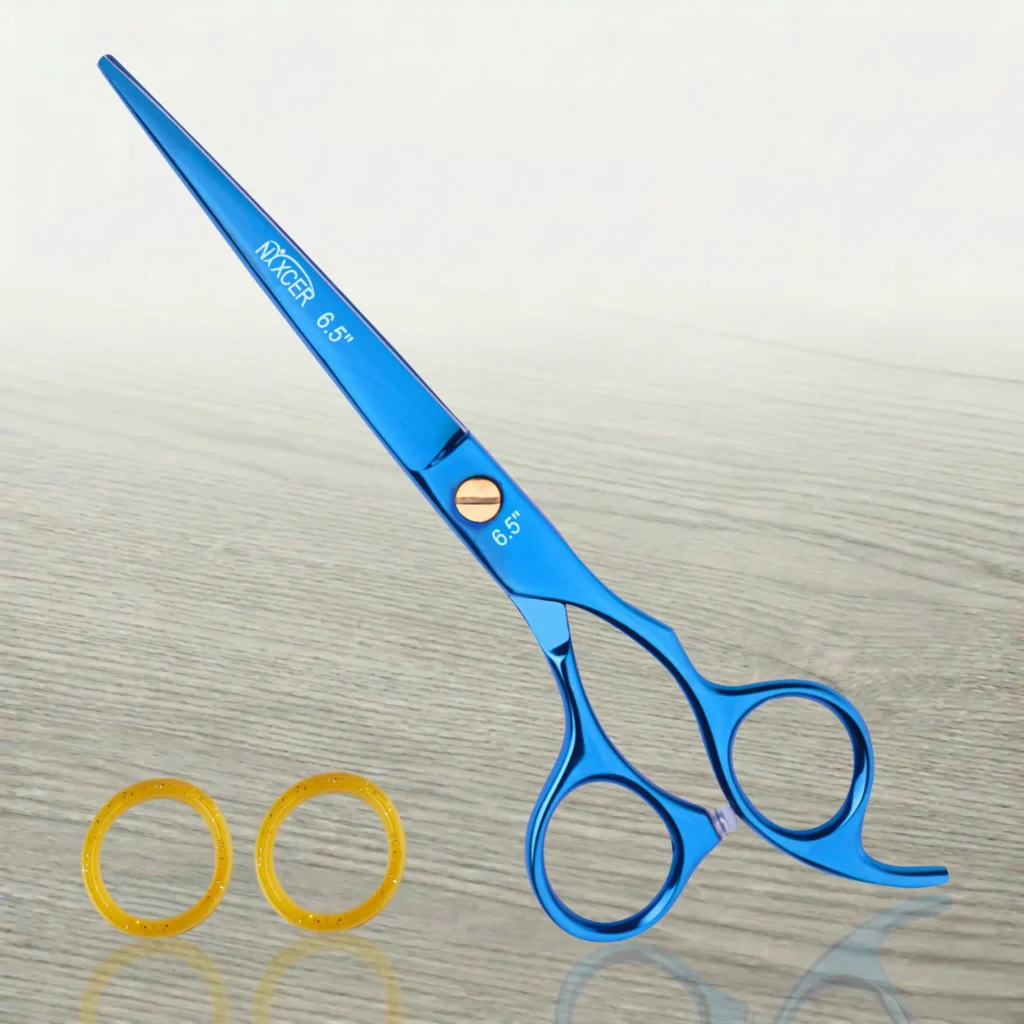
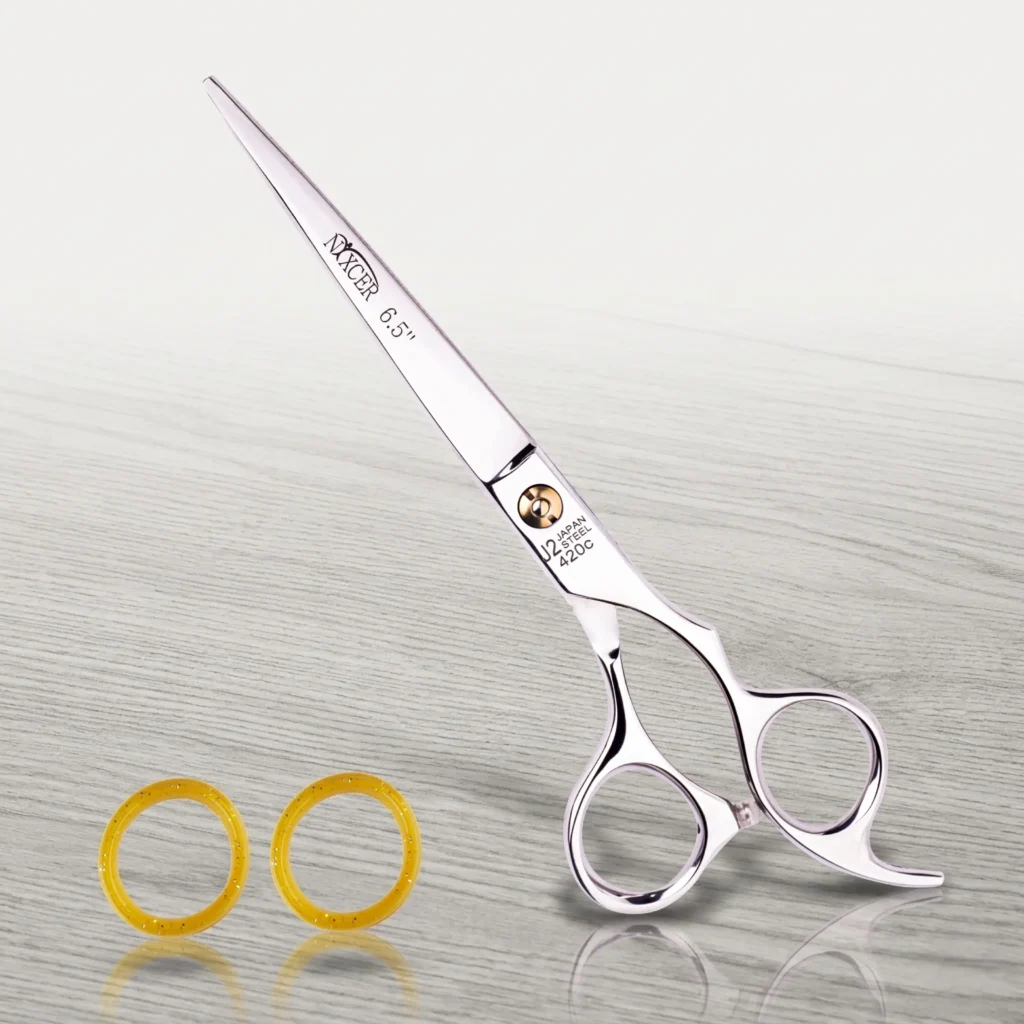
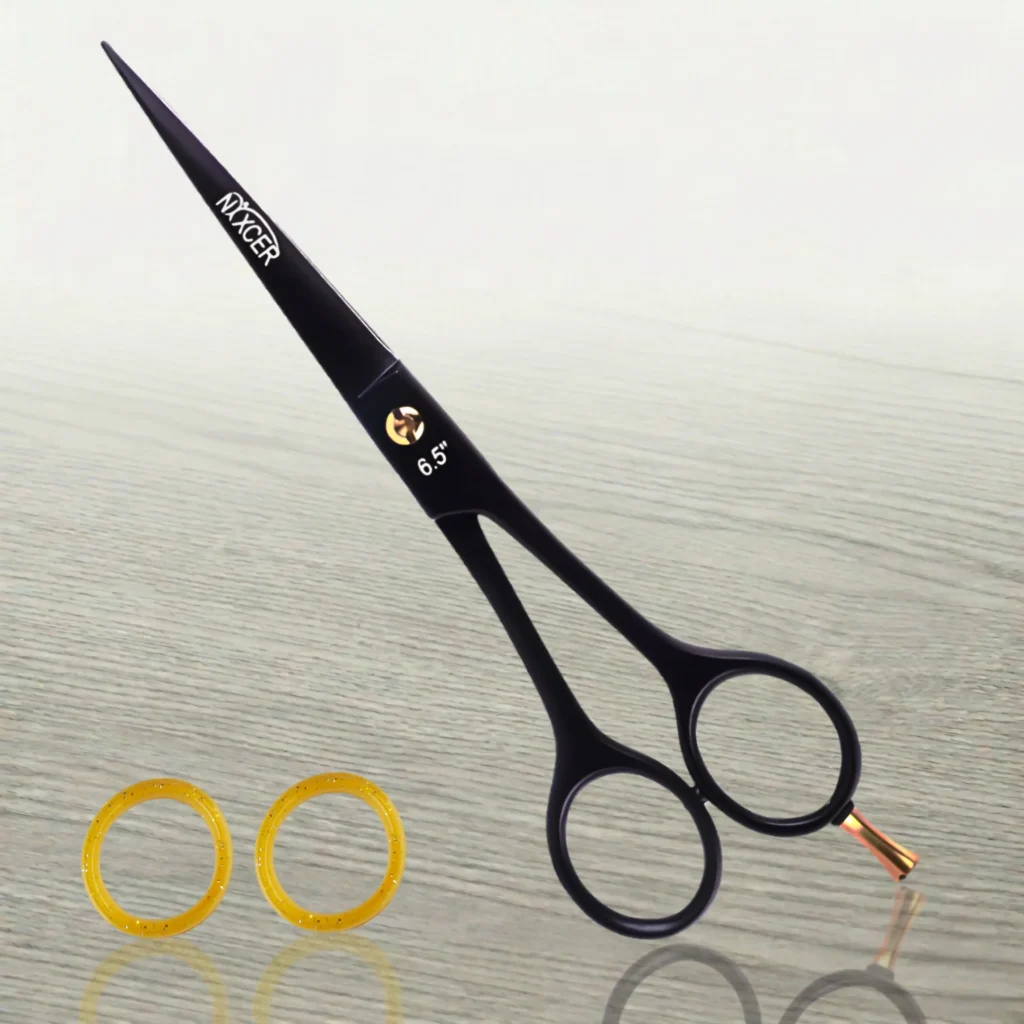
For an adaptable starting point, the Professional Sharp Series Razor Edge Hair Cutting Scissors are available in 6.0- and 6.5-inch options. Stylists who need to thin dense waves selectively can pair a cutting shear with the Nixcer Professional Series Hair Thinning Scissors.
Why Wavy Hair Needs the Right Cutting Shears
Wavy hair is not simply straight hair with a bend. Its fibers curve, change direction, and group into wave families. A scientific review of curly hair explains that fiber geometry and mechanical behavior change with curliness; those differences help explain why textured hair responds differently to tension, moisture, and handling (Royal Society review via PubMed Central).
During a hair cut, dull blades may push a loose wave out of position before they close. That can create an uneven perimeter, rough ends, or excess frizz after the hair returns to its natural shape. Extremely sharp professional hair scissors cut the section where the stylist places it. They also glide more easily during point cutting, channel cutting, and other texture-sensitive cutting techniques.
This matters whether the hair type is lightly wavy 2A hair, defined 2B hair, or a stronger 2C pattern that borders on curly hair. The sharper and smoother the shear action, the easier it is to make precise cuts without fighting the pattern.
Best Nixcer Outlet Scissors for Wavy Hair
No single scissor is ideal for every person or technique. A short detailing shear, a long barber scissor, and a texturizing tool solve different problems. Use this comparison to choose by task rather than appearance alone.
| Nixcer product | Best use on wavy hair | Why it fits |
| Professional Sharp Series Razor Edge Hair Cutting Scissors | Everyday cutting, layers, point cutting, and home haircutting | Razor-edge design, adjustable tension, and 6.0- or 6.5-inch choice |
| Nixcer Broad Blade Razor Edge Hair Cutting Scissors | Long, thick, or dense waves | Broad 6.25-inch format offers coverage and stability for larger sections |
| Nixcer Professional Series Hair Thinning Scissors | Selective bulk removal and soft blending | A dedicated hair thinning scissor gives more controlled removal than repeated blunt cutting |
| Nixcer Broad Blade Razor Edge Hair Thinning Scissors | Dense wavy hair that needs internal weight reduction | The broad 6.25-inch design is suited to deliberate salon or barbering work |
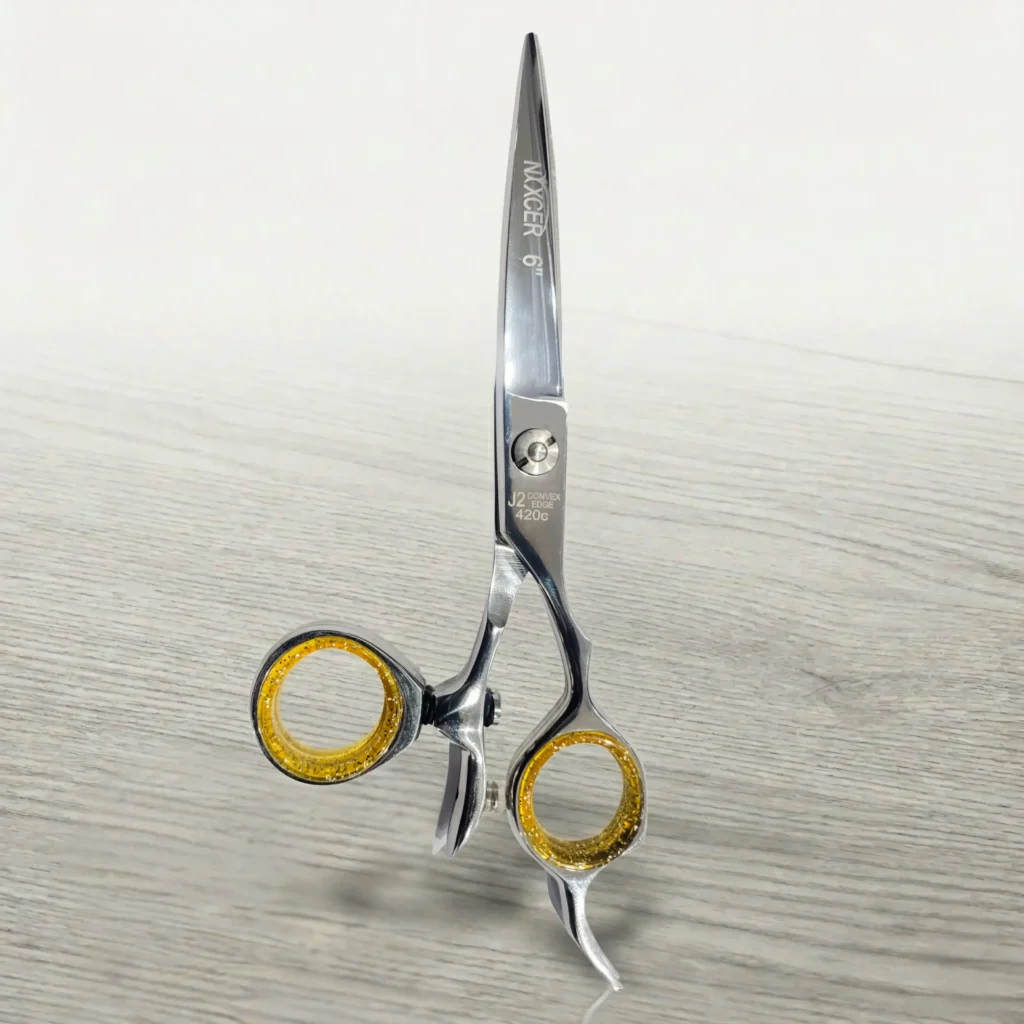
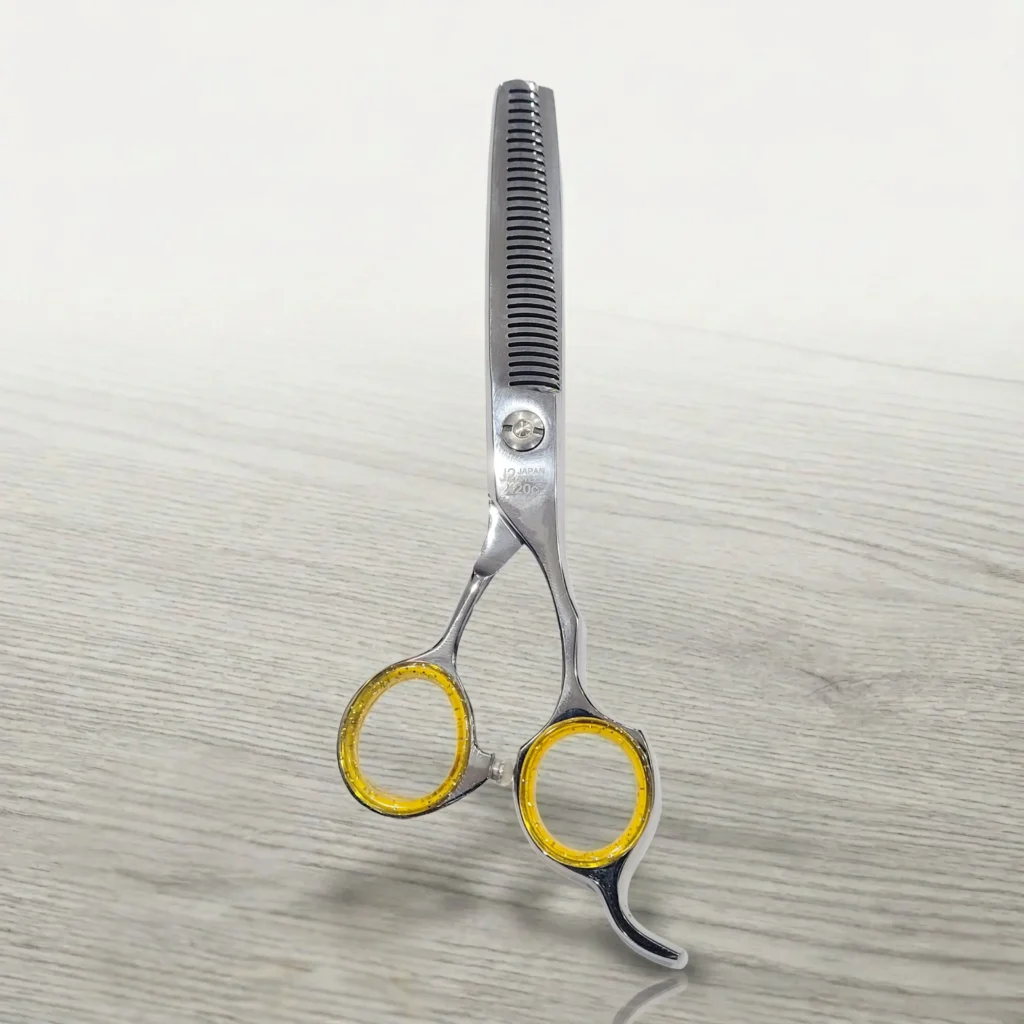
| Signature Sharp Series SWORD Hair Cutting and Thinning Scissors | Stylists who want a coordinated cutting-and-thinning set | Keeps a straight cutting shear and a texture tool available for different stages of the cut |
Steel grade, handedness, included accessories, and available sizes can vary by model. Check the individual product page before ordering rather than assuming every Nixcer shear has the same specification.
1. Best Versatile Choice: Professional Sharp Series Razor Edge Scissors
The Professional Sharp Series is the most flexible option for a stylist, barber, or careful home user who wants one primary cutting tool. Its hand-sharpened edge supports precision cutting, while the adjustable tension screw lets the user tune blade movement. The 6.0 inch version favors control; the 6.5 version gives more coverage for long layers and scissor-over-comb work.
This pair of scissors is a practical choice for dry hair refinement, perimeter work, point cutting, and cutting hair in small wave-by-wave sections. It is also comfortable to use for a range of professional hair and home haircutting tasks.
2. Best for Long or Dense Waves: Broad Blade Cutting Scissors
A broad blade offers stability when a hairdresser needs to control a larger section. The 6.25-inch Broad Blade Razor Edge Hair Cutting Scissors can suit long, thick waves, controlled blunt lines, and professional barber work.
Broad blades are not a reason to take oversized sections. Wavy and curly hair still benefits from conservative sectioning. Let the tool create a smooth cut; do not force the blades through more hair than they can close on cleanly.
3. Best for Controlled Bulk Removal: Professional Hair Thinning Scissors
Thinning scissors have one toothed blade and remove only part of the hair in a section. They can soften a heavy line, blend layers, or thin an overly dense area without taking away the full visible length.
Use thinning shears cautiously on wavy or curly hair. Too many closures can produce short pieces that spring outward and create frizz. Work on dry or nearly dry hair, stay away from the outer perimeter, make one light pass, release the section, and reassess before cutting again.
4. Best Two-Tool Setup: SWORD Cutting and Thinning Set
The Signature Sharp Series SWORD Hair Cutting and Thinning Scissors give a stylist separate tools for structure and texture. Use the standard shear to establish the shape, then use the thinning or texturizing tool only where the finished dry pattern holds too much weight.
This separation matters. A professional hair cut should not depend on thinning shears from start to finish. Build the shape first, allow the wave pattern to settle, and refine density second.
How to Choose Professional Hair Cutting Shears for Wavy Hair
Blade Edge: Convex, Razor, or Beveled?
A convex blade has a curved outer profile and a very fine edge. It is known for a soft, low-resistance feel and can glide through slide cutting or detailed dry cutting. A razor-style sharp edge can also deliver clean, precise cuts when it is well made and correctly tensioned.
A beveled edge is durable and familiar, but it may feel less fluid in advanced cutting techniques. For wavy hair, prioritize clean closure and sharpness over marketing language. A premium label means little if the blades fold hair or feel rough at the cutting edge.
Scissor Size: 5.5, 6.0, or 6.5 Inch?
The right size depends on hand size, hair length, and technique:
- 5.5 inch: Strong control for detail, fringe, short layers, and point cutting. A 5.5-inch scissor often suits smaller hands or stylists who work close to the fingers.
- 6.0 inch: A versatile middle ground for salon work, precision cutting, and most medium-length wavy styles.
- 6.5 inch: More blade coverage for long hair, scissor-over-comb, and larger sections. A 6.5-inch barber shear can also work well for a professional barber who moves between cutting and blending.
Search phrases such as “stainless steel hair cutting scissors 6.5” or “steel hair cutting scissors 6.5 inch” describe size and material, but they do not confirm quality. Balance, blade alignment, heat treatment, tension, and edge finishing matter too.
Steel: Japanese Steel, 440C, and Stainless Steel
Quality hair shears must hold a sharp edge while resisting corrosion and routine wear. Japanese steel is popular in professional hairdressing because well-treated alloys can provide a hard, refined edge and a smooth cutting feel. 440C is a high-carbon stainless steel grade often used in quality hair shears because it can balance hardness, edge retention, and corrosion resistance.
Do not assume that anything made of stainless steel performs the same. “Stainless steel hair cutting” is a broad category, not a complete specification. Good steel shears also depend on heat treatment, blade geometry, polishing, assembly, and maintenance. Confirm the stated material on the exact product page.
Handle Design and Ergonomics
Haircutting involves repeated finger and wrist movement. Offset handles can support a more relaxed thumb position, while a finger rest improves stability. Well-balanced ergonomic hairdressing shears can help a hair stylist keep the wrist neutral during long salon sessions.
OSHA guidance on repetitive scissor work identifies awkward wrist posture and repeated grip force as risk factors and recommends well-maintained tools designed to support neutral joint positions (OSHA Scissor Work guidance). Although the guidance addresses industrial scissor work, the ergonomic principle is relevant to any hairdresser or barber using shears repeatedly.
Right-handed and left-handed users should choose true right-handed or left handed scissors rather than merely turning one model over. True left-handed blades are arranged so a left-handed stylist can see the cutting line and apply natural closing pressure. If a listing does not state handedness, ask before buying.
Tension Screw and Blade Alignment
The tension screw controls how the blades meet. If tension is too loose, the shear may fold or push hair. If it is too tight, the blades create drag and the hand works harder.
Test the action after cleaning the blades. The shear should open smoothly, close without wobble, and cut a fine section cleanly. Do not keep tightening the screw to compensate for a dull or damaged edge; get the scissors sharpened by a technician who understands professional hairdressing scissors.
Cutting Wavy Hair: Dry, Wet, or Both?
Wavy hair changes length and shape as moisture changes. A dry cut shows the natural fall, density, and wave pattern, making it useful for face framing, fringe, final balance, and curl-by-curl refinement. Dry cutting demands sharper hair shears because dry fibers offer more resistance and reveal every rough edge.
Wet cutting still has value for establishing a clean guide, removing significant length, or building a geometric shape. Many stylists use a hybrid method: create the main structure on damp hair, dry it in the client’s normal pattern, then refine the result with professional hair cutting shears.
Avoid pulling each wave completely straight under high tension. It may spring up shorter than expected. Use even, light tension and compare both sides after the hair relaxes.
Cutting Techniques That Protect the Wave Pattern
Point Cutting
Point cutting places the tips of the scissor into the ends instead of cutting a hard horizontal line. It can soften the perimeter and help waves separate naturally. Use shallow points for fine hair and slightly deeper points only when dense hair needs more movement.
Slide Cutting
Slide cutting can create flow in long layers, but it requires an extremely sharp convex or polished edge. The blade should glide; it should never scrape, tug, or saw through the section. Stop if the hair catches.
Curl-by-Curl or Wave-by-Wave Refinement
Allow the dry pattern to form, identify pieces that sit outside the shape, and trim them individually. A trained stylist can cut curls or strong waves one grouping at a time instead of forcing every section into the same guide. This is especially useful when 2C wavy hair blends into curly hair or when different areas of the head have different shrinkage.
Thinning or Texturizing
Thinning and texturizing are not automatic steps for every wavy hair type. Thin only where excess internal weight prevents movement. Keep texturizing shears away from fragile ends and the outermost layer unless a trained stylist has a specific plan.
The goal is not to make all wavy hair thinner. The goal is to support shape, movement, and balance while preserving enough density for the waves to group together.
Mistakes to Avoid When Cutting Wavy or Curly Hair
- Using household scissors. Craft tools are not professional hair scissors. They can crush or bend strands instead of making a clean hair cut.
- Cutting too much while wet. Waves may retract as they dry, especially when the pattern is close to curly hair.
- Overusing thinning shears. Repeated closures can create patchy density, short flyaways, and frizz.
- Choosing by finish alone. Matte black and rose gold can look excellent, but color does not prove steel quality or sharpness. A Jaguar brand name or any other familiar label is also only one comparison point; geometry, fit, and maintenance remain essential.
- Ignoring handedness. Left-handed stylists need properly configured left-handed scissors for a clear cutting line and natural pressure.
- Working with poor tension. A misadjusted shear will not deliver smooth cutting even if the blades were once sharp.
- Forcing a dull tool. If you need extra thumb pressure to finish a cut, stop and inspect the scissors.
How to Keep Hairdressing Scissors Sharp
Even quality hair shears that are built to last need routine care.
- Wipe loose hair and product residue from the blades after every service.
- Clean and disinfect according to the product instructions and local salon rules.
- Dry the shear completely before storage.
- Apply a small amount of approved scissor oil around the pivot.
- Check the tension screw regularly.
- Store each pair of scissors in a protective case; do not toss it into a drawer with other cutting tools.
- Never use professional hair shears on paper, packaging, thread, or fabric.
- Get them sharpened by a specialist before dullness becomes blade damage.
Sharpening frequency depends on workload, steel, technique, and how often the shear is used on dry hair. A busy salon professional may need service sooner than someone using shears for home trims. The warning signs are reduced glide, folded strands, pushing, a rough spot in the closing action, or a sharp edge that no longer makes precise cuts.
Are Thinning Shears Good for Wavy Hair?
Yes, but only for the right density problem and with conservative technique. Hair thinning scissors can remove internal bulk, soften a heavy transition, and blend layers. They should not be used to erase every visible wave or compensate for a poorly built shape.
A texturizing shear may remove a different percentage of hair than a fine-tooth thinning scissor. Check the tooth design and cutting ratio when that information is available. Make one controlled closure, comb or shake the section out, and inspect the result before repeating.
For home haircutting, it is safer to trim the perimeter with sharp hair cutting scissors and leave major thinning or texturizing work to an experienced stylist. Removing length is predictable; rebuilding density is not.
Final Verdict
The best hair cutting scissors for wavy hair are the pair that matches the user’s hand, technique, and hair type while delivering clean closure without drag. For most people, a 6.0- or 6.5-inch razor-edge shear is a strong all-purpose choice. A 5.5-inch tool favors detail, while broad-blade or longer barber shears favor coverage and control on dense or long waves.
Start with a dedicated cutting shear such as the Professional Sharp Series Razor Edge Hair Cutting Scissors. Add professional hair thinning scissors only when you need controlled bulk removal. Above all, keep the blades clean, correctly tensioned, and sharp. A well-fitted shear in trained hands will do more for smooth, defined waves than an impressive finish or a long list of marketing claims.
Browse all Nixcer Outlet professional scissors and shears.
Frequently Asked Questions
What size hair cutting scissors are best for wavy hair?
A 5.5- to 6.0-inch shear gives strong control for detail and point cutting. A 6.5-inch shear offers more coverage for long wavy hair, scissor-over-comb work, and larger sections. Choose by hand fit and technique, not size alone.
Are 6.5 inch hair cutting shears too long for home use?
Not necessarily. A 6.5-inch pair can work for home haircutting if it feels balanced and comfortable to use. Beginners should take small sections and avoid cutting near the fingers until their control is reliable.
Is Japanese steel better for hair scissors?
Japanese steel is widely used in professional hair shears because suitable alloys can hold a refined, sharp edge. However, the steel name alone does not guarantee quality. Heat treatment, blade geometry, alignment, and sharpening all affect performance.
Is 440C good for professional hair cutting shears?
440C can be an excellent material for professional hair cutting shears when it is properly treated and finished. It is valued for hardness, corrosion resistance, and edge retention. Always confirm that the exact product—not just the brand’s wider range—uses 440C.
Should wavy hair be cut wet or dry?
Both methods can work. Wet or damp hair is useful for the main structure, while dry hair shows the natural pattern and final length. A hybrid approach often gives a stylist the most control.
Can I use thinning shears on curly hair?
You can use thinning shears on some dense curly or wavy hair, but placement matters. Avoid repeated cuts, fragile ends, and the outer surface. When unsure, ask a curl-trained hair stylist or hairdresser to do the texturizing.
What is the difference between a scissor and a shear?
In hairdressing and barbering, “scissor” and “shear” are often used interchangeably. “Shears” commonly refers to professional hair cutting tools, including straight cutting, thinning, and texturizing shears.
How do I know when my hair scissors need sharpening?
Have the scissors sharpened when they push or fold hair, lose their smooth glide, require extra thumb pressure, or leave a rough result. Do not wait until the blades become visibly damaged.
Are professional barber shears different from salon scissors?
Professional barber shears are often longer to support scissor-over-comb and efficient coverage, while salon scissors may favor shorter precision work. There is overlap: many stylists and barbers use 6.0- or 6.5-inch professional hairdressing scissors for both.
Can the same scissors cut straight hair and wavy hair?
Yes. Sharp, well-balanced hair cutting shears can cut straight hair, wavy hair, and curly hair. The technique, tension, section size, and dry-versus-wet approach should change with the hair type.